Planning a visit to the French Guiana penal colony means organizing two very distinct excursions, separated by 200 km of coastal road: the Îles du Salut off Kourou, and the Transportation Camp in Saint-Laurent-du-Maroni. I’ve guided dozens of travelers to both sites since I moved here, and the same mistake comes up every time: trying to cram it all into a single day. It’s impossible, and it would be a shame. Between 1852 and 1953, around 70,000 convicts were sent to the Guianese penal colonies; understanding this chapter of history deserves at least two days, ideally three. Here’s how to organize the visit in concrete terms: boats, tickets, schedules, and the logistical pitfalls that general guides forget to mention.
The Îles du Salut: the most famous penal colony, 14 km off Kourou
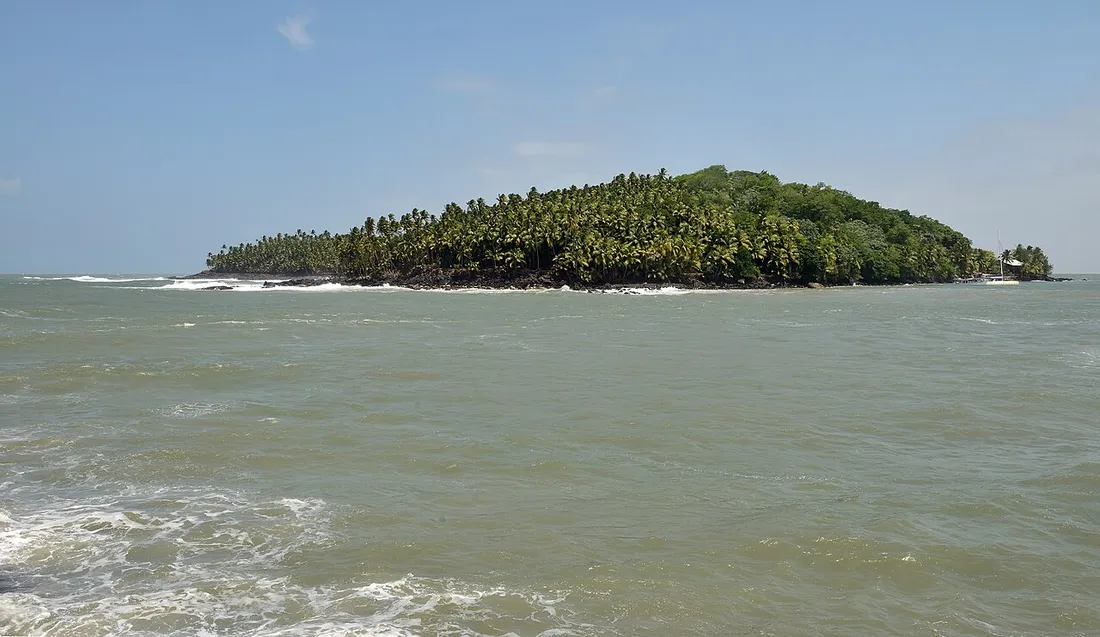
The archipelago has three islands: Île Royale (the largest, where you land), Île Saint-Joseph (the “solitary confinement” island, reserved for those being punished), and the famous Île du Diable, where Captain Dreyfus was held from 1895 to 1899. A striking contrast: from the coastal path on Royale, you can see both Dreyfus’s cell and, on a clear day, the launch pad of the Guiana Space Center on the mainland. Two centuries of French history in a single panorama.
How to get there: catamaran from Kourou
There’s no access other than by boat. The crossings leave from the fishermen’s pier or the Kourou jetty, about 60 km from Cayenne via the RN1 (allow 50 minutes by road; a car is essential in French Guiana).
- Sailing catamaran: departs around 8 a.m., returns around 5–6 p.m., roughly 1h45 to 2h crossing. Expect €49 to €59 round trip per adult, often with a loop around Île du Diable included.
- Fast shuttle (motorboat): 45 minutes to 1h crossing, similar prices, a rougher ride if the swell is up.
- Booking: mandatory in the dry season (mid-July to mid-November) and on weekends, and essential on Ariane 6 or Vega launch days — the islands are then evacuated or closed by prefectural decree. Check the launch calendar before locking in your date.
On-the-ground tip: take the earliest possible morning crossing. The sea is generally calmer before 9 a.m., and you gain two hours of sightseeing before the groups arrive.
What to see on Île Royale
A full loop of the island takes 1h30 to 2h along the coastal path (3 km, easy, but closed shoes recommended: the agoutis dig and the roots break the surface). Don’t miss:
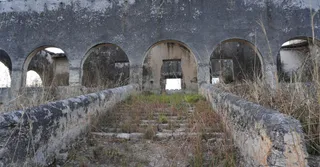
- the convicts’ quarter and its cells overrun by vegetation;
- the chapel decorated by the forger-painter Francis Lagrange;
- the military hospital and the director’s house, overlooking the sea;
- the children’s cemetery of the prison staff, deeply moving;
- the view of Île du Diable, off-limits to the public (violent currents, dangerous landing) — you observe it from the northern tip of Royale;
- the saïmiri monkeys and free-roaming peacocks, surprisingly tame.
Île Saint-Joseph, accessible on certain days depending on the operators, holds the cells of silent confinement: open-air corridors beneath the canopy, the most striking place in the whole archipelago in my opinion.
Staying overnight: the option few visitors consider
The former inn on Île Royale offers rooms (expect €80 to €120 per night) and a hammock area (around €10 to €15 for a spot, your own hammock required). Spending a night on the island changes everything: sunset over the mainland, the island emptied of its visitors by 5 p.m., and waking to the cries of the howler monkeys. Book several weeks ahead in the dry season.
The Transportation Camp in Saint-Laurent-du-Maroni: the gateway to the penal colony
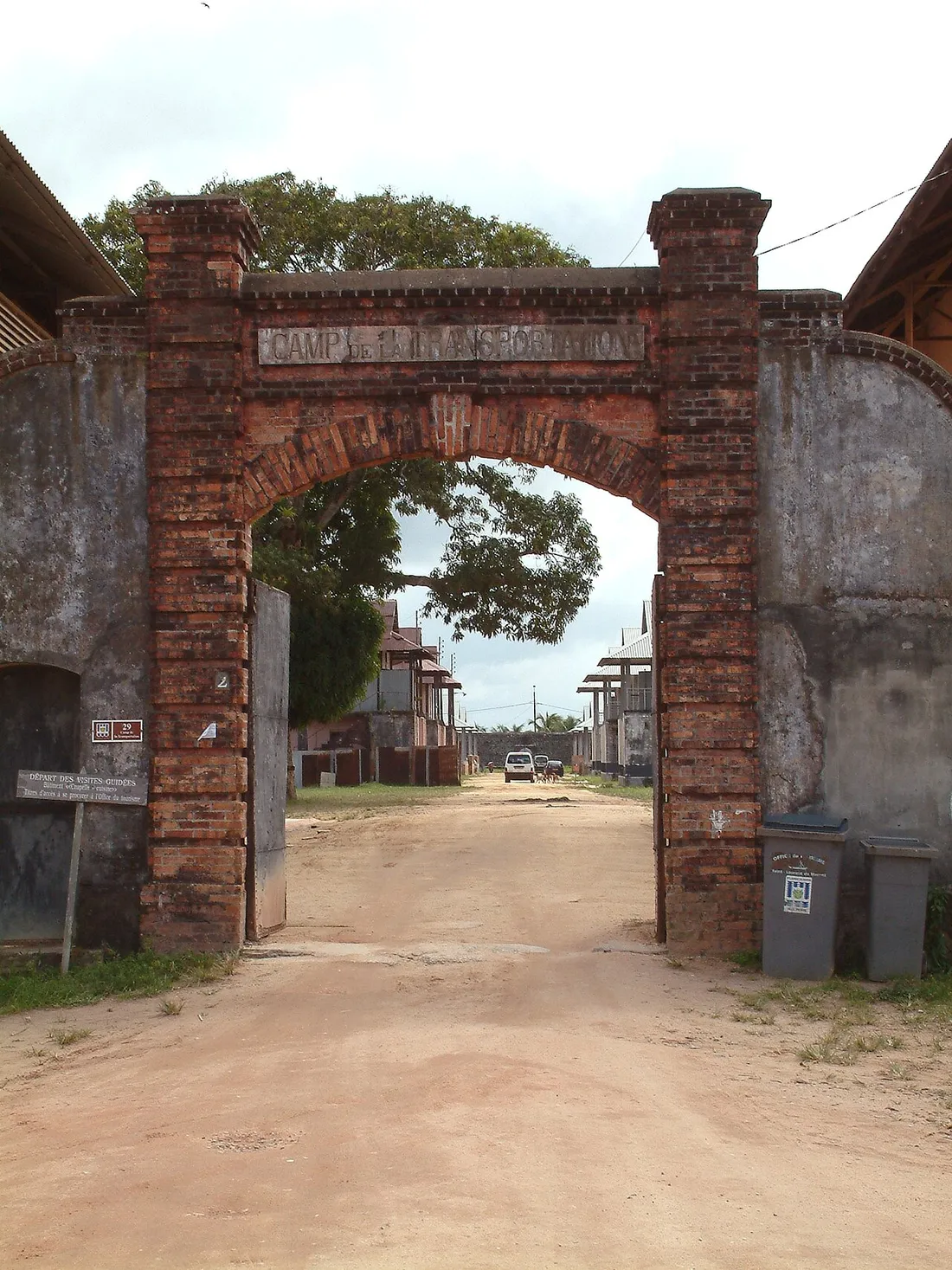
250 km from Cayenne via the RN1 (about 3h by road), Saint-Laurent-du-Maroni was the landing point for all convicts arriving from mainland France by sea convoy. The Transportation Camp, a listed historic monument, is the best-preserved and best-documented penitentiary site in French Guiana.
Guided tour: the option to choose
The main courtyard of the camp can be visited freely, but the enclosed areas (cells, disciplinary quarter, hut of the relegated convicts) are only accessible on a guided tour via the Saint-Laurent tourist office, located right at the camp entrance.
- Price: around €5 to €8 per adult, free or half-price for children.
- Duration: 1h15 to 1h30.
- Schedule: several departures a day, generally in the morning and early afternoon; the morning slots are more bearable given the heat.
- A must-see: the cell attributed to Papillon (Henri Charrière) — carving on the floor included, even if historians debate its authenticity — and the wall of the firing squad.
Round it out with the Relegation Camp in Saint-Jean-du-Maroni (15 km upstream) if the subject fascinates you, and stroll through the official quarter of Saint-Laurent: colonial penitentiary architecture is everywhere, from the former hospital to the river station. A dugout canoe outing on the Maroni river at sunset is the ideal way to end the day (€20 to €35 for a 1h30 trip).