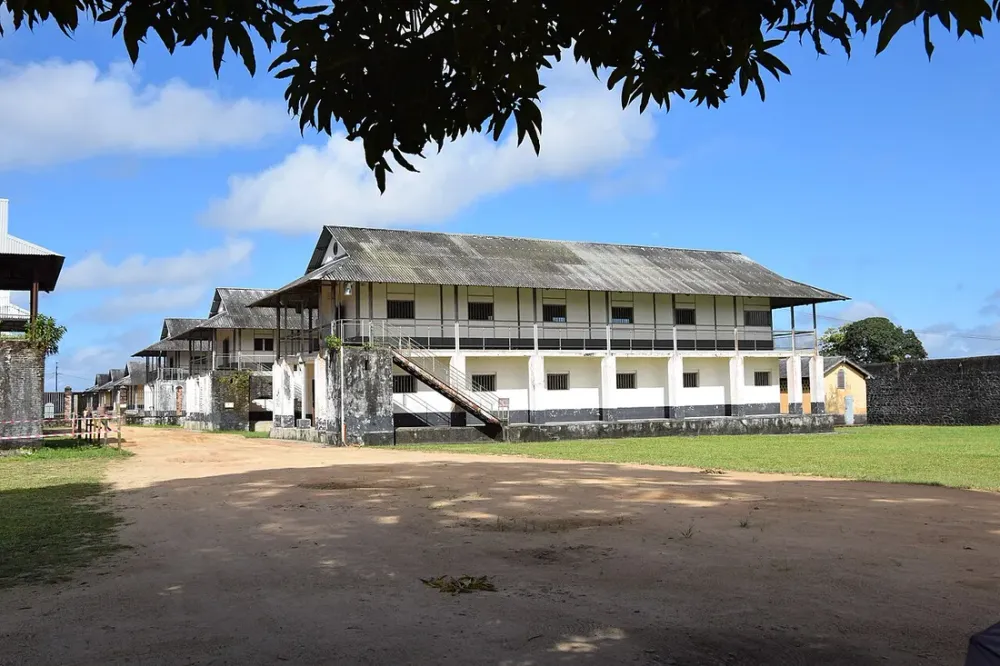
When you reach Saint-Laurent-du-Maroni after the 3-hour drive from Cayenne, you don’t expect to discover a site as steeped in history as the Camp de la Transportation. It was here, on the banks of the Maroni River that marks the border with Suriname, that convicts sentenced to “transportation” disembarked from mainland France. Today, this place of memory has become the cultural must-see of western French Guiana. After accompanying several of our travellers on visits, I’m sharing here everything you need to know to prepare your own, opening hours included, along with a few angles that rushed guides often overlook.
Why the Camp de la Transportation leaves such a mark
Between 1858 and 1938, around 70,000 convicts passed through this reception camp. It was the first land the prisoners set foot on before being dispatched to the other penitentiaries: the Îles du Salut, Saint-Jean-du-Maroni or the forest camps. The Camp de la Transportation was therefore not a long-term prison, but a sorting point, a holding area where the penal administration decided each man’s fate.
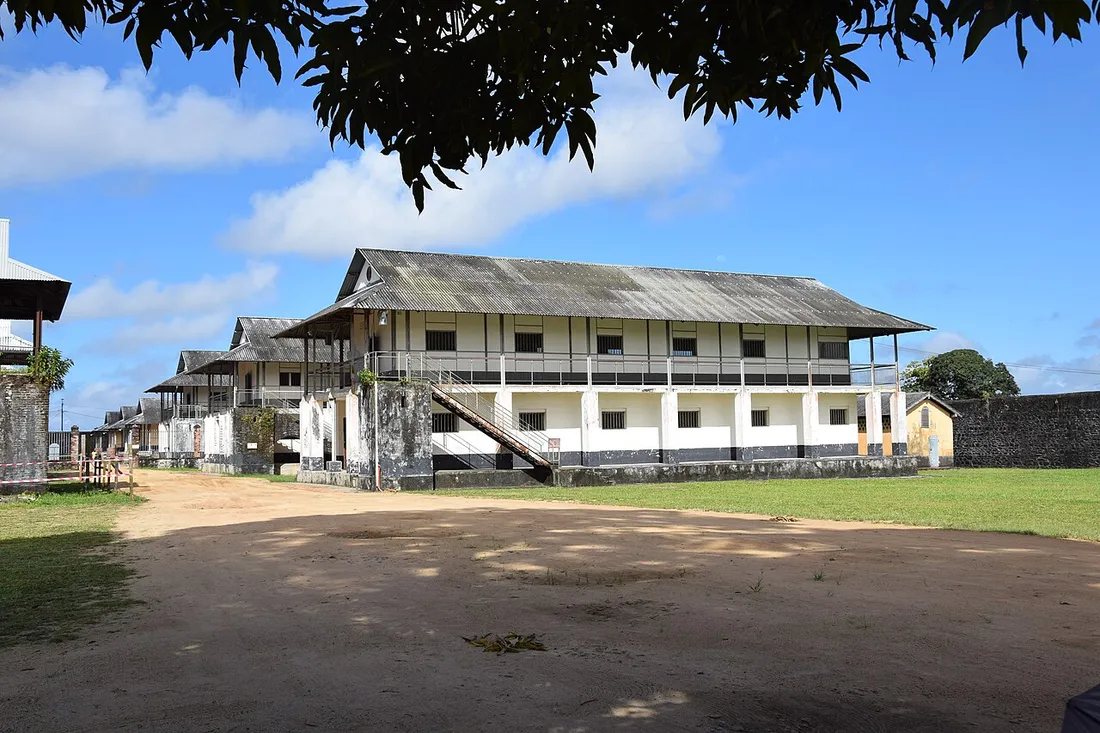
What strikes you on site is the scale. The red-brick buildings, the long galleries, the communal cells where men were crammed together: it all tells the story of a system designed to crush. And in the middle of this complex stands the cell of Henri Charrière, known as “Papillon”, whose tale travelled around the world. Whether his story is embellished or not, it still draws visitors searching for traces of the famous escapee.
A listed and well-maintained site
The camp has been a listed Historic Monument since 1990 and is part of the protected heritage areas of Saint-Laurent-du-Maroni. Some of the buildings have been restored and now house exhibitions, artists’ studios and the interpretation centre for architecture and heritage (CIAP). This is far from an abandoned ruin: it is a living place, where memory enters into dialogue with contemporary creation.
Practical info: hours, prices and access
Here is the concrete information to check before setting off. Hours change with the season and public holidays, so always confirm with the Saint-Laurent-du-Maroni Tourist Office the day before.
- Opening hours: generally Monday to Saturday, from around 8:30 a.m. to 4:30 p.m., with guided tours at set times (often 9 a.m., 10:30 a.m., 3 p.m. and 4 p.m.). Reduced opening on Sundays.
- Guided tour prices: expect around €8 to €12 per adult, with a reduced rate of around €5 to €6 for children and students. Self-guided access to the outdoor site is usually free.
- Duration: the guided tour lasts about 1 hour 15 to 1 hour 30. Allow 2 to 2.5 hours on site if you add the exhibitions.
- Booking: strongly recommended in high season (July to November) and for groups. The Tourist Office is located right at the camp entrance.
- Accessibility: uneven ground and steps in places; let the reception know if you have reduced mobility.
How to get there from Cayenne, Kourou or Matoury
Saint-Laurent-du-Maroni lies at the far west of the department. A car is essential in French Guiana, and this trip is no exception.
- From Cayenne: around 250 km via the RN1, i.e. 3 to 3.5 hours’ drive.
- From Kourou: around 190 km, i.e. 2.5 hours.
- From Félix-Éboué airport (Matoury): allow 3 hours, ideal if you pick up your rental car on arrival.
The road passes through Sinnamary, Iracoubo and Mana: bring water, fuel (service stations are scarce) and leave early in the morning to enjoy the cool air and the light.
The lesser-known angles not to miss
Most visitors are content with the classic guided tour. Here’s what I recommend to our travellers to go further.
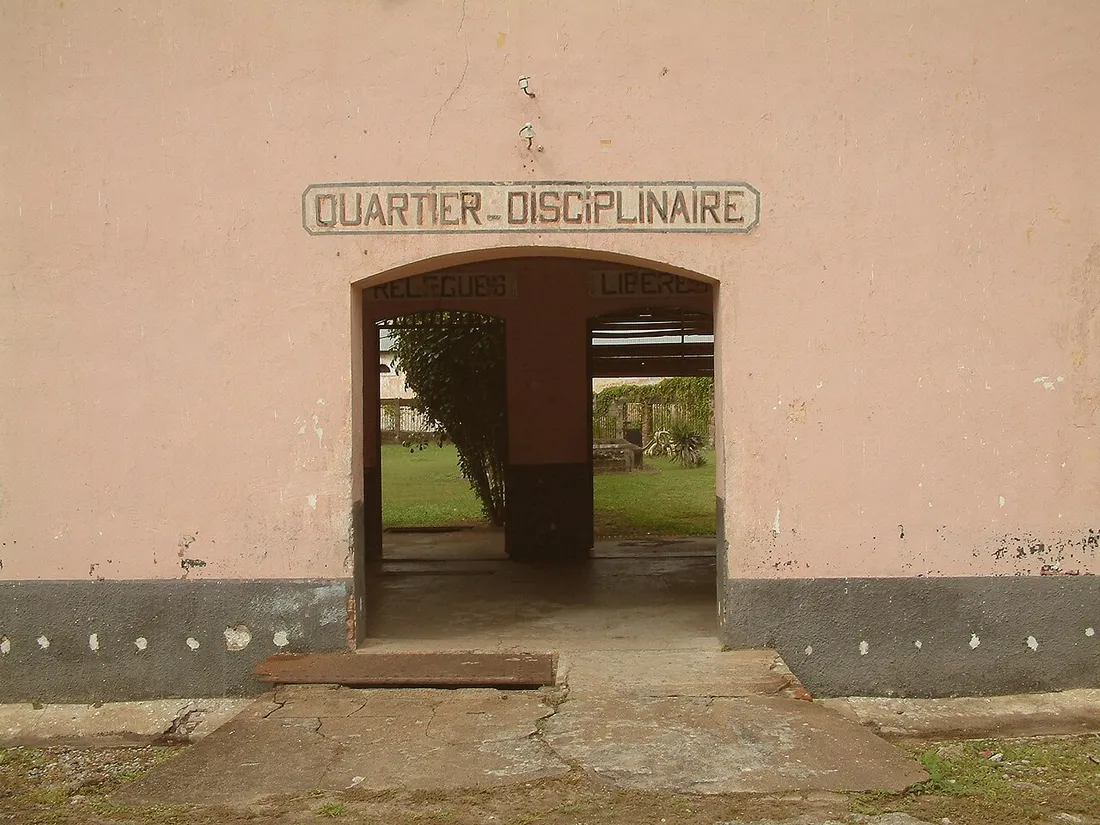
The disciplinary quarter and the graffiti
Beyond the famous “Papillon” cell, take the time to observe the graffiti carved into the walls by the inmates: dates, names, drawings, sentence calendars. These are raw testimonies, far more moving than any explanatory panel. Ask your guide to point them out to you, as they are easily missed.
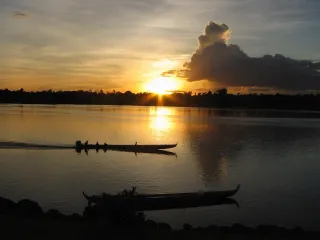
Sunset over the Maroni
The camp borders the river. In the late afternoon, after the visit, head down to the banks and the nearby jetty to watch the sunset over the Maroni, with Suriname facing you. It is one of the finest panoramas in western French Guiana, and a striking contrast with the heaviness of the place.
Pairing it with a pirogue trip and the market
Saint-Laurent lives to the rhythm of the river. Just after the camp, you can:
- Set off on a pirogue trip on the Maroni to reach a Bushinenge village or simply follow the border (an outing from 1 hour to a half-day depending on the boatmen).
- Stroll through the market and the town centre, where Creole, Bushinenge and Amerindian cultures mingle.
- Visit the Relégation camp (Saint-Jean) a little further upstream, less visited and just as telling.