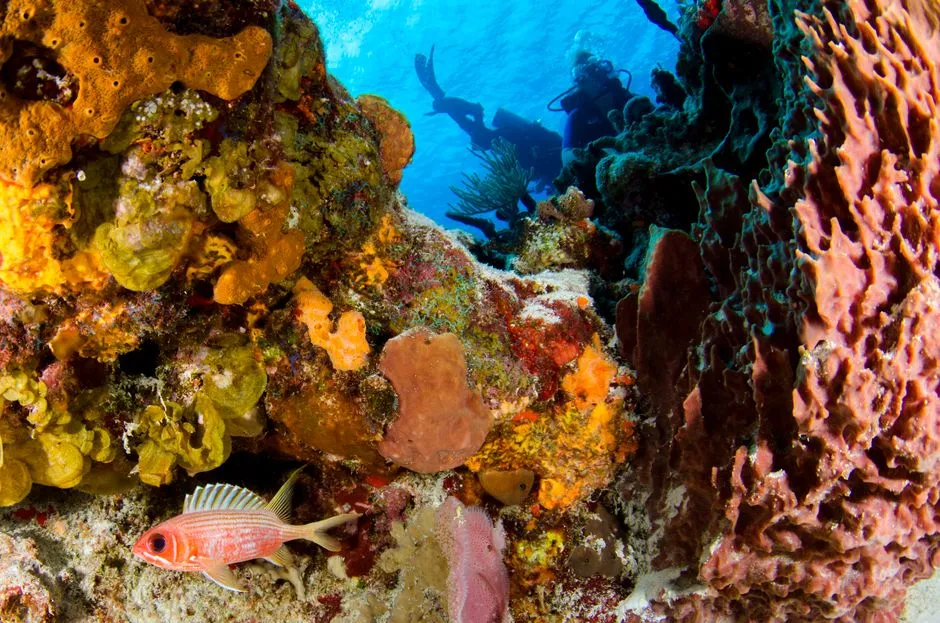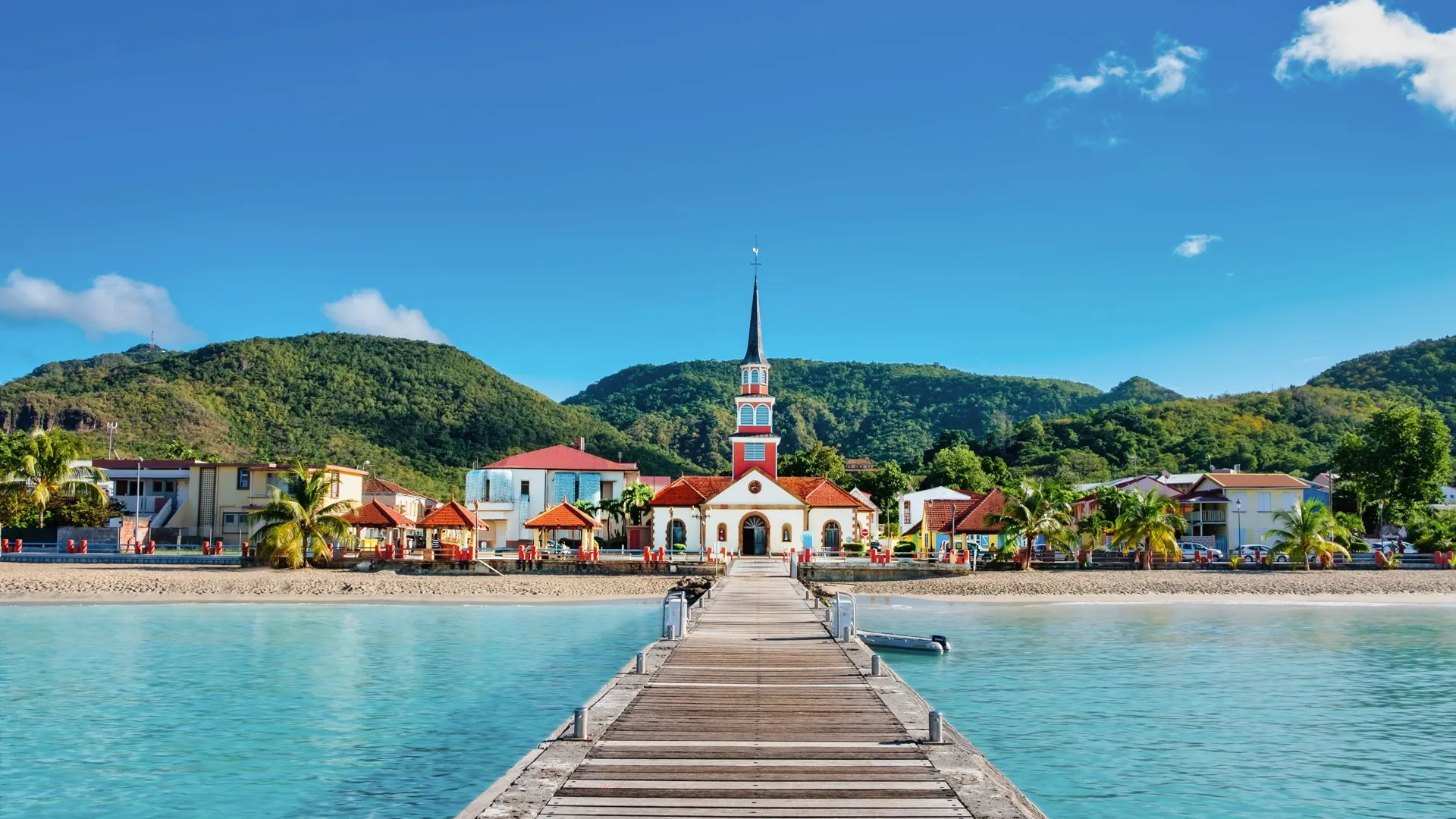
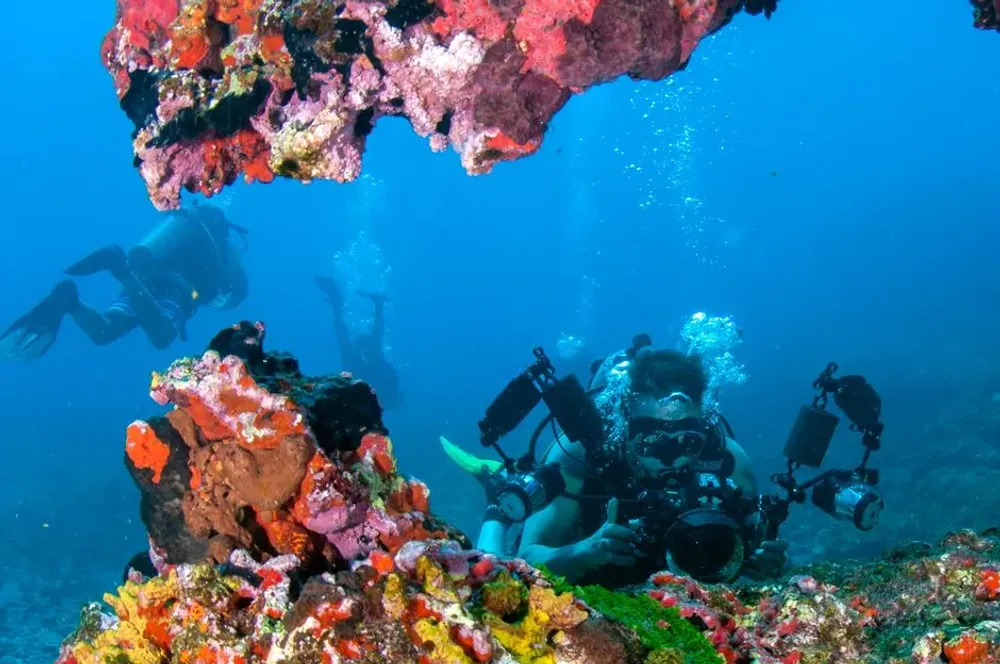
Beneath its turquoise surface, Martinique hides one of the most varied underwater playgrounds in the French West Indies. In a single week you can explore a wreck graveyard steeped in history, glide along drop-offs blanketed in sea fans, cross paths with green turtles and stingrays, then finish with a night dive in a black-sand cove. Here the water stays between 26 and 29 °C all year long, and visibility often exceeds 25 metres during the dry season.
After dozens of dives along the island’s three coastlines, here is an honest overview of the best spots, area by area, with the levels required, the certified centres and the right time to slip beneath the surface.
When to dive in Martinique?
Diving in Martinique is possible all year round, but the ideal window remains the Carême, the dry season running from December to April. The rains taper off, the sea calms down, and visibility peaks, especially on the Caribbean coast (the west coast), sheltered from the trade winds.
A few concrete markers:
- Water temperature: 26 °C in January–February, up to 29 °C in September–October.
- Wetsuit: a 3 mm shorty is enough in summer; a 3/5 mm full suit is more comfortable in winter.
- Wet season (June to November): diving is still possible, but visibility can be reduced after downpours, and the swell is stronger on the Atlantic coast.
Worth noting: as Martinique is a French overseas region (DROM), your certifications (PADI, SSI, FFESSM, CMAS) are recognised without any formalities, the euro is the currency, and the telephone code is +596. Keep the time difference in mind (-5 h in winter, -6 h in summer compared with Paris) when scheduling your bookings from mainland France.
Northern Caribbean coast: the Saint-Pierre wrecks
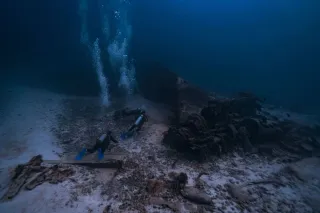
This is the island’s legendary site, and probably the most moving. On 8 May 1902, the eruption of Mount Pelée wiped Saint-Pierre off the map in a matter of minutes and sent a dozen ships then anchored in the bay to the bottom. Now a listed heritage site, this open-air museum-town extends underwater into a marine graveyard unique in the West Indies.
The must-see wrecks
- The Roraima: a 100 m cargo ship resting between 35 and 55 m, the highlight of the show. Reserved for experienced divers.
- The Tamaya: a three-masted ship between 35 and 90 m, its structure carpeted with sponges and corals.
- The Dahlia and La Gabrielle: more accessible, between 18 and 40 m, perfect for a first wreck.
Level required: most of the Saint-Pierre wrecks lie deeper than 30 m, so a Level 2 (CMAS) / Advanced (PADI) is needed to make the most of them. Beginners can, however, dive on the shallows and certain shallow wrecks.
Access: Saint-Pierre sits about 35 km north of Fort-de-France, a 45-minute drive along the coast. Several FFESSM- and SSI-certified centres operate out of the harbour.
Southern Caribbean coast: Cap Salomon and the Trois-Îlets peninsula
Gentler and sunnier, the area around the Anses-d’Arlet and Trois-Îlets concentrates the sites that are perfect for intro dives and intermediate-level dives.
Cap Salomon
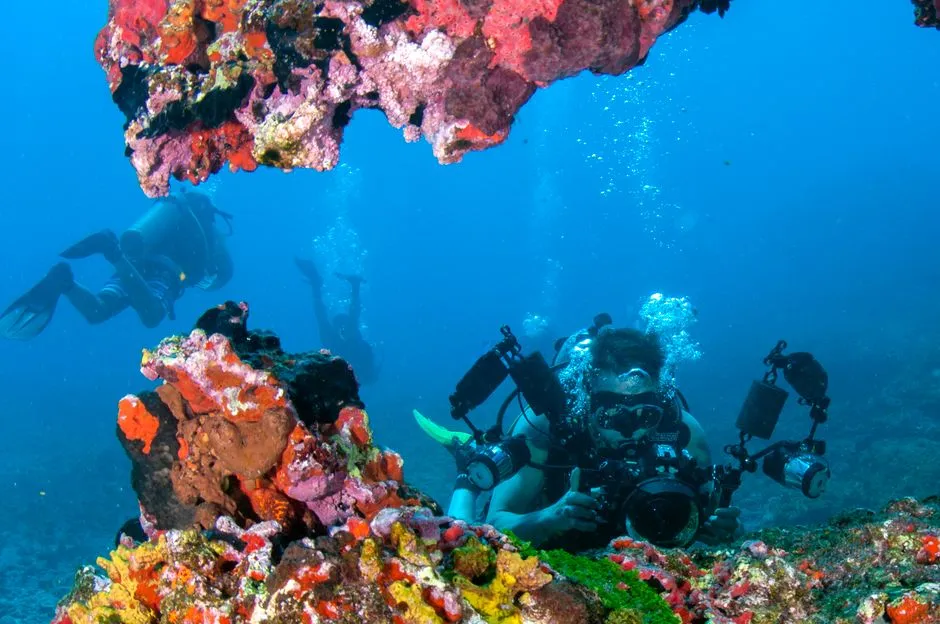
Located at the southern tip of the Bay of Fort-de-France, this reserve is one of the island’s most beautiful drop-offs. You descend along a wall lined with sea fans and barrel sponges, between 6 and 30 m, with excellent chances of crossing paths with turtles, barracudas and schools of trumpetfish.
- Level required: accessible from the intro dive on the upper section; Level 1 recommended for the drop-off.
- Bonus: the Statue of the Virgin of Diamant, submerged nearby, is a much-loved photogenic site.
Anse Dufour and Anse Noire
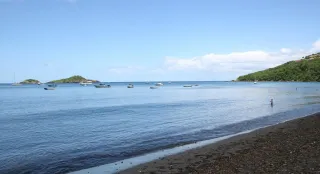
These two twin coves, separated by a single rocky ridge, are as rewarding for snorkelling as for scuba diving. Anse Noire, with its black volcanic sand, regularly shelters green turtles that come to graze the seagrass beds just metres from the shore. Ideal for a family outing or a first entry into the water.
The south: Îlet à Ramiers and Diamant Bay
Off the Trois-Îlets and Diamant, the south offers wilder dives, dotted with drop-offs and exposed rocky sites.
Îlet à Ramiers
This small fortified islet off the Pointe du Bout shelters rocky seabeds between 10 and 25 m, rich in spiny lobsters, moray eels and trunkfish. Sheltered from the current, the site is well suited to Level 1 divers looking to build their independence.
The Rocher du Diamant
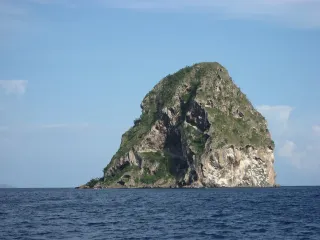
For experienced divers, this iconic volcanic stack jutting out of the sea opposite Diamant is an exceptional dive: dizzying drop-offs, caves, and frequent passes of rays and turtles. The currents can be strong: Level 2 minimum and good physical condition are required.