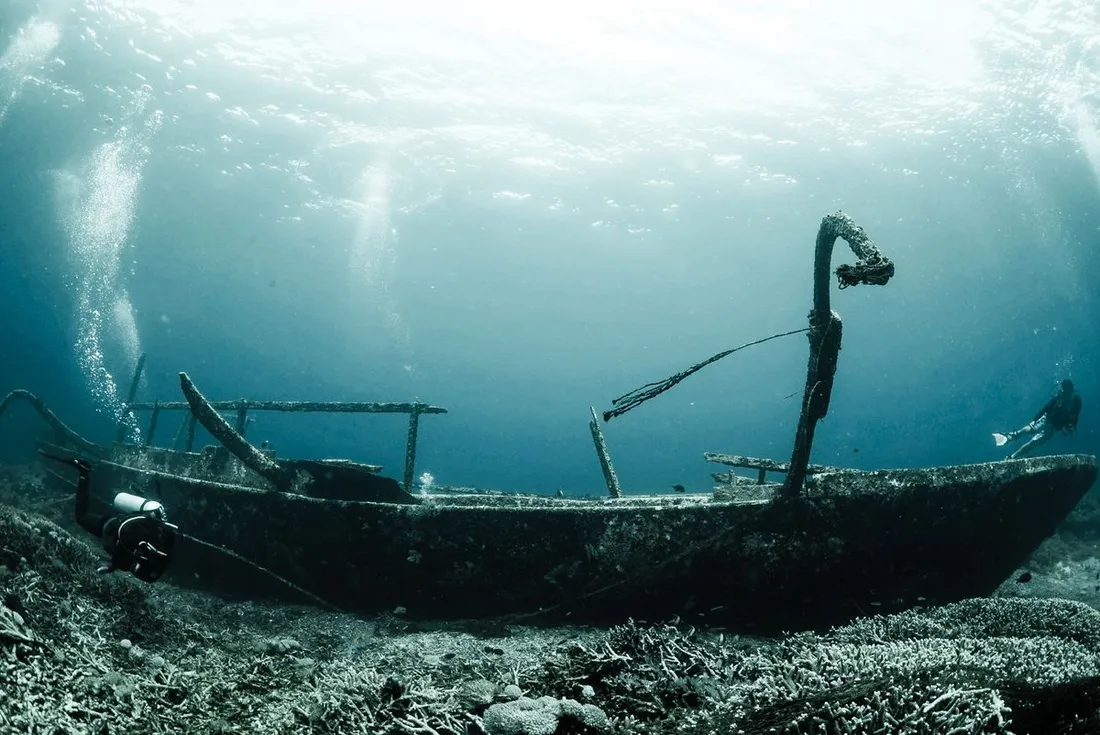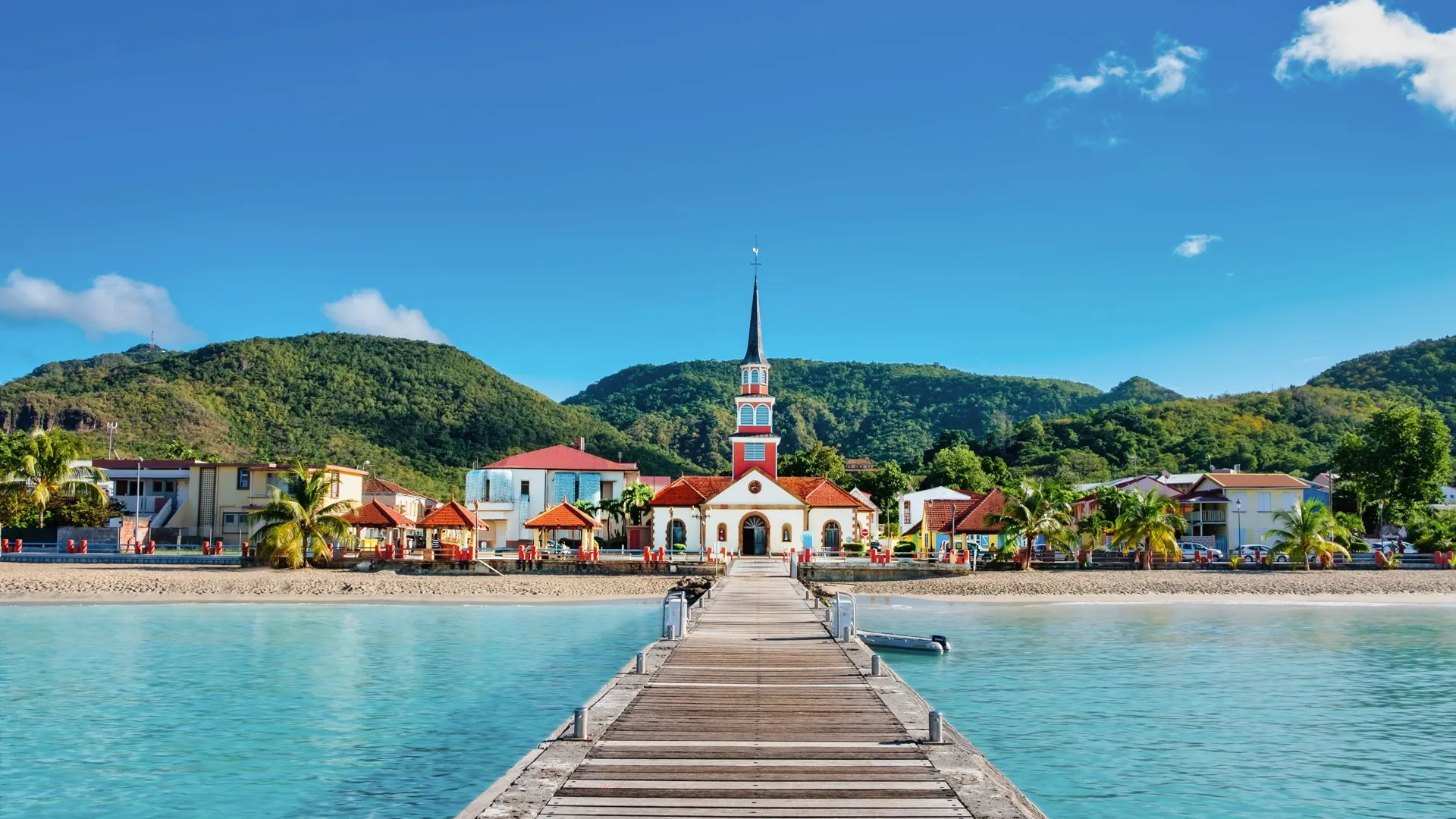
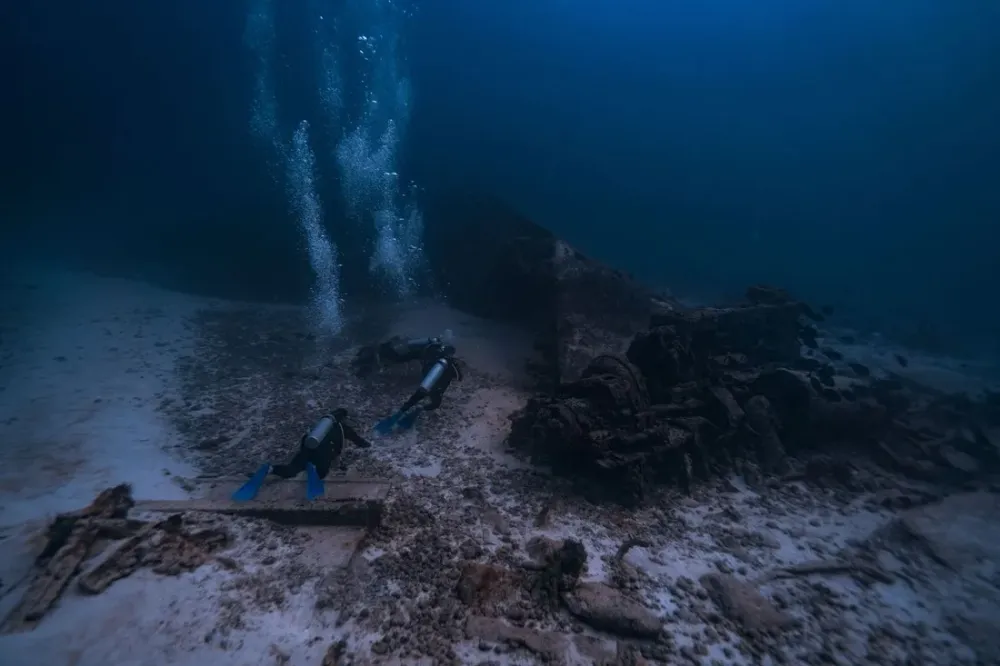
There are few places in the world where a historic catastrophe can be visited underwater, tank on your back. Diving in Saint-Pierre, Martinique is one of them: on 8 May 1902, the pyroclastic flow from Mount Pelée destroyed the town in a matter of minutes and sent the fleet anchored in the bay to the bottom. More than a century later, those ships still rest there, between 10 and 90 metres deep, transformed into living reefs. It is one of the largest marine graveyards in the Lesser Antilles, reserved largely for experienced divers.
I have been diving this bay for years. Here is an honest guide to the Saint-Pierre wrecks, ship by ship, with real depths, the certification required, the going rates and how to choose a licensed local club. No sugar-coating: this is deep diving, and it takes preparation.
Why Saint-Pierre is a unique wreck-diving site
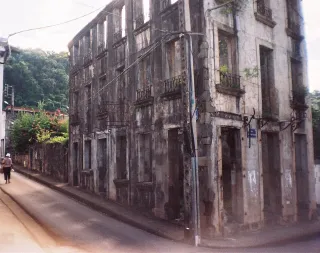
On the eve of the eruption, Saint-Pierre was the island’s busiest port, the “Little Paris of the Caribbean.” A dozen ships lay at anchor in the bay when the pyroclastic flow, at more than 1,000 °C, struck them head-on: most burned or capsized before sinking on the spot.
What makes 1902 wreck diving so special is the combination of three factors that are rarely found together:
- Density: eight to ten identified wrecks are concentrated over a few hundred metres, along the drop-off that borders the town.
- Depth: the seabed plunges fast. Many hulls rest below 35 m, some come close to 90 m, which makes it a technical spot.
- Marine life: a century underwater has turned the steel into reef, colonised by sea fans, barrel sponges, moray eels, lobsters and shoals of trumpetfish.
So you do not dive here for the turquoise lagoon, but for the thrill of brushing against a page of history in a unique volcanic light.
The Saint-Pierre wrecks, ship by ship
The Roraima, the star of the marine graveyard
The Roraima is the bay’s legendary wreck, the one every experienced diver comes to find. This roughly 100-metre Canadian cargo ship, hit head-on on the morning of the eruption, burned for several hours before going under.
- Depth: hull lying on its side, deck around 36-40 m, keel beyond 50 m.
- Level required: CMAS Level 2 / PADI Advanced as a minimum, ideally a deep-diving qualification for the lower section.
- What you’ll see: the massive silhouette of the cargo ship, the collapsed superstructures, a fallen mast carpeted with sea fans, patrolled by barracudas.
The Roraima wreck has to be earned: short bottom time, strict decompression stops, possible narcosis.
The Tamaya, the deep three-master
A French merchant sailing ship, the Tamaya stretches between 35 and 85 m on a sloping seabed. Reserved for very experienced divers, its appeal lies in its ghostly feel and its encrustations.
The Dahlia and the drop-off, for getting started on the site
Not all of the Saint-Pierre wrecks are out of reach. The Dahlia, between 18 and 36 m, offers a first wreck accessible to supervised Level 1 divers or Level 2. And the Saint-Pierre drop-off, from 6-10 m, descends in a steep slope covered with corals and sponges: this is where discovery dives and beginners find their place, away from the deep hulls.
What level do you need to dive the wrecks?
Most of the iconic wrecks lie below 20 m. The benchmarks before you book:
- Discovery dive: drop-off and shallows down to 6-12 m, not the big wrecks.
- Level 1 / Open Water: drop-off and the Dahlia, supervised, down to 20-25 m.
- Level 2 / Advanced: access to the Roraima (upper section) and to wrecks down to 40 m.
- Level 3 or deep qualification: full exploration of the Roraima and the Tamaya.
Most clubs require an up-to-date dive logbook and a medical certificate less than a year old for deep dives. Your French (FFESSM) or international (PADI, SSI, CMAS) certifications are recognised without formality: Martinique is a French overseas department, the euro is the currency and the dialling code is +596. Keep the time difference in mind (-5 h in winter, -6 h in summer compared with Paris) when booking from mainland Europe.
Choosing a licensed dive club in Saint-Pierre
Given the depths involved, choosing a licensed local club is your first line of safety. Several operators work from the Saint-Pierre jetty and the neighbouring towns (Le Carbet, Le Prêcheur). My criteria:
- A recognised affiliation: FFESSM label, PADI or SSI accreditation clearly displayed.
- Expertise in deep wrecks: how long have the instructors been guiding the Roraima, and do they offer nitrox to extend bottom time?
- Small groups and a proper briefing: on a wreck at 40 m, a pair or a trio per guide remains the rule.
Access is almost always by boat, 5-10 minutes from the jetty. Book at least the day before, and 48 h in advance in high season.
Realistic rates observed on the north coast
- Drop-off / shallow wreck exploration (equipment included): €50 to €65.
- Deep wreck (Roraima, Tamaya): €65 to €85, sometimes more with nitrox.
- 6-dive package: from €290 to €330; discovery dive on the drop-off: €60 to €80.
The water ranges between 26 °C in January-February and 29 °C in September-October; a full 3/5 mm wetsuit is comfortable on deep dives, where you quickly feel the chill.