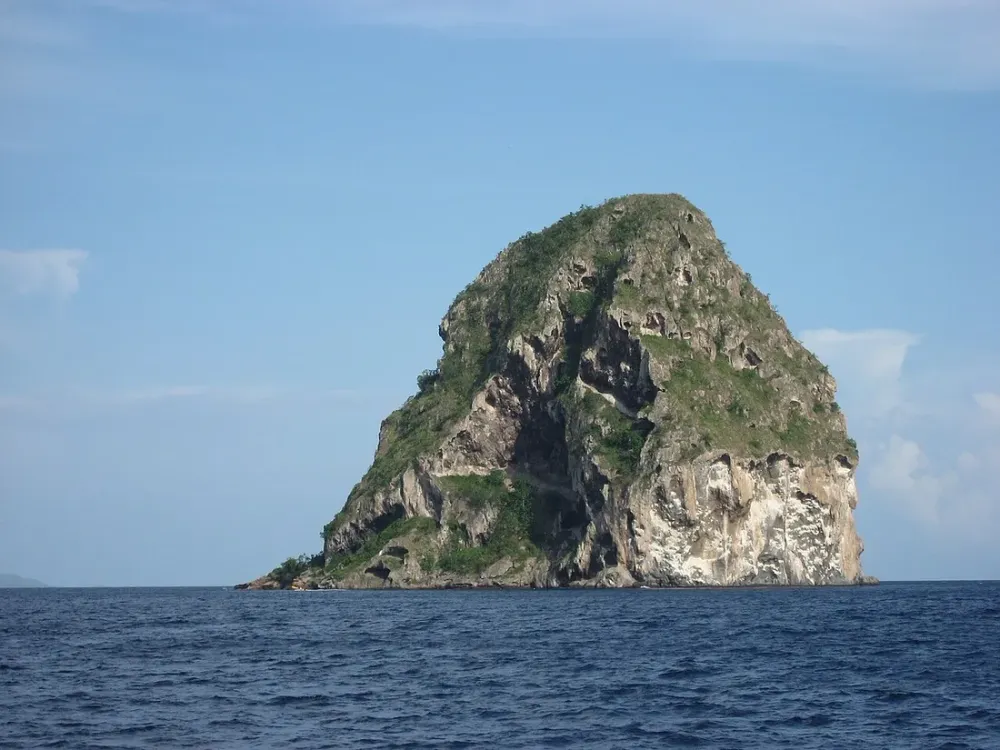
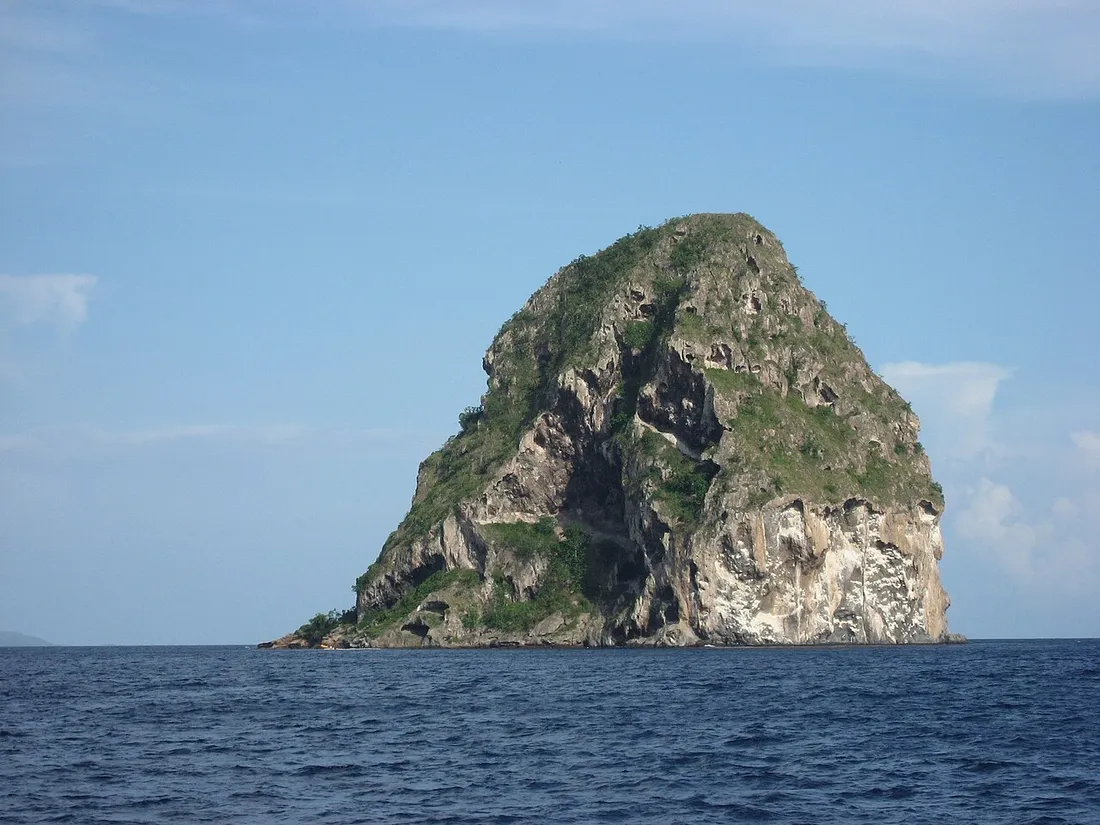
Sitting roughly two kilometres off the shore of the town of Le Diamant, in southern Martinique, Diamond Rock is one of those backdrops that lodge themselves in your memory the very first time you catch sight of them from the road. This 175-metre volcanic cone rises from the water like a solitary sentinel, sculpted by the trade winds and pounded by the Atlantic swell. But behind the postcard lies a more demanding reality: reaching this monolith calls for preparation, the right watercraft and, above all, a careful reading of the sea conditions. Here’s how to experience this excursion wisely, whether you’re a curious kayaker or a seasoned diver.
Understanding Diamond Rock before you go
The rock is no mere geological curiosity. It’s an ancient lava dome that surfaced hundreds of thousands of years ago, today classified as a protected nature reserve and site. No landing is permitted: you approach it, circle around it, dive at its base, but you don’t climb it. This rule protects both a remarkable colony of nesting seabirds and the visitors themselves, since the cliffs are steep and unstable.
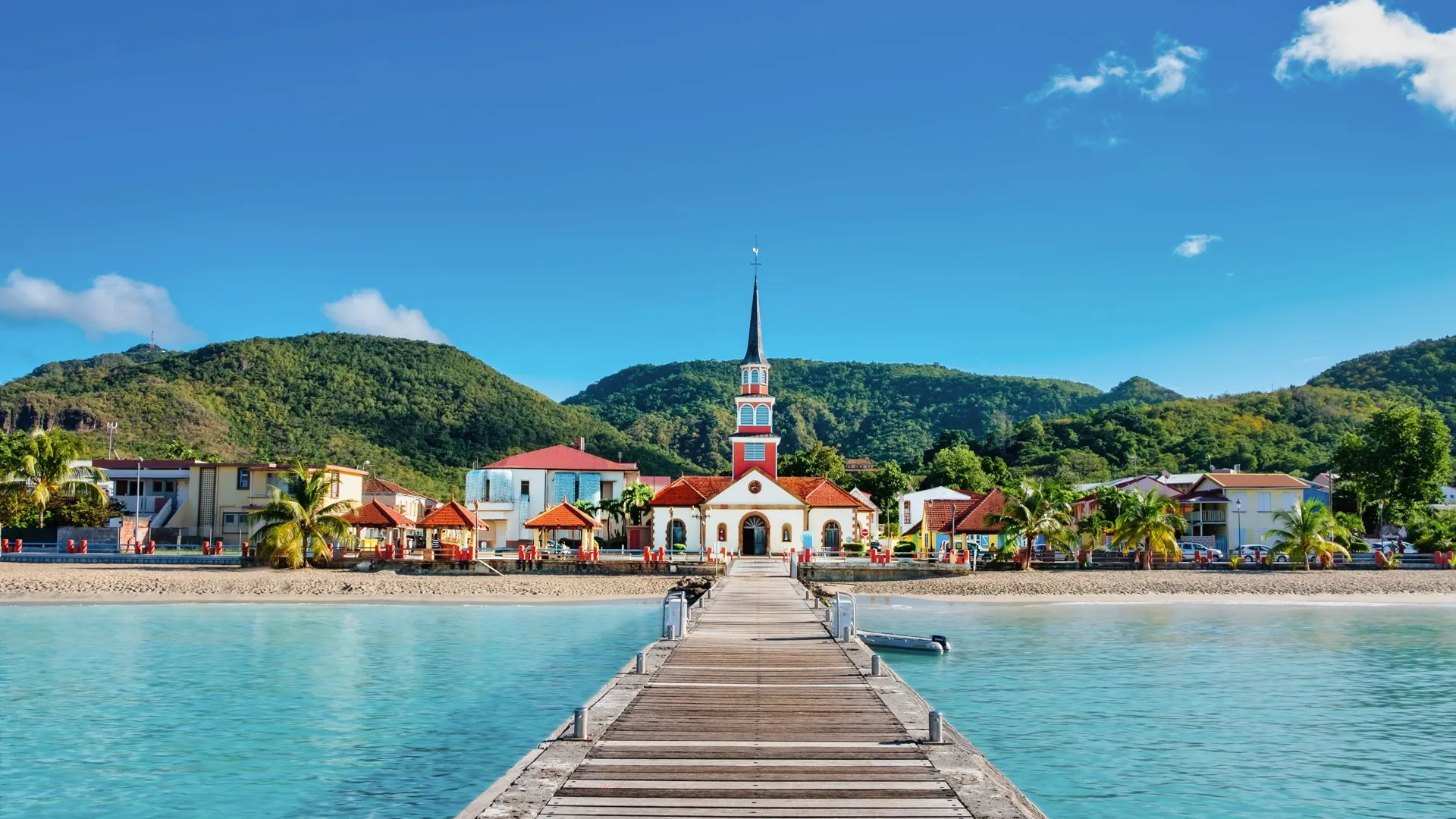
From Le Diamant beach, you’ll see it straight ahead, framed by the long stretch of pale sand running along the town. The village of Le Diamant lies about 35 km from Fort-de-France and 25 km from Aimé Césaire airport (Le Lamentin), a 40- to 50-minute drive. A car is strongly recommended on an island 80 km long where public transport doesn’t keep pace with a traveller’s rhythm.
A very real military legend
The nickname “HMS Diamond Rock” is no tourist invention. In 1804, in the thick of the Franco-British war, the Royal Navy hauled cannons to the summit of the rock and officially declared it one of His Majesty’s warships. For seventeen months, a British garrison harassed French ships passing through the Saint Lucia Channel. The French eventually retook the islet in 1805. This story, a blend of naval audacity and extreme isolation, gives the excursion a depth few Martinican spots possess. By kayak or by boat, look at the rocky ledges: that’s where the English sailors set up their positions.
Approaching the rock by kayak: for whom, and how
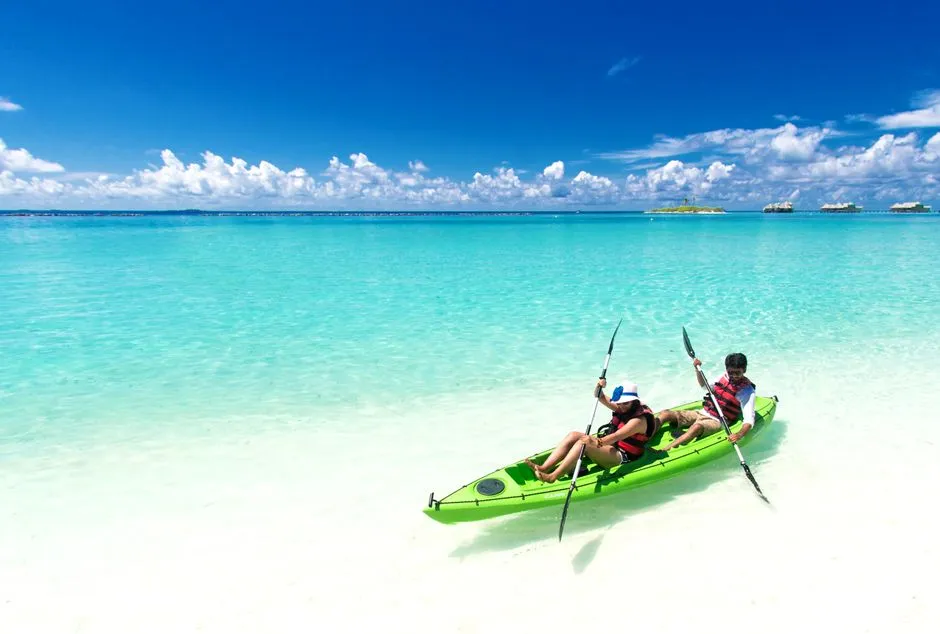
The kayak trip out to Diamond Rock is the stuff of dreams, and rightly so. Gliding over turquoise water with this giant looming larger as you advance is a rare sensation. But let’s be clear: this is not an outing for an absolute beginner going solo.
The round-trip distance from the beach is around 4 to 5 km, exposed to the wind and the Atlantic swell that wraps around the southern point. The channel between the coast and the rock funnels the currents, and the sea can build quickly by mid-morning when the trade wind picks up.
A few concrete benchmarks:
- Level required: good physical fitness, sea-paddling experience, or supervision by a qualified instructor.
- Duration: allow 2.5 to 3 hours for a guided outing, briefing included.
- Indicative price: €40 to €60 per person for a guided sea-kayak trip, sometimes in a transparent kayak.
- Best time slot: early morning, ideally before 9 a.m., when the sea is flattest and the wind still light.
The smart move: guidance over solo adventure
I always recommend going through a local club or instructor for your first approach. They know the weather windows, carry a VHF radio, and know when to turn back. A kayak capsized 1.5 km from shore, in a current that pushes out to sea, is no trivial matter. Supervision turns a gamble into a well-managed memory.
Diving at the foot of Diamond Rock
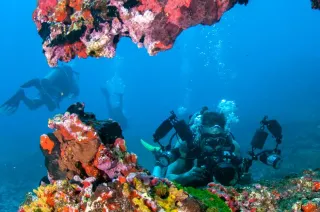
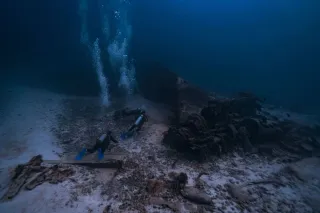
Beneath the surface, Diamond Rock reveals another face. Its drop-offs and underwater arches rank among the most renowned dive sites in southern Martinique.
The sites to know
- La Cathédrale: a major fault forming a chimney and arches, where light pours down in curtains. A deep dive (often 30 m and beyond), reserved for advanced divers.
- The north-face drop-offs: gorgonians, colourful sponges, lobsters in the crevices, schools of jacks and the occasional passing turtle.
- The base boulders: for more accessible dives when the current allows.
Visibility is often excellent in the dry season, but the site is exposed: the current can be strong and shapes the choice of route. This is typically a dive you book through a club in Le Diamant or Les Anses-d’Arlet, heading out by boat (15 to 20 minutes’ navigation). Allow €55 to €75 per tank dive depending on the club and the gear provided.
Snorkelling: a gentler alternative
Not everyone is a diver. Good news: several operators offer boat trips combining a tour around the rock and snorkelling in more sheltered areas, over towards Les Anses-d’Arlet or Anse Dufour, famed for their turtles. It’s the ideal option for families, halfway between the legend and a relaxed swim.