“We’re going to spend a fortune on restaurants, aren’t we?” It’s one of the worries I hear most often from the travelers I welcome. And it’s true that at a tourist restaurant, the West Indian bill stings: expect 28 to 40 € for a fish dish at a table in Pointe du Bout or Les Salines. But after years of living here, I can tell you for sure: where to eat cheap in Martinique isn’t a secret, it’s simply a matter of knowing where the locals stop. Lolos, covered markets, food trucks and beachside fried snacks: here’s how to enjoy authentic Creole cuisine for a fraction of the price, with real price ranges by type of spot.
Where to eat cheap in Martinique: the map of local addresses
On the island, the best deals are almost never found on the terraces with menus laminated in four languages. They hide in popular formats that rival guides skim over. Here are the four main families of addresses to know, from the cheapest to the most “comfortable.”
- The lolo: the Creole shack-restaurant, often right on the beach. Daily dish 10 to 16 €.
- The fritter stand / the food truck: accras, smoked chicken, bokit or sandwiches to go. 3 to 9 €.
- The covered market: you eat on the spot with the “ti-manmans” who do the cooking. 9 to 14 €.
- The bakery and the neighborhood snack bar: bread, savory pâté, fresh juice. 2 to 6 €.
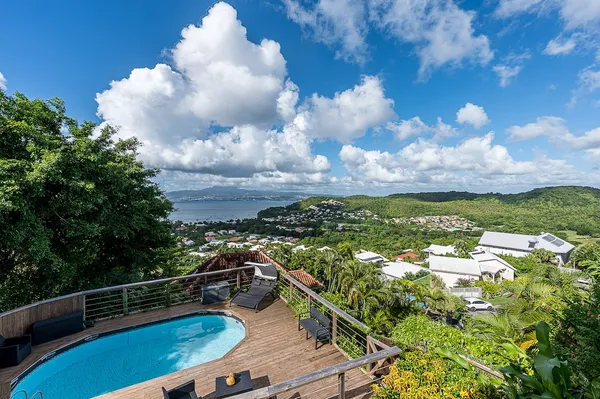
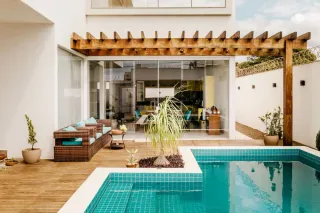
The winning move: book a rental with a fully equipped kitchen so you can alternate between eating out and home-cooked meals. That’s the whole spirit of our rentals in Martinique, designed for cooking your market purchases.
Lolos: the institution of the budget Creole meal
If there’s only one thing to remember, it’s the Martinique lolo. The word refers to these small family-run shack-restaurants, sometimes almost with their feet in the sand, where you eat a dish of the day prepared that very morning. No frills, plastic tables, a chalkboard, and a generous plate.
What a lolo plate looks like
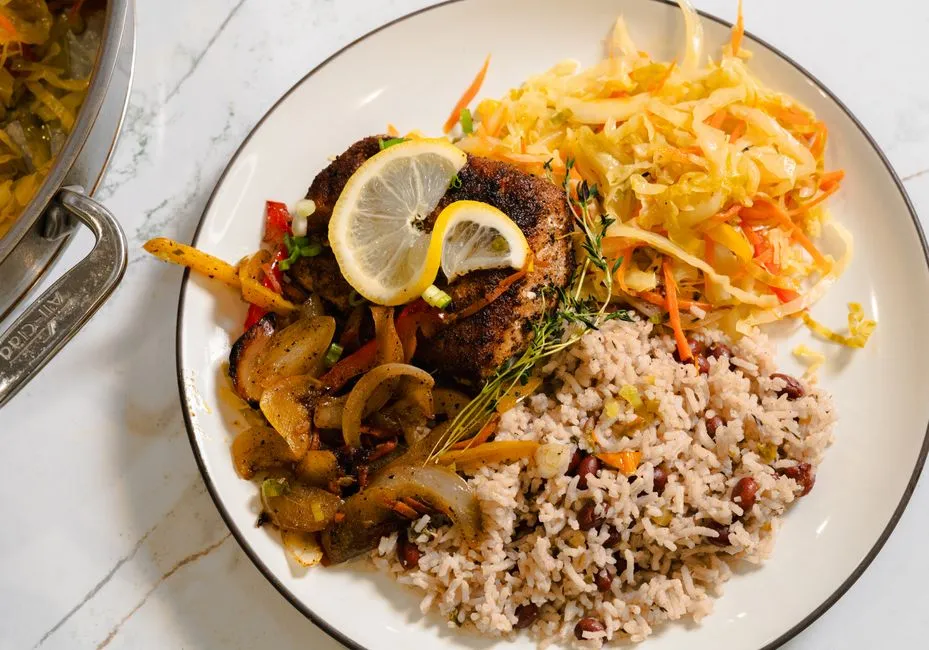
A typical lolo dish is a Creole protein served with starches and raw vegetables:
- Grilled fish (snapper, mahi-mahi) or fried fish: 12 to 16 €.
- Chicken colombo or smoked chicken: 10 to 14 €.
- Fish court-bouillon or chatrou fricassee (octopus): 13 to 17 €.
- Cod accras as a starter: 4 to 6 € per portion.
It usually comes with rice, lentils or red beans, christophine gratin and a small local juice. A homemade ti-punch runs around 3 to 4 €.
Where to find the best lolos
My sure bets are concentrated where Martinicans go on weekends: the Anse Dufour beach and Anse Noire in Les Anses-d’Arlet, the seafront of Sainte-Luce, the village of Le Diamant, and above all Sainte-Anne, where a row of lolos lines the Pointe Marin beach. In Le François and Le Robert, on the Atlantic side, you also eat very well for little money, far from the tourist prices of the Caribbean coast.
A little local tip: arrive early (before 1 p.m.). The best dishes go fast, and on Sundays many families have lunch at the lolo after the beach.
The Fort-de-France market: lunch and stocking up
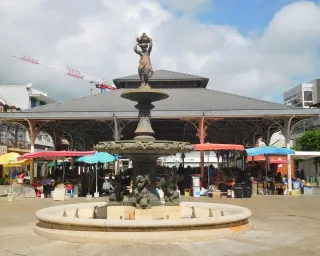
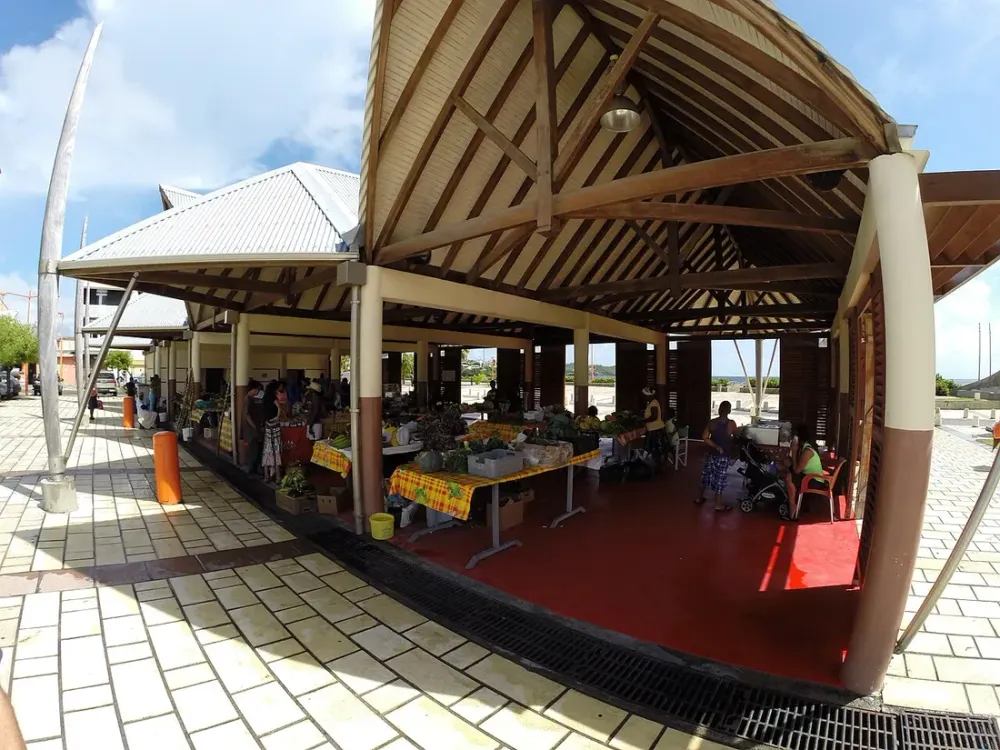
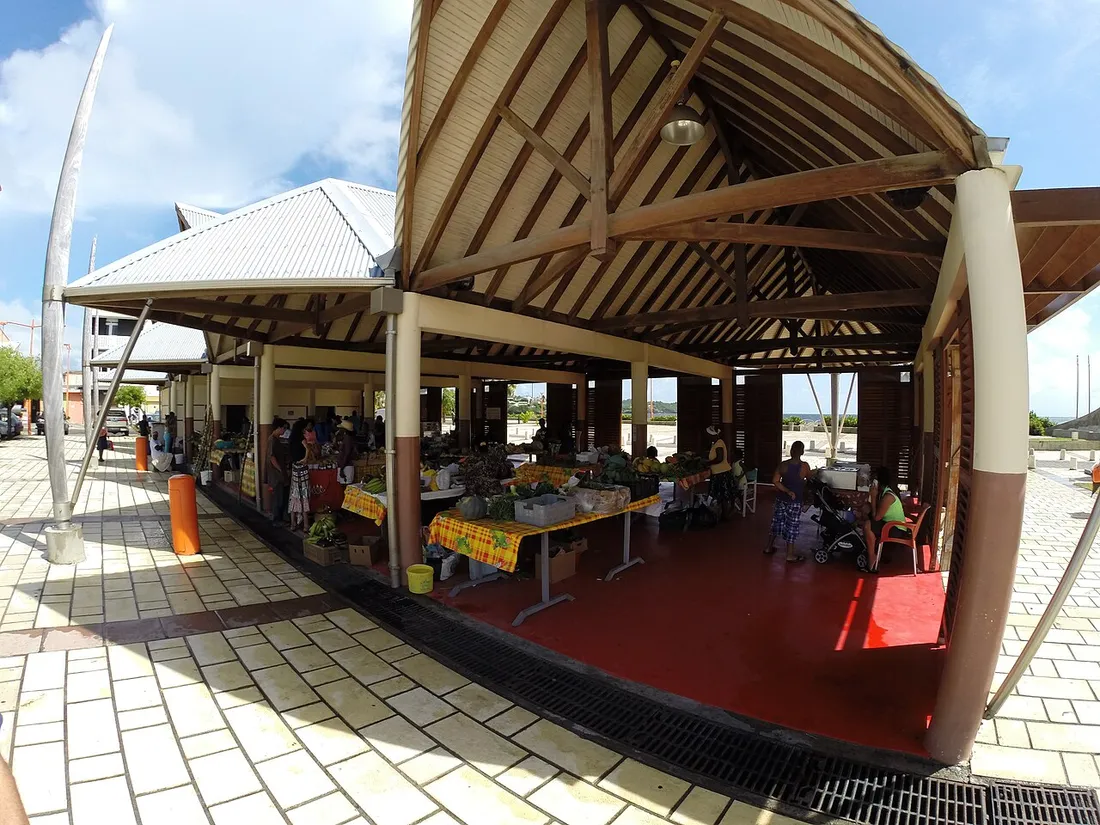
The Fort-de-France market is worth a whole morning on its own. The large covered market (the vegetable market and the spice market, rue Antoine Siger and around) is open every morning, ideally between 7 a.m. and 1 p.m., and Saturday is the busiest day.
Eating on the spot at the market
Upstairs and around the covered market, cooks serve homemade Creole dishes at very gentle prices: expect 9 to 14 € for a colombo, a fish or a féroce d’avocat (avocado and salt cod mash). It’s one of the most authentic and affordable lunches in the city, far more so than the seafront brasseries. Sleeping in Fort-de-France itself changes the game: from a cosy Fort-de-France apartment with a sweeping view and a real kitchen, you walk down to the market in the cool of the morning and come back with your arms full.
Shopping local to cook
The market is above all the key to slashing your food budget if you cook in your rental. A few price benchmarks I observe:
- Mangoes, passion fruit, golden apples: 2 to 4 € a batch, depending on the season.
- Plantains, yams, christophines: around 2 to 3 € per kilo.
- Spices and colombo powder: 2 to 5 € a packet, also ideal as a souvenir.
- Fish straight from the fisherman (on the docks of Le Robert, Le Vauclin, Les Trois-Îlets): clearly cheaper than at the fishmonger.
Everything that comes from Martinique’s land and sea remains affordable, unlike imported products. To understand why, take a look at our complete guide to Martinique and our articles on the local cost of living.