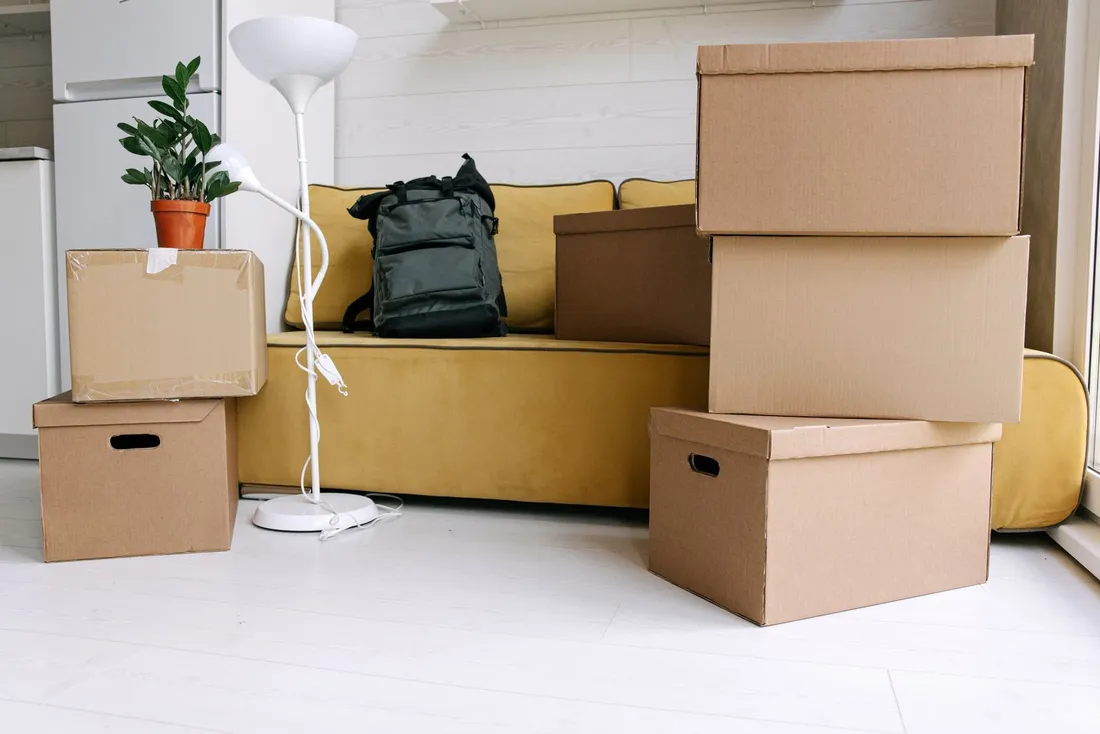

You’re preparing a job transfer, a move from mainland France or a whole new life in Martinique, Guadeloupe or French Guiana: the question that always comes up, even before the boxes are packed, is the budget. How much do you really need to set aside to get through the first month, between the flight, housing costs, the car and groceries? The reality overseas is that several expenses land at the same time, often before the first salary or the relocation allowance reaches your account. Anticipating this start-up cash flow spares you the stress of arriving in the red.
This article reviews, line by line, what to plan for during your first month on the ground. The amounts given are purely indicative, presented as ranges: prices vary widely depending on the town, the season, the state of the rental market and your personal situation. The goal is not to hand you a magic number, but to help you build your own budget without nasty surprises.
Housing: the heaviest expense of the first month
Finding somewhere to live takes the biggest share of the start-up budget. And be warned: it isn’t just “one month’s rent” you need to plan for, but often the equivalent of two to three months at once.
Rent, security deposit and agency fees
When you sign an unfurnished or furnished lease in Martinique, Guadeloupe or French Guiana, the landlord or agency generally asks for:
- The first month’s rent paid in advance.
- A security deposit (often called a “caution”): one month’s rent excluding charges for an unfurnished home, up to two months for a furnished one.
- Possible agency fees if you go through a real estate professional.
In practice, if you’re aiming for a one-bedroom flat in a sought-after town, the first cheque you write can amount to two or three times the monthly rent. This is the point most underestimated by newcomers.
What rents look like by area
Rent levels vary a great deal from one island and one town to the next. A few useful geographical benchmarks, with no guaranteed amounts:
- Martinique: Fort-de-France and its outskirts (Schoelcher, Le Lamentin) concentrate demand. The towns of the tourist south (Les Trois-Îlets, Sainte-Anne, Le Diamant) are often pricier, especially in season. The north and centre (Le Robert, Le François) can offer gentler rents.
- Guadeloupe: Pointe-à-Pitre, Les Abymes and Le Gosier form the heart of the market on Grande-Terre; Basse-Terre and its administrative region make up another hub. Saint-François and southern Grande-Terre are more touristy and therefore tighter.
- French Guiana: Cayenne, Rémire-Montjoly and Matoury form the most active urban area. Kourou, shaped by the space industry, has its own market. Rents there are sometimes high relative to the available supply, because demand linked to job transfers is strong.
As a rough guide, plan a monthly housing budget that, depending on the size and the town, can range from a few hundred euros for a studio to more than a thousand euros for a family home in a sought-after area. Check current local listings to refine your figures.
The trap of house-hunting from a distance
Many newcomers try to sign a lease from mainland France without having seen the property. That’s risky: fake-listing scams, misleading photos, a neighbourhood quite different from the one that was sold to you. The safest approach is still to arrive, stay somewhere temporarily for a few weeks, then view properties on the spot before committing to a long-term lease. That is exactly the role of temporary furnished accommodation: it gives you time to choose without rushing.

Temporary accommodation on arrival: a line item not to forget
Between stepping off the plane and getting the keys to your long-term rental, two to six weeks often go by. You need somewhere to stay during that period, and it deserves its own budget line.
Several options exist:
- Short-term furnished rentals (by the week or the month), which offer the best comfort/price compromise for a relocation.
- Hotels, handy for a few nights but quickly expensive over several weeks.
- Staying with friends or family, when that’s an option.
For a relocation, a temporary furnished rental is generally the most economical option as soon as you go beyond a week, and above all the most comfortable: a fitted kitchen so you’re not eating out at every meal, a washing machine, real living space to unpack your suitcases. It’s also an ideal logistical base for viewing homes and handling your paperwork. Discover our properties designed for exactly this kind of relocation stay.
Transport: getting there, then getting around
The plane ticket
The flight from mainland France is a significant expense and varies a lot by season. School holidays, the year-end festivities and the summer push fares up. Booking several months ahead and avoiding peak periods remains the best way to keep this item under control. Also factor in the extra cost of additional baggage: when you’re relocating, you carry more than you would on holiday.
A car: all but essential
In Martinique, Guadeloupe and French Guiana alike, public transport doesn’t cover every daily need. Having a vehicle is, in practice, close to essential for getting to work, doing the shopping or dropping off the children. For the first month, two scenarios:
- Renting a car while you look for something better: simple but costly over time.
- Buying a used vehicle: the local market is active, but used-car prices can be higher than in mainland France because of shipping costs and demand.
Also think about fuel and car insurance, to be taken out as soon as the vehicle is on the road. If you have your own car shipped in a container, the sea crossing takes several weeks: either way, you’ll need a mobility solution for the interim.
Groceries and daily life: the cost of living overseas
The cost of living is a real issue overseas. Part of the consumer goods supply is imported, which pushes up the grocery basket compared with mainland France, particularly for processed products and national brands.
A few habits to keep this item in check from the very first month:
- Favour local markets and produits pays (local fruit, vegetables and fish): often fresher and more affordable than the imported equivalent.
- Compare supermarket chains, whose prices vary.
- Anticipate the electricity/water contracts and connection, to be arranged as soon as you move into a long-term home.
- Plan for the phone/internet subscription, which sometimes comes with activation fees.
As a rough guide, expect a monthly food budget higher than what you were used to in mainland France for an equivalent lifestyle. Adapting your habits to local produce is the best way to bring the bill down.