You’ve just bought, or renovated, a studio in Le Gosier, a one-bedroom in Sainte-Anne or a villa with a lagoon view in Saint-François, and you want to create an Airbnb listing in Guadeloupe without making mistakes. Good news: the market is strong, with visitor numbers driven by the dry season from December to April and travelers booking earlier and earlier. Less good news: between the town-hall registration, the photos, the right price and multi-channel distribution, beginners often let weeks of revenue slip away, or pick up their first lukewarm reviews. As a resident of the archipelago who supports owners every day, I’m offering you here the step-by-step path, in the order you should follow it, to start a vacation rental in Guadeloupe on the right foot.
Before the listing: town-hall registration is mandatory
This is the step 9 out of 10 beginners overlook, and yet it’s the first one. Renting out a furnished property in a French overseas department (DROM) follows French law: before publishing a single photo, you must register your furnished tourist accommodation with the town hall of the commune where it’s located.
- The Cerfa 14004 form (furnished tourist accommodation declaration) is filed at the town hall or via the online service when the commune offers one.
- In communes that have introduced registration (notably Le Gosier, Sainte-Anne and Saint-François, all very much in demand), you receive a 13-character registration number. It’s mandatory and must appear on every listing, including Airbnb.
- If your property is not your main residence, some communes in high-demand areas may require an authorization to change of use: check with the urban-planning department first.
Without a number, your listing risks being delisted by the platform and a fine. The traveler, for their part, quickly spots a rental with unclear status. For a commune-by-commune breakdown, our complete guide to Guadeloupe maps out the local rules.
Field tip: start the town-hall process 4 to 6 weeks before your target go-live date. Processing times vary from one office to another, and high season is prepared as early as the previous summer.
Preparing the property: the equipment that makes the difference in the tropics
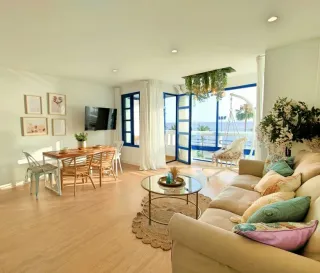
A high-performing listing rests first on a property genuinely ready to welcome guests. In a tropical climate, certain amenities are not a luxury but a baseline expectation:
- Air conditioning in the bedrooms (or at the very least high-performance ceiling fans): the top filtering criterion for travelers during the hot season.
- Mosquito nets or diffusers, especially near mangroves or a garden.
- Reliable Wi-Fi: indispensable, including for remote workers extending winter somewhere warm.
- Fully equipped kitchen: most rental stays are self-catered, with markets and local lolos to back them up.
- Small beach gear (parasol, cooler, dedicated towels): a detail that keeps coming up in 5-star reviews.
Budget an initial equipment outlay of €2,500 to €6,000 for a one-bedroom, depending on the starting condition. It’s an investment that pays off quickly if the listing is well calibrated.
Photos: the number-one asset of your future listing
On Airbnb, the cover photo decides in under two seconds whether the traveler clicks or moves on. It is, by far, the most profitable conversion lever when you want to create an Airbnb listing in Guadeloupe that stands out.
What really works
- Natural morning light (7-9 a.m.) or late afternoon: the tropical midday light flattens volumes and burns out the whites.
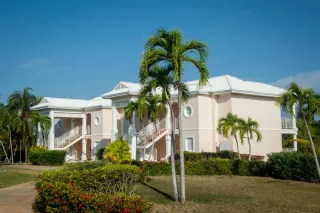
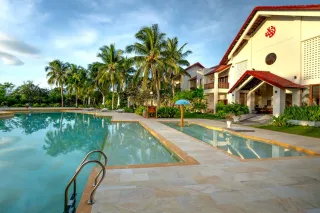
- Highlighting the local asset: terrace, lagoon view, Creole garden, pool. If you’re 10 minutes from La Caravelle in Sainte-Anne or Grande Anse in Deshaies, show it in the description, not just in a photo.
- 15 to 25 horizontal photos, each room at its best angle, plus an exterior view and the surroundings.
Beginner mistakes to avoid
- Vertical photos taken on a smartphone against the light.
- Unmade bed, half-closed shutter, visible clutter.
- No photo of the exterior or the neighborhood.
A professional shoot costs €120 to €250 in Guadeloupe and pays for itself with one or two extra nights. It’s the best cost-to-benefit ratio in the whole project.
Writing the listing and setting the right price
The title should be concrete and localized: “Air-conditioned 1-bedroom, 5 min from La Caravelle beach, Sainte-Anne” converts better than “Lovely apartment in the Caribbean.” In the description, be precise about real distances (Pôle Caraïbes airport, shops, beach), amenities and house rules.
On the pricing side, this is where beginners lose the most money. A few realistic benchmarks observed across the archipelago:
- Well-located studio / one-room: €55 to €90/night in low season, €80 to €140 in high season (December-April).
- One- / two-bedroom: €90 to €160 in low season, €140 to €250 in high season.
- 3-bedroom villa with pool (Saint-François, Deshaies): €200 to €400/night in high season.
Three pricing reflexes:
- Dynamic pricing: raise prices over the year-end holidays, February (Carnival), mainland school holidays and major events (Route du Rhum).
- Variable minimum stays: 5 to 7 nights in February, 2 to 3 nights in the shoulder season to capture weekends.
- Launch rate: -15 to -20% on your first 3 bookings to gather reviews quickly. Without reviews, a brand-new listing stays nearly invisible.