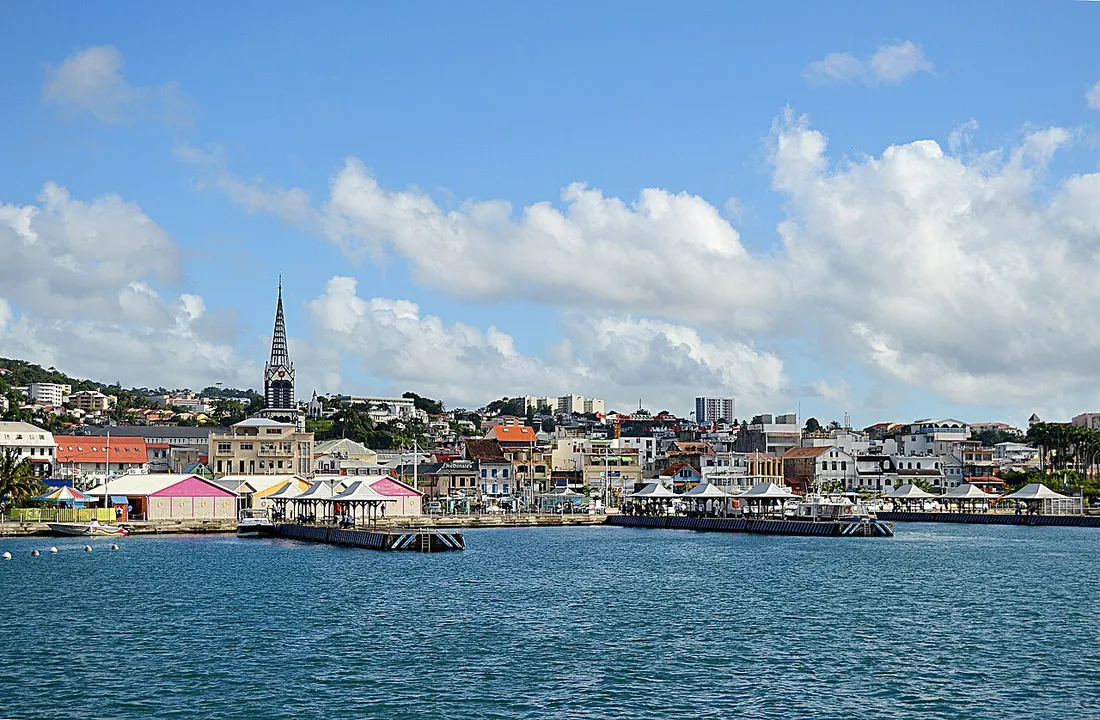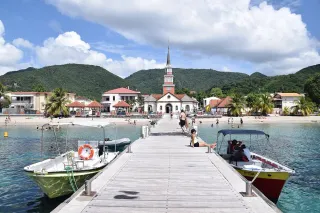
Every season, owners reach out to me with the same line: “My villa is ready, I want to rent it out next week.” And every time, after a visit to Sainte-Anne, Le Diamant or Les Trois-Îlets, we discover that three or four essentials are missing. Nothing dramatic, but enough to push the first booking back by a month. To rent out a furnished home in Martinique without unpleasant surprises, you need to follow a precise order: first the paperwork, then the insurance, then equipment suited to the tropical climate, and only at the very end the listing. Here’s the checklist I use in the field, condensed and ready to apply from today.
Step 1: the administrative steps to wrap up first
You don’t rent out a tourist furnished property “under the table” in France’s overseas regions. The steps for seasonal rentals in the overseas departments are fundamentally the same as in mainland France, with a few municipal specifics. Take care of them first, because some condition everything that follows.
Registering your furnished property with the town hall
The prior declaration to the town hall (Cerfa form no. 14004) is mandatory for any short-term rental to a transient clientele. In return, the town hall issues you a 13-character registration number, which platforms now require in order to publish your listing. Allow a few days to two weeks depending on the municipality.
Checking the change of use according to the municipality
In the most strained municipalities — Fort-de-France first and foremost — converting a residential dwelling into a tourist furnished property may require a change-of-use authorization. More rural or seaside municipalities (Le François, La Trinité, Sainte-Anne) are often more flexible, but the rules change quickly. A call to your town hall’s urban planning department settles the question in five minutes.
Property diagnostics in the overseas zone
A rented furnished property must present an up-to-date Technical Diagnostics File (DDT). In Martinique, check these in priority:
- the DPE (energy performance diagnostic), valid for 10 years;
- the risk statement (ERP): nearly the entire island is in a high seismic risk zone and exposed to cyclone risk, which must be stated in black and white;
- the electrical and gas diagnostics if the installation is more than 15 years old;
- depending on the age of the building, asbestos and lead.
Have these diagnostics carried out by a certified local professional: a complete file reassures travellers and protects you legally.
Classification: optional but very profitable
Having your tourist furnished property classified (from 1 to 5 stars, valid for 5 years) is not mandatory, but it raises the micro-BIC tax allowance from 30% to 50%. For a well-rented coastal property, the tax saving quickly exceeds the cost of classification (€150 to €350). Tax details and booking windows are in our complete Martinique guide.
Step 2: insurance, and above all cyclone coverage
This is the point that owners coming from mainland France underestimate the most. In Martinique, cyclone season runs from June to November, peaking in September.
Your standard home insurance is not enough for a rental activity. You need:
- a Non-Occupying Owner (PNO) insurance covering seasonal furnished rentals;
- a climatic events and natural disasters guarantee explicitly adapted to the local cyclone risk and seismic risk;
- ideally, coverage for damage caused by travellers and a specific civil liability.
Check the deductibles: they are often higher in the overseas regions than in mainland France. A “storm” deductible of €1,000 to €2,000 is nothing unusual here. Also read the exclusion clauses related to sargassum or humidity damage, and keep dated photos of your furnished property: in the event of a claim after a system passes through, they speed up compensation.
Step 3: equipment, designed for the tropical climate
A furnished property that’s a hit in Lyon may disappoint at Le Diamant if the equipment isn’t suited to the heat, humidity and salt air. Here is the mandatory and strongly recommended equipment for an Airbnb in Martinique, ranked by priority.
The anti-heat and anti-humidity foundation
- Air conditioning in the bedrooms (the no. 1 criterion in traveller reviews) and ceiling fans in the living areas.
- Mosquito nets in good condition on every opening: dengue/chikungunya prevention starts here.
- Household linen in light cotton, in a double set, that dries quickly.
- Dehumidifier or good air circulation to prevent mould in the closets.
The kitchen and creole comfort
- Equipped kitchen: hobs, oven or microwave, a sufficient fridge-freezer, tableware for maximum capacity.
- Kettle, coffee maker, and what’s needed to prepare a ti-punch (travellers love the local touch).
- Barbecue or plancha on the terrace: a booking argument in its own right in the tropics.
- Sun loungers, an outdoor table and a parasol to enjoy the dry season (the Carême, from December to April).
Safety and connectivity
- Smoke detector (DAAF) mandatory and functional.
- Fire extinguisher and a posted safety notice.
- Secure key box for late arrivals at Aimé Césaire airport (Le Lamentin), often in the evening due to the time difference (-5h in winter, -6h in summer vs Paris).
- Reliable Wi-Fi: essential, including for travellers working remotely.
The detail that changes everything: a welcome booklet
A binder or a digital page with the good addresses (lolos, Fort-de-France market, Les Salines beach in Sainte-Anne, distilleries on the Rum Route), the property’s instructions and an emergency number. This is what turns a decent stay into a 5-star review.