Landing a transfer or deciding to settle in French Guiana with your children is an exciting life project, but also a move that cannot be improvised. Between choosing the right town, enrolling the children in school, hunting for housing in a tight market and handling the logistics of arriving from mainland France, it is far better to move forward step by step. This guide brings together the concrete landmarks you need to prepare your family relocation to French Guiana, understand the neighbourhoods around Cayenne, plan ahead for schooling and, above all, secure those first few weeks thanks to temporary accommodation. All figures quoted here are indicative only: the Guianese market moves, prices vary by season and by town, and nothing replaces direct contact with people on the ground.
Understanding French Guiana before choosing your town
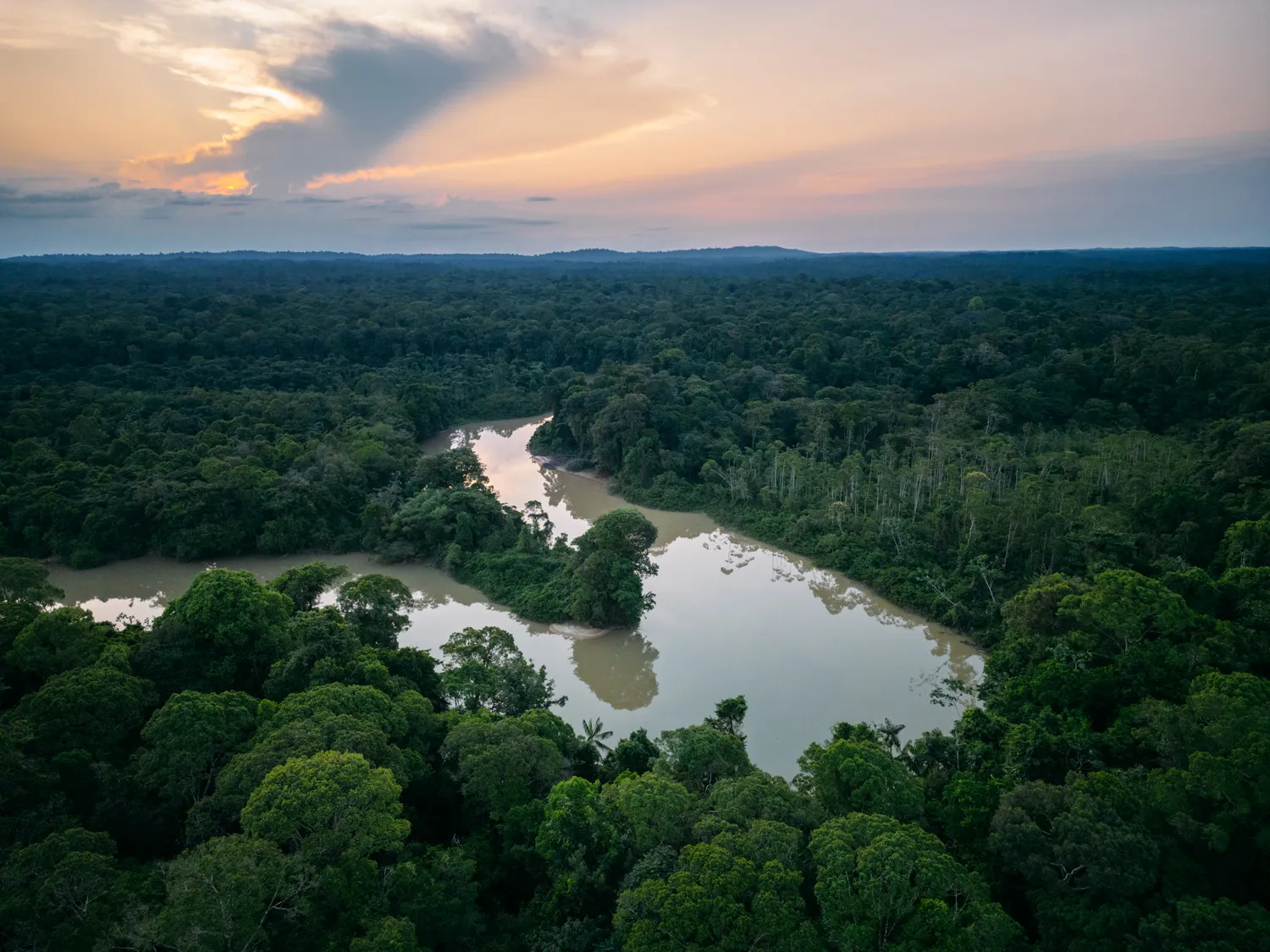
French Guiana is a French overseas department and region located on the north-eastern coast of South America, between Brazil and Suriname. It is the largest French department, but the population is concentrated mainly along the coastal strip, around three main hubs.
- The Île de Cayenne (Cayenne, Rémire-Montjoly, Matoury): the administrative, economic and educational heart of the territory, home to the prefecture, the hospitals, most secondary schools and the majority of service-sector jobs.
- Kourou: shaped by the activity of the Guiana Space Centre, with a population often linked to the aerospace industry and a town life organised around that hub.
- Western French Guiana (Saint-Laurent-du-Maroni and its surroundings): the second population basin, demographically very dynamic, on the border with Suriname.
For a family on assignment, the choice usually comes down to the Île de Cayenne or Kourou, depending on the workplace. The climate is equatorial: hot and humid all year round, with a rainy season (roughly from December to July, with a short dry spell known as the “petit été de mars”) and a dry season (August to November). This rhythm influences both your travel and the timing of your move.
Distances and the relationship to time
In French Guiana, distances are measured in travel time rather than kilometres. The main road axis is the RN1 (heading west) and the RN2 (heading east towards Saint-Georges). A family working in Cayenne but eyeing a home in Matoury or Rémire-Montjoly needs to factor in rush-hour traffic jams, particularly on the approaches to Cayenne. Living close to school and to work genuinely changes daily life.
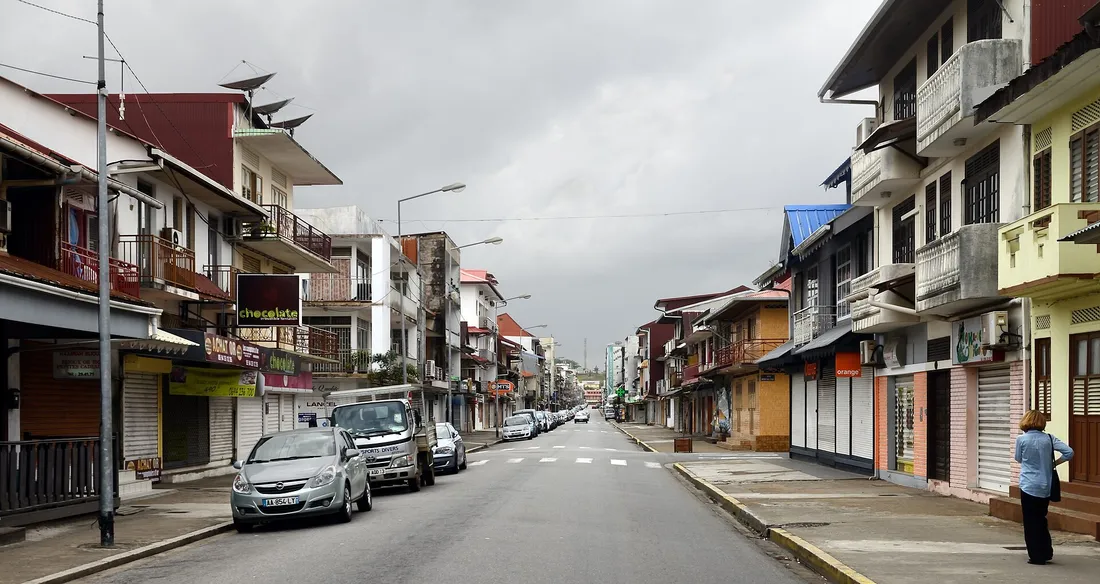
Choosing your neighbourhood around Cayenne
The choice of neighbourhood depends on your priorities: proximity to schools, peace and quiet, budget, access to the sea or to shops. Here are the main landmarks on the Île de Cayenne.
Cayenne
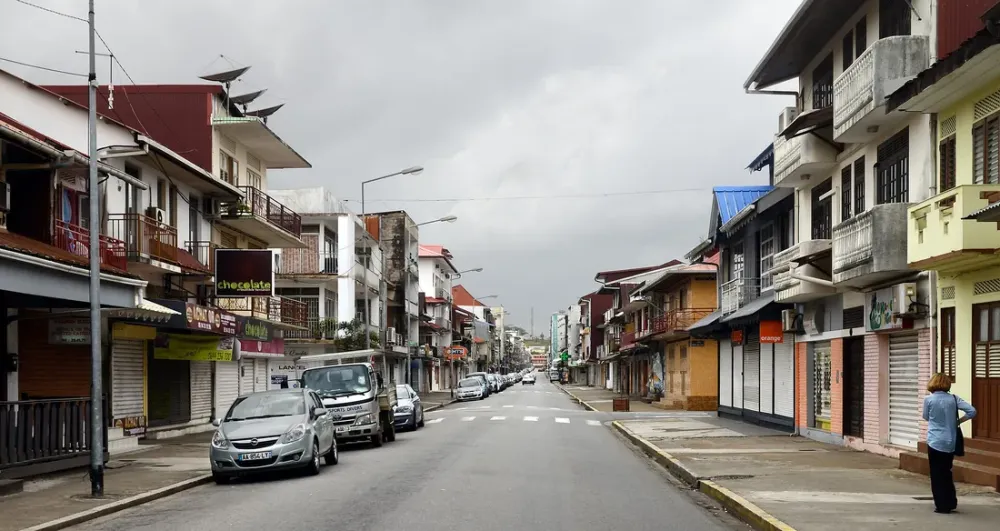
The central city concentrates the administration, the shops and part of the cultural scene. The neighbourhoods are contrasting: the historic centre with its Creole houses, the heights such as Montabo (residential, sought-after, close to the sea and to certain schools), or more working-class areas. Living in Cayenne itself means being close to services, but often at the price of difficult parking and older housing stock.
Rémire-Montjoly
Often the favourite among families, this residential town offers beaches (Montjoly, Rémire), quiet housing estates, schools and a reputation for quality of life. The flip side: strong demand pushes rents upwards and the search can take longer.
Matoury
Located near Félix-Éboué airport, Matoury is a large and developing town, with suburban areas, recent housing estates and prices sometimes more affordable than in Rémire-Montjoly. It is a good compromise for many families, provided you accept a commute depending on the area you choose.
A few criteria to weigh up according to your situation:
- Proximity to the school you are targeting and to your workplace (the single biggest gain in daily comfort).
- Safety and quietness of the estate, to be assessed on site or through local contacts.
- Type of housing: a house with a garden (common on the outskirts) or an apartment (more common in the centre).
- The presence of air conditioning, a gate, a water point and mosquito screens — details that genuinely matter in this climate.
Enrolling your children in school: what to plan ahead
French Guiana falls under the French national education system: the curricula are the same as in mainland France, from primary school to sixth form, and the baccalauréat is identical. The académie de Guyane manages all state schools.
The main enrolment steps
For primary level (nursery and elementary), enrolment generally goes through the town hall of your place of residence, then through the catchment school. Proof of address is therefore often essential — hence the value of having a stable address, even a temporary one, from the moment you arrive. For secondary school and sixth form, catchment areas and procedures go through the académie’s services and the school concerned.
Points to watch for a family arriving from mainland France:
- Plan ahead for the transfer of the school file (reports, leaving certificate from the previous school).
- The calendar gap: the school year starts at the same time as in mainland France, but organise your move so as not to miss the spring/summer enrolment windows.
- Demand is strong in certain well-regarded schools: enquire early, as the catchment map can depend heavily on the neighbourhood you choose.
- State-contracted private schools do exist, particularly on the Île de Cayenne, with their own admission procedures.
The schooling checklist
- Obtain the leaving certificate from the previous primary or secondary school
- Gather the school reports and the school record book
- Obtain proof of address in French Guiana (lease, accommodation certificate)
- Contact the town hall of your chosen town for primary level
- Contact the académie / the school for secondary level
- Check the required vaccinations and that the health record is up to date
- Plan for school meals and school transport
Housing: a tight market that deserves serious preparation
Finding a home in French Guiana, especially on the Île de Cayenne, requires method. Rental demand is strong, quality properties go quickly, and many applications are handled remotely when you are preparing a transfer from mainland France. The result: it is often unrealistic to expect to sign a long-term lease before you have even set foot in the territory.
Long-term rentals: the local realities
As an indication, rents vary considerably depending on the town, the condition of the property and the presence of amenities (air conditioning, garage, secure garden). Rémire-Montjoly is generally at the top of the range, Matoury slightly more affordable, and Cayenne highly variable depending on the neighbourhood. Landlords usually ask for the standard supporting documents (income, employment contract, guarantor), and a complete, responsive application makes all the difference in a market where several candidates compete for the same property.
A few useful habits:
- Put together a complete, digitised rental application before you leave.
- Be wary of listings that look too good and of deposit requests before any viewing: remote rental scams do exist.
- Arrange, if possible, an on-site viewing or a viewing delegated to someone you trust.
- Keep the extra costs in mind (security deposit, home insurance, connecting water and electricity).
Why temporary accommodation changes everything
This is the key to a successful move: arriving with temporary accommodation already booked. It gives you a base from which to:
- have an address and proof of residence useful for your paperwork (schooling, bank, administrations);
- view long-term rentals without the pressure of having to sign in a hurry;
- take the time to discover the neighbourhoods in real conditions before committing;
- absorb the unexpected (delayed removals, rental application pending, school year to prepare).
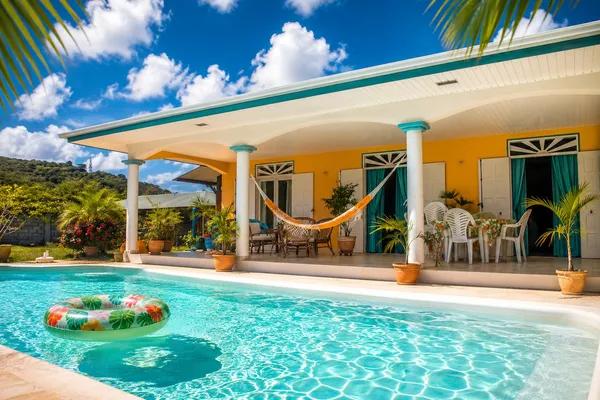
A temporary stay of a few weeks to a few months, in furnished and fully equipped accommodation, avoids a lot of nasty surprises. That is exactly the kind of solution we offer through our properties: furnished accommodation in French Guiana, ready to live in, so you can set down your bags with peace of mind while you settle in. Our team knows the ground and can point you in the right direction — feel free to contact us to plan your arrival.