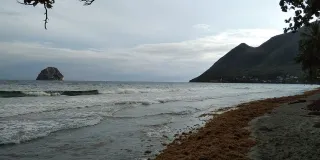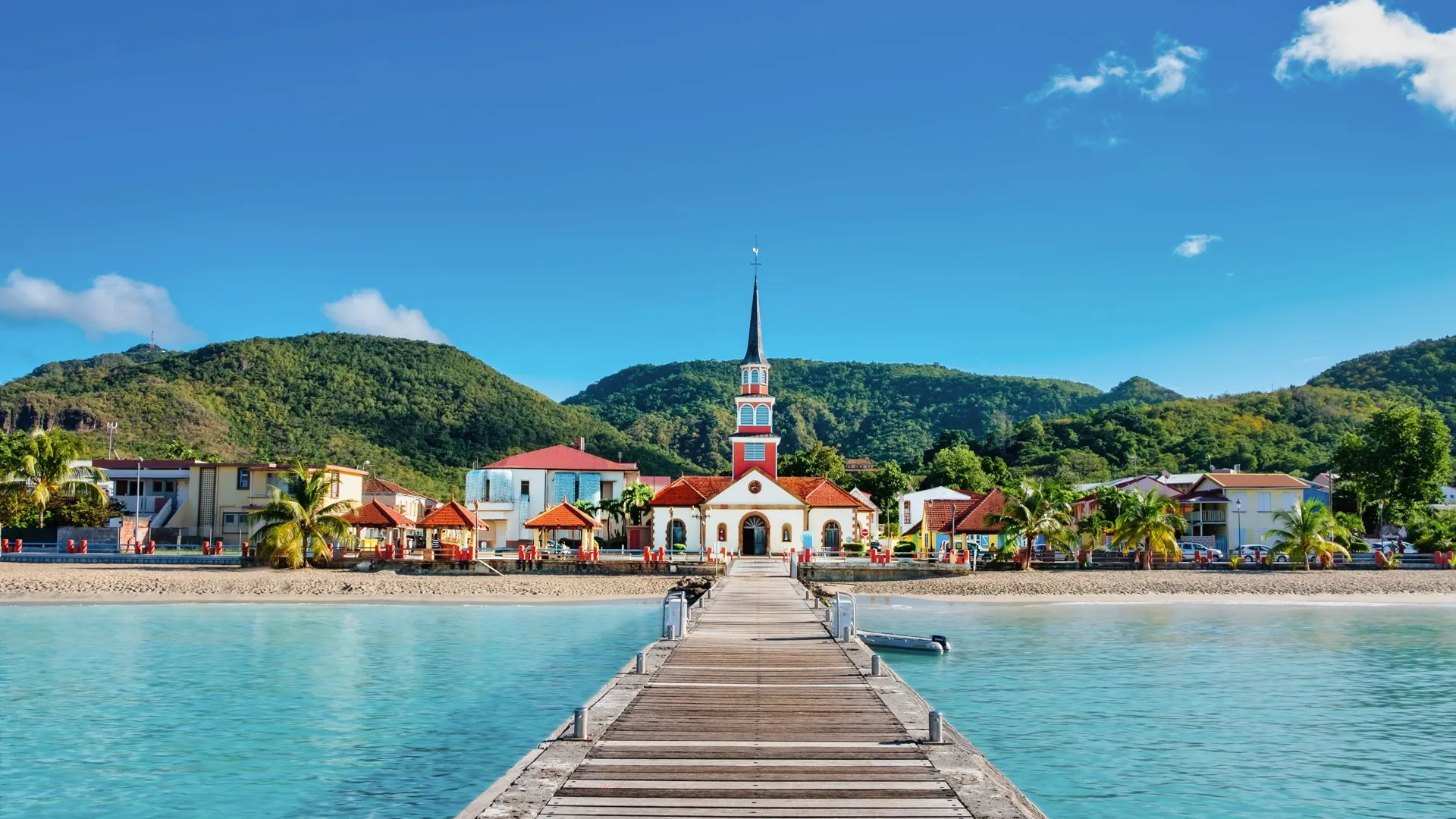
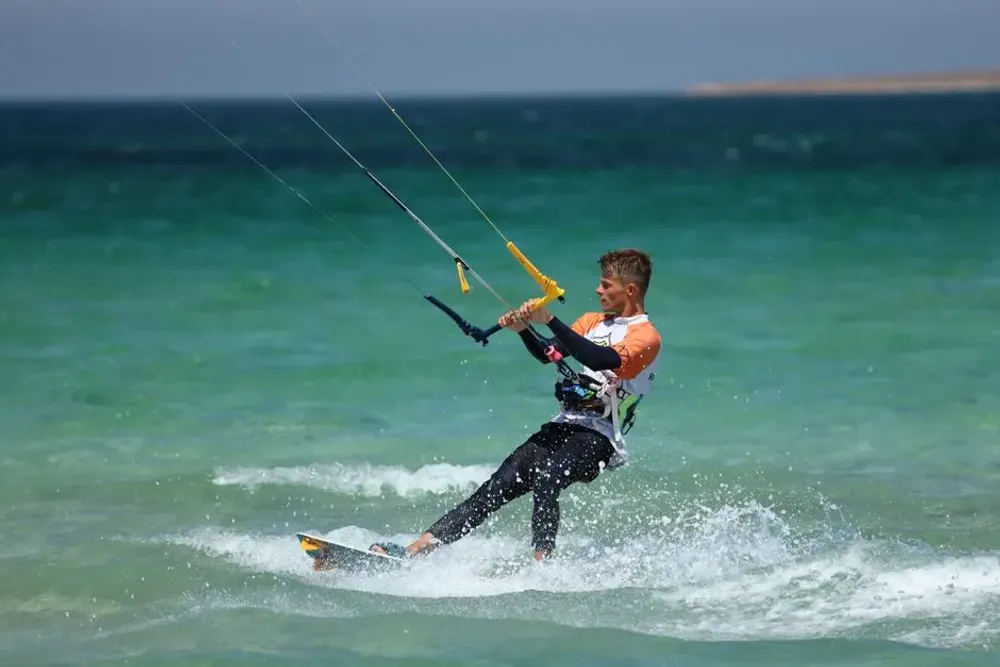
When the trade winds set in and the Caribbean coast dozes at anchor, it’s the other side of the island that comes alive. Martinique’s Atlantic shore, swept by a steady wind and shielded by a string of islets and coral barriers, is one of the most underrated riding playgrounds in the French Antilles. Flat lagoons, water at 27-28 °C all year round, and room to roam: for anyone into kitesurfing in Martinique or windsurfing, the South Atlantic is a quiet little paradise.
After several seasons rigging up my kite on these waters, here’s an honest tour of the best spots, the winds to expect month by month, and the schools where you can learn safely, from Vauclin to Cap Chevalier by way of the islets of Le Robert.
Why Martinique’s Atlantic coast is made for riding
Martinique is swept by the trade winds, those easterlies that blow almost continuously across the Atlantic shore. It’s the ideal orientation: the wind comes off the sea (side to side-onshore depending on the spot), which makes the return to the beach safe and keeps a rare consistency. Three ingredients make for a quality riding spot in Martinique on the east side:
- The wind: 12 to 22 knots on average during the dry season (the Carême), with peaks in January and February.
- The flat lagoons: behind the coral barriers and islets, the water stays smooth even when it’s blowing hard. Perfect for both learning and freestyle.
- The warm water: 27 to 28 °C all year round. No wetsuit needed, just a UV-protection rash guard.
A useful reminder: Martinique is a French overseas department (DROM). Your certifications (IKO for kite, FFVoile for windsurf) are recognized, the euro is the currency, the dialing code is +596, and the time difference is -5 h in winter, -6 h in summer versus Paris. A car is strongly recommended: the spots are scattered and poorly served by public transport.
Local tip: the trade winds often pick up mid-morning and ease off in late afternoon. The best sessions happen between 10 a.m. and 4 p.m.
Le Vauclin: the star kitesurf spot in Martinique
If only one name is to be remembered, it’s this one. Le Vauclin, about 50 minutes from Fort-de-France (45 km) and 40 minutes from Aimé Césaire airport in Le Lamentin, is the mecca of windsurfing and kitesurfing on the island.
Pointe Faula: the perfect lagoon
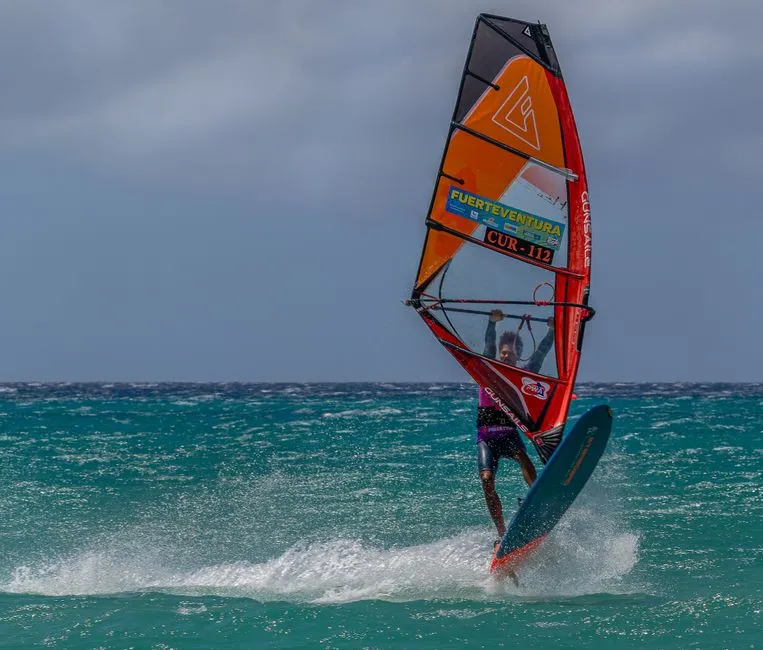
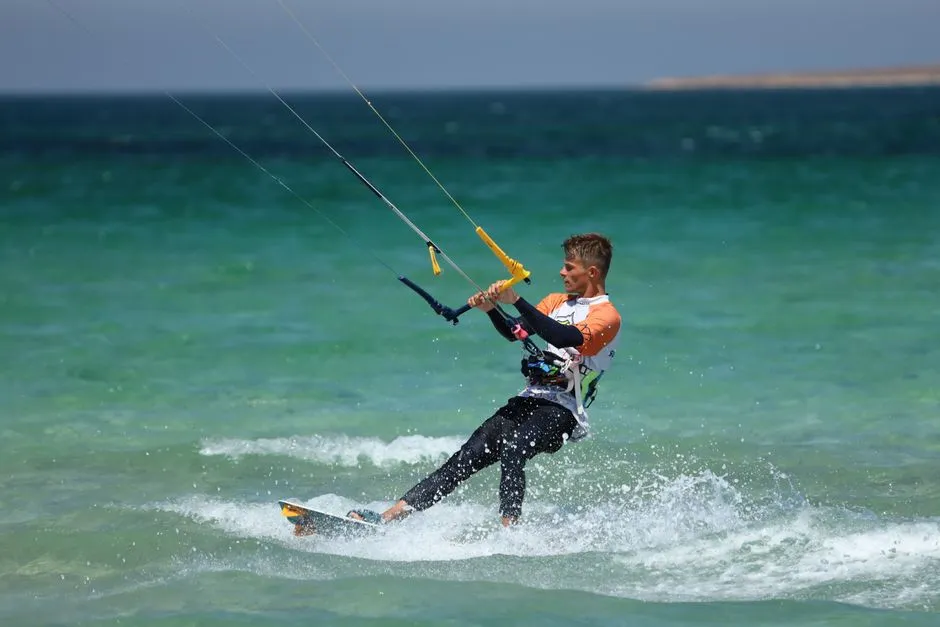
The legendary spot is Pointe Faula: a vast turquoise lagoon, shallow (you can often touch the bottom far from shore), protected by the coral barrier, with a steady side-shore wind. Flat water, sandy bottom, wide-open space: the ideal place to start kiting or windsurfing as well as to progress.
- Level: from complete beginner to advanced.
- Prevailing wind: side to side-onshore, 15 to 20 knots in season.
- Parking: free, but arrive early on weekends.
- On site: food trucks, snacks and several schools.
On the windsurf side, windsurfing at Le Vauclin is a tradition that predates kiting: Pointe Faula remains one of the best stretches of water in the Lesser Antilles for slalom and freestyle.
Cap Chevalier: Sainte-Anne’s hidden kite spot
Further south, in the territory of Sainte-Anne, Cap Chevalier is the other great name in Martinique riding. Cap Chevalier kite is practiced on a superb lagoon, closed off by Îlet Chevalier and a coral barrier, in a wilder setting than Le Vauclin. The crystal-clear, shallow water makes it one of the island’s most beautiful spots; on windless days, you can even walk out to the islet at low tide for some snorkeling.
- Level: intermediate to advanced depending on the zone.
- Prevailing wind: side-onshore, sustained at the height of the Carême.
- Access: via the Cap Chevalier road from Sainte-Anne, about 1 h 10 from Fort-de-France.
- Caution: fewer facilities than at Le Vauclin, so bring your own gear and ride with company if you’re new to the spot.
Cap Chevalier is also the starting point of the Trace des Caps, the coastal trail of the Grand Sud: a chance to combine riding in the morning and a coastal hike in the afternoon.
Le Robert and its islets: flat water as far as the eye can see
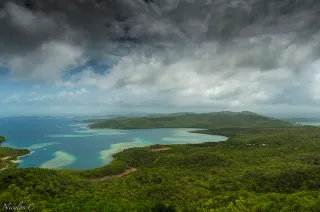
Further north along the Atlantic coast, the bay of Le Robert and its string of islets (including Îlet Chancel and its iguanas) offer vast sheltered stretches of water. More low-key terrain, prized by self-reliant riders looking for space and flat water away from the crowds. The wind here is a bit more fickle than at Le Vauclin, as the coast is cut into bays, but on well-oriented days you ride on glassy water between the islets. Reserved for riders who are already self-sufficient and well informed about the navigation zones.
Also worth knowing: Le François, neighbor to Le Robert and famous for its fonds blancs, and Pointe Marin (Sainte-Anne / Le Marin) for beginner windsurfing in moderate wind, in a sheltered setting on the south side.