Hostel Toucan — Apartments & Hotels
Menu

Settling in

Living in Le François / Le Robert (Atlantic coast)

Published on July 30, 2026 · by Ismael Samuel

Living in Le François / Le Robert (Atlantic coast)

Are you preparing a job transfer, a professional project or a new life in Martinique, and does the Atlantic coast appeal to you? Le François and Le Robert, two neighbouring towns in the centre-east of the island, attract more and more newcomers looking for an authentic way of life, between turquoise sea, the famous white sandbanks and villages still spared by mass tourism. Far from the bustle of Fort-de-France and the tourist beaches of the South, this windward coast offers a calmer art of living, turned towards the sea and nature. This practical guide brings together the essentials for a smooth relocation: understanding the neighbourhoods, finding housing, estimating your budget and organising your daily life. The figures quoted are indicative and vary with the season, the property and the moment of your search.

Why choose the centre-east Atlantic coast?

Le François and Le Robert form a natural pair on Martinique’s Atlantic side. People here speak of the leeward coast on the Caribbean side and the windward coast on the Atlantic side: Le François and Le Robert belong to the latter, breezier side, where the trade winds cool the air. That is a considerable advantage for coping with tropical heat day after day.

Several features set this area apart:

  • Bays sheltered by a coral reef, creating shallow lagoons and iconic islets (the fonds blancs, or white sandbanks).
  • A strong maritime identity: yoles rondes, fishing, boating and water sports set the rhythm of local life.
  • A genuinely Martinican fabric of daily life, far less focused on tourism than Sainte-Anne or Les Trois-Îlets.
  • A central position on the island: Fort-de-France, the airport or the South are all within reasonable reach.

Le François, the town of the fonds blancs

Le François is famous worldwide for its fonds blancs: those submerged sandbanks in the middle of the bay, where the water comes up to your waist, reached by boat and firmly part of the Martinican imagination. The town has several islets (Oscar, Thierry, Métrente, Long, Frégate and more) and a deeply indented bay. The lively town centre offers shops, a market, schools, a marina and many residential neighbourhoods spread across the hills.

Le Robert, the bay of ten islets

Its neighbour to the north, Le Robert, is built around a vast bay dotted with about ten islets. The town combines a lively centre, business zones and residential neighbourhoods perched on the heights, often with a view over the bay. Le Robert is also known for its water-sports spots and for the fishing-village atmosphere that endures despite population growth.
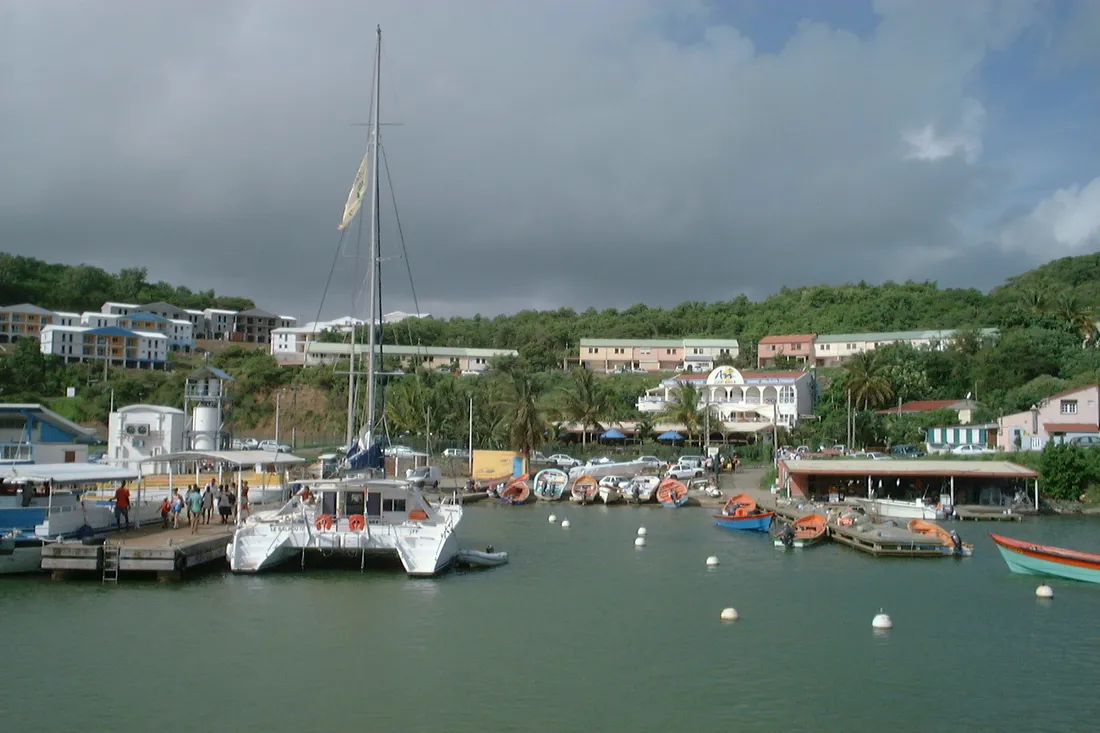
Le port et la baie du François en Martinique, avec un catamaran à quai et les maisons résidentielles étagées sur les mornes verdoyants de la côte atlantique
Le port du François et ses quartiers résidentiels sur les mornes, sur la côte atlantique de la Martinique — © Wikimedia Commons

Understanding the neighbourhoods before choosing

In both towns, housing is very scattered: people rarely live in the centre, but rather in a hillside neighbourhood, sometimes several minutes’ drive from the town centre. Knowing the main clusters will help you target your search.

In Le François

  • The town centre and its surroundings: close to shops, the harbour and services, ideal if you do not want to depend entirely on a car.
  • Hillside neighbourhoods (Dostaly, Bois Soldat, Pérou, Simon, Chopotte and others): detached houses, quiet, often with bay views, but far from the shops.
  • The Cap Est area: known as more residential and sought-after, close to the coastline and the lagoons.

In Le Robert

  • The town centre: the heart of local life, shops, schools and quick access to the RN1.
  • Pointe Savane, Vert-Pré, Four à Chaux, Mansarde: residential neighbourhoods on the heights, family atmosphere.
  • Areas close to the bay: sought after for the view and proximity to water activities.

One piece of on-the-ground advice: before signing a long-term lease, test the home-to-work commute at rush hour. The RN1, which links Le Robert, Le François, Le Lamentin and Fort-de-France, can suffer major slowdowns in the morning and at the end of the day.

Finding housing: renting, buying and market realities

The Atlantic coast property market remains more affordable than the tourist South, while offering a highly sought-after living environment. Here are indicative benchmarks, to be refined according to the condition of the property, the view and the exact location.

Rent before you buy

For an arrival from mainland France, renting first is almost always the best decision. It lets you:

  • Discover the neighbourhoods in real conditions (noise, commutes, neighbours, exposure to the wind).
  • Avoid a rushed purchase you might regret.
  • Take the time to understand the local market, which often runs on word of mouth.

As a rough guide and depending on the season, rents for a furnished or unfurnished home vary noticeably with floor area, sea view and proximity to the town centre. Properties with a bay view or sea access naturally sit at the top of the range. Expect additional charges for water, electricity (air conditioning) and sometimes the upkeep of outdoor space.

Buying: points to watch in the overseas territories

If your relocation plan is confirmed, buying involves local specifics worth knowing:

  • Land and joint ownership: many plots are held in family indivision, which can complicate or lengthen a transaction. Work with a local notaire.
  • Natural hazards: always check the natural risk statement (seismic, cyclonic, ground movement, coastal erosion). Martinique lies in a seismic zone.
  • Cyclone-resistant standards: check that the construction complies (roof, openings, anchoring).
  • Exposure: on the windward coast, sea air and spray accelerate corrosion; choose suitable materials.

Allow plenty of time: transaction times in the overseas territories are often longer than in mainland France.

Budget and cost of living

The cost of living in Martinique is structurally higher than in mainland France, especially for imported goods. Here are the main items to plan for, given as indicative benchmarks.

  • Food: imported products (mainland brands) cost noticeably more; favouring markets, local produce and local market gardening helps keep the bill down.
  • Energy: air conditioning can be a significant expense; a well-ventilated house (through-draught, exposed to the trade winds) sharply reduces that need, a real advantage of the windward coast.
  • Fuel and car: a car is all but essential in these spread-out towns; factor in buying or renting a vehicle plus a fuel budget.
  • Housing: more affordable than in the South, but variable depending on sea view and proximity to services.

Certain territorial continuity schemes or mobility grants may exist depending on your situation (job transfer, return, training); check with the relevant bodies before departure, as conditions change.

Jeune femme souriante portant un carton de déménagement dans un intérieur clair, symbole d'une nouvelle installation ou d'une mutation
Préparer son installation au François ou au Robert : emménagement et vie pratique pour les nouveaux arrivants — © Kaboompics.com (Pexels, Licence Pexels)

Practical daily life

Getting around

The car dominates. The RN1 is the backbone route towards Le Lamentin (a major commercial and economic hub), Fort-de-France and Martinique Aimé Césaire airport. Public transport exists but remains less flexible for daily use from the hillside neighbourhoods. Plan for traffic jams on the centre-east route at peak times.

Schools, healthcare and services

Le François and Le Robert have nursery and primary schools, secondary schools, local healthcare professionals and pharmacies. For specialist and hospital care, the Fort-de-France and Le Lamentin hub remains the reference. Remember to handle school enrolment well before the start of term if you arrive mid-year.

Employment and business

The main employment area is concentrated around Fort-de-France and Le Lamentin. From Le François or Le Robert, many residents commute. Remote work, the public sector, healthcare, retail, the sea and tourism are locally promising sectors. If you are starting a business, community networks and local connections play a major role.

Leisure and lifestyle

  • Boat trips out to the fonds blancs and the islets.
  • Kayaking, paddleboarding, kitesurfing and traditional sailing (yoles rondes).
  • Markets, creole snack bars, distilleries and rum producers in the region.
  • Hiking and exploring the surrounding Martinican countryside.

It is this balance between nature, sea and village life that gives the Atlantic coast its lasting charm.

Getting your arrival right: the transition period

The classic mistake made by newcomers from mainland France is trying to sort everything out from a distance. Yet in these towns, much of it plays out on site, through meeting people and over time. The best strategy is to plan temporary accommodation on arrival, while you find the right long-term home, open your accounts, register your vehicle and find your bearings.

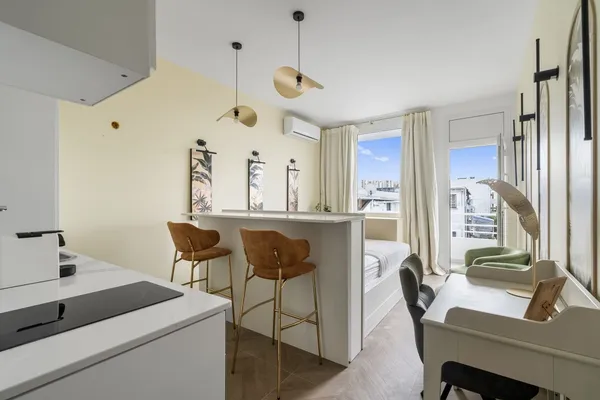
This transition period, often a few weeks to a few months, spares you from signing a lease in a hurry and lets you explore the neighbourhoods in real conditions. A furnished, fully equipped, move-in-ready home lets you put down your bags stress-free. That is exactly the kind of solution we offer through our rentals, designed for newcomers and medium-term stays.

Relocation checklist

  • Book furnished temporary accommodation for the first few weeks
  • Open or transfer a local bank account
  • Rent or buy a suitable vehicle (essential)
  • Visit several neighbourhoods in Le François and Le Robert at rush hour
  • Check the natural risk statement before any long-term rental or purchase
  • Plan school enrolment ahead of time
  • Identify your employment area and test the home-to-work commute
  • Put together a solid rental application (guarantees, supporting documents)
  • Budget more for setting up than the mainland average

Entrusting your property: investing without being there

Many newcomers end up buying a home while keeping a property to rent out, or invest even before settling permanently. Managing a holiday or long-term rental remotely, or alongside a new professional life, can quickly become time-consuming: welcoming guests, cleaning, maintenance, handling the unexpected, local regulations.

That is where a property management service makes full sense. We support owners in Martinique with the complete management of their property, turning an investment into genuinely passive income, with no nasty surprises. Return levels depend on many factors (location, season, quality of the property, occupancy rate) and cannot be guaranteed; we favour a realistic and transparent approach. To find out more, discover our concierge service.

Frequently asked questions

Is it better to settle in Le François or Le Robert?

The two towns are very much alike: same Atlantic side, same islets, same maritime way of life. Le François is better known for its fonds blancs and its extensive residential offer; Le Robert has a large bay and quick access to the RN1. The best choice depends above all on your precise neighbourhood, your commute and the kind of property you find. Visit both before deciding.

Can you live without a car in Le François or Le Robert?

It is very difficult day to day. Housing is scattered across the hills and shops are concentrated in the town centres. Unless you live right in the centre, a car is practically essential for work, shopping and school.

Is the windward coast climate pleasant?

Yes, and it is even an advantage. The trade winds sweeping the Atlantic coast cool the air and make the heat more bearable than elsewhere. In return, the sea is rougher than in the shelter of the coral reef, and the sea air is more corrosive for buildings and vehicles.

How long should you allow to find a long-term home?

It varies a great deal with the season and the type of property. As a rough guide, allow a few weeks to a few months, which is precisely why temporary accommodation on arrival is so useful. Word of mouth and being there in person often speed up the search.

Is this a good area for a rental investment?

The Atlantic coast attracts visitors seeking authenticity and nature, which can be promising. Performance nevertheless depends on location, the quality of the property and the season, and no return can be guaranteed. Local support and professional management often make the difference.

Ready to put down your bags on the Atlantic coast?

Settling in Le François or Le Robert is a fine project, provided you give yourself time to choose well. The key to a successful arrival comes down to one word: transition. Book furnished, move-in-ready temporary accommodation right now through our rentals, while you find the neighbourhood and the home that suit you. A question about your relocation, your housing or managing a property? Feel free to contact us: we know the ground and will be delighted to help. And to take your Martinique project further, browse the blog.

🧭 Which stay suits you?

3 questions, 20 seconds.

Also read