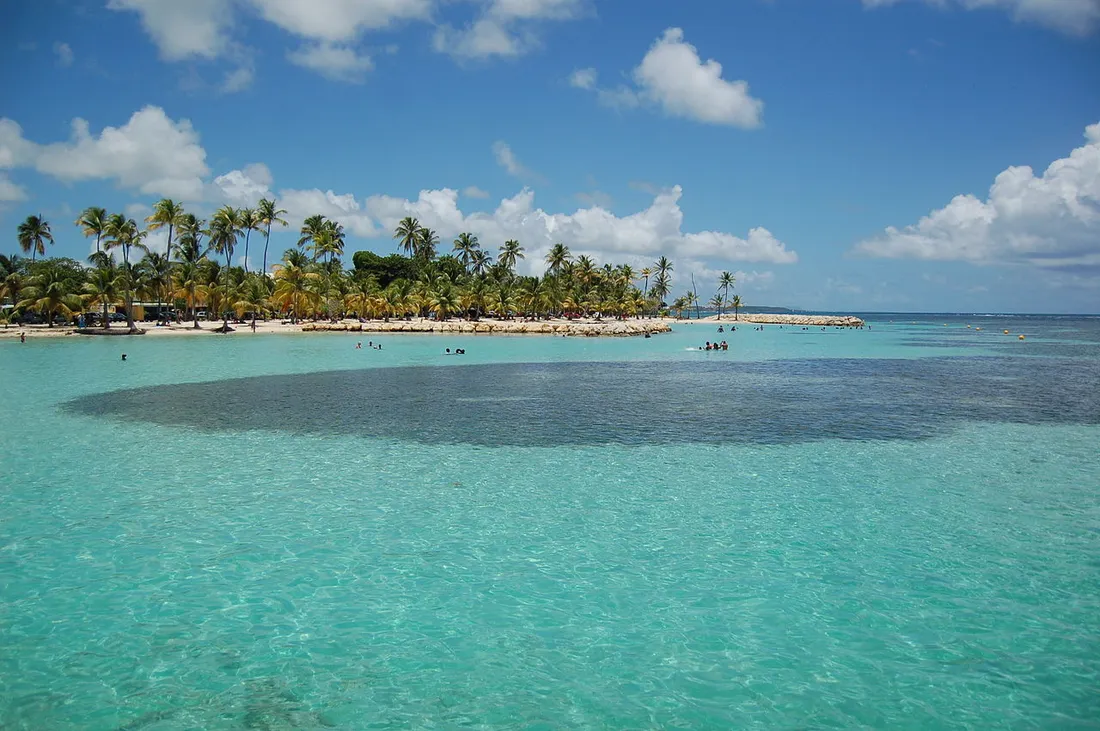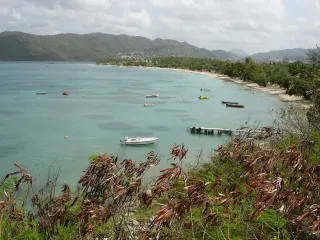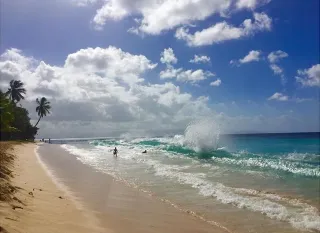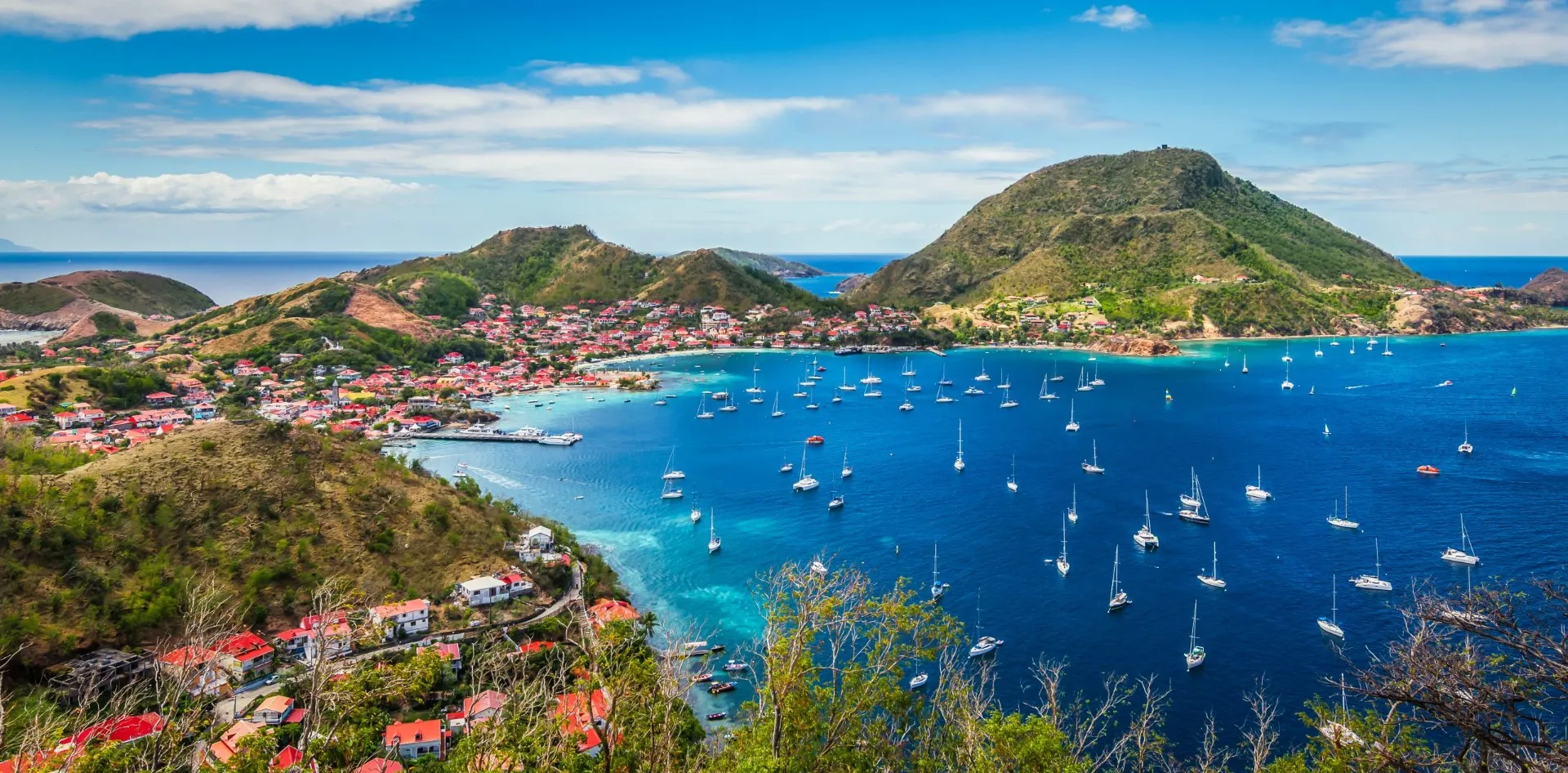
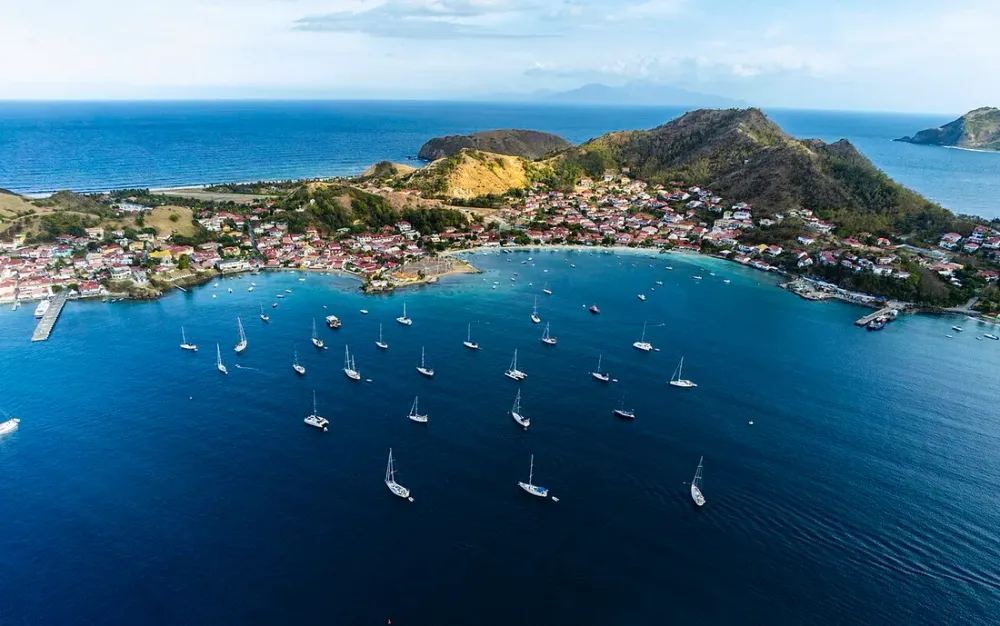
Nicknamed Gwadloup in Creole, Guadeloupe traces a shape on the map like a butterfly resting on the Caribbean Sea. Its two wings, separated by a narrow channel called the Rivière Salée, offer two radically different moods: on one side the turquoise lagoons and white-sand beaches of Grande-Terre, on the other the dense rainforest and the volcano of Basse-Terre. Add a string of neighbouring islands, a vibrant Creole culture and a generous cuisine, and you get one of the most complete destinations in the French Antilles. This guide gives you every key you need to plan a successful stay, whether you’re coming for a week or for a month.
Grande-Terre or Basse-Terre: understanding the butterfly archipelago
Understanding the geography of the archipelago will help you structure your trip and choose your home base.
- Grande-Terre (the eastern wing) is flatter, drier and more built up. This is where the great postcard beaches are concentrated, along with seaside resorts such as Le Gosier and Sainte-Anne, as well as Pointe-à-Pitre, the economic heart of the island.
- Basse-Terre (the western wing) is mountainous, volcanic and blanketed in lush forest protected by the national park. People come here for hiking, waterfalls, diving and the more authentic atmosphere of villages like Deshaies or Pointe-Noire.
The smart tip: don’t limit yourself to a single wing. The two islands are joined by two bridges, and it takes less than two hours to cross the archipelago from east to west. Many travellers combine a few beach days on the Grande-Terre side with a few nature days on the Basse-Terre side. For inspiration, browse our accommodations spread across the whole archipelago.
When to go to Guadeloupe?
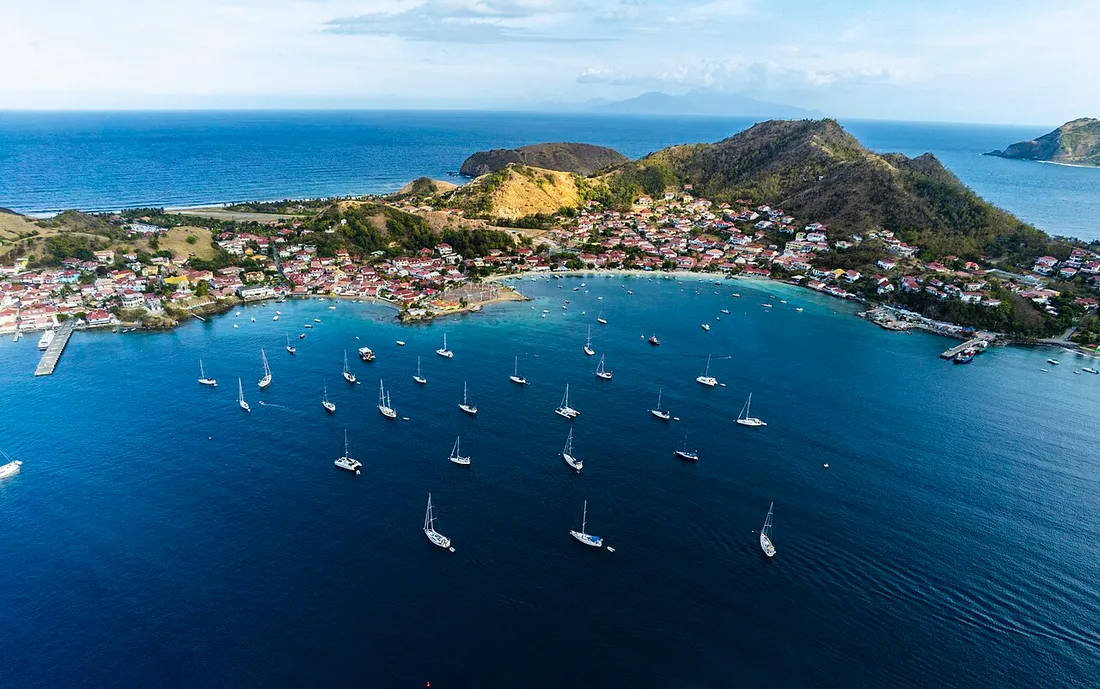
Guadeloupe’s tropical climate splits into two main seasons.
The dry season, known locally as the carême, runs from December to May. This is the peak tourist season: generous sunshine, refreshing trade winds, low humidity. February and March are especially pleasant. It’s also the most sought-after season, so plan to book your accommodation and flight well in advance.
The wet season (hivernage) runs from June to November. Showers, often brief and intense, are more frequent, and the period from September to October corresponds to the peak of the hurricane season. In return, the vegetation is dazzling, prices are softer and the sites less crowded. The sea itself stays swimmable all year round, with temperatures hovering between 26 and 28 °C.
Good to know: carnival, which animates the island from January to Ash Wednesday, is a highlight of Guadeloupean culture and worth experiencing at least once.
Getting there and getting around
Guadeloupe is reached by air at Pôle Caraïbes airport (Pointe-à-Pitre), connected to mainland France by direct flights of about eight hours from Paris. Several airlines serve the island, and fares vary widely depending on the season and how far ahead you book.
Once there, the watchword is independence:
- The car is by far the most practical way to explore both islands, the secluded coves and the trailheads poorly served by public transport. Reserve your vehicle as early as possible in high season. Discover our car rental options to save time on arrival.
- Buses and shuttles exist, but their schedules remain limited, especially in the evening and at weekends.
- Sea shuttles link mainland Guadeloupe to the neighbouring islands (Les Saintes, Marie-Galante, La Désirade) from several piers such as Trois-Rivières, Saint-François or Pointe-à-Pitre.
Allow around 30 to 45 minutes between Pointe-à-Pitre and most of the Grande-Terre beaches, and longer to reach the remote sites of Basse-Terre.
The most beautiful beaches
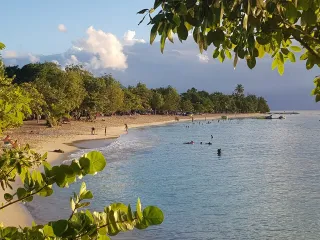
Guadeloupe is a first-rate seaside destination, with a surprising variety of beaches.
- Sainte-Anne and its Bourg beach, a sheltered lagoon ideal for families.
- La Caravelle, a long stretch of sand lined with coconut palms.
- Plage de la Datcha in Le Gosier, lively and easy to reach.
- Grande Anse in Deshaies (Basse-Terre), a vast golden-sand beach at the foot of the hills.
- Pointe-des-Châteaux, at the far east, less for swimming than for its spectacular ocean panorama.
For a detailed ranking and practical advice on each spot, read our dedicated article on the most beautiful beaches in Guadeloupe.
National park, La Soufrière and the Carbet Falls
Guadeloupe’s wild heart beats in Basse-Terre, within the Guadeloupe National Park, listed as a biosphere reserve by UNESCO.
La Soufrière, the highest point of the Lesser Antilles at 1,467 metres, is a still-active volcano nicknamed “the old lady”. Its ascent, demanding and often shrouded in mist, rewards hikers with fumaroles and striking panoramas. Set off early in the morning and bring sturdy shoes, a waterproof jacket and water.
The Carbet Falls are among the most impressive waterfalls in the Antilles. The second fall, the most accessible, is reached via a maintained trail in less than an hour’s walk. Access to the falls may be regulated depending on volcanic activity and trail conditions: check locally before setting out.
Don’t miss the Cousteau Reserve off Malendure, a snorkelling and diving paradise, or the Saut de la Lézarde for a freshwater swim.