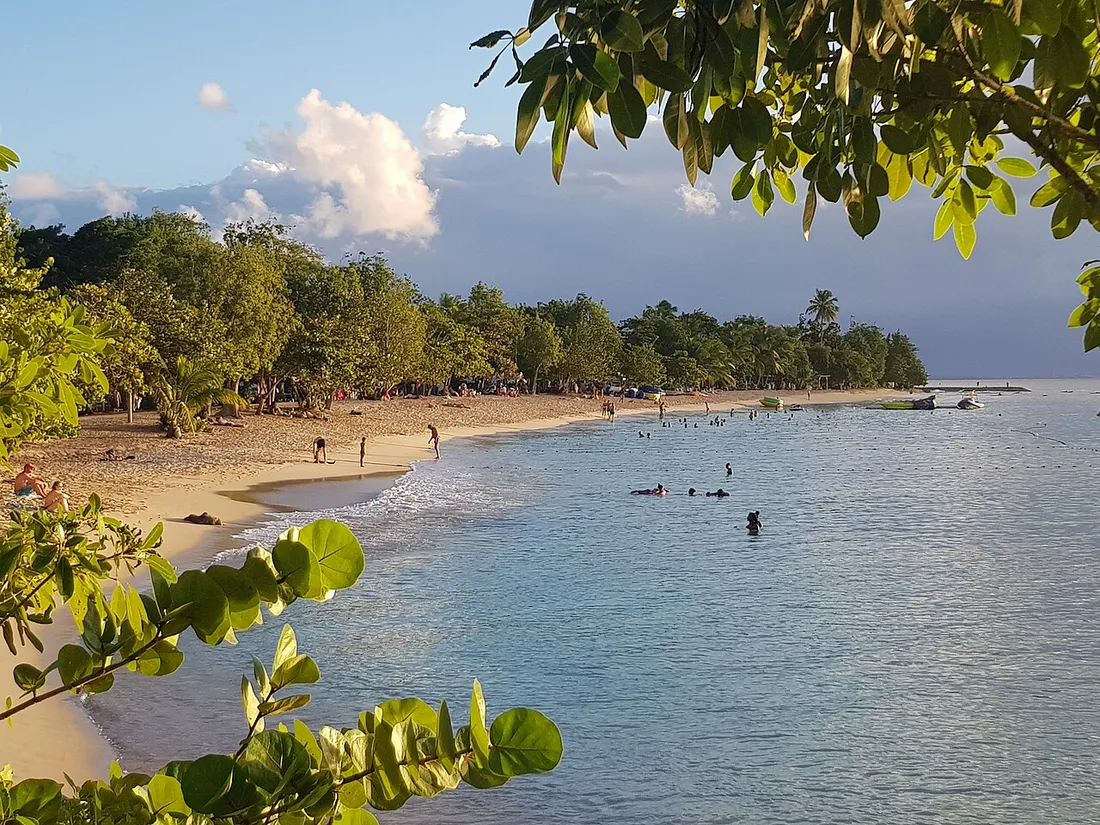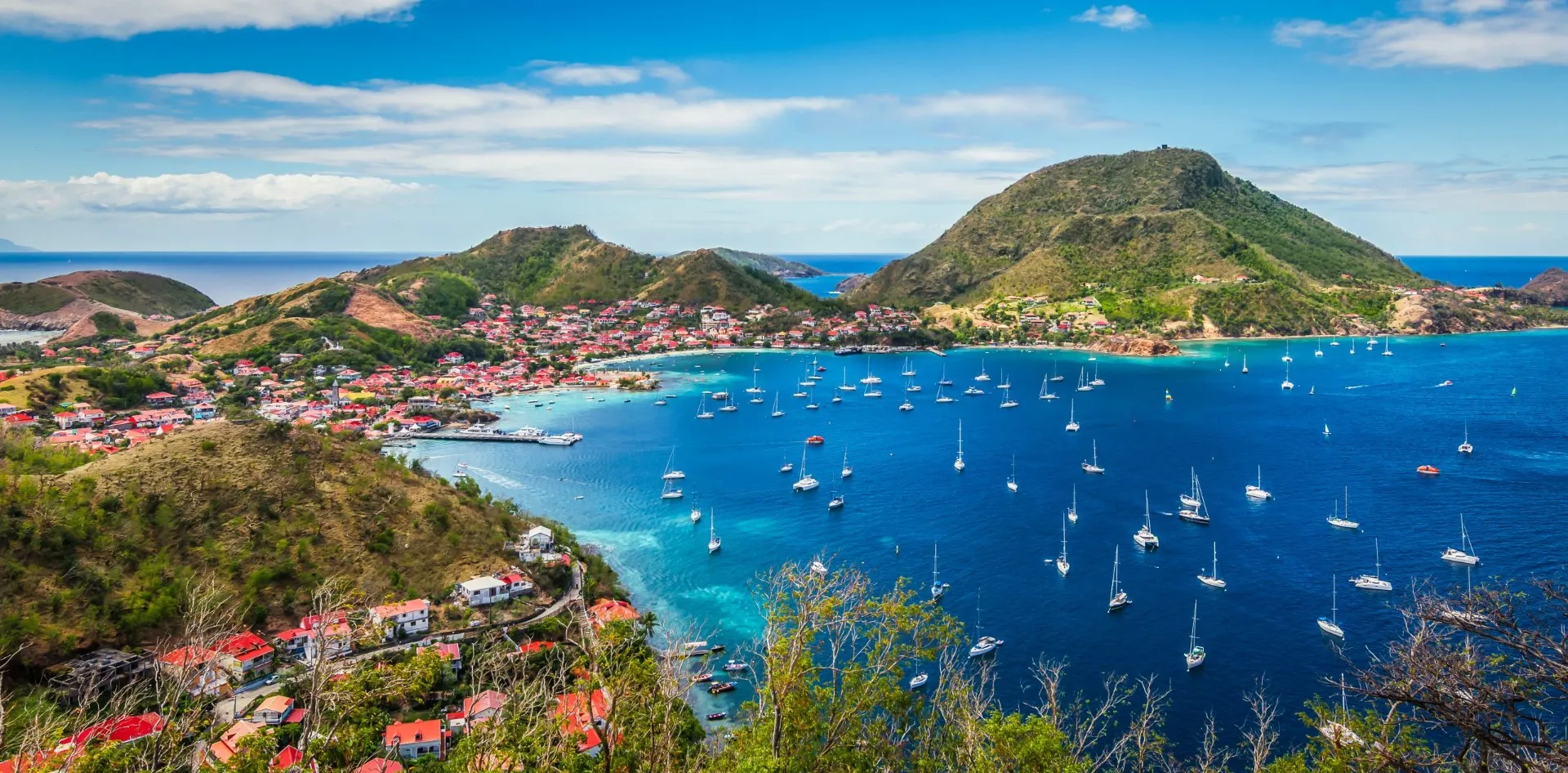
Travelling to Guadeloupe on a budget isn’t a marketing myth: it comes down to timing, the right addresses and a few local reflexes. After several years on the archipelago welcoming travellers between Sainte-Anne, Le Gosier and Deshaies, I’ve seen families spend €4,500 for two weeks… and others enjoy the very same holiday for €2,600. The difference? Twelve concrete tips, costed below, across the three big budget items: flights, accommodation and food. The Guadeloupe butterfly, with its free beaches, its lolos for €10 and its freely accessible volcano, remains one of the most affordable tropical destinations for a French traveller — the euro, no visa, no banking fees.
Flying smart: the ticket, your first lever for savings
Tip 1: aim for the off-season rather than the dry season
The dry season (December to April) concentrates demand: expect €700 to €900 for a Paris–Pointe-à-Pitre round trip in February. In off-season Guadeloupe — the wet season, from June to November — the same ticket drops to between €380 and €500. Yes, it rains more, but in the form of 20-minute showers followed by bright sunshine, especially over Grande-Terre, the drier limestone wing. Saving: €300 to €400 per person, or €1,200 for a family of four.
Tip 2: book 4 to 6 months ahead and fly midweek
Tuesday and Wednesday flights to Pôle Caraïbes airport cost on average €60 to €90 less than Saturday flights. Set up price alerts as soon as your dates start to firm up.
Tip 3: rent the car before you take off
On the ground in high season, a compact car is rarely negotiated below €45/day. Booked online three months ahead, the same car costs €22 to €28/day with local rental firms: a €250 difference over 14 days. It remains essential — 60 km separate Sainte-Anne from the dives at Bouillante.
Accommodation: a rental with a kitchen changes everything
This is where the gap widens the most. A 3-star hotel in Le Gosier charges €130 to €180 a night, breakfast often extra. A fully equipped holiday rental — a studio or one-bedroom with a kitchen — runs between €55 and €90 a night in Sainte-Anne, Saint-François or Deshaies, outside school holidays.
Tip 4: choose accommodation with a real kitchen
Cooking even just breakfasts and every other meal saves €30 to €50 per day for a couple. Over two weeks: €400 to €700. That’s exactly the logic behind our catalogue of rentals in Guadeloupe: equipped homes (hob, fridge, often a barbecue), selected and looked after by our team on the ground.
Tip 5: book direct, with no platform commission
The big platforms add 12 to 17% in service fees. On a €1,000 stay, that’s €120 to €170 that go neither to the owner nor to your comfort. At Hostel Toucan, direct booking carries no platform fees, with free cancellation up to 7 days before arrival and WhatsApp assistance 7 days a week — handy when you’re hunting for a mechanic on a Sunday. Own a property on the archipelago? Our owners page explains how we make it profitable for you.
Tip 6: sleep away from the busiest tourist areas
In Le Moule or Petit-Canal, weekly rents are 20 to 30% lower than in Saint-François, for beaches just as beautiful 10 minutes away by car.
Eating local: lolos, markets and roadside fruit
Tip 7: embrace the lolos
These small Creole beachside restaurants serve smoked chicken with rice and red beans for €9 to €13, versus €25 to €35 a dish at a touristy seafront restaurant in Le Gosier. Two lolo meals a day for two people: around €45 in daily savings. My sure bets: the Sainte-Anne seafront and the Bouillante road after a dive.
Tip 8: shop at the market rather than the hypermarket for fresh produce
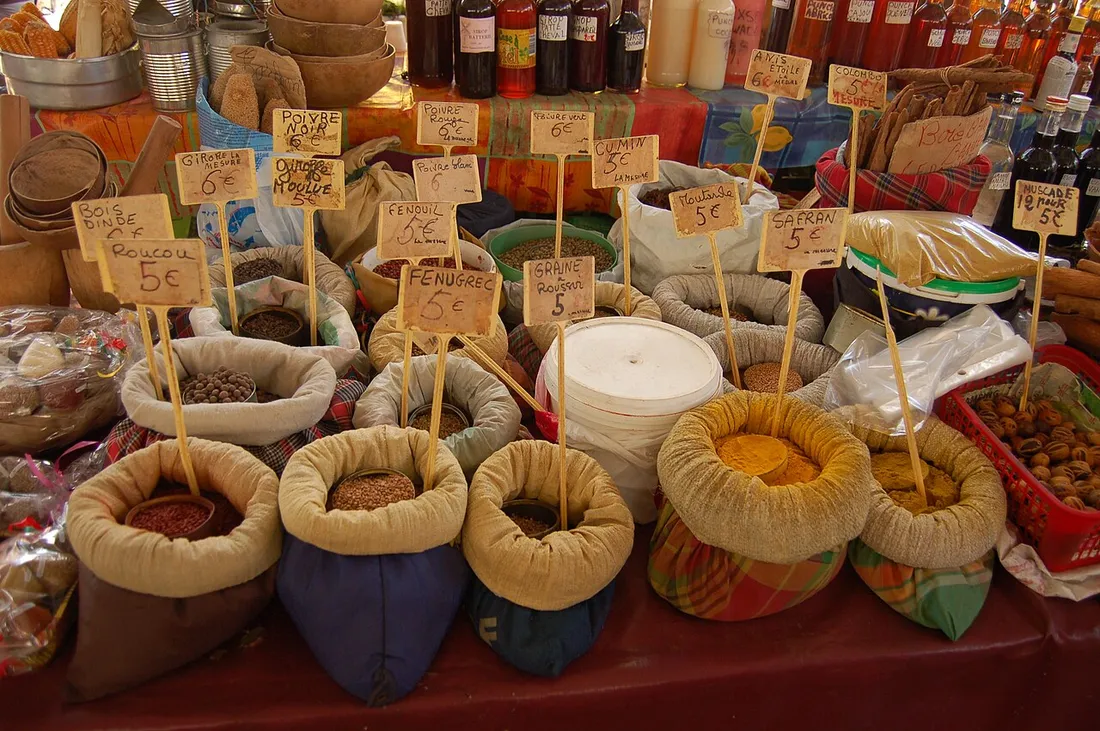
At the Sainte-Anne or Pointe-à-Pitre market: €2–3 a kilo of plantains, €1.50 for a pineapple in season, €5 a kilo of local tomatoes. Imported goods (yoghurt, cheese, cereal) cost 30 to 40% more than in mainland France: keep them to a minimum, eat local.
Tip 9: pack a cooler for beach days
Sandwiches, fruit, water frozen the night before: a day at La Caravelle or the Pointe des Châteaux comes to €5 per person instead of €25 at a beach snack bar.