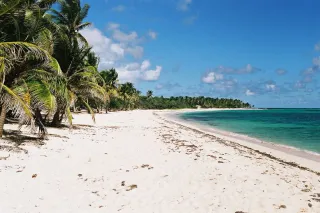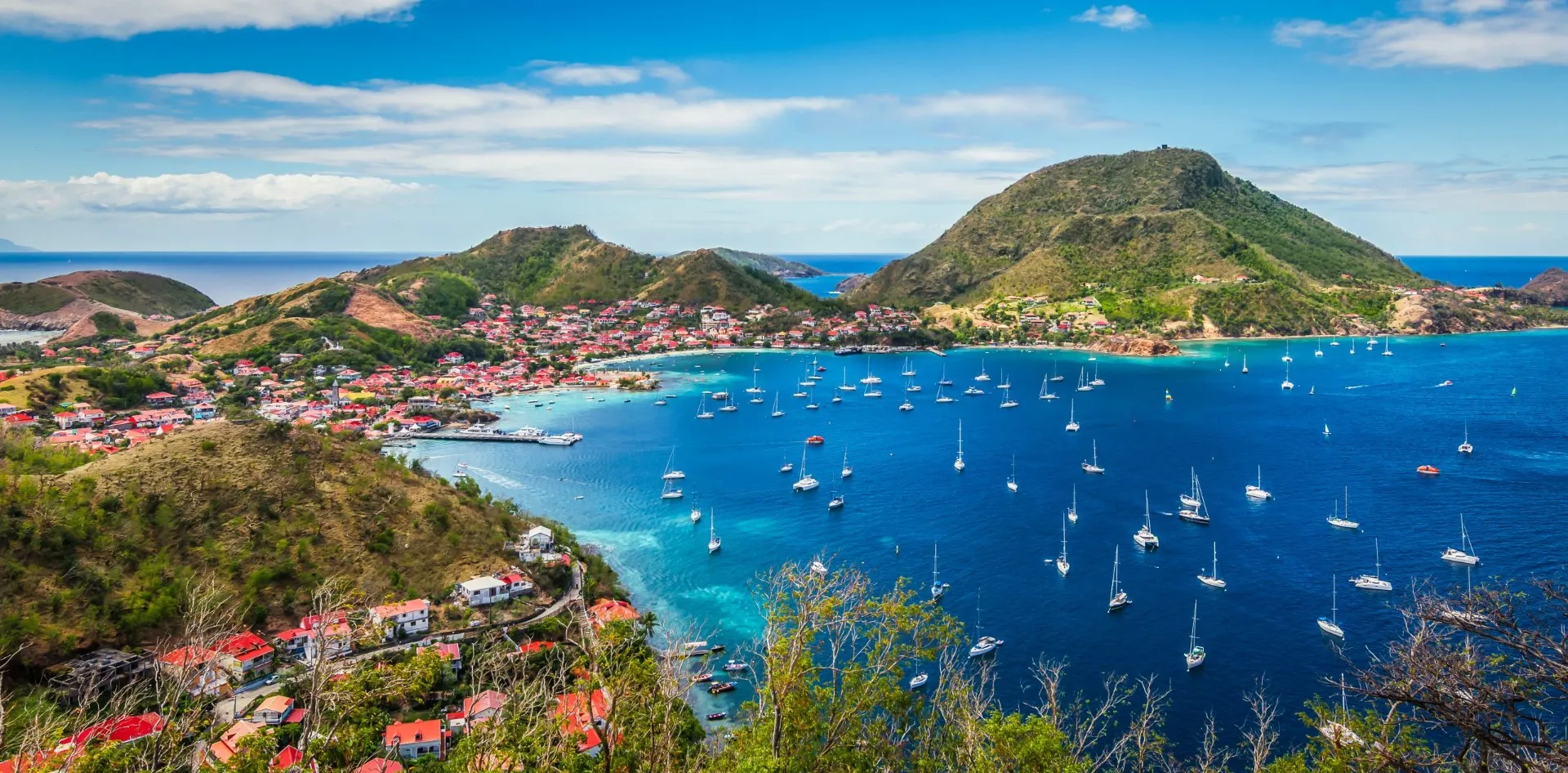
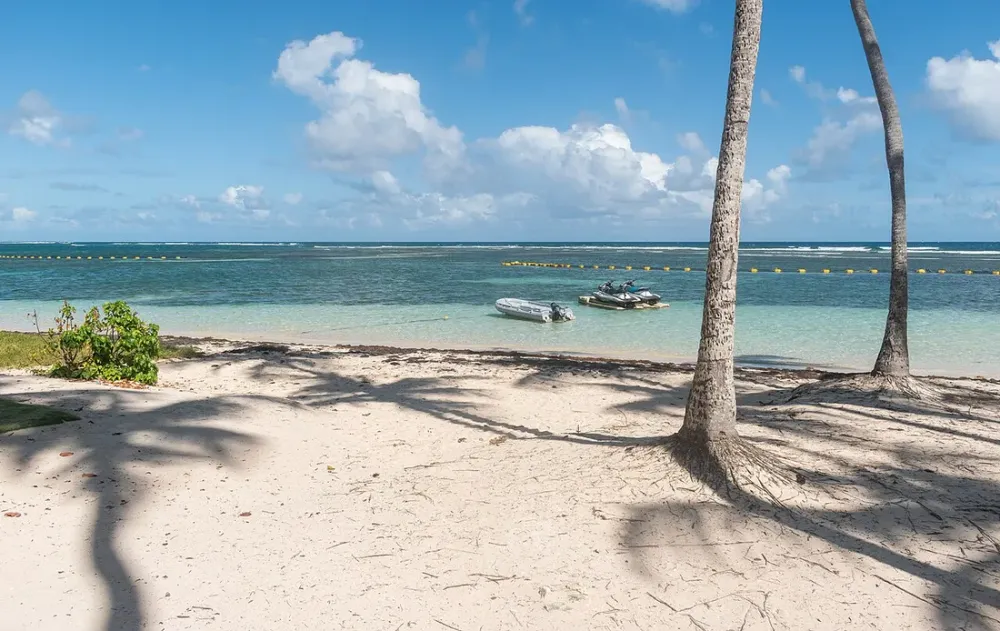
Guadeloupe is shaped like a butterfly, and each of its two wings tells a different seaside story. To the east, Grande-Terre rolls out its turquoise lagoons and white sand, fringed with coconut palms and sea grapes. To the west, Basse-Terre, more mountainous and volcanic, alternates between golden sand, black sand and wild coves backed by tropical forest. Add to that the southern islands, and you get one of the finest collections of beaches in the Lesser Antilles. Here is our 2026 selection, island by island, with our tips for choosing the right one depending on what you’re after: family-friendly swimming, snorkeling or untouched nature.
Grande-Terre: turquoise lagoons and white sand
Grande-Terre is home to the postcard-perfect beaches, the ones with warm, shallow waters that come to mind when you think of Guadeloupe. The coral reef that surrounds much of the southern coast creates calm lagoons, perfect for swimming in complete peace.
Plage de la Caravelle (Sainte-Anne)
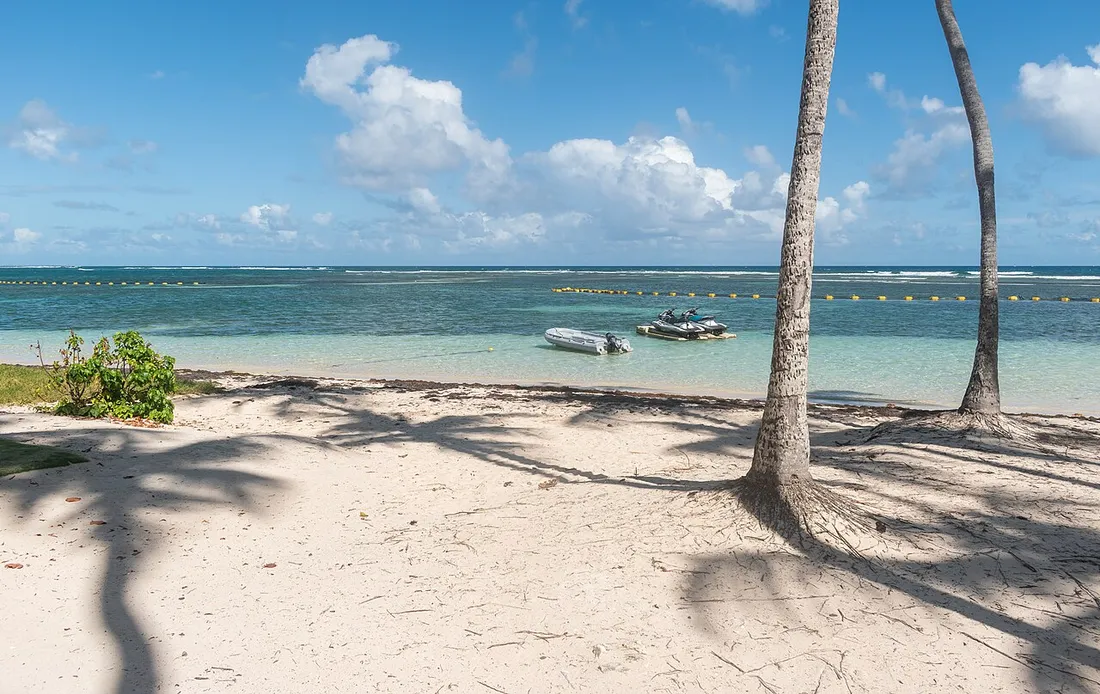
This is often the first beach people mention, and for good reason. Its lagoon, sheltered by the reef, offers crystal-clear water that stays calm and shallow for several dozen metres. The white sand, the leaning coconut palms and the colours ranging from emerald green to deep blue make it an absolute classic. It’s the ideal spot for a family day out: you can swim without a care, rent a sun lounger in the shade and sometimes watch the sailboats out at sea.
A few useful tips:
- Arrive early (before 10am) on weekends and in high season for a parking spot and shade under the trees.
- The western end, which is quieter, is better suited to families; the eastern end is livelier.
- Bring water and a snack: facilities are limited depending on the area.
Plage de Bois Jolan (Sainte-Anne)
Just a few minutes from Sainte-Anne, Bois Jolan appeals to fans of unspoiled beaches. Its very shallow lagoon, dotted with seagrass beds where starfish sometimes hide, stretches far out before the water reaches your waist. It’s a more low-key beach, lined with coconut groves, where the atmosphere stays family-friendly and close to nature. Perfect for very young children and for those looking for a more authentic corner, away from the bustle.
Anse à la Gourde (Saint-François)
Between Saint-François and the Pointe des Châteaux, the Anse à la Gourde is a long, white-sand beach that remains relatively under the radar. Partly protected by a reef, it offers calm areas for swimming and water with spectacular turquoise hues. It’s an excellent compromise: there’s space, beauty and a more moderate crowd than the star beaches. Keep an eye out for areas where the current can be felt, near the passes in the reef.
Pointe des Châteaux (Saint-François)
This isn’t a swimming beach in the classic sense, but a magnificent natural site at the far eastern tip of Guadeloupe. Atlantic waves crash here against jagged limestone cliffs, and a short climb leads to the summit cross, where the view takes in the islands of La Désirade and Petite-Terre. Nearby, the Anse Tarare and the Baie des Cailloux offer coves for swimming. A must-see for lovers of raw landscapes and coastal hiking.
Basse-Terre: wild nature and diving
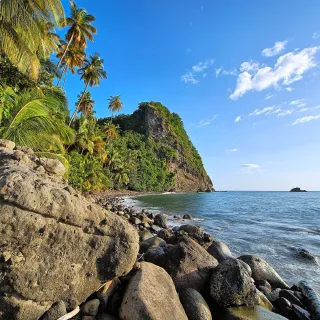
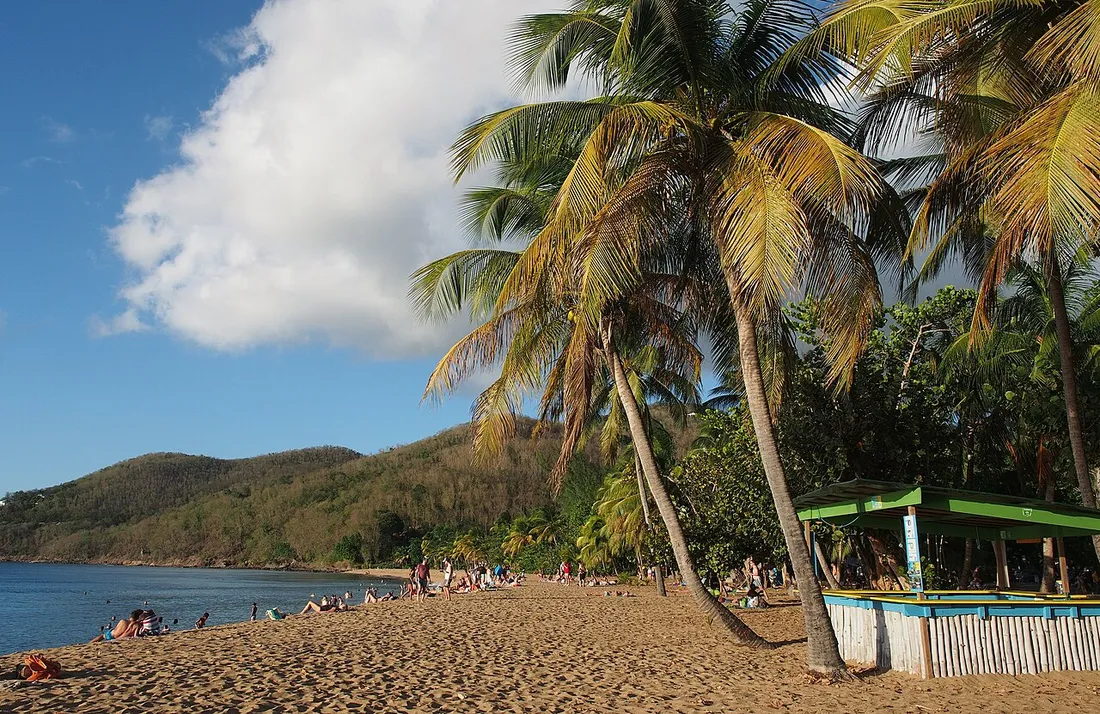
On the Basse-Terre side, the scenery changes: lush relief, forest that drops almost to the sea, golden or volcanic sand. The beaches here are often wilder, more intimate, and some rank among the best snorkeling spots in the archipelago.
Grande-Anse (Deshaies)
A vast crescent of golden sand backed by a hill of coconut palms, Grande-Anse is regularly named among the most beautiful beaches in Guadeloupe. Its sheer scale is impressive: you can walk for a long way, find your patch of shade and enjoy a spectacular setting at sunset. The sea here is more open than on the lagoons of Grande-Terre, so swimming calls for a bit more caution on certain swell days. Check local conditions and follow the signage. The nearby village of Deshaies adds the authentic charm of a fishing port.
Plage de Malendure (Bouillante)
Malendure, a grey-black volcanic sand beach, is above all the departure point for the Cousteau reserve and the Pigeon Islets. It’s one of the prime spots for snorkeling and diving in Guadeloupe: turtles, multicoloured fish and coral seabeds await just a few fin-kicks away. Many clubs offer boat trips, and you can also reach the islets by kayak or glass-bottom boat. Ideal for a day combining relaxation and discovery of the underwater world.
Snorkeling tips:
- Bring your mask, snorkel and fins if you have them; rental is also available on site.
- The waters are clearer in the morning, before the wind picks up.
- Respect the reserve: don’t touch the coral or the turtles.
Plage de Cluny (Sainte-Rose)
Further north, the Plage de Cluny is a natural cove, framed by vegetation and lapped by a sometimes lively sea. Less frequented, it appeals to those seeking authenticity and seaside walks. Swimming here should be enjoyed with caution depending on the swell, but the wild setting and the path running along the coast make it worth the detour for a break far from the crowds.
The islands: the jewel of southern Guadeloupe
No selection would be complete without the beaches of the neighbouring islands, reachable by ferry from Grande-Terre or Basse-Terre. They often offer some of the purest water in the archipelago.
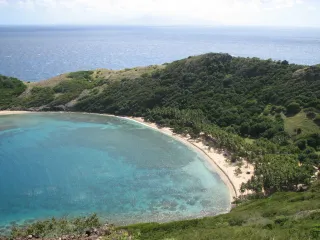
- Les Saintes: the Anse du Pain de Sucre, a small cove framed by peaks, and the bay of Terre-de-Haut rank among the prettiest anchorages in the Caribbean. To plan your excursion, read our guide a getaway to Les Saintes.
- Marie-Galante: nicknamed the “big pancake”, it unfurls vast, uncrowded beaches such as the plage de la Feuillère or the Anse Canot, with white sand and translucent water. Our article discovering Marie-Galante gives you all the keys.
- Petite-Terre: a protected nature reserve, its lagoon shelters rays and turtles in water of rare clarity; access is only possible on a guided excursion.