You arrive in French Guiana for a move, a work transfer or a new chapter of life, and you discover a home plunged into darkness, with no running water and no internet connection. It is a stage almost every newcomer goes through: between electricity, water and the internet connection, opening meters and accounts takes a little planning. French Guiana has its own quirks — a single electricity supplier, municipal water utilities and very uneven internet coverage from one town to the next — which often catch out those arriving from mainland France. This guide reviews, service by service, what to prepare, who to contact and what lead times to keep in mind, so you do not spend your first weeks by candlelight and offline.
The lead times and costs given here are indicative: they vary depending on the municipality, the season, the condition of the home and how busy the providers are. Treat them as ballpark figures to organise your arrival, and always check with the provider concerned at the time of your application.
Electricity in French Guiana: a single supplier, EDF
In French Guiana, unlike in mainland France, the household electricity supply market is not open to competition. EDF (through its branch dedicated to island energy systems, EDF SEI) handles generation, the grid and sales all at once. In other words, there is no point shopping around for a “cheaper” supplier: you will have a single point of contact to open your meter.
Where and how to apply
You can start your connection in several ways:
- Online, through the EDF Guyane customer area;
- By phone with the EDF customer service in French Guiana;
- In person at a branch, notably in Cayenne, Kourou or Saint-Laurent-du-Maroni.
For newcomers, an in-branch appointment has one advantage: local pricing and any available support schemes are explained to you, and you leave with a complete file.
Documents and information to prepare
Before calling or logging in, gather:
- Proof of identity;
- Proof of occupancy of the home (lease, landlord’s statement, deed of sale);
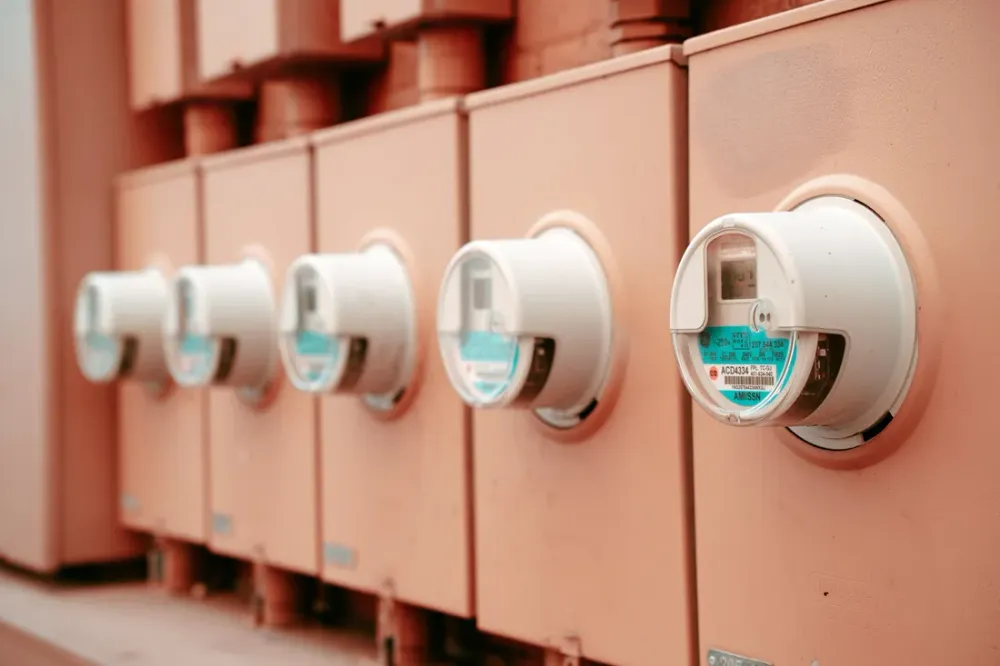
- The delivery point number (PDL) or meter number, often shown on an old bill for the property or visible on the meter itself;
- The meter reading (the figures displayed on the meter) on the day you move in;
- Bank details for setting up the direct debit.
Existing meter or new grid connection
Two very different situations:
- The home is already connected (the most common case in rented accommodation): this is a simple activation or a change of account holder. The lead time is generally short, in the order of a few working days as a guide, sometimes faster with an express request (often billed at a higher rate).
- The home is new or has never been connected: you then need a grid connection, a far longer and more expensive operation involving a technical study and works. Allow several weeks, or more depending on the location — a crucial point if you are building in a remote inland municipality.
Pricing and consumption benchmarks
As a guide, electricity in French Guiana follows a regulated pricing framework, with a standing charge based on the subscribed capacity (expressed in kVA) and a price per kilowatt-hour. Air conditioning, extremely widespread because of the constant humid heat, is by far the biggest item in a Guianese household’s consumption: the more rooms you cool, the higher the bill climbs. Choosing a suitable meter capacity (neither too low, which would trip the breaker, nor too high, which inflates the standing charge) is a trade-off to make based on your appliances. If in doubt, ask customer service for advice when signing up.
Water: municipal utilities and concession holders depending on the town
Drinking water does not depend on a single operator in French Guiana. Responsibility lies at municipal or inter-municipal level, and the service is run either by a public utility or by a private concession holder depending on the area. The result: your contact, the tariffs and the procedures change from one town to the next.
Identifying your water provider
The first thing to do is to find out who manages water in your municipality. To do so:
- Ask the landlord or the letting agency;
- Look at an old water bill for the property, which states the provider;
- Enquire at the town hall, which will be able to point you to the right service.
In the Cayenne conurbation and the most populated coastal towns (Cayenne, Rémire-Montjoly, Matoury, Kourou, Saint-Laurent-du-Maroni and so on), the network is well structured and opening a meter follows a standard procedure. In inland or more rural municipalities, the set-up may be different.
The application process
Once you have identified the right contact, opening (or transferring) a water account generally requires:
- Proof of identity;
- Proof of occupancy of the home;
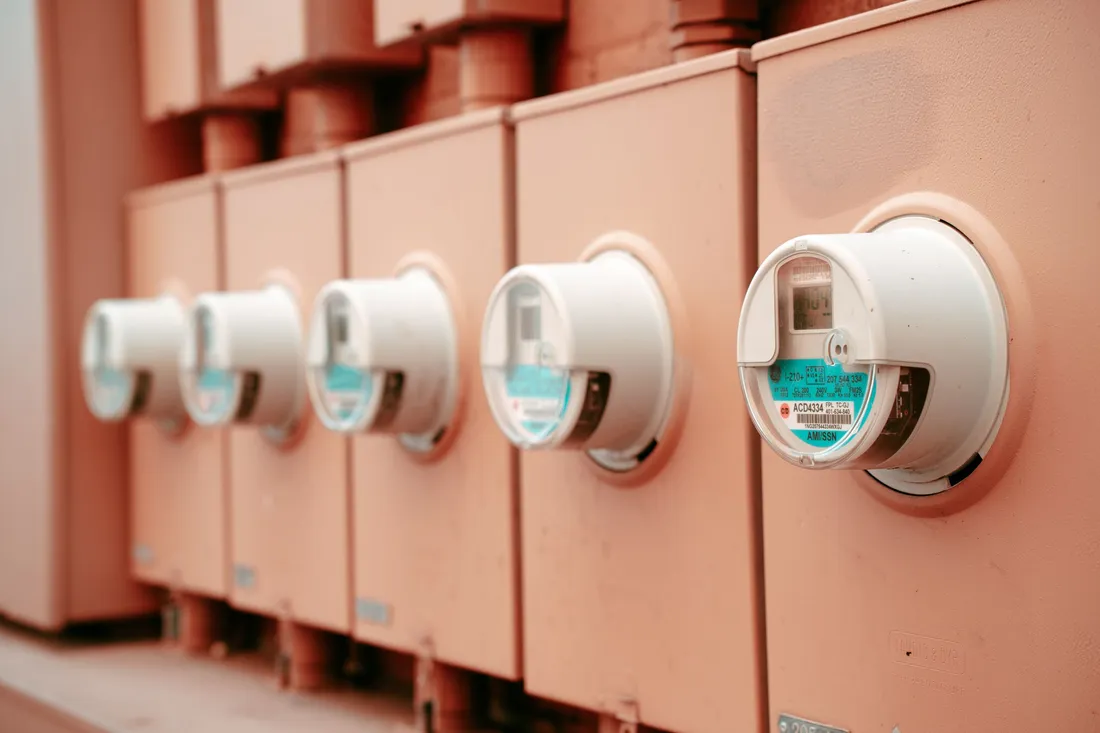
- The water meter reading when you move in;
- Bank details for the direct debit.
Here again, if the meter already exists, it is mainly a matter of putting the contract in your name: that is quick. For a new connection, expect lead times and works charges.
Good to know about quality and use
Tap water is distributed and monitored on the public networks along the coast. Many newcomers wonder about its taste or hardness: habits vary from one household to another, with some drinking tap water and others preferring filtered or bottled water. In unconnected inland areas, supply may rely on other solutions (rainwater harvesting, boreholes), which completely changes the logic of setting up.
Internet and phone: the real point to watch
This is often the biggest surprise for anyone arriving from mainland France: in French Guiana, the quality of your connection depends enormously on your exact address. Two homes a few streets apart can have very different offers available.
The technologies available
Depending on your location, you may have access to:
- Fibre optic, being rolled out gradually, above all in the Cayenne conurbation (Cayenne, Rémire-Montjoly, Matoury) and certain areas of Kourou and Saint-Laurent;
- ADSL / VDSL over the phone line, still very common;
- 4G / a 4G box or mobile coverage as a back-up or main solution where fixed-line options are limited;
- Satellite solutions, considered in the most isolated areas.
Check eligibility BEFORE signing a lease
The most useful piece of advice in this guide: test the eligibility of the precise address even before committing to a home if the internet is essential for you (remote work, distance learning, freelance activity). Every operator offers an online eligibility check based on the address. Do not rely on coverage “for the municipality” in general: ask what is actually available at the address.
Operators and lead times
Several national and local operators are present in French Guiana, with mobile and fixed-line offers. To open a fixed line or fibre connection:
- If the line or fibre socket already exists, activation is relatively quick;
- If technical work is needed (running the fibre, connecting the property), the wait can stretch to several weeks as a guide, especially in periods of high demand.
To avoid being cut off from the world in the meantime, many newcomers first take out a mobile plan with data and a 4G box until the fixed connection is installed.
Planning ahead: the right timeline before you arrive
The classic mistake is trying to set everything up on moving day. In reality, the more you plan ahead, the better your first days will be.
- 3 to 4 weeks before: identify the municipality’s water provider and check the internet eligibility of the address.
- 2 to 3 weeks before: start the EDF activation request and the water contract (especially for a change of account holder).
- 2 weeks before: order the internet/fibre subscription and, as a back-up, a mobile plan with data.
- On arrival: read and note down the meter readings for electricity and water (with a photo as proof).
- Week 1: check that the direct debits are set up and that you have received your customer area login details.
Tip: keep a digital copy of all your supporting documents (ID, lease, bank details, old bills for the property) in a folder you can access from your phone. You will be asked for them several times.