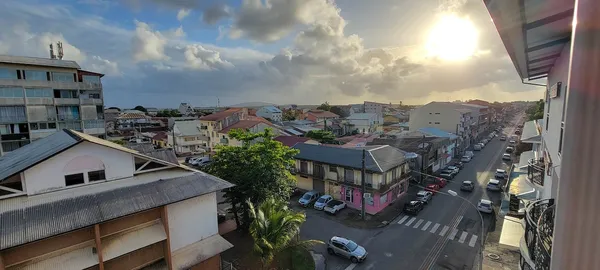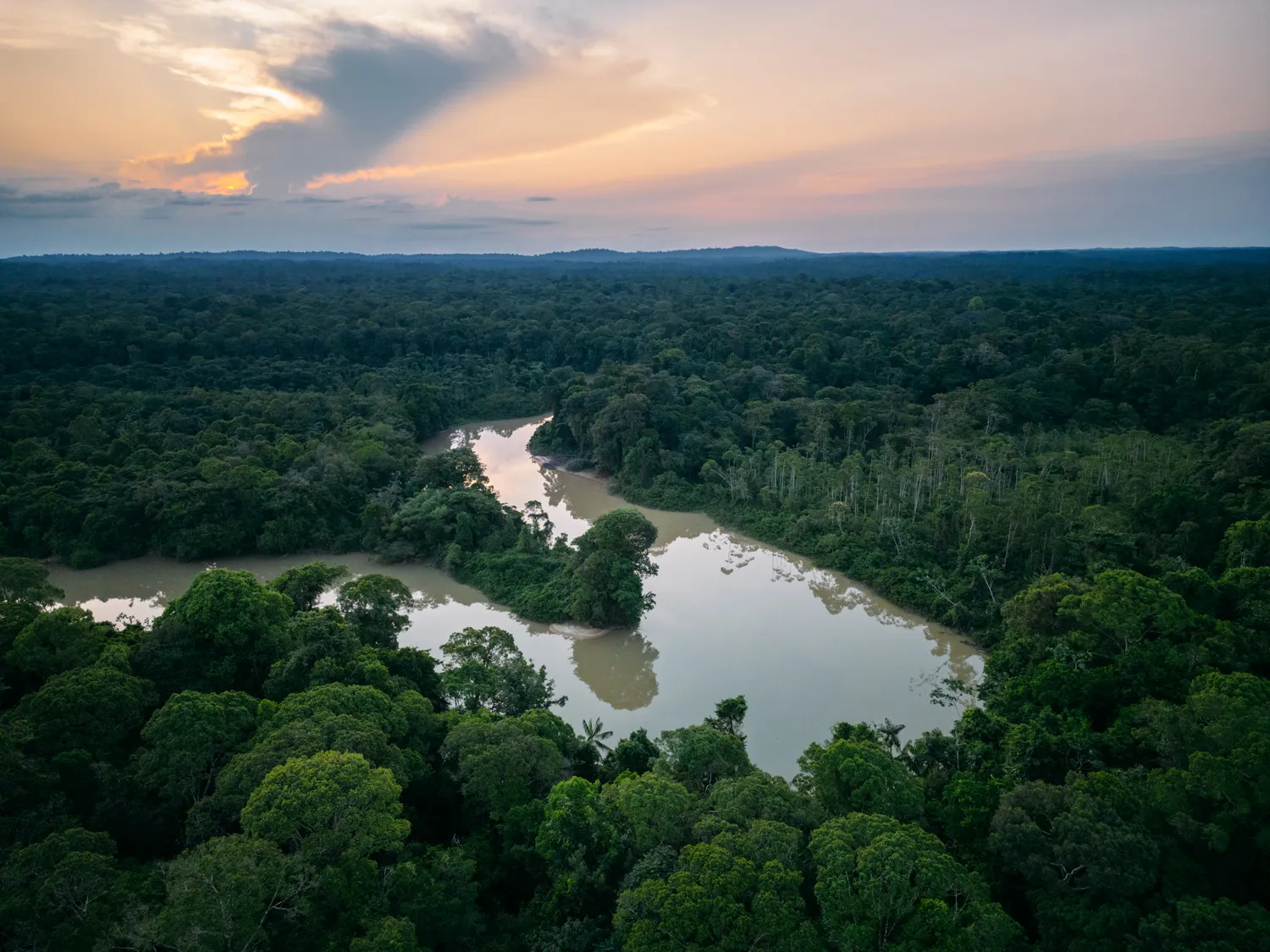

Moving to French Guiana to work remotely appeals to more and more employees, freelancers and entrepreneurs coming from mainland France. The setting is unique: Amazon rainforest, Atlantic coastline, a living Creole and Bushinenge culture, and a far gentler pace of life than back home. But remote work means a reliable connection, the right equipment, and sometimes a place to set down your laptop other than an overheated studio. The good news: the territory has invested heavily in recent years. Fibre optic in the main towns, expanding 4G/5G mobile networks, and submarine cables linking French Guiana to the rest of the world. This guide takes stock, without unrealistic promises, of what you need to know to work remotely from Cayenne, Kourou, Matoury, Rémire-Montjoly or Saint-Laurent-du-Maroni, and how to organise your arrival with peace of mind.
The state of internet connectivity in French Guiana
Long penalised by its isolation, French Guiana is today connected to the world by several submarine cables, including the Kanawa cable linking it to the French West Indies and mainland France, plus regional interconnections towards South America. In practice, this means latency and speeds have improved markedly, even if the experience still varies from one town and neighbourhood to another.
Fibre optic: where has it been rolled out?
The fibre (FTTH) rollout is concentrated on the central coastal conurbation, the most densely populated area of the territory. As a rough guide, the towns of Cayenne, Rémire-Montjoly, Matoury and Kourou are the best served, with eligibility progressing neighbourhood by neighbourhood. In Saint-Laurent-du-Maroni, the territory’s second city, the rollout is advancing but remains more uneven. In inland towns (Maripasoula, Camopi, Grand-Santi) or more isolated ones, fibre is rare or absent altogether, leaving you dependent on the mobile network or satellite solutions.
Before signing a lease or booking accommodation for several weeks, the reflex is simple: check fibre eligibility at the exact address with the operators (Orange, SFR, and local players). One street may have fibre while the next one does not.
Speeds, time difference and video calls
On a properly installed fibre line, you can expect comfortable speeds for video conferencing, screen sharing and file transfers. On ADSL or older lines, the experience is more modest, with limited download speeds and an upload that can be just about adequate for long video calls. These benchmarks are indicative: the actual experience depends on the property, the internal wiring and network load.
The point most often underestimated is the time difference. French Guiana is on GMT-3, meaning 4 hours behind mainland France during summer time, and 5 hours during winter time. If your team is in mainland France, a 9am meeting there falls at 4am or 5am in French Guiana. Many remote workers organise their day accordingly: quiet focused work in the local morning, meeting slots in the late Guianese morning (early afternoon in mainland France). This is a parameter to settle with your employer before you leave.
Backup solutions so you’re never cut off
Working remotely without a plan B means risking a missed client meeting. In French Guiana, a few precautions change everything.
- A mobile plan with plenty of data so you can tether if the router fails. 4G is well established along the coast, and 5G is expanding in dense areas.
- A 4G/5G router or dongle, alongside fibre, to switch over automatically if the fixed line goes down.
- A UPS or a high-capacity power bank: power cuts, though occasional, do happen, particularly during the rainy season with thunderstorms. A UPS also protects your equipment.
- A satellite solution (such as Starlink) for those settling outside fibre-covered areas or inland; the cost is higher but coverage is independent of terrestrial networks.
This equipment represents an upfront budget, but it turns an “acceptable” connection into a “professional” one.
Coworking and places to work in and around Cayenne
The coworking ecosystem in French Guiana is more modest than in mainland France, but it exists and is taking shape, especially around Cayenne and Kourou. Venues come and go: some close, others open. It is therefore advisable to confirm opening hours, rates and availability directly before travelling there.
In Cayenne and on the central coast
Cayenne concentrates most of the offering: shared spaces run by entrepreneurship support organisations, business incubators and accelerators, as well as community workspaces offering open-plan desks, meeting rooms and sometimes private offices by the day or by the month. The business parks of Matoury and Rémire-Montjoly also host structures geared towards companies and project developers.
What a good coworking space brings, beyond the desk:
- a shared professional-grade connection, often more stable than a residential line;
- controlled air conditioning, precious in an equatorial climate;
- meeting rooms for important video calls;
- a local network: meeting other freelancers, entrepreneurs and local players hugely accelerates settling in.
In Kourou and Saint-Laurent-du-Maroni
Kourou, home to the Guiana Space Centre, hosts a highly qualified population and has a few shared workspaces and services geared towards space and tech professionals. Saint-Laurent-du-Maroni, on the Maroni river, is gaining momentum and is seeing community workspaces and local initiatives emerge, in a more riverine, cross-border atmosphere with Suriname.
What if the café became your office?
Without a coworking space nearby, many remote workers alternate between home and cafés or restaurants with wifi. It works in a pinch, but is rarely ideal for a confidential video call or a full day’s work: noise, patchy air conditioning and the reliability of public wifi all work against you. Save it for light tasks (emails, offline writing, short calls).
Choosing your neighbourhood as a remote worker
Where you live matters as much as the connection. Here are a few pointers on the central coast, the area best suited to remote work.
- Cayenne (city centre, Montabo, Baduel): close to services, shops, the airport (via Matoury) and cultural life. Montabo, on the heights, is prized for its setting. The historic centre is lively but denser.
- Rémire-Montjoly: residential and sought-after, with beaches (Montjoly, Rémire), a quiet green setting, and often well connected. A good compromise between green living and proximity to Cayenne.
- Matoury: close to Félix-Éboué airport and business parks, handy for frequent travellers.
- Kourou: more spacious, space-industry focused, about an hour’s drive from Cayenne.
Also bear local realities in mind: the rainy season (roughly December to July, with a short dry spell in March) brings intense downpours; air conditioning is all but essential for working in comfort; and distances are measured in travel time, as the RN1 and RN2 can get busy at peak hours around Cayenne.