A business trip overseas is not decided solely by the quality of the bed. Between two meetings in Fort-de-France, a multi-week assignment in Pointe-à-Pitre or a long-running project in Cayenne, the business traveller needs a stable internet connection, a real workspace and — on the back-office side — an invoice that the accounting department will accept without discussion. This is exactly where para-hotel accommodation makes the difference compared with a classic holiday rental or a hotel room: it combines the comfort of a full home with the administrative rigour expected by a company. This article reviews, region by region, what really matters for a successful business stay in Martinique, Guadeloupe and French Guiana.
What “business accommodation” really means
Calling accommodation “suitable for professionals” is not just about displaying a “Wi-Fi” logo. A successful business stay rests on two inseparable pillars.
The first is operational: being able to work efficiently from the accommodation, hold a video call without interruption, print or scan a document, receive a parcel, store equipment safely. The second is administrative: returning from a trip with compliant supporting documents, an invoice in the company’s name, VAT correctly stated and a payment that fits cleanly into the company’s accounts.
A peer-to-peer holiday rental rarely ticks both boxes. A hotel ticks the administrative box but imposes cramped spaces, poorly suited to long stays and multi-week assignments. Para-hotel accommodation, on the other hand, aims to combine the two: the comfort and autonomy of a home, the compliance of a structured provider.
Para-hotel: the nuance that changes everything for the company
Para-hotel activity refers to furnished accommodation combined with hotel-type services (reception, cleaning, linen provision, maintenance, services). In concrete terms, for a company, this translates into three major advantages:
- a properly issued invoice, produced by an identified structure, with an invoice number, the details of both the host and the professional client;
- VAT stated on the invoice when the applicable regime provides for it, which is decisive for accounting treatment;
- payment by bank transfer possible, the preferred method of corporate finance departments, in addition to or instead of a personal bank card.
Wi-Fi and workspace: the real criteria overseas
The first reflex of a professional making a booking is to check the connection. In Martinique, Guadeloupe and French Guiana, coverage has improved markedly in recent years, but the realities remain uneven from one area to another.
Speed, fibre and backup solutions
In the main urban areas — Fort-de-France, Le Lamentin, Schoelcher, Pointe-à-Pitre, Baie-Mahault, Le Gosier, Cayenne, Rémire-Montjoly, Kourou — fibre and good ADSL/VDSL speeds are widely deployed. The further you get from the urban centres (inland Guianese municipalities, rural areas of the West Indies), the wiser it is to check the actual speed and plan a backup solution.
For a business stay, a few points are worth confirming before booking:
- the download and upload speed advertised, upload determining the quality of video calls and the sending of large files;
- the existence of a 4G/5G backup connection in case of outage, common during heavy rains or the cyclone season in the West Indies;
- the stability of the local electricity grid and, where applicable, the presence of a backup power supply for sensitive equipment.
A workspace worthy of the name
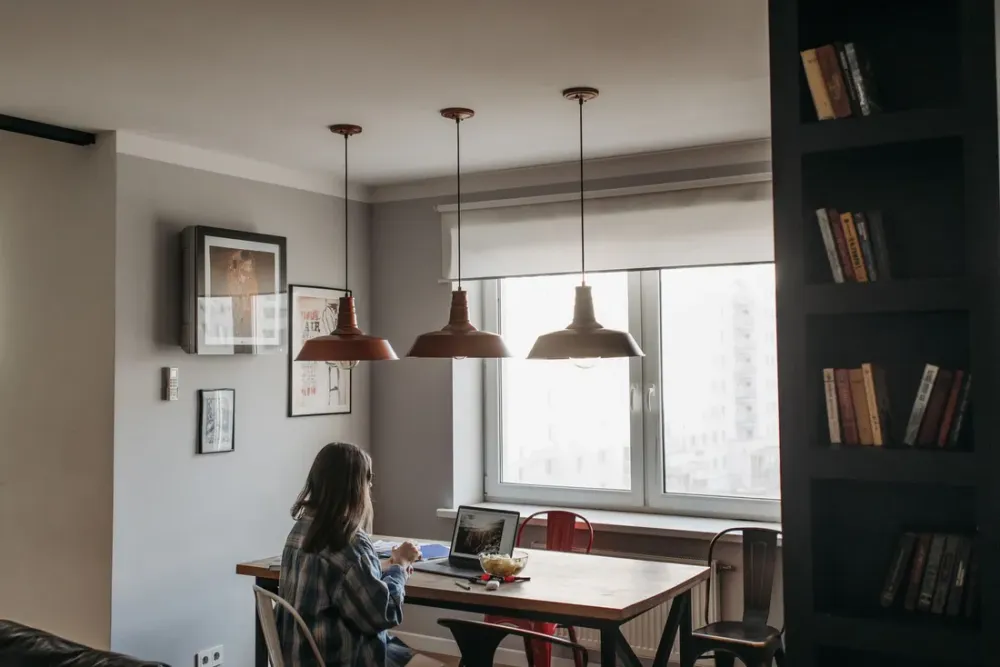
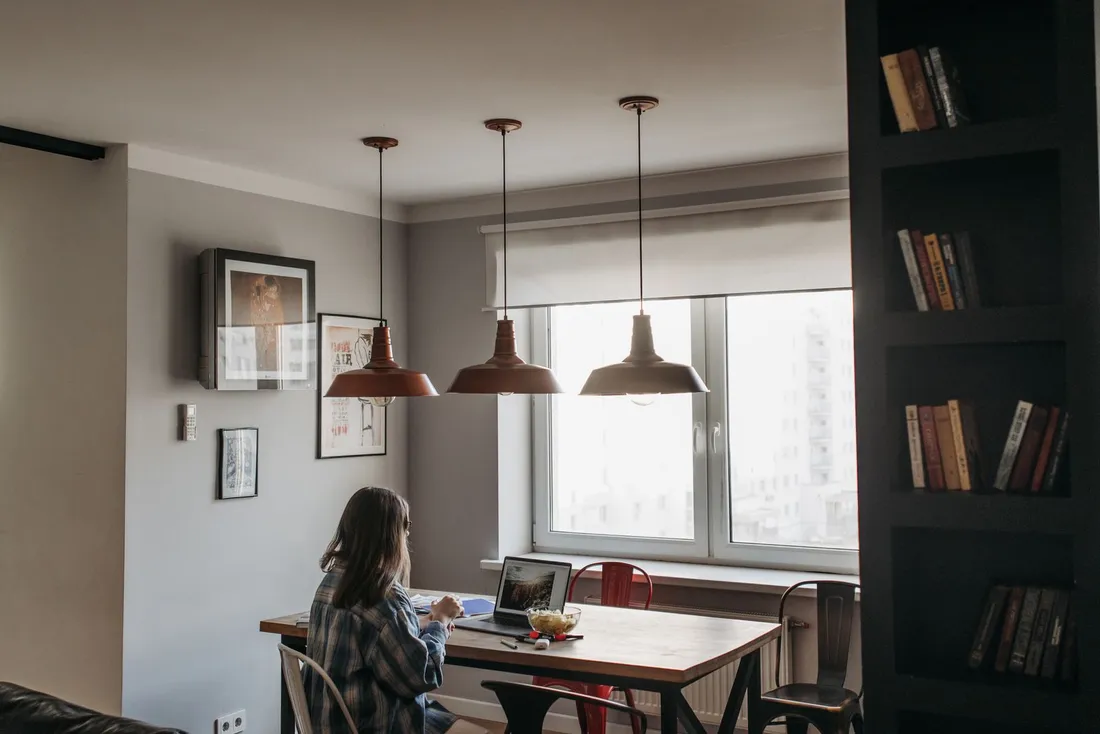
A good workspace requires more than a kitchen table: a clear work surface, a comfortable chair for long hours, sufficient lighting, accessible sockets and, ideally, a room or corner that allows you to isolate yourself for a call. On a multi-week assignment, this ergonomic comfort makes all the difference to fatigue and productivity.
Coworking and shared spaces in the territories
Beyond the accommodation, the coworking ecosystem is developing overseas. Shared spaces and hubs can be found in the urban areas of Fort-de-France, Pointe-à-Pitre / Baie-Mahault and Cayenne, useful for days when you need a meeting room, a professional environment or simply to get out of the accommodation. Well-located accommodation, near these spaces and business districts, lets you combine working from home and coworking days according to the needs of the assignment.
The invoice in the company’s name: the real differentiator
This is the point that most clearly distinguishes para-hotel accommodation from a simple peer-to-peer rental. An employee or a director on a trip must be able to justify their accommodation expense to their company.
Compliant expense report: what accounting expects
For an accommodation expense to be accepted in an expense report, accounting generally expects an invoice that includes the usual details: the identity and contact details of the host, the identity of the client company, the dates of the stay, the nature of the service, the amount excluding tax, the VAT rate and amount where applicable, and the total including tax. A screenshot of a booking or a simple card receipt is not always enough.
Here is a practical checklist to verify when booking a business stay:
- The invoice can be issued in the company’s name (not just in the traveller’s name).
- The legal details (contact information, numbers, dates) appear on the document.
- VAT is stated when it applies, with rate and amount.
- Payment by bank transfer is accepted, with IBAN and invoice reference.
- A detailed record of the service (nights, included services) is provided.
- The document is delivered in a usable format (PDF) for the expense report.
Payment by bank transfer and deposit management
Companies often favour bank transfers for long-stay accommodation, particularly for assignments lasting several weeks or months. This avoids tying up an employee’s personal card and makes accounting reconciliation easier. A structured host can offer a deposit at booking followed by a balance by transfer, with clear invoicing at each stage.
Long stays and assignments: thinking beyond the night
Business trips overseas are often long. A construction project, an audit assignment, hospital reinforcement, a training course, a space project in Kourou: all situations counted in weeks or months rather than isolated nights.
Degressive rates and the framework of the stay
For these durations, long-stay furnished accommodation offers real economic value compared with a hotel. As an indication, furnished accommodation frequently offers monthly rates that are significantly more advantageous than the accumulation of weekly nights, and a long stay often opens the way to negotiating a degressive rate. These ranges vary greatly depending on the municipality, the season (high tourist season in the West Indies, dry season in French Guiana) and the standard of the property: it is therefore preferable to request a personalised quote rather than relying on a single advertised price.
Services that matter on a long stay
Over several weeks, certain services become essential: regular cleaning, linen changes, routine maintenance, responsiveness in the event of a technical problem. This is precisely the field of para-hotel activity and good rental management. It is also where our concierge service works alongside owners to maintain a consistent level of service, an essential condition for hosting demanding professional clients throughout the year.