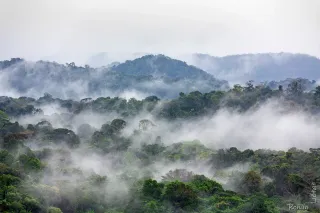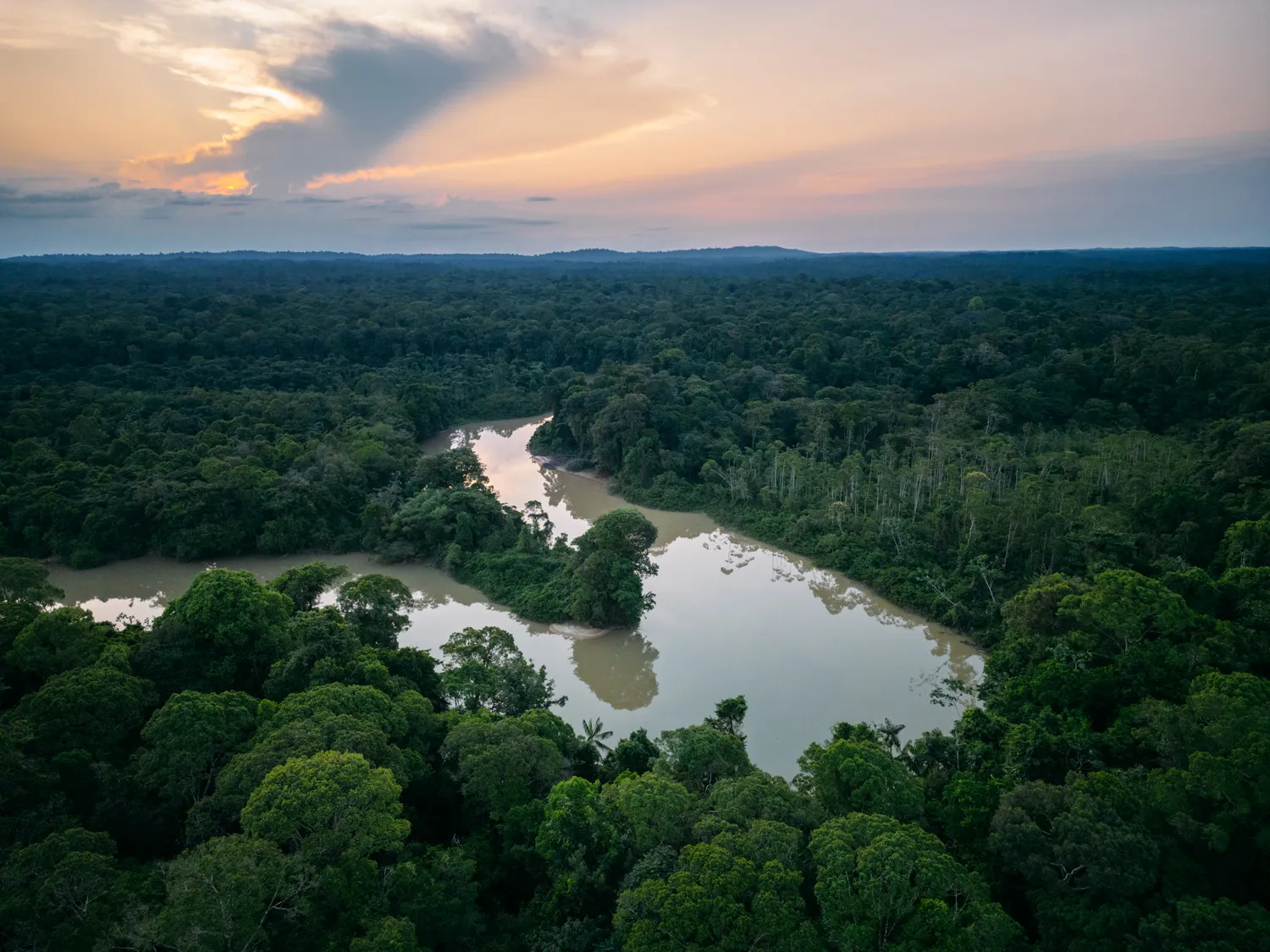
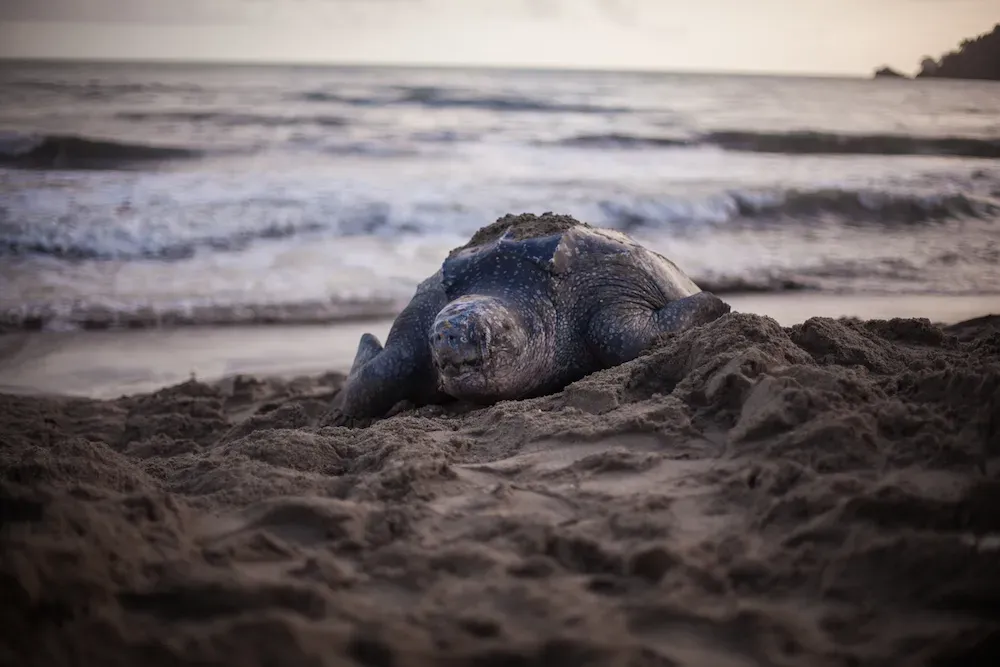
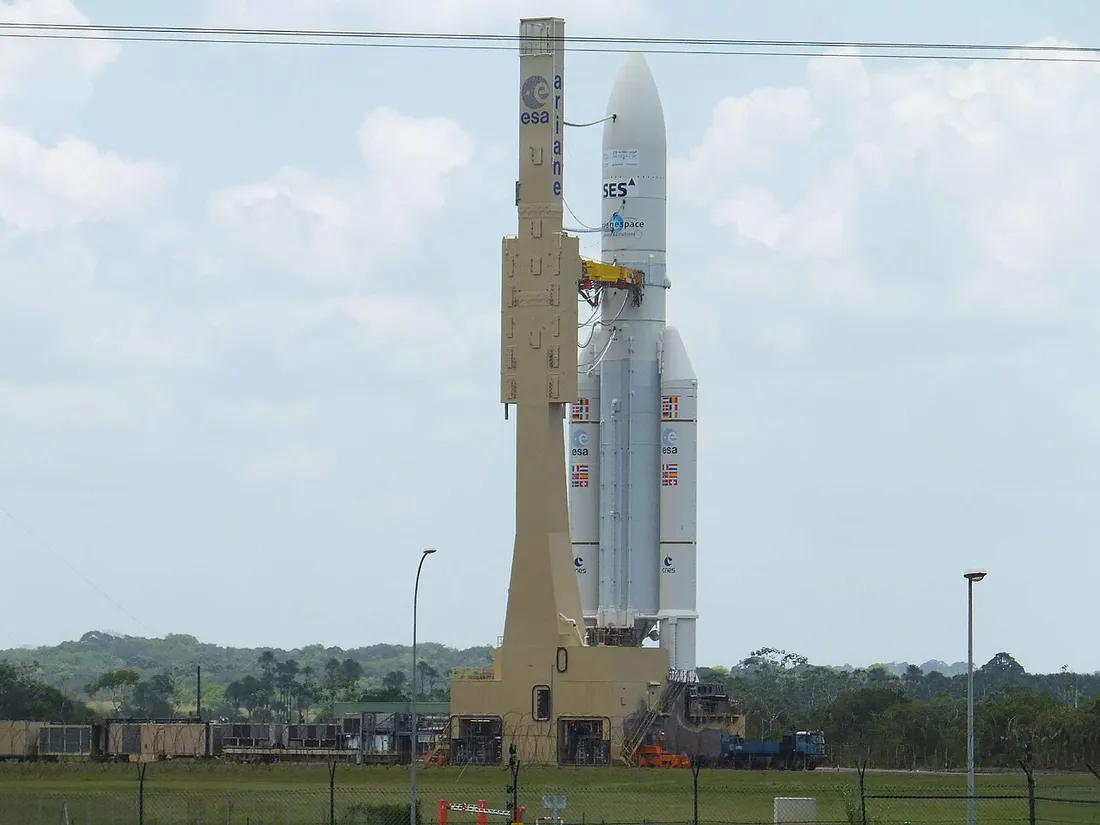
Living in French Guiana means learning to read the sky differently. There are no four seasons here, just a tropical rhythm driven by rain and sun. And one variable you won’t find anywhere else in France: the calendar of space launches from Kourou. But choosing when to visit French Guiana is about more than dodging the rain: every month opens a different window. Sometimes leatherback turtles haul themselves up the beaches of Awala-Yalimapo, sometimes scarlet ibises set the Kaw marshes ablaze, sometimes an Ariane 6 launch lights up the sky. At Hostel Toucan, we get asked the question almost every week. Here is the calendar we actually use to time a nature trip for the best possible moment, weaving together weather, nesting and birdwatching.
Understanding French Guiana’s climate before you book
French Guiana is a French overseas region bordering the Amazon, located between Brazil and Suriname, about 7,000 km from Paris. The climate is equatorial: hot (26 to 32 °C year-round, rarely below 23 °C at night) and humid (80 to 90 % humidity), with no real winter or summer in the mainland European sense. What changes is not the temperature but the amount of rain, set by the intertropical convergence zone.
There are roughly four periods:
- The short rainy season (December to early February): irregular showers, often late in the day.
- The “little March summer”: a precious brief lull in the heart of the wet season, around late February-March.
- The long rainy season (April to mid-July): the wettest, with heavy totals in May (up to 500 mm).
- The dry season (July to late November): the prime window, clear skies, passable tracks.
Good to know before you go: time difference of 5 hours in winter and 6 hours in summer (Paris ahead), currency in euros, dialing code +594, languages French and Guianese Creole (with Bushinenge and Amerindian languages depending on the area). Félix-Éboué international airport, in Matoury, is your gateway, 15 minutes from Cayenne. The yellow fever vaccine is mandatory, to be arranged at least 10 days before departure.
Why the dry season changes everything
In French Guiana, a car is essential and many sites can only be reached by track or river. During the rainy season, these tracks turn to mud, rivers rise, and certain excursions (Nouragues, upper Maroni) become tricky. The dry season, from July to late November, guarantees that pirogues set off, trails are dry and safe, the Kaw marshes are accessible and sunsets over the Îles du Salut come without an umbrella.
The dry season (July to late November): the safe bet
If you were to remember just one answer to the question “when to visit French Guiana”, it would be this: from July to late November. Forest tracks are passable, rivers become navigable again without surprise floods, and the sky clears enough to fully enjoy the excursions.
Why it’s the ideal window
- The trails of the Nouragues reserve and the Monts La Fumée are dry and safe.
- The Maroni river by pirogue from Saint-Laurent-du-Maroni offers a stable water level and crossable rapids.
- The Îles du Salut (about 1 hour by boat from Kourou, expect 45 to 55 € round trip) can be visited without overly rough seas.
- It’s the high season for space launches at the Guiana Space Centre, with better visibility for Ariane 6 and Vega launches.
The flip side: crowds and budget
July-August and All Saints’ break match the mainland school holidays: plane tickets to Félix-Éboué airport climb to 900-1300 € from Paris, and accommodation fills up fast. Our advice: aim for late September to mid-November, still dry but far calmer and cheaper — it’s our favorite, with stable weather and perfect conditions for the Nouragues or a trip up the Maroni. A rental car remains essential (35 to 70 €/day depending on the season), as the distances are real: about 60 km from Cayenne to Kourou, 250 km to Saint-Laurent.
The combined rain / nesting / birds calendar, month by month
This is where a true nature trip is decided. The dry season is comfortable, but certain natural spectacles only happen during the wet season. Here’s how we balance the factors.
January – February: rain but skies full of birds
The short rainy season is no deal-breaker: showers are brief and intense, often followed by clear spells, with mornings frequently clear. The forest is lush, the waterfalls full. The Kaw marshes (in the Roura area, 1.5-2 hours from Cayenne) are then brimming with water and offer the best pirogue outings at dusk: scarlet ibises, black caimans by flashlight, herons (expect 60 to 90 € for a guided night outing). It’s an underrated period for birdwatchers — and the Guianese carnival is in full swing from Epiphany to Ash Wednesday, with its Cayenne parades and “touloulou” balls.
March: the “little summer”, the well-kept secret
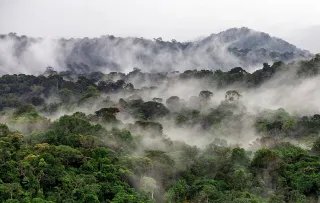
In the middle of the wet season comes a lull of one to three weeks, the famous little March summer. The sky clears, humidity drops, and it’s one of the best moments for nature lovers who want to avoid the autumn crowds. The primary forest is vibrant, frogs and nocturnal wildlife very active. It’s also the start of the sea turtle nesting season along the western coast. The catch: the date of this little summer varies each year, so you need to stay flexible.
April to mid-July: the long rainy season (except for the turtles)
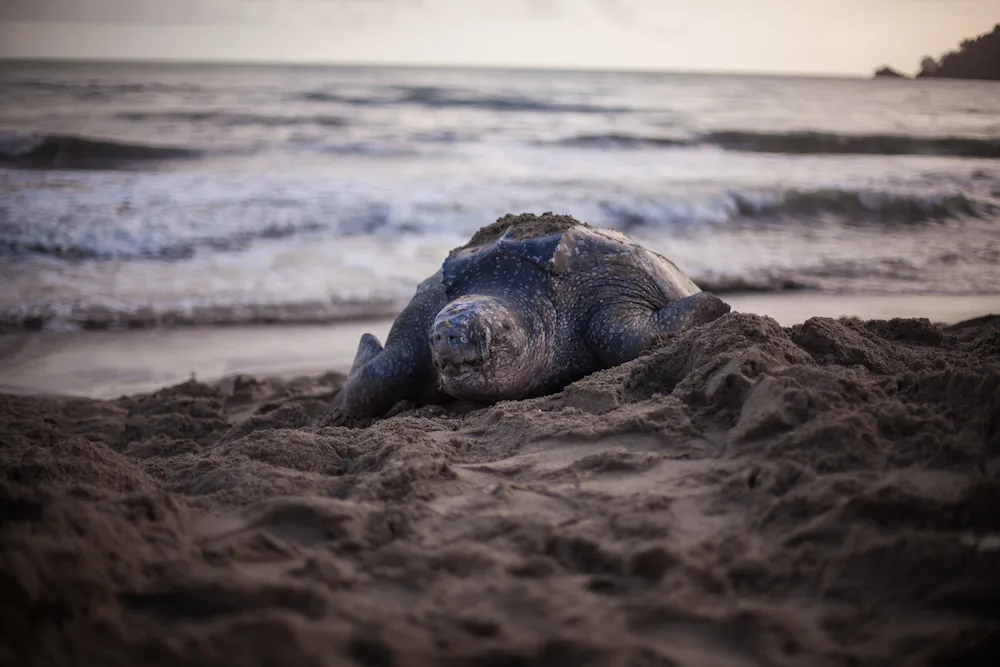
This is the wettest period, with heavy totals in May. Tracks toward the interior deteriorate and some deep-forest excursions are suspended. But it’s the peak of leatherback turtle nesting at Awala-Yalimapo, in the far west. Watching a leatherback weighing over 600 kg dig its nest under the moon is unforgettable. If that’s your main goal, accept the rain: turtle outings take place at night, on foot along the beach, supervised by associations. Otherwise, the vegetation is spectacular and prices at their lowest, but for a first trip it’s better to aim later.
Turtle nesting calendar to remember
- April to July: leatherback turtle nesting (peak in May-June)
- June to September: hatching and emergence of baby turtles
- Green and olive ridley turtles: more spread-out nesting, into August
Mid-July to November: full nature comfort
The rain fades and all excursions reopen: Maroni, Nouragues, Îles du Salut, Saint-Laurent-du-Maroni, and Cacao with its Hmong community (Sunday morning market, soup and fritters for under 10 €). Turtle hatchings continue early in this period. It’s the perfect compromise for anyone who wants to see everything without rain: July-August for sunshine (high season, book early), September-October for stable weather and smaller crowds, mid-November for fine days before the rains return.
December: transition and festivities
The rains gradually return, but often late in the day. The end-of-year atmosphere is warm, with Creole Christmas markets enlivening Cayenne and Rémire-Montjoly. A good option if you’re combining a family visit with discovery.
Timing your trip around an Ariane launch from Kourou
This is the criterion that makes French Guiana unique. The Guiana Space Centre, in Kourou, regularly launches the Ariane 6 and Vega rockets. Witnessing a liftoff is an unforgettable experience: the ground vibrating, the glow in the night, the rocket piercing the Amazonian sky.
A few concrete points:
- Visiting the Space Centre is free (by reservation, vaccination and ID required).
- The public viewing sites for launches are also free, but spots go fast.
- The launch calendar is published in advance, but dates often slip (weather, technical issues). Don’t build your whole trip around a launch: treat it as a bonus.
Our advice as residents: aim for the dry season AND an announced launch slot, then keep two days of margin in your schedule in case the launch is postponed 24-48h. You’ll find more details in our complete guide to French Guiana.