Water, Electricity, Internet: Mastering the Running Costs of a Guadeloupe Rental
Published on August 27, 2025 · by Ismael Samuel
When owners calculate the profitability of a vacation rental in the archipelago, they look at the rent, the tourist tax, sometimes depreciation. They almost always forget the line item that erodes margins and melts away Airbnb ratings: operating costs. And in Guadeloupe, the running costs of a Guadeloupe vacation rental bear no resemblance to those of a small flat in mainland France. Recurring water cuts, some of the most expensive electricity in France, connectivity that varies from one town to the next: after several seasons managing properties on both wings of the “butterfly,” here is the ground-level reality of these costs, their price in euros, and their direct impact on the guest experience.
Why running costs are a category of their own in the French overseas territories
A rental in Guadeloupe operates under a tropical climate (dry season from December to April, humid “hivernage” from June to November), in an island territory dependent on strained infrastructure. Three concrete consequences:
Water and electricity are more expensive and less reliable than in mainland France.
Air conditioning runs almost year-round, whereas it remains a luxury elsewhere.
A network outage is no minor detail: it’s a potential negative review, especially for guests traveling 6,800 km and 5 to 6 hours of time difference from Paris.
Well managed, these costs stay under control; poorly anticipated, they generate disputes, refunds, and a damaged reputation. Let’s break them down.
Water cuts in Guadeloupe: the number-one issue for a host
There’s no escaping it: water cuts in Guadeloupe rentals are the leading source of guest complaints. The network suffers from major leaks and rotating water shutoffs (alternating distribution by sector) that can leave a neighborhood without water for several hours, sometimes a full day, with no reliable advance warning.
What it means for your property
A guest who arrives after an 8-hour flight and can’t take a shower has had a ruined start to their stay; with no water, there’s no flushing toilet, no dishes, and no cleaning between turnovers.
The phenomenon affects certain towns and elevated areas more heavily; it worsens during the dry season (carême), at the worst possible time for tourism.
Practical solutions (and their cost)
Defensive equipment makes all the difference:
Buffer reserve tank with a booster pump: a 500 to 1,000-liter tank connected to the network takes over during cuts. Budget €800 to €1,800 installed. It’s the most profitable investment for a year-round rental.
Electric storage water heater rather than an instantaneous one: it keeps a usable volume of hot water even when the network is down.
Flow restrictors on taps and showers: they curb guest overconsumption and smooth out the bill.
On the pure water budget, plan for €40 to €90 per month for a well-occupied one- or two-bedroom unit, more with a pool. But the real challenge isn’t the amount so much as service continuity: a buffer tank turns a water cut into a non-event for the guest.
The cost of electricity for a rental in the overseas territories
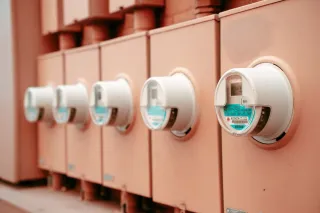
The second item, and far from a small one. The cost of electricity for an overseas rental surprises mainland owners: air conditioning, all but mandatory to rent properly, sends consumption soaring.
Why the bill climbs fast
A reversible bedroom split unit consumes 0.8 to 1.5 kWh per hour. A guest who leaves it running 24/7 with the windows open can double your monthly bill.
Hot water (storage heater), the pool pump, and a tumble dryer — useful given the humidity — all weigh heavily.
During the hivernage, humidity often exceeds 80%: dehumidifiers and AC run continuously.
Realistic ranges and levers for savings
For a well-occupied air-conditioned rental, count on €120 to €250 of electricity per month depending on the size, the number of split units, and whether there’s a pool. To keep this item in check:
Recent inverter air conditioners (class A++): 30 to 40% savings versus an old split unit. Replacement: €900 to €1,500 fitted, quickly paid off.
Ceiling fans: €40 to €80 each, they cut AC use in half during the cooler hours.
Solar water heater: common in Guadeloupe, it almost eliminates the hot-water item. Investment €2,500 to €4,000, amortized in a few years.
Programmable thermostats and a welcome note reminding guests to close openings when the AC is on: better than a meter spinning out of control.
Salty humidity also accelerates wear on outdoor units, especially seaside on the Atlantic coast (Le Moule, Pointe des Châteaux): regular rinsing extends their lifespan and prevents a breakdown in the middle of high season.
Internet and fiber: a deciding factor, not an option
People long believed you came to Guadeloupe to disconnect. That’s false for a large share of guests: remote workers on a “workation,” families keeping the kids occupied in the evening, travelers booking their excursions online. Fiber internet for an Airbnb in Guadeloupe has become a booking filter and a review criterion in its own right.
The real state of the network
Fiber is widely deployed across the economic hub of Pointe-à-Pitre, Le Gosier, Sainte-Anne, Saint-François, and most of Grande-Terre’s town centers.
On the heights of Basse-Terre and in certain rural areas (the Deshaies hinterland, Bouillante), fiber can be lacking; you then fall back on ADSL/VDSL or 4G, which is more hit-or-miss.
4G/5G covers the coastline well but leaves dead zones in the rainforest and at the heart of the National Park.
How to secure connectivity
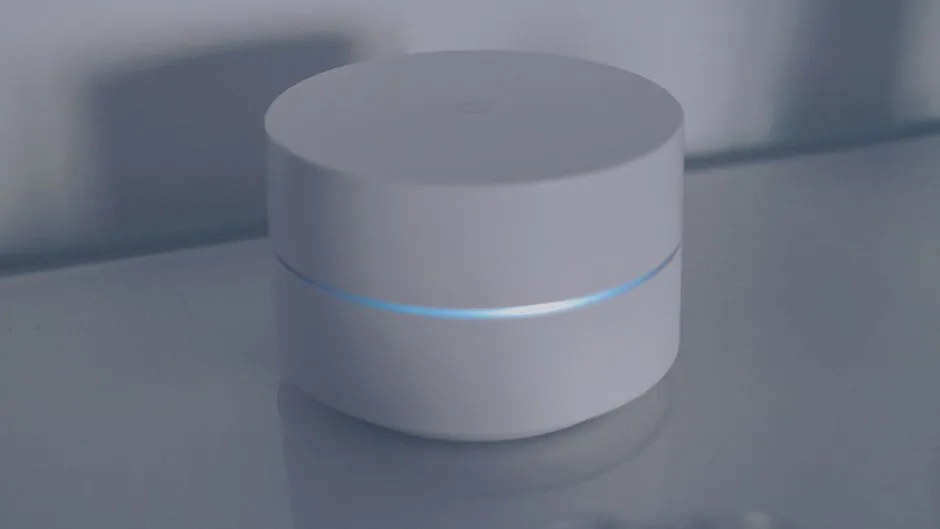
Subscribe to fiber as soon as your property is eligible: €30 to €45 per month and a genuine selling point. Display the actual speed, not a promise.
Backup 4G router in poorly served areas: €20 to €35 per month, it saves a remote worker’s stay when the ADSL falters.
Wi-Fi repeaters in multi-story villas, and a speed test before every arrival: Wi-Fi that’s advertised but doesn’t work scores worse than an openly acknowledged absence.
To position your property within its micro-market and understand what guests are looking for town by town, our complete guide to Guadeloupe reviews Grande-Terre, Basse-Terre, and the southern islands (Les Saintes, Marie-Galante, La Désirade).
Budgeting your running costs: the worked example of an air-conditioned 2-bedroom
For a well-occupied air-conditioned two-bedroom rental in Grande-Terre, here is a realistic average monthly breakdown over the year:
Water: €40 to €90
Electricity (AC included): €120 to €250
Fiber internet + possible 4G backup: €35 to €70
Minor upkeep and consumables (AC filters, supplies, bulbs): €30 to €60
That’s roughly €225 to €470 in running costs per month, excluding major maintenance, owner’s non-occupant insurance, and tourist tax. On revenue of €1,800 to €3,000 per month in a good period, this item accounts for 10 to 18%: this is where anticipation (buffer tank, inverter AC, fiber) separates a profitable property from one that collects lukewarm reviews.
The Hostel Toucan approach to running costs and unforeseen events
At Hostel Toucan, a concierge and vacation rental service in the French overseas territories, we treat running costs as a matter of guest experience as much as accounting. Concretely:
Technical audit of the property: spotting weak points (no water reserve, old energy-guzzling split units, temperamental Wi-Fi) before listing it.
Proactive communication and WhatsApp support 7 days a week, in the right time zone: a message when a water shutoff is announced, a quick response in case of an AC breakdown or a cut — rather than a vengeful review.
Direct booking with no platform fees and free cancellation up to 7 days before arrival, reassuring for guests traveling far.
A traveler looking for a well-equipped place? Browse our rentals in Guadeloupe. An owner who wants to turn running costs into a competitive advantage? Head to the owners page for a free, no-obligation estimate.
FAQ
Are water cuts frequent in Guadeloupe and how do you manage them in a rental?
Yes, rotating water shutoffs and cuts remain a real problem, more pronounced in the dry season and in elevated areas. The best defense for a rental is a buffer reserve (a 500 to 1,000-liter tank with a booster pump, €800 to €1,800 installed) paired with a storage water heater: the guest then no longer feels the cut. Communicating in advance when shutoffs are announced prevents most complaints.
What electricity budget should you plan for an air-conditioned rental in Guadeloupe?
For a well-occupied air-conditioned one- or two-bedroom unit, count on €120 to €250 per month, more with a pool. This item depends mainly on how much the air conditioning is used. Recent inverter split units, ceiling fans, and ideally a solar water heater significantly reduce the bill while improving comfort.
Is fiber essential for renting on Airbnb in Guadeloupe?
It has become a genuine booking criterion, particularly for remote workers and families. It’s widely available in Grande-Terre and in town centers; elsewhere (the heights of Basse-Terre, rural areas), good ADSL/VDSL backed by a backup 4G router will do. The key is to display an honest speed and to test the connection before every arrival.
What share of profitability do running costs represent for a rental in Guadeloupe?
On average 10 to 18% of monthly revenue for an air-conditioned rental, or roughly €225 to €470 per month for a two-bedroom, excluding major maintenance, insurance, and tourist tax. It’s an item to factor in from the very first profitability calculation, and to optimize with equipment suited to the tropical, island context.
Nous utilisons des cookies de mesure d'audience et de publicité pour améliorer votre expérience
et nos campagnes. Vous pouvez accepter ou refuser. Voir notre
politique de confidentialité.