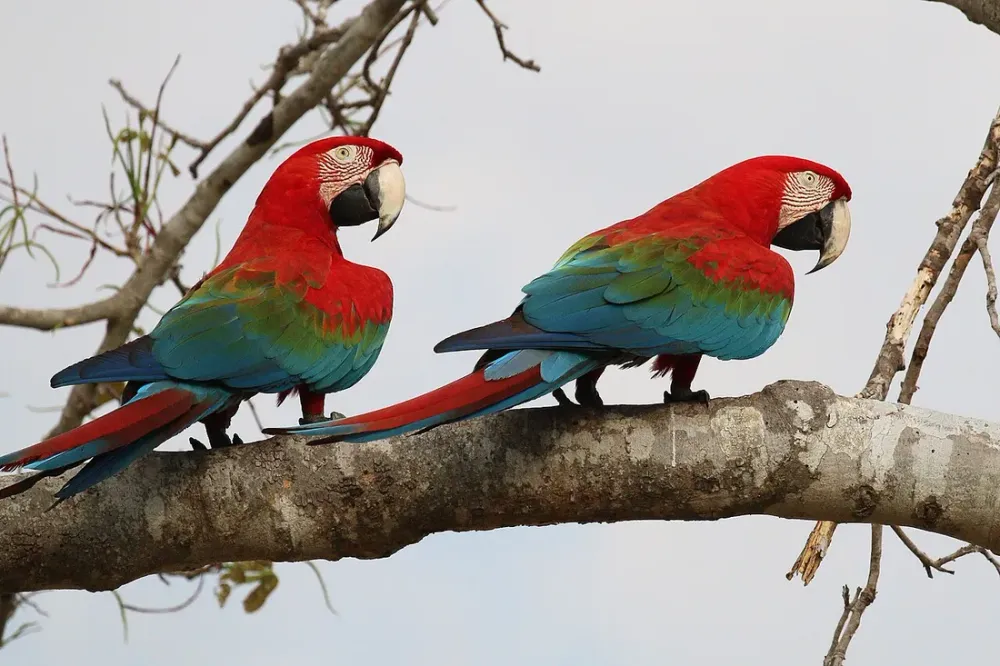
When you live in French Guiana, you end up setting your alarm by the birds. Around 5:30 a.m., well before the sun climbs above the canopy, the sky fills with calls: it’s often the macaws that open the show, in noisy pairs streaking from one forest stand to the next. The birds of French Guiana are among the most spectacular in the Amazon, and the good news for 2026 is that you can observe plenty of them without high-end binoculars or a 600 mm lens. You just need to know the right places, and above all the right hours. Here’s the guide I wish I’d had when I arrived.
Why French Guiana is an accessible birding paradise
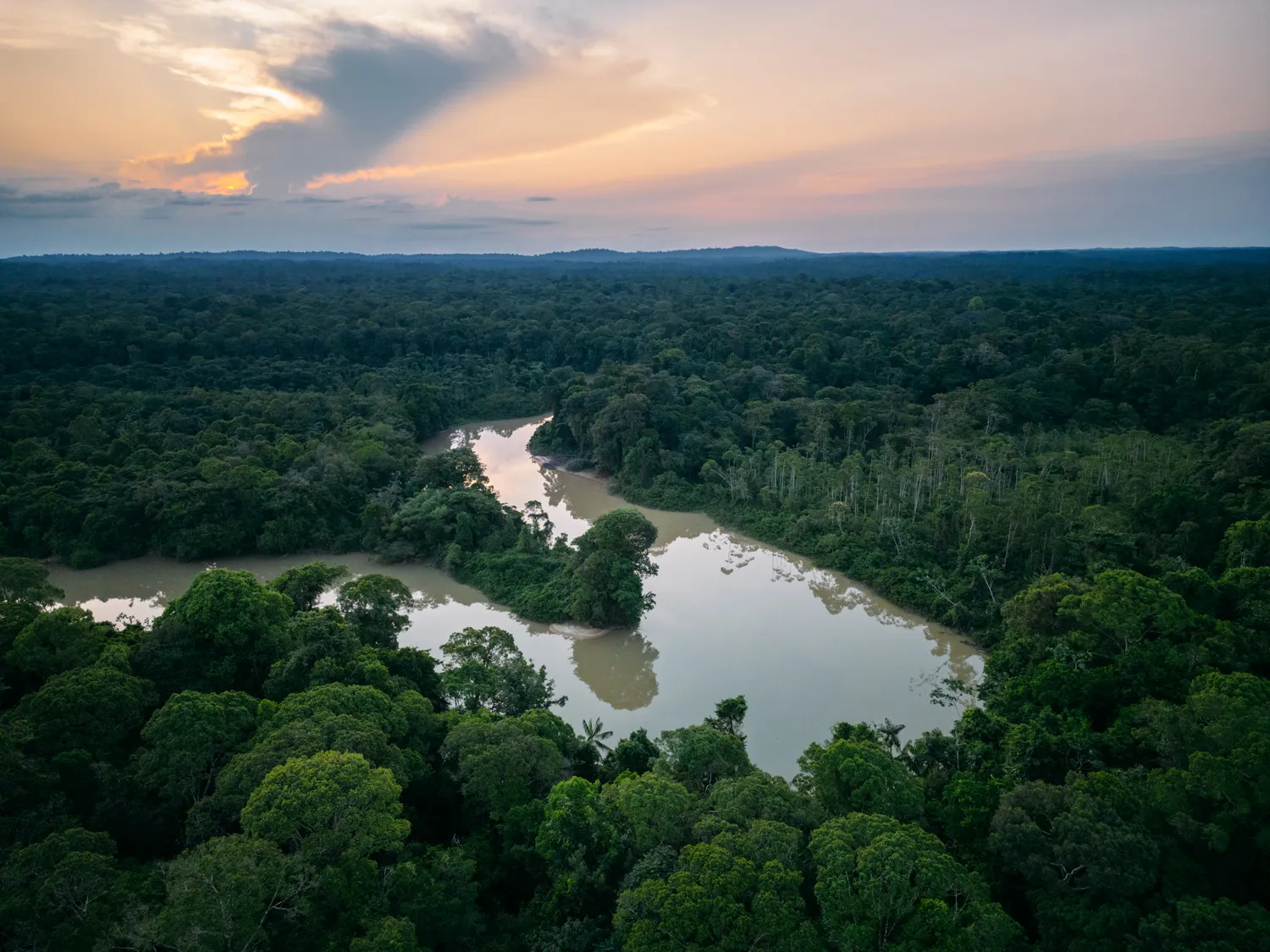
French Guiana is a French overseas department (DROM) covered by more than 90% primary Amazon rainforest. The result: over 700 bird species are recorded across a territory the size of Portugal, yet home to just 290,000 inhabitants. This low human density explains why the wildlife stays so visible, sometimes along the roadside or at the edge of a garden.
Another advantage: everything is done from Cayenne and its surroundings by car (essential here). The best spots are less than two hours from the regional capital. And unlike many Amazonian destinations, the French infrastructure makes the adventure comfortable: paved roads, clean accommodation, drinkable water.
The golden rule: timing beats gear
If you only remember one thing, let it be this: timing beats equipment. A beginner with a simple phone, present at the right place at 6 a.m., will see ten times more birds than an equipped photographer arriving at 10 a.m. The two magic windows are:
- 5:45 – 8:30 a.m.: peak activity, songs, movements toward feeding areas.
- 4:30 – 6:15 p.m.: return to roosts, golden light, macaws in flight.
During the day, in the heat, the forest goes almost silent. No point exhausting yourself at noon.
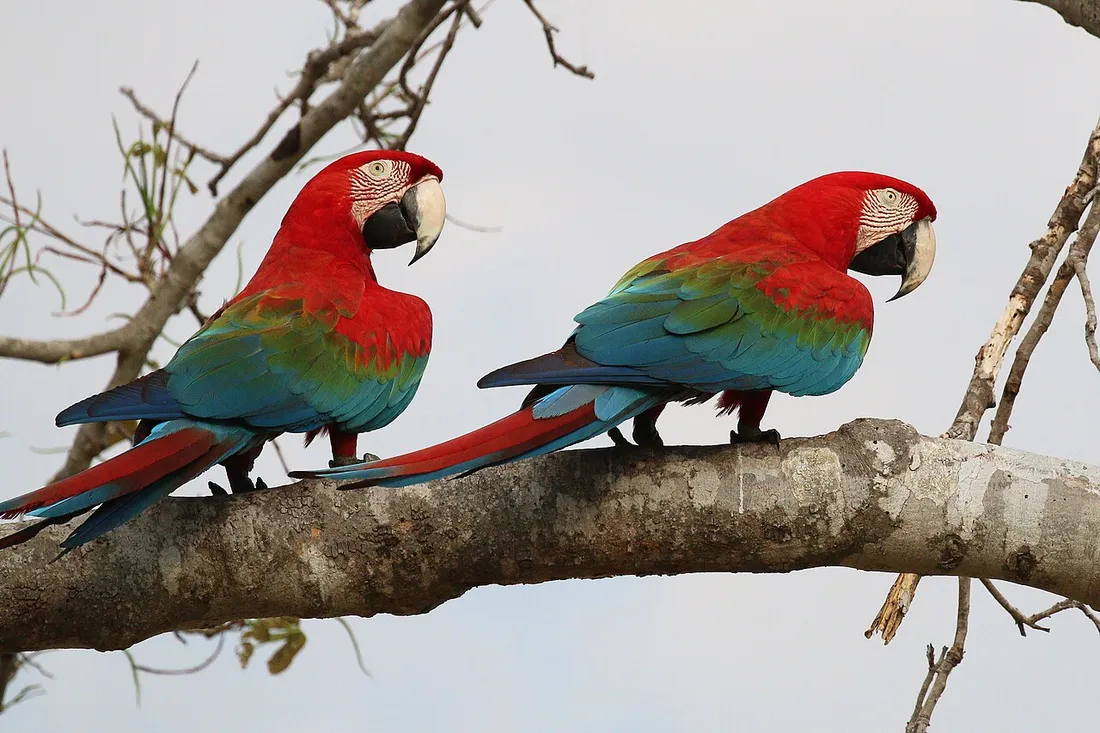
Where to see scarlet macaws in French Guiana
The scarlet macaw (ara macao) and the red-and-green macaw are the local stars. To observe them, forget the dense forest: you spot them mostly in flight above the canopy, backlit or as a colorful silhouette.
The Kaw marshes (Roura)
About 1 hr 30 from Cayenne via the Roura road, the Kaw marshes are my number one spot. The track that drops down toward the village crosses a savanna and skirts the forest-covered Kaw mountain. That’s where, in the late afternoon, you see pairs of macaws passing above the trees.
- When: leave Cayenne around 2:30 p.m. to be on site by 4:30 p.m.
- Cost: fuel only if you stay on the road; a guided pirogue outing usually costs 45 to 70 € per person.
- Tip: at night, those same pirogues head out to watch caimans. Combine the two.
The Gabrielle creek and the Cacao road (Roura)
The D6 road leading to Cacao, the village of the Hmong community, crosses a magnificent forested area. The roadsides often offer clearings where you can watch for macaws at daybreak. Stock up on shrimp fritters at Cacao’s Sunday market, then station yourself at a clearing around 6:30 a.m.
Where to see toucans effortlessly
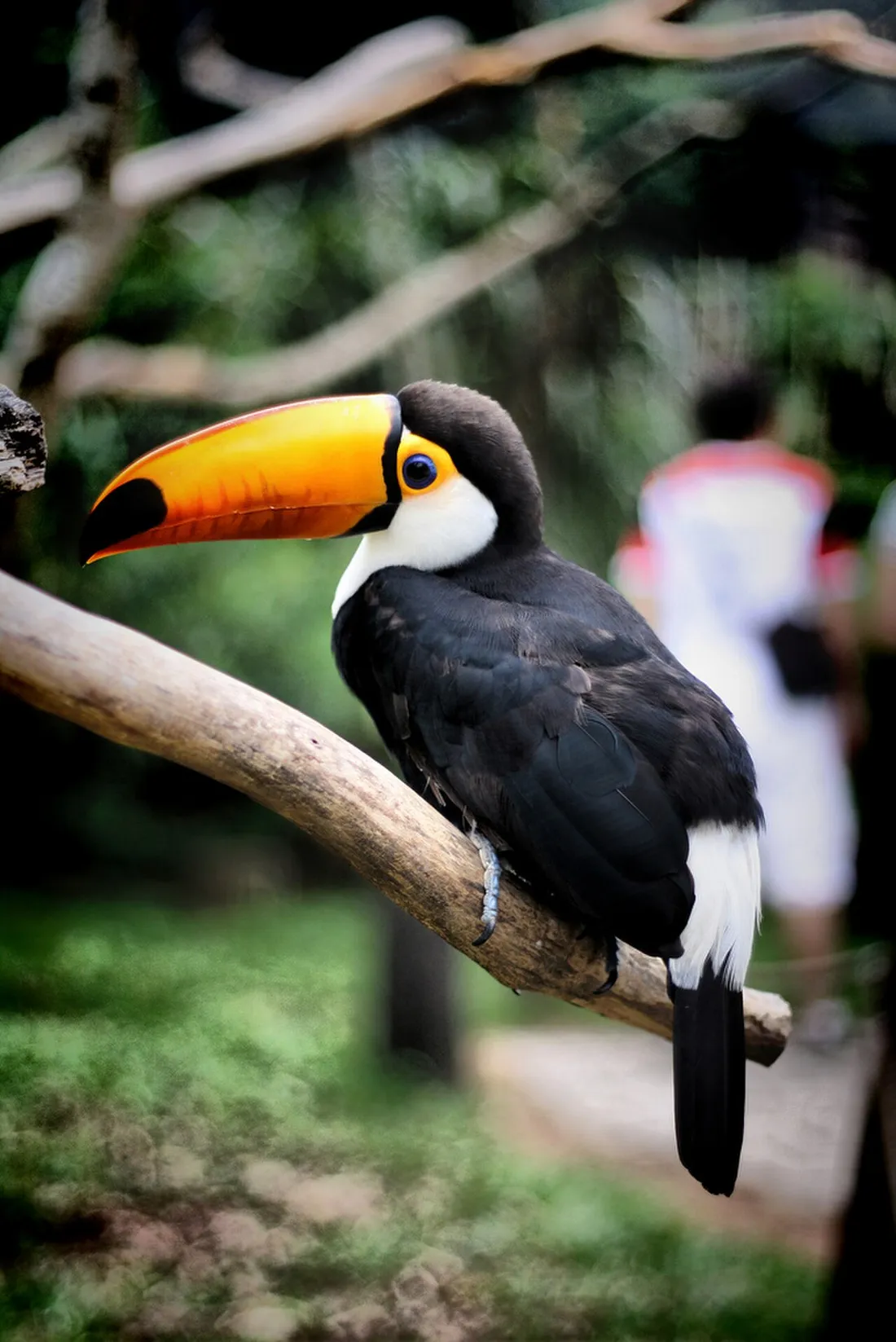
Unlike macaws, toucans let you approach more easily, as they happily frequent fruit trees at the forest edge and even some gardens. The channel-billed toucan and the toco toucan are the easiest to spot thanks to their enormous bill and their characteristic undulating flight.
The gardens and edges of Rémire-Montjoly and Matoury
A pleasant surprise for travelers: no need to go far. In Rémire-Montjoly and Matoury, toucans come to feed in the mango and guava trees in the early morning. A terrace roof, a coffee in hand, and you witness the show.
- When: 6 – 7:30 a.m., when ripe fruit attracts all the wildlife.
- Sound cue: a raspy, almost mechanical croak signals their presence before you see them.
The Rorota trail (Rémire-Montjoly)
This marked trail around Lake Rorota is one of the most accessible in the municipality. Count on 1 hr 30 to 2 hours of easy walking. Besides toucans, you can hear curassows on the ground and sometimes cross paths with monkeys. Free entry, parking at the trailhead.
The curassow: the most discreet encounter
The black curassow (hocco alector) is a large black bird with a curly crest on top of its head, living on the ground in the deep forest. It is hunted, and therefore wary, except in protected areas. To maximize your chances:
- The Nouragues reserve: access is highly regulated and limited, but the wildlife there is dense and confident.
- Quiet forest tracks at daybreak, driving slowly, windows open.
- Stay silent: the curassow flees at the slightest engine or voice noise.