
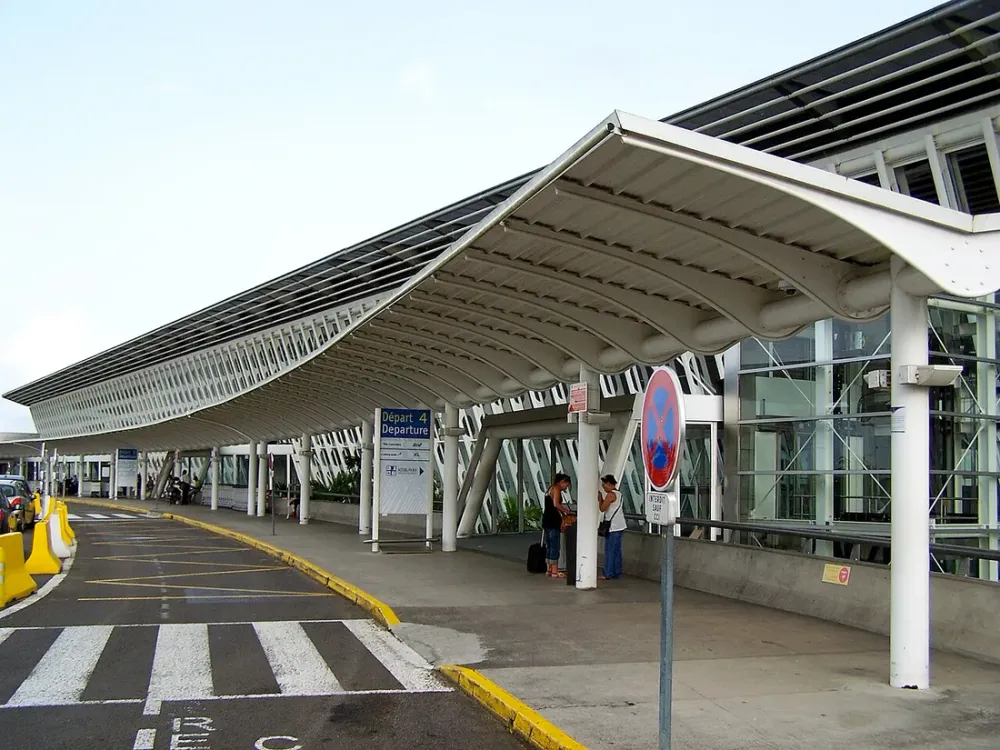
A business trip to Martinique, Guadeloupe or French Guiana quickly weighs heavily on a company’s cash flow. Between the transatlantic plane ticket, the car rental, meals and accommodation, the bill for a one-week assignment often exceeds that of an equivalent mainland trip. Yet a significant share of this budget can be controlled in advance, provided you choose services designed for businesses: invoicing in the company’s name, compliant supporting documents, payment by bank transfer and degressive rates over the duration. This article reviews the concrete levers for reducing and securing the cost of an overseas assignment, with a focus on para-hotel accommodation, often the area where savings are easiest to obtain.
Understanding the structure of an overseas travel budget
Before optimising, you need to know where the money goes. On a 5- to 10-day assignment in the French West Indies or French Guiana, the budget is generally split across four main items.
- Air travel: often the heaviest item. A round trip from mainland France to Fort-de-France, Pointe-à-Pitre or Cayenne commonly falls within an indicative range of 500 to 1,200 EUR depending on the season and how far in advance you book.
- Accommodation: at a hotel, expect frequently 90 to 180 EUR per night in business areas (Fort-de-France, Baie-Mahault, Cayenne, Rémire-Montjoly). With long-stay para-hotel accommodation, the cost per night drops noticeably beyond a few nights.
- Local mobility: car rental is almost unavoidable, often 35 to 70 EUR per day, excluding fuel.
- Meals and incidentals: dining out, possible tolls, connectivity, laundry on long stays.
Accommodation and mobility are the two items where the length of stay strongly changes the unit cost. That is where most of the optimisation happens.
The trap of per-night rates
Booking night by night, as you go, almost always turns out more expensive. On a long or recurring assignment, the company pays full price and loses the benefit of degressive rates. Anticipating and locking in a long-stay accommodation often significantly lowers the average cost per night.
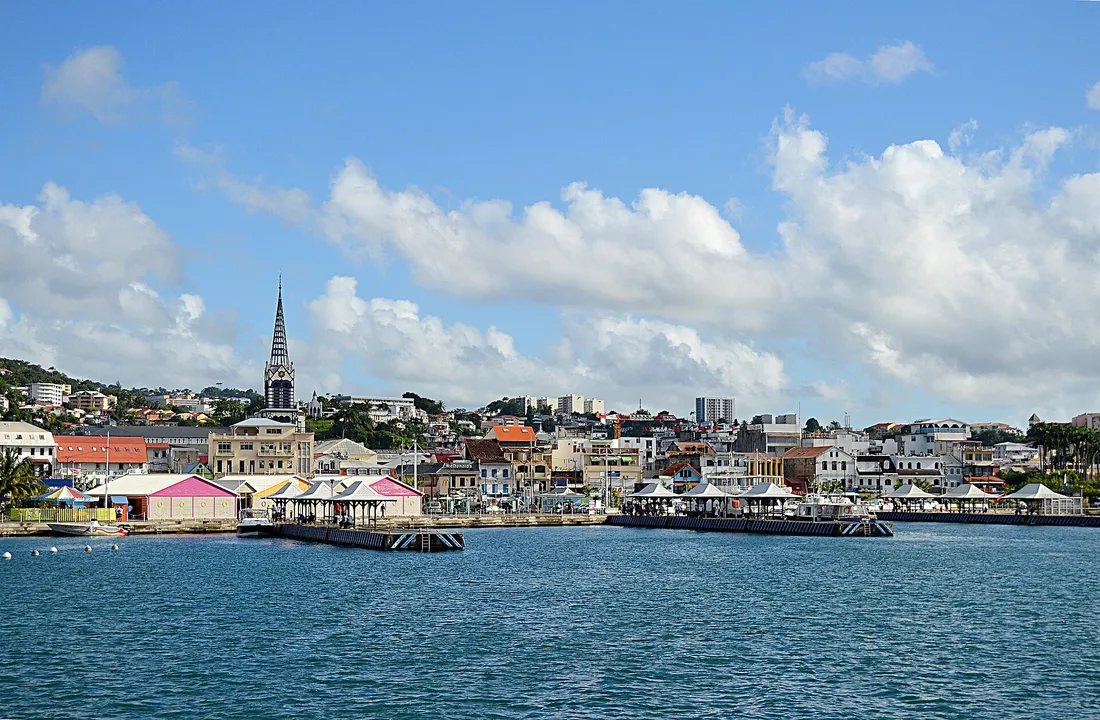
Why para-hotel accommodation is a game changer for professionals
Para-hotel accommodation refers to a furnished rental combined with services close to those of a hotel (linen, cleaning, reception), but in a complete home: villa, apartment or equipped studio. For a business trip, this format combines several concrete advantages.
- A whole home: an equipped kitchen to prepare some meals and cut the dining budget, a workspace, several rooms for a team.
- A degressive cost per night: the longer the stay, the lower the average rate, unlike a hotel which often stays linear.
- The comfort of a real living space: on an assignment of several weeks, this is a factor of well-being and productivity for staff.
Discover our accommodation available in French Guiana and the French West Indies to assess the formats suited to your assignment.
A shared villa for a team
When several staff members travel together, renting a villa rather than several hotel rooms mechanically divides the cost per person. A villa with several bedrooms and shared spaces also fosters cohesion and collaborative work in the evening.
Invoicing in the company’s name: the key point of the expense report
This is the differentiator that is often overlooked. Many peer-to-peer rental platforms do not issue a usable invoice in the company’s name, which complicates accounting and undermines the deductibility of the expense.
A professional para-hotel host, on the other hand, issues a proper invoice in the company’s name, containing the expected details:
- Corporate name and address of the client company
- SIREN/SIRET number and, where applicable, intra-community VAT number
- Breakdown of services, stay dates and number of nights
- Amount excluding tax, VAT rate and amount, total including all taxes
This invoice fits seamlessly into an expense report, holds up during an audit and secures the accounting treatment of the expense.
A compliant expense report: the checklist
Before validating accommodation for a business trip, check these points:
- The invoice is issued in the company’s name, not the staff member’s name
- The SIRET and, if applicable, the company’s VAT number appear on the document
- The stay dates and number of nights are detailed
- VAT is clearly broken down (base excluding tax, rate, amount)
- The payment method accepts professional bank transfer
- A proof of payment (statement or transfer confirmation) is kept
- The professional purpose of the trip is documented internally
This rigour avoids accounting rejections and painful adjustments at year-end.
VAT and recovery: what you need to know
VAT on professional accommodation is a topic to handle with your chartered accountant, because recovery rules depend on the exact nature of the service and the company’s situation. A few useful benchmarks to keep in mind.
In France, VAT on the accommodation expenses of executives and employees is in principle not recoverable, unlike certain ancillary services. However, having a correctly established invoice, with VAT broken down, remains essential to justify the expense, calculate the real cost and enable your accountant to apply the right treatment. The VAT rates applicable in the overseas territories also differ from those in mainland France, which makes it all the more important to obtain a clear and detailed document.
The key point, from an optimisation standpoint: never accept accommodation without a usable professional invoice. The lack of a compliant supporting document often costs more, in the long run, than the difference in the displayed price.