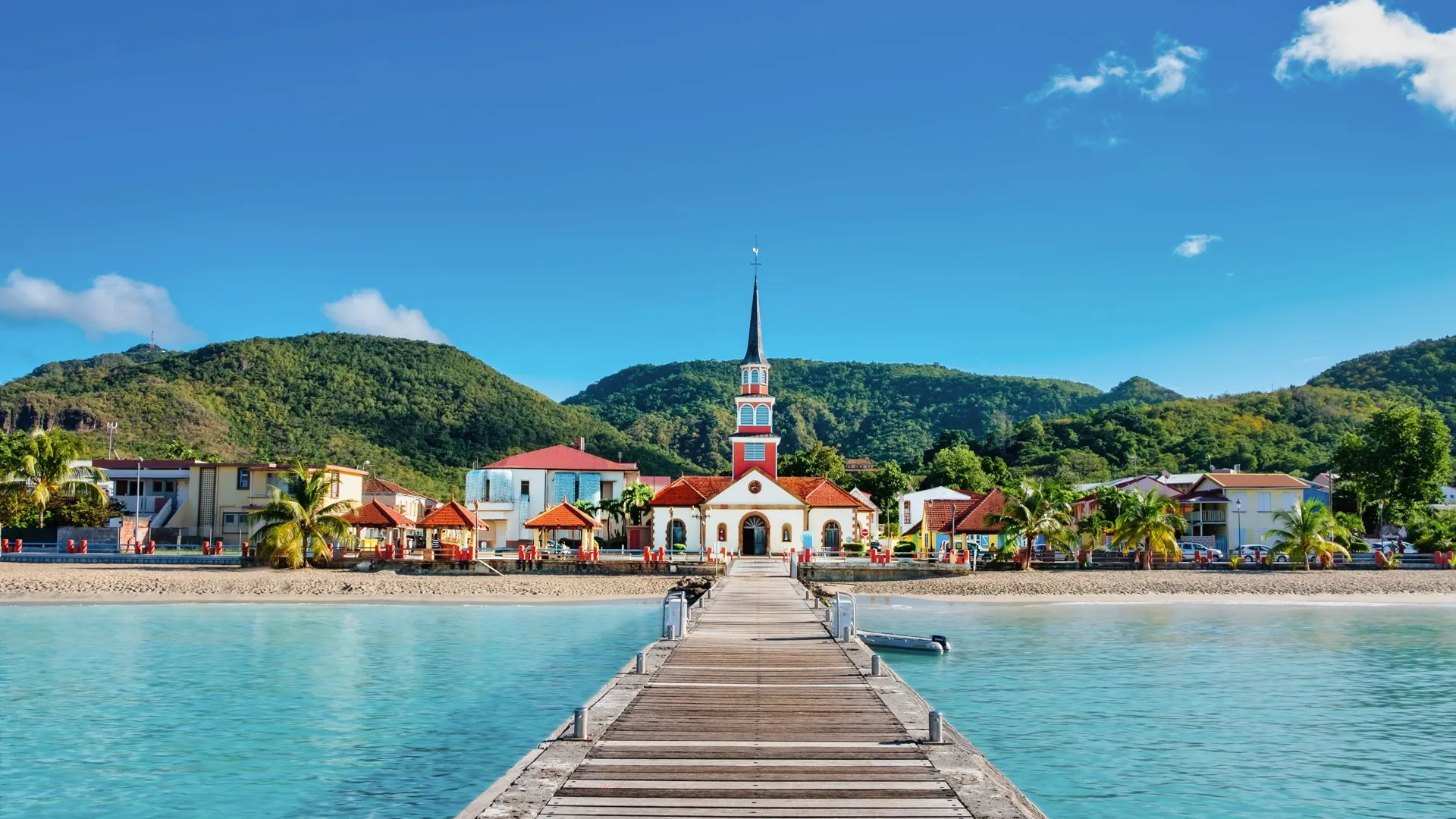

Season after season, I watch Martinican owners cross a line without realizing it. You start with a one-bedroom in Le Diamant, the dry season takes off, you buy a villa in Les Trois-Îlets, then a studio in Sainte-Anne facing Les Salines — and one fine day, the tax authorities decide you are no longer a simple landlord but a professional. Understanding the LMP threshold in Martinique then becomes decisive: crossing that line changes your social coverage, your capital-gains taxation, and your cash flow. Anticipated properly, this shift is no trap; poorly prepared for, it catches you off guard.
As an island resident and furnished-rental manager in the French overseas departments (DROM), let me explain concretely where the line lies, what happens when a multi-property owner crosses it, and how to approach it calmly. This guide is educational and does not replace the advice of a chartered accountant, the only professional qualified to validate your personal situation.
The LMP threshold in Martinique: two cumulative conditions
By default, renting out furnished accommodation classes you as a Non-Professional Furnished Rental Provider (LMNP). You shift to Professional Furnished Rental Provider (LMP) as soon as two conditions are met at the same time:
- your annual rental income exceeds €23,000 (rent including charges, with all your furnished rentals added together);
- this income becomes higher than the other activity income of your tax household (salaries, pensions, professional BIC or BNC).
The key word is cumulative. A salaried nurse in Fort-de-France who collects €30,000 in rent but earns €35,000 in salary remains LMNP: the second condition is not met. Conversely, a retiree with an €18,000 pension who draws €28,000 from their furnished rentals shifts to LMP. This is the situation many multi-property owners face: as the portfolio grows, the rent eclipses everything else.
Why owning multiple properties accelerates the shift
The €23,000 threshold is assessed across the entire household, not per property. Three units at €8,000 in annual income each, and you are already at €24,000: the first condition is met. And the Martinican short-stay market — Sainte-Anne, Les Trois-Îlets, Le Diamant, Le François, Tartane — posts high nightly rates in the dry season, and a properly managed property quickly exceeds €7,000 to €10,000 in income per year.
In practical terms, on the island:
- one well-located studio almost always stays LMNP;
- two properties bring you close to the threshold without a large salary on the side;
- three or more properties push you past €23,000 almost mechanically, and the LMP status becomes likely for a household with modest other income.
Note: the calculation is based on income collected, not profit. Even if depreciating your villas brings the taxable result down to zero, it is the gross rent that counts toward the LMP threshold in Martinique.
SSI social contributions: the real change for the professional rental provider
This is the most tangible impact, and the one most often underestimated. As an LMNP, your short-stay rents are subject to social levies at 17.2% (CSG-CRDS on investment income). As an LMP, you enter a different world: you become affiliated with the Self-Employed Social Security scheme (SSI) and pay social contributions on your profit.
What this means for a professional furnished rental provider in an overseas department (DOM):
- an overall rate of around 35% to 45% of the result (pension, health, family allowances, CSG-CRDS), well beyond the 17.2% of the non-professional;
- a minimum contribution due even in the absence of profit: expect something in the order of €1,100 to €1,200 per year at the floor, which can surprise an owner whose depreciation wipes out the taxable result;
- in return, these contributions open up rights (validation of retirement quarters, benefits) and are deductible from the result.
Good news for the DOM: if you fall under the micro-BIC scheme, you can opt for the micro-social regime, and the contribution rates are reduced in Martinique compared with mainland France, as for all overseas self-employed workers. The difference does not erase the charge, but it lightens it. Depending on whether you are under the micro or the actual (réel) regime, the social bill varies twofold: a chartered accountant will quantify your case.
LMP and CFE: no double penalty, but stay vigilant
Professional or not, you remain liable for the CFE (business property contribution), with a minimum base set by the municipality, exempt the first year and below €5,000 in income. Switching to LMP does not create an additional CFE, but it formalizes your activity: registration, social declaration, more closely tracked accounting. For a multi-property owner, this is the moment to get organized.
Capital gains: the often decisive tax advantage of LMP status
People talk a lot about social contributions counting against LMP; they forget that the resale can actually work in its favor. This is the whole point of capital-gains coverage.
- As an LMNP, the sale falls under private capital gains: full exemption from income tax after 22 years of ownership, and from social levies after 30 years. And since 2025, the depreciation deducted is reintegrated into the calculation, which inflates the taxable capital gain.
- As an LMP, you shift into professional capital gains, with a powerful mechanism: the exemption under Article 151 septies for small businesses. If your activity exceeds five years and your annual income stays below €90,000, the capital gain is fully exempt; the exemption is partial between €90,000 and €126,000.
Translated into Martinican terms: a multi-property owner who has operated their villas for more than five years, with €70,000 in annual income, can resell with no capital-gains tax under Article 151 septies — where an LMNP would wait two to three decades. For a portfolio boosted by the property pressure of the South, the gap quickly amounts to tens of thousands of euros. The flip side: the short-term capital gain (the depreciation applied) remains taxed at the scale and subject to contributions. So LMP is not just a constraint.