Every year, between February and March, Martinique tips into a fever that no other season can match. Martinique Carnival is far more than a simple parade: it’s an entire week when the whole island, from Fort-de-France to the towns of the North, throbs to the beat of drums, vidés and Creole. As an island resident, I’ve lived it from the inside, and here I share a day-by-day guide so you won’t miss a thing, from Fat Sunday all the way to the burning of Vaval.
Understanding Martinique Carnival before you go
Carnival begins on the first Sunday after Epiphany, with “Fat Sundays” that build in intensity, but the heart of the festivities is concentrated in the four “fat days”: from Sunday to Ash Wednesday. We’re in a French overseas department here: you pay in euros, you speak French and Creole, but the spirit is resolutely Caribbean.
On the practical side:
- Time difference: -5h in winter, -6h in summer compared to Paris. Carnival falling in the dry season (Lent, from December to April), you enjoy the best climate of the year.
- Arrival: Aimé Césaire Airport in Le Lamentin, 20 minutes from Fort-de-France.
- Country code: +596.
- Getting around: a car is strongly recommended. Budget €30 to €50/day for rental, and plan ahead: the roads toward Fort-de-France are jammed on parade days.
One figure structures everything: Vaval, the king of Carnival. He’s a huge papier-mâché effigy, often satirical, caricaturing the year’s political or social news. He presides over the festivities… before being burned on the final day.
The day-by-day program
Fat Sunday: a grand opening
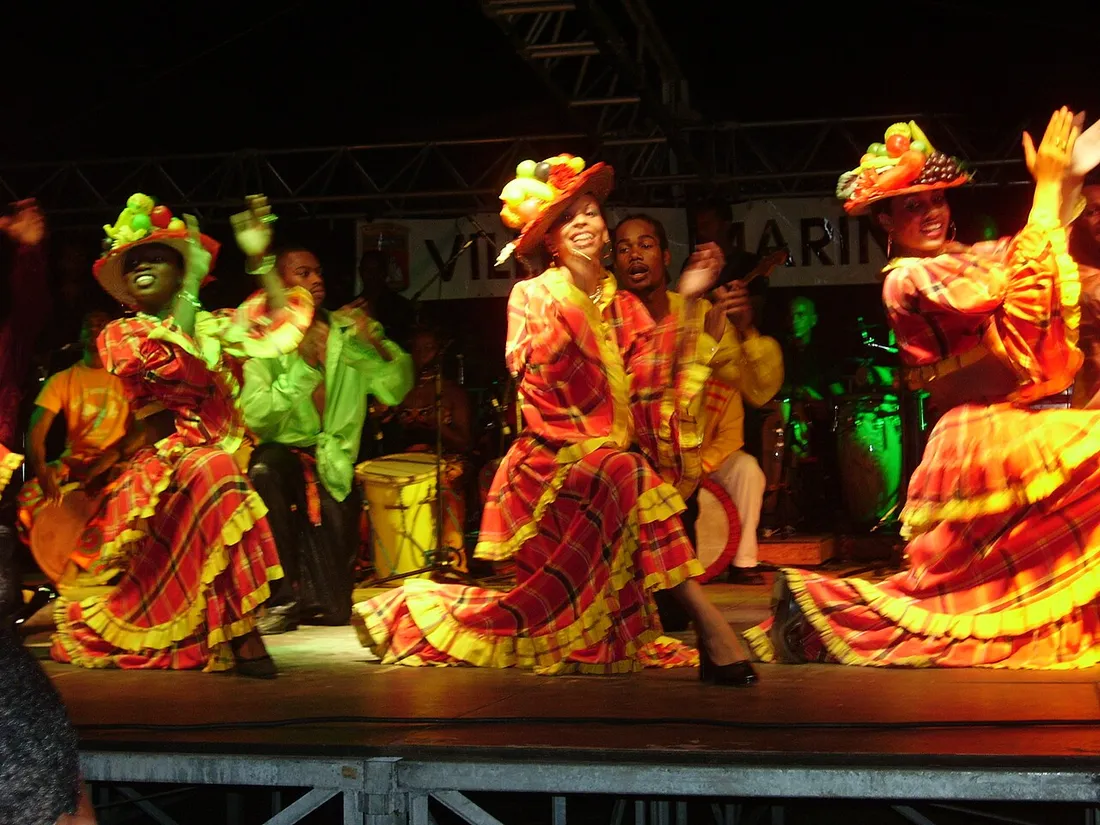
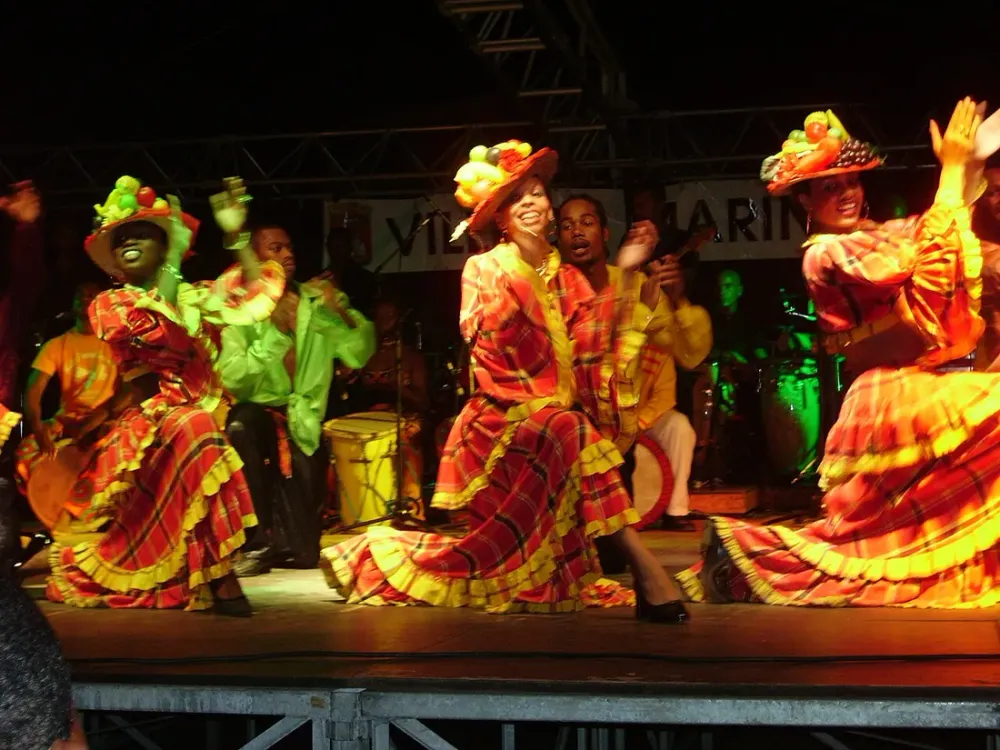
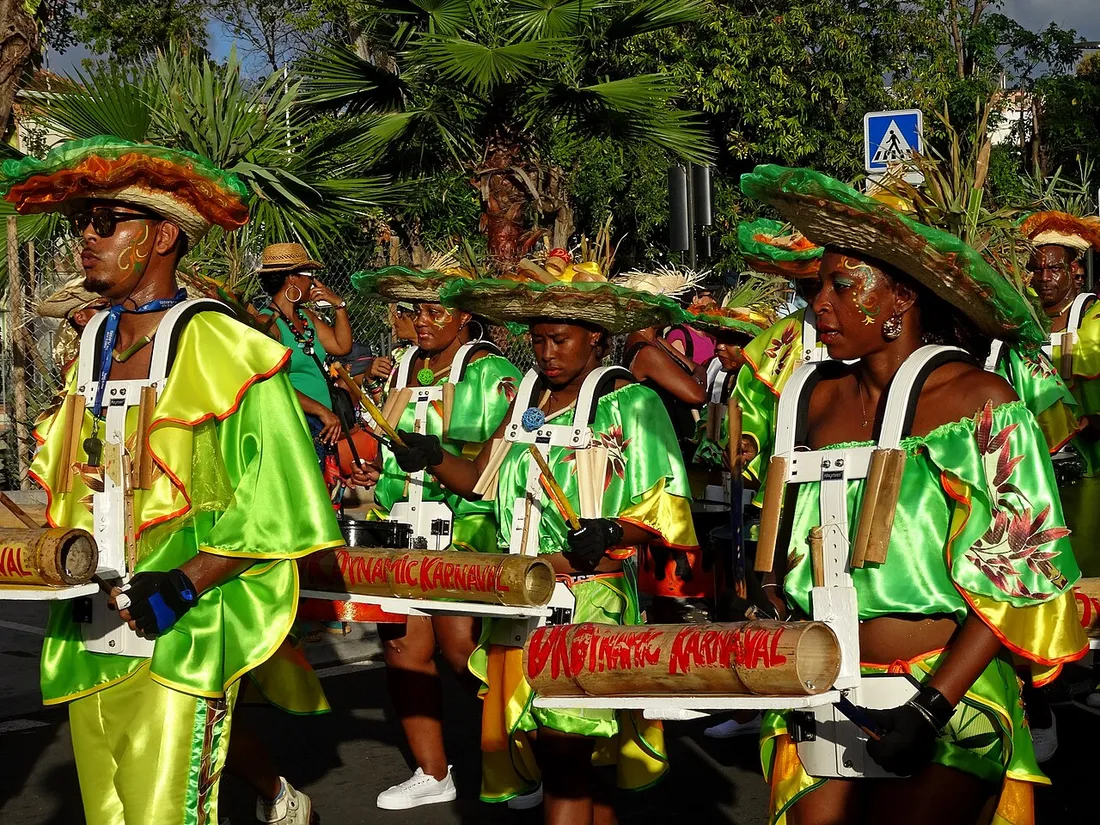
Fat Sunday (“dimanch gras”) officially launches the big week. In Fort-de-France, the parade usually starts in the early afternoon, around 2 p.m., on La Savane and along the waterfront. It’s the most colorful parade: walking groups (“groupes à po”), floats, orchestras and queens elected in each town.
My on-the-ground tip: arrive early, park on the outskirts (toward Le Lamentin or Schœlcher) and finish on foot or by shuttle. The best spots along the route are taken from noon. Bring water, a hat and closed shoes: you walk, you dance, you sweat.
Fat Monday: the burlesque weddings
Fat Monday is devoted to burlesque weddings. Tradition reverses the roles: men dress as brides, women as grooms, in deliberately grotesque and hilarious processions. It’s a lighter day, hugely popular with families.
The vidés (improvised parades where the crowd follows an orchestra through the streets) start to swell. Le Diamant, Sainte-Anne and Les Trois-Îlets organize their own neighborhood parades, often more intimate and more authentic than the big Foyalais spectacle.
Mardi Gras: the red of the she-devils and imps
Mardi Gras is arguably the most spectacular day. The mandatory color is red: the streets fill with red devils, imps and she-devils. Children parade with horns and pitchforks, and the groups compete with flamboyant costumes.
It’s also the day you cross paths with Carnival’s iconic figures:
- The nèg gwo siwo: revelers entirely coated in a mixture of molasses (cane syrup) and soot, who threaten with a laugh to smear you if you come close. A figure inherited from the history of slavery, now a symbol of freedom and joyful provocation.
- The Marianne lapofig: covered in dried banana leaves.
- The red devils with mirrors, meant to frighten off evil spirits.
In Fort-de-France, the great Mardi Gras vidé is unmissable. But know that Le François and Saint-Pierre offer more concentrated atmospheres, ideal if you want to experience the celebration without the crush of the capital.
Ash Wednesday: black and white, and the death of Vaval
Ash Wednesday closes Carnival in an unexpected emotional intensity. The color of the day is black and white: the crowd parades in mourning, dressed as black-and-white she-devils, to weep for Vaval.
In late afternoon, on the Fort-de-France waterfront, Vaval is burned. The crowd chants “Vaval, pa kité nou” (“Vaval, don’t leave us”) in an overwhelming collective trance. It’s the most powerful moment of the entire week, a blend of celebration and melancholy. The king goes up in smoke, and the island returns to Lent.
The liveliest towns
Every town has its own Carnival, but here’s my resident’s ranking:
- Fort-de-France: the capital (the island has around 360,000 inhabitants), the inescapable epicenter. The four great parades are at their most massive here.
- Le François: a good-natured vibe, lively neighborhood parades, less touristy.
- Saint-Pierre: Carnival at the foot of Mount Pelée, amid the UNESCO-listed ruins. An exceptional setting.
- Les Trois-Îlets and Sainte-Anne: perfect if you’re staying in the South near the beaches.
- La Trinité / Tartane: to combine Carnival with the Caravelle peninsula.