Sending a team to work in Saint-Laurent-du-Maroni means running very quickly into one reality: western French Guiana offers few accommodation options built for a company’s needs. Construction sites, administrative missions, medical operations, technical work along the Maroni river or logistics-related travel — professional reasons are plentiful in this town on the Suriname border, the second largest in French Guiana. But between a hotel that is fully booked, a furnished rental let privately with no usable invoice, and a guesthouse that refuses bank transfers, the administrative side of a business stay quickly becomes a headache.
This article takes a concrete look at how to properly house a team in Saint-Laurent-du-Maroni: what is available locally, the real constraints on the ground, and above all how to secure accommodation that meets corporate accounting requirements — namely an invoice in the company’s name, a compliant expense claim, payment by bank transfer, VAT handling and sliding rates for longer stays. The figures quoted here are indicative only; they vary with the season, the length of stay and the standard of accommodation sought.
Why Saint-Laurent-du-Maroni is a special case
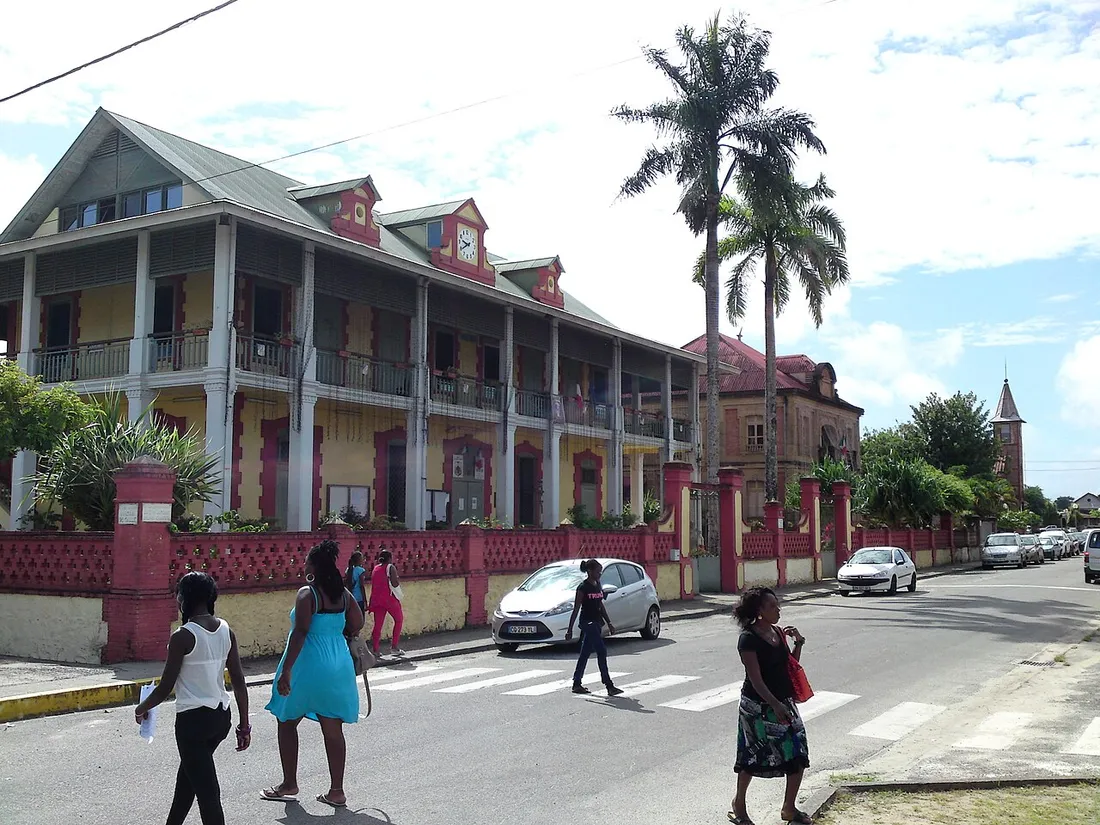
Saint-Laurent-du-Maroni lies roughly 250 km from Cayenne, close to a 3-hour drive along the RN1. That distance changes everything when organising a mission: a daily round trip from the Cayenne area is simply not realistic. As soon as a team works several days in the west, on-site accommodation becomes mandatory.
Yet supply is structurally limited. The town, home to several tens of thousands of residents and experiencing strong demographic growth, has a modest hotel stock concentrated around the historic centre and the riverfront. During periods of intense activity (public works, health campaigns, administrative missions, events), the handful of establishments fill up fast.
Useful neighbourhoods and landmarks
To place accommodation on the map, a few local landmarks:
- The town centre and the Camp de la Transportation: the historic and administrative heart, close to shops, the market and the banks of the Maroni.
- The Charbonnière district and the residential areas near the centre: housing and furnished rentals are easier to find here.
- Saint-Maurice and the business zone: useful for technical and logistics teams.
- The Saint-Jean road and the axis towards Mana: worth considering depending on where the mission takes place, especially for sites on the outskirts.
The choice of district depends first and foremost on where the team is working: cutting daily travel time, in a town where getting around is mostly done by vehicle, saves precious hours over the course of a mission.
The real constraints of team accommodation
Housing a team is not simply a matter of booking several rooms at random. A few points come up systematically.
Capacity and configuration
A team of 3, 5 or 8 people does not have the same needs as a solo traveller. You have to weigh up:
- individual rooms (comfort, privacy, but a higher cost per head);
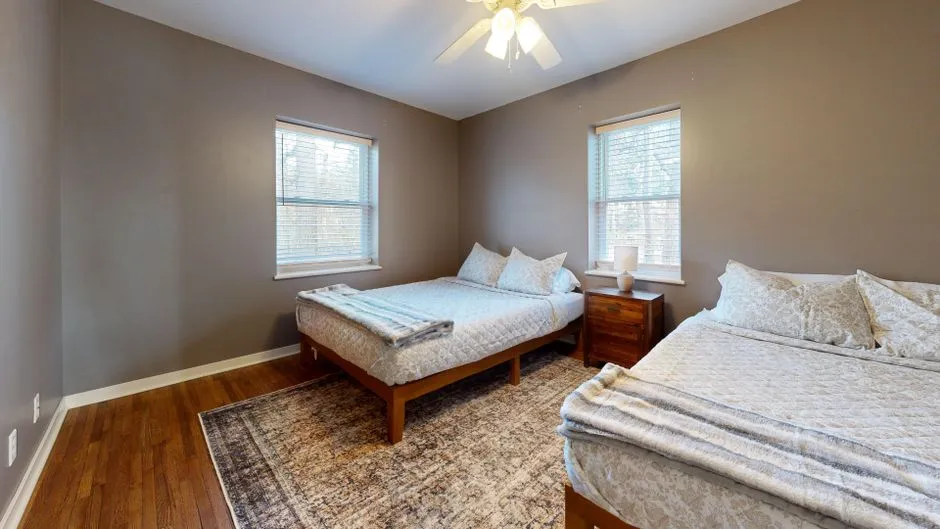
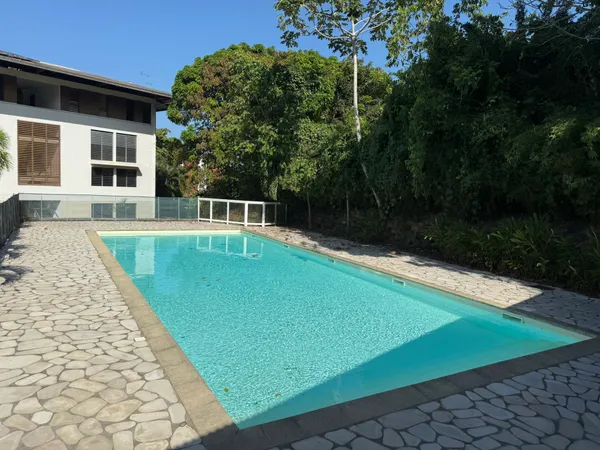
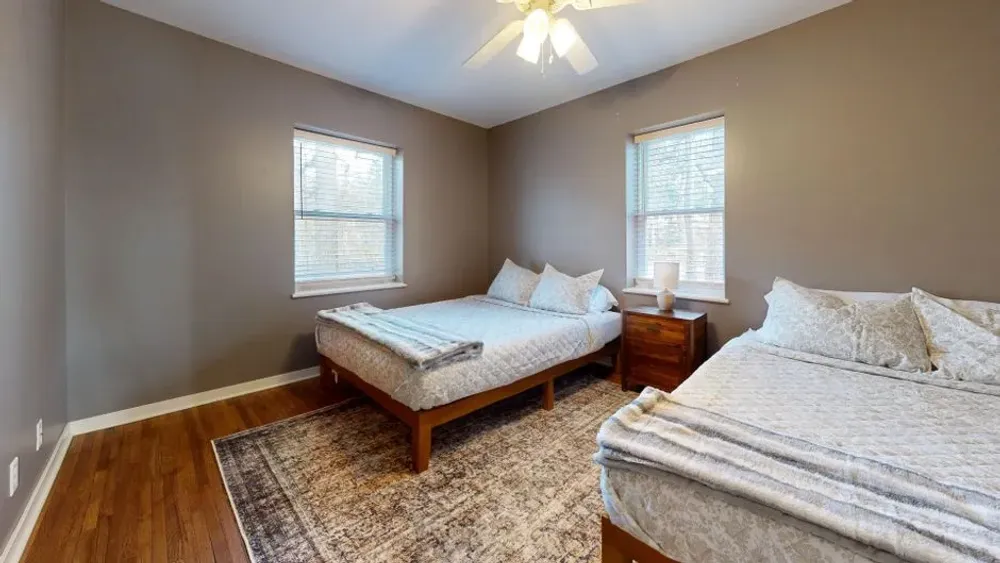
- a shared property (villa or large furnished rental) that keeps the team together and lowers the unit cost;
- a fully equipped kitchen, often decisive: cooking on site sharply limits the food budget, especially on a long mission.
Length of stay
A business stay in Saint-Laurent rarely lasts a single night. Missions often stretch over several weeks, or even several months for construction projects. This medium- and long-stay dimension normally opens the door to sliding rates: as a guide, a weekly or monthly rate works out better than adding up nights at the public price. It is a point to negotiate explicitly from the moment you request a quote.
The crux of the matter: paperwork
This is where most consumer solutions fall short. A private host on a rental platform does not always issue a usable invoice, often refuses bank transfers and has no notion of VAT. For a company, those gaps turn a perfectly genuine stay into an accounting headache.
The para-hotel difference: a clean invoice
This is the heart of the matter. Para-hotel accommodation — a furnished rental paired with hotel-style services — makes it possible, unlike an unfurnished private rental, to issue proper invoicing suited to businesses.
Invoice in the company’s name
The invoice must be issued in the company’s name, with its legal name, address and SIRET number, not in the employee’s name. That is what allows the company to record the expense correctly and, where applicable, to recover the cost. An invoice made out personally to Mr X complicates rebilling and internal controls.
Compliant expense claim
The employee on assignment must be able to justify the accommodation expense. A detailed invoice (dates of stay, nature of the service, amounts excluding and including tax, host’s details) is the supporting document expected for a compliant expense claim. A simple platform statement or confirmation email is not always enough for the accounting department or in the event of an audit.
The VAT question
Para-hotel services fall under a different regime from unfurnished rentals. A para-hotel invoice shows VAT separately, which, depending on the company’s situation and its right to deduct, may allow it to reclaim the tax. A word of caution: this depends on the tax status of both the host and the client company. The general rule: always ask whether VAT appears on the invoice and have the treatment validated by your accountant. Never assume deductibility is automatic.
Payment by bank transfer
Paying by bank transfer is often a practical necessity for a company: an employee’s personal card should not have to carry the company’s cash flow, and procurement procedures frequently require transfer against invoice. A professional host accepts transfers, provides bank details and can work with a deposit followed by a balance, or even payment on receipt of invoice depending on the agreement reached.
Checklist: asking for the right business accommodation
Before booking for your team, review the following points:
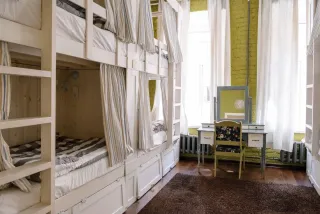
- Enough capacity for the exact headcount (real number of beds, no sofa bed counted as a bedroom)
- Equipped kitchen if the mission runs beyond a few days
- Reasonable proximity to the work site to limit travel
- Invoice issued in the company’s name (SIRET, legal name)
- Clear breakdown of the amount excluding VAT, the VAT itself and the total including VAT
- Payment by bank transfer accepted, bank details provided
- Documentation usable for an expense claim
- Sliding rate confirmed for medium or long stays
- Cancellation and amendment terms suited to a mission that may change
- Linen, cleaning and check-in arrangements specified in advance