Arriving from mainland France to settle in French Guiana means discovering an equatorial climate unlike anything back home. There are no four seasons here, but an alternation between a rainy season and a dry season, constant heat and humidity that follows you through every day. Whether you are coming for a civil service posting, a job at the Guiana Space Centre in Kourou, a medical contract or a personal project, understanding this climatic rhythm changes everything: your choice of neighbourhood, the type of home, the equipment to plan for and even how you organise your first few weeks. This article helps you prepare a stress-free move, especially if you arrive during the rainy season.
Understanding the equatorial climate of French Guiana
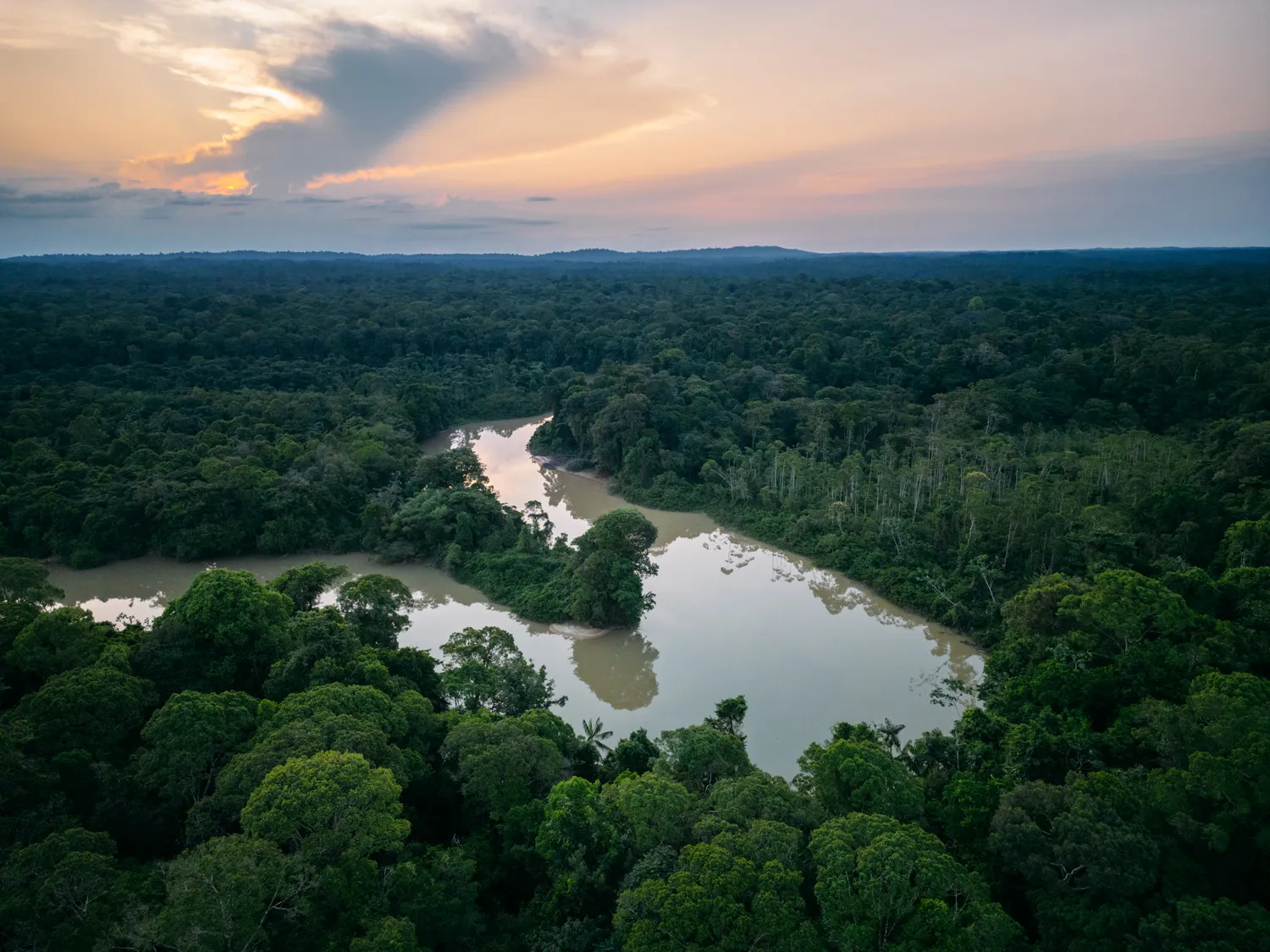
French Guiana lies a few degrees north of the equator, on the north-east coast of South America, between Suriname and Brazil. The climate is equatorial: hot, humid and stable in temperature all year round. Contrary to popular belief, it does not get “hotter and hotter” in summer — the notion of summer simply does not exist in the mainland sense.
As a rough guide, temperatures generally hover between 25 and 33 °C all year, with little variation between day and night. It is the humidity, often very high, that creates that heavy-air sensation. How it feels depends a lot on the wind and on how close you are to the coast.
The main seasons
The climatic calendar of French Guiana is broadly organised, as a rough guide, around four phases:
- The short rainy season: often from December to January or February, with heavy downpours.
- The March mini-summer (or “petit carême”): a short, drier spell around March, variable from year to year.
- The long rainy season: generally from April to June or July, the wettest period, with frequent and sometimes intense rain.
- The dry season (grand carême): roughly from mid-July to November, sunnier and better suited to travelling around.
These markers are indicative: the climate varies from one year to the next and across the territory’s micro-regions (coastline, forest interior, western French Guiana).
What the rainy season really changes
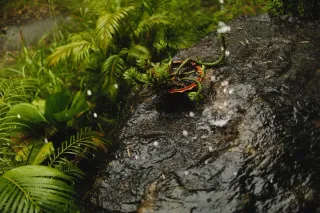
The rainy season is not an obstacle to settling in, but it does call for a few adjustments. Equatorial rains are often violent and brief, sometimes long and continuous. They can turn a sunny day into a tropical downpour in a matter of minutes.
In practice, you need to plan for:
- Permanent humidity, which encourages mould on walls, laundry and leather. A well-ventilated home makes all the difference.
- Roads and tracks: some secondary routes, particularly towards the interior or on unpaved sections, become difficult. On the main network (RN1 towards Saint-Laurent-du-Maroni, RN2 towards Régina and Saint-Georges), driving remains possible but caution is essential during heavy rain.
- Mosquitoes, more numerous with standing water. Mosquito protection is a local reflex, especially in the evening.
- The move itself: carrying boxes through a tropical downpour requires proper planning (tarpaulins, timing).
Everyday life in the rain
Your daily rhythm adjusts naturally. People in French Guiana often start the day early, when the air is cooler. Late-afternoon showers are frequent during the rainy season: you plan your shopping, your paperwork and outings with the children around that reality. Nothing dramatic — it is a habit you pick up within a few weeks.
Choosing where to live: towns and neighbourhoods
Where you settle depends on your workplace and your lifestyle. Here are the main hubs.
Cayenne and the Île de Cayenne
Cayenne, the capital, concentrates government offices, shops and services. Its neighbourhoods are varied: the historic centre around the Place des Palmistes, Montabo with its residential heights, Montjoly (in the neighbouring commune of Rémire-Montjoly) popular for its beaches and greener setting, or Baduel and Mont-Lucas, closer to amenities. Rémire-Montjoly and Matoury complete the “Île de Cayenne”, the most densely populated living area in the territory, which is also home to Félix Éboué airport (in Matoury).
For a first move, choosing a home on higher ground or with good ventilation makes the humidity of the rainy season much easier to live with.
Kourou
Kourou is the town of the Guiana Space Centre. Many newcomers move there for a job linked to the space industry or its subcontractors. The seaside town offers a more open setting. Services are more limited than in Cayenne, which sometimes weighs on families’ decisions.
Saint-Laurent-du-Maroni and the west
Saint-Laurent-du-Maroni, on the Maroni river facing Suriname, is the main town of western French Guiana and is growing fast in population. There are many jobs in education, health and social work. The drive from Cayenne (about 250 km via the RN1, as a rough guide) takes several hours.
The other communes
Depending on your posting, you may end up living in Maripasoula, Grand-Santi or Saint-Georges-de-l’Oyapock. These interior or eastern communes have very different realities (access sometimes only by river or by air, more limited services) and deserve specific preparation.
Housing on arrival: the temporary accommodation solution
One of the classic traps of an overseas relocation is wanting to sign a long-term lease before even setting foot in French Guiana. Yet the reality of a neighbourhood, a home’s exposure to humidity, the actual home-to-work distance or the atmosphere of a residence can only be judged on the spot.
The safest strategy is to start with furnished temporary accommodation while you:
- get to know the neighbourhoods and choose with full knowledge of the facts;
- complete the administrative formalities (bank, social security, school, rental guarantee);
- view properties without the pressure of moving in immediately;
- wait for your shipping container to arrive, often slow to cross the Atlantic.
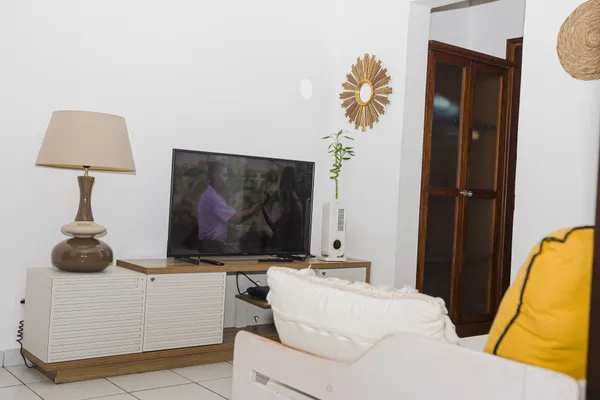
That is exactly what our properties offer: furnished and fully equipped, designed for stays of a few weeks to a few months. You drop your bags in a ready-to-live-in home suited to the climate while you organise what comes next.
Checklist for the first few weeks
- Book furnished temporary accommodation before you leave
- Open or transfer a bank account based in French Guiana
- Update your address with the CGSS (local social security) and with your employer
- Check your vaccinations (notably yellow fever, mandatory in French Guiana)
- Take out suitable home insurance
- Scout out schools and nurseries if you have children
- Arrange transport (a car is often essential outside the Île de Cayenne)
- Put together a solid rental application (supporting documents, guarantor)