Leaving mainland France to settle in Martinique means changing your rhythm, your light and, above all, your climate. Here there are no longer four seasons but two: the carême, the drier season, and the hivernage, the wetter one, which coincides with the hurricane season. Whether you are relocating for work, retraining or starting a new chapter, understanding this tropical calendar is no small detail: it shapes your choice of town, the type of home to look for, the best time to move and a large part of your day-to-day comfort. This guide sets out the facts you need before unpacking your bags in Martinique, and how to sail smoothly through your first few weeks.
Two seasons rather than four: carême and hivernage
Martinique has a tropical maritime climate. Temperatures vary little across the year: as a rough guide, they usually sit between 24 and 31 °C, with pleasantly warm sea water all year round. What really changes from one period to the next is rain and humidity.
- The carême (roughly December-January to April-May): the driest season. Clearer skies, steady trade winds, more bearable humidity levels. This is also the busiest tourist period.
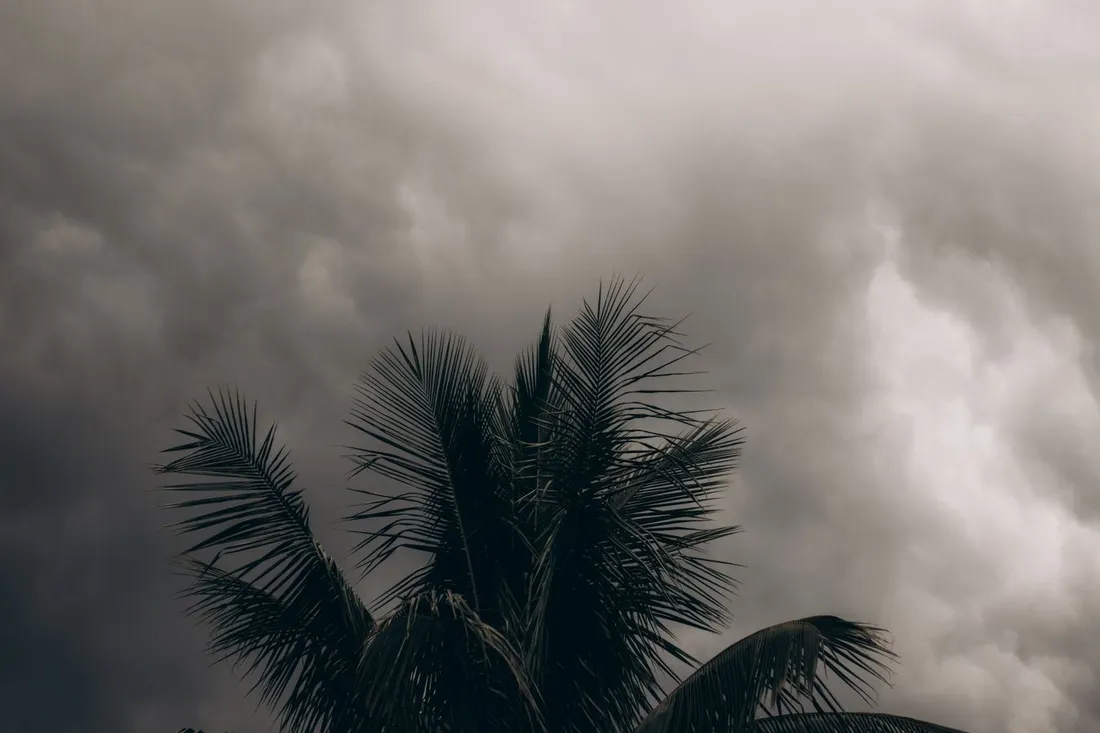
- The hivernage (roughly June to November): the wet season, hotter and heavier. Tropical downpours, often short and intense, are frequent. This is also the hurricane season.
These dates are indicative and vary from year to year: the climate does not follow a calendar to the day. One year may bring a late carême, another an early hivernage.
The terrain changes everything locally
Martinique is an island of mountains and mornes (hills). The north, dominated by Montagne Pelée and the Pitons du Carbet, is markedly wetter and greener (tropical rainforest around Le Prêcheur, L’Ajoupa-Bouillon and Fonds-Saint-Denis). The south (Sainte-Anne, Le Marin, Sainte-Luce, Le Diamant) is drier and sunnier, with lower-growing vegetation. In between, the urban centre around Fort-de-France, Le Lamentin and Schoelcher concentrates most of the jobs and services.
In practice: two towns 30 km apart can have very different weather on the same day. That factor weighs heavily when choosing where to live.
Hurricane season: what you really need to know
The North Atlantic hurricane season officially runs from 1 June to 30 November, with activity generally peaking around August, September and October. Several realities need to be distinguished:
- The vast majority of hivernage days are simply rainy or stormy, with no major event.
- Tropical waves and heavy rainfall can cause localised flooding and mudslides, especially in the north and on sloping ground.
- Tropical storms and hurricanes that hit or brush past Martinique remain occasional events, but their consequences can be serious: power and water cuts, blocked roads, property damage.
The right mindset is neither panic nor complacency: it is preparation. Martinicans have always lived with this risk and have a well-established culture of the “hurricane kit” and of alert procedures.
Understanding the alert levels
Météo-France issues hurricane alert levels (green, yellow, orange, red, then specific phases). From the moment you arrive, get into the habit of following the official bulletins. Under a high alert level the instructions are clear: stay indoors, do not drive, secure the area around your home. Local authorities (the préfecture, town halls) relay the information.
”Hurricane season kit” checklist
Put it together as soon as you move in, without waiting for an alert:
- A supply of drinking water (several days’ worth) and non-perishable food
- Torches, batteries, charged power banks, a battery-powered radio
- First-aid kit and personal medication
- Important documents gathered in a waterproof pouch
- Candles, a lighter, matches
- A full tank of fuel and some cash (electronic payments may go down)
- Knowing where the fixing points for shutters are, plus securing materials (tarpaulins, tape, straps)
- Useful numbers written down on paper (emergency services, town hall, neighbours, insurer)
Choosing your town based on climate and daily life
Climate is only one criterion, but it sheds light on many decisions. Here are a few pointers by broad area.
The south: sunshine and a seaside setting
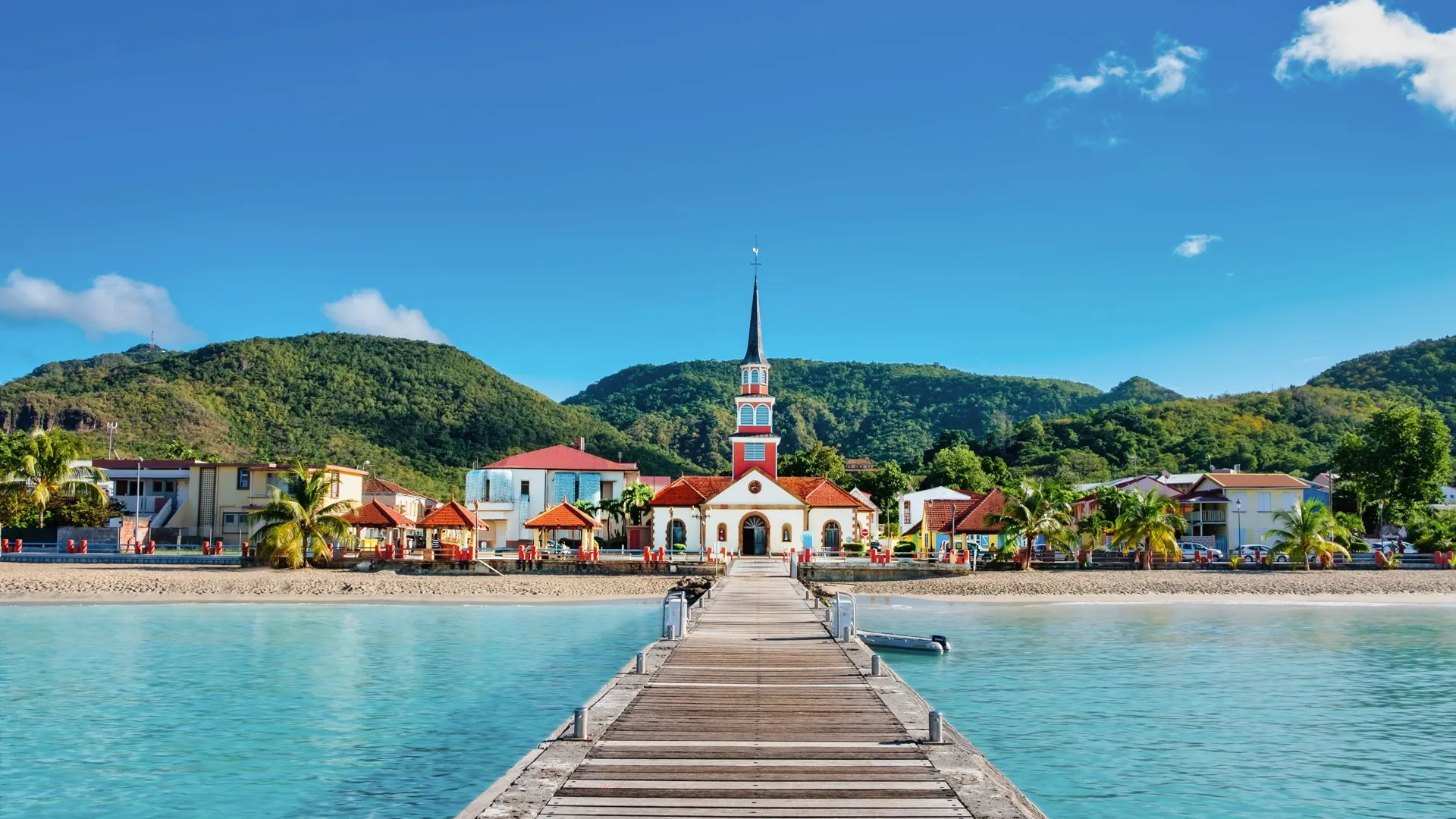
Sainte-Anne, Le Marin, Sainte-Luce, Le Diamant and Les Trois-Îlets offer the driest, sunniest climate, beautiful beaches and a sea- and tourism-oriented atmosphere. The flip side: distance from the main employment hubs (allow travel time to Fort-de-France or Le Lamentin) and heavy tourist numbers in high season. The south often appeals to remote workers or to those whose business is tied to tourism.
The centre: jobs, services, convenience
Fort-de-France, Schoelcher, Le Lamentin and Ducos concentrate government offices, hospitals, shops, Aimé-Césaire airport and a large share of the jobs. It is the most practical area for a professional relocation, at the cost of a more urban environment and heavy traffic at rush hour. Schoelcher, home to the university, has a younger population.
The north: nature, greenery and humidity
Le Carbet, Saint-Pierre, Le Morne-Rouge and La Trinité offer spectacular landscapes and a quieter setting. It is also the wettest area: worth choosing if you love nature and accept damper weather, plus a little more driving to reach services in the centre.
Points to weigh up before deciding
- Real home-to-work distance at rush hour, not on empty roads
- Exposure to flooding or ravine risk (check locally and through town-planning documents)
- Natural ventilation of the home and how it faces the trade winds
- Proximity of schools, the local health centre and essential shops
Choosing a home suited to the tropical climate
A home adapted to the climate radically changes your comfort. A few things to check during viewings:
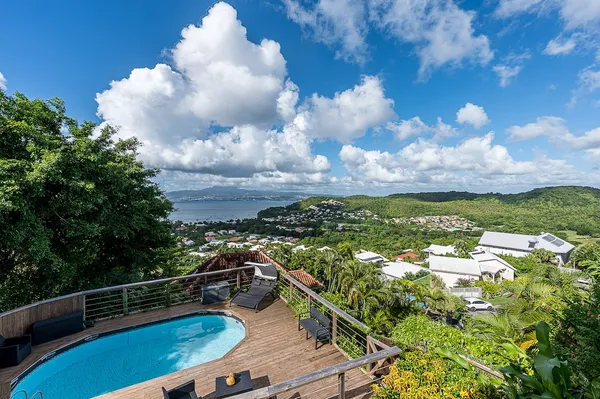
- Cross-ventilation: openings on opposite sides that let the trade winds flow through are often better than running air conditioning constantly (and they ease the electricity bill, which is higher than in mainland France, as a rough guide).
- Louvred shutters and storm protection: essential both for hurricane season and for the heat.
- Roof and water drainage: a securely fixed roof and well-maintained gutters make all the difference in heavy rain.
- Damp and mould: favour well-aired homes; hivernage humidity quickly marks poorly ventilated walls and closed cupboards.
- Mosquito screens: your evening comfort largely depends on them.
- Water storage: some homes have a tank, which is useful during supply cuts.
If you are still unsure about the town, it is often wiser to rent first, using a temporary base to visit several neighbourhoods before committing to a long lease or a purchase.