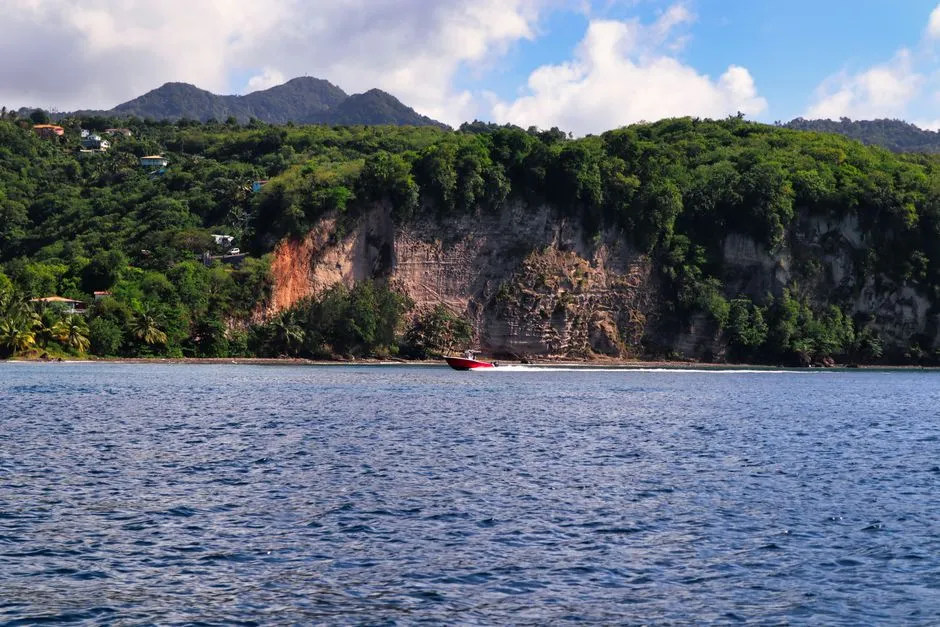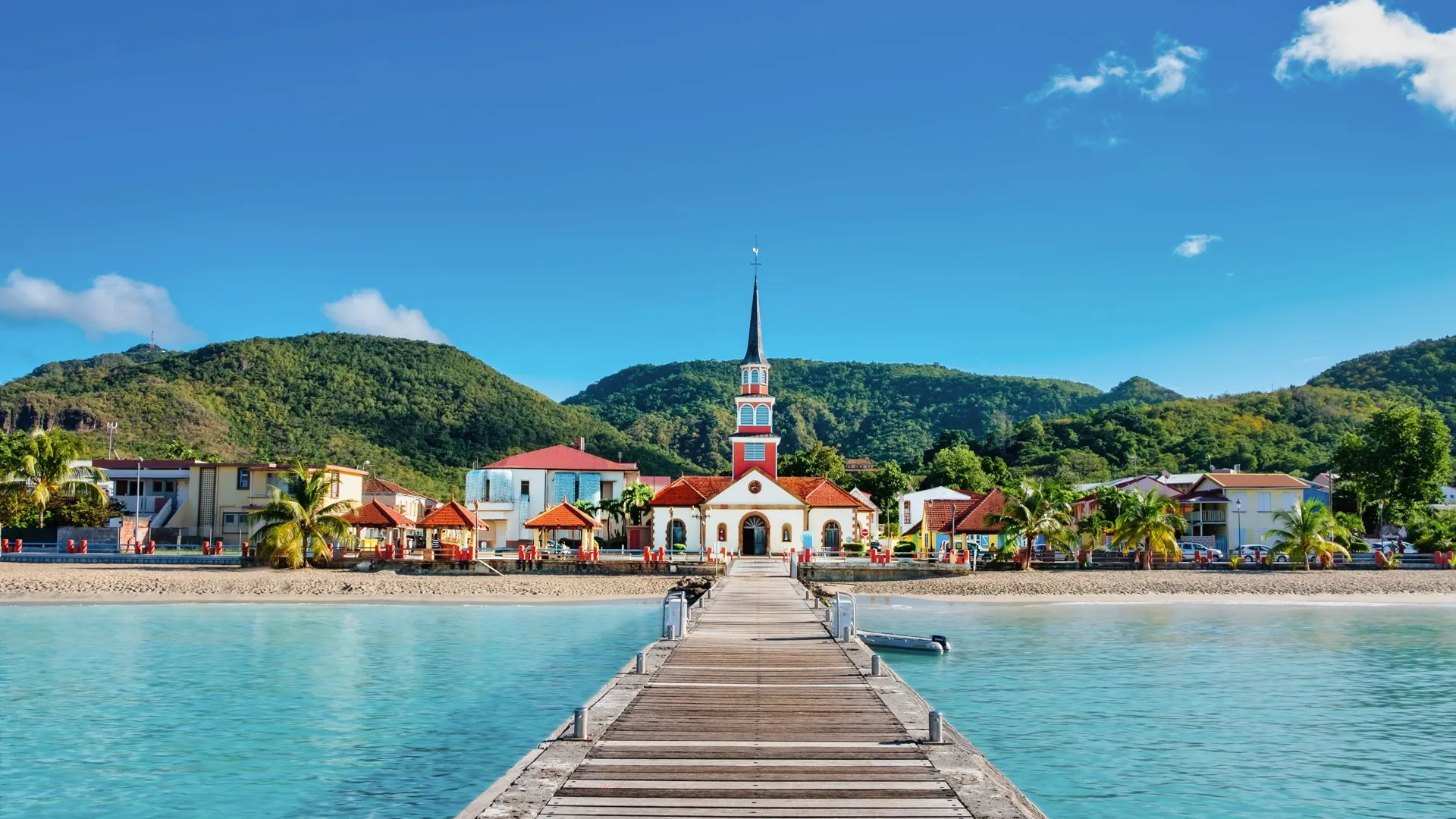
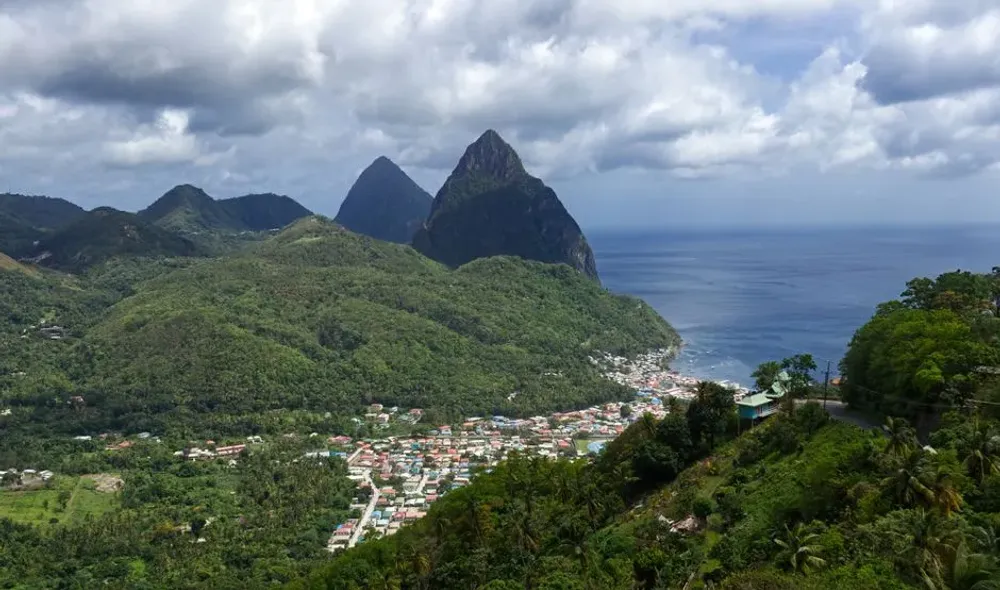
From Martinique’s Caribbean coast, on a clear day, you can spot our neighbours on the horizon: Dominica to the north and Saint Lucia to the south, bristling with its famous Pitons. Many travellers I host ask me whether it’s possible to set foot there for just a day. The answer is yes, and it’s one of the loveliest ways to extend a stay. But be warned: organising a day trip to Dominica from Martinique (or over to Saint Lucia) isn’t something you improvise like a quick hop to Sainte-Anne. You’re changing country, language and currency, and you’ll need a passport. Here, as a resident, is what you need to know to pull off this getaway to the island next door to Martinique.
Why push on to the island next door to Martinique
Martinique is more than enough on its own — I’m the first to say it. But these two destinations offer a total change of scenery, less than two hours by sea.
- Dominica, nicknamed the Nature Island, is one of the wildest islands in the Caribbean: primary rainforest, a boiling lake, waterfalls like Trafalgar Falls and exceptional underwater scenery at Champagne Reef. English-speaking and independent (a Commonwealth nation), it lives at a far more rural pace than we do.
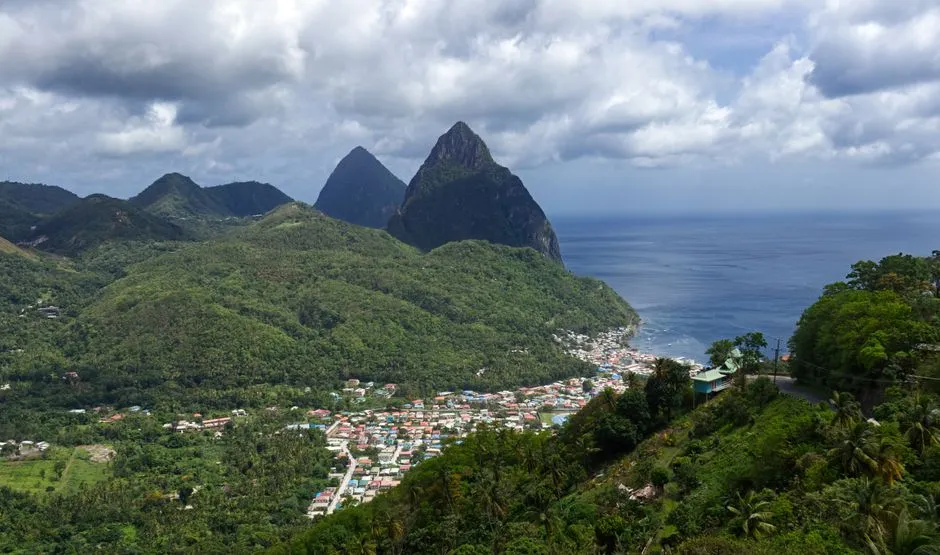
- Saint Lucia plays the spectacular card: the Pitons (Gros Piton and Petit Piton), UNESCO-listed, the volcanic zone of Soufrière and its thermal mud baths. English-speaking, but with a Creole close to our own, which makes conversations surprisingly familiar.
To weigh up our local sites against a day abroad, keep our complete guide to Martinique close at hand.
Sea crossings: L’Express des Îles, the key to your trip
The simplest and most iconic way to reach our neighbours is the ferry. The long-standing company, L’Express des Îles, operates from the Fort-de-France ferry terminal and serves Roseau (Dominica) and Castries (Saint Lucia), often on the same north–south line as Guadeloupe.
Real durations and frequencies
- Fort-de-France → Roseau (Dominica): count on roughly 1h45 to 2h for the direct crossing.
- Fort-de-France → Castries (Saint Lucia): about 1h30 to 1h45.
- Frequency: only a few departures a week, not every day. This is THE factor that shapes your planning. Check the schedule several weeks ahead, as the rotations vary with the season.
For a day trip, aim for an early departure (often around 7–8 am) with an evening return. But depending on the day, the outbound and return don’t necessarily fall on the same day: in that case, plan a night on the island, which turns the day into a mini two-day stay — often more relaxing. A 7 am departure is far easier to face after a night in town: the cosy Fort-de-France apartment with its sweeping view over the bay spares you the 5 am alarm and the drive up from the South.
The ferry fare
For a Saint Lucia–Martinique ferry or a Martinique–Dominica crossing, expect in practice:
- One-way adult fare: around €60 to €90.
- Return fare: often €90 to €130 depending on the season and how early you book.
- Reduced fares: children, students and families qualify for discounts you’ll need to ask about.
Sunday-sailor tip: the channel between the islands can be choppy, especially in the afternoon when the trade winds pick up. If you’re prone to seasickness, take something before boarding and choose a seat in the middle of the vessel.
And flying?
Regional air links exist at certain times of year, but they’re irregular, more expensive and often involve a connection. For a day trip from Martinique, the ferry remains almost always the simplest and most economical option.
Non-EU entry formalities: the point you really mustn’t overlook
This is where I see the most mistakes, so read this section carefully. Unlike a trip to Guadeloupe (another French overseas department), Dominica and Saint Lucia are independent countries outside the European Union. You’re crossing an international border.
A passport is mandatory
- A national ID card is not enough: you need a valid passport for every traveller, including children and babies.
- Check the required validity period: some countries ask for a passport valid for several months beyond your departure date.
- For French nationals, no visa is required for a short tourist stay, but the rules change: always confirm with official sources before you go.
Other documents and taxes
- Depending on the period, an online entry formality or a disembarkation form may be required, sometimes to be completed before boarding.
- Port or embarkation taxes are sometimes added to the ticket (a few dozen euros for a round trip).
- Arrive at the ferry terminal well ahead of time (1h, ideally 1h30): immigration checks take time and a ferry won’t wait.
I’ve seen travellers turned away at boarding for lack of a passport: check these points the day before. That eve goes more smoothly close to the port: the quiet, central ground-floor villa apartment in Fort-de-France leaves you time to sort passports and tickets without the road on your mind.