It’s one of the questions I’m asked most often when people start planning a trip: “We’ve got two weeks, should we combine Martinique and Guadeloupe to see both?” The temptation makes sense. The two islands are neighbours, both French, reachable on the same plane ticket from Paris, and it feels like a shame to be so close without popping over to the sister island. After years of living in Martinique and welcoming travellers, my answer is a nuanced one: yes, it’s doable and sometimes magnificent, but only if you avoid the classic trap of turning your holiday into one long transit. Here’s an honest breakdown, with the real durations, the real prices and the right trade-off.
Combining Martinique and Guadeloupe: the real feasibility
Let’s be clear from the start: technically, combining Martinique and Guadeloupe poses no problem at all. The two islands lie roughly 120 to 150 km apart as the crow flies, separated by Dominica. You have two ways to get from one to the other.
By inter-island flight
The inter-island flight in the Antilles is the fastest option. Several regional airlines (Air Caraïbes, Air Antilles depending on the season) link Aimé Césaire airport in Le Lamentin to Pôle Caraïbes airport in Pointe-à-Pitre.
- Flight time: about 45 minutes; door to door, allow 3 hours once you factor in check-in and the airport transfers.
- Price: booking ahead, a one-way fare runs between €90 and €160. Bought late or in high season (the dry season, school holidays), it can climb to €200 or more.
- Luggage: watch out for the often-reduced baggage allowances on these regional routes. A checked bag sometimes costs extra.
By ferry with L’Express des Îles
The other option, and the most iconic, is the sea crossing with L’Express des Îles. The ferry links Fort-de-France to Pointe-à-Pitre, usually stopping at Dominica and Les Saintes.
- Duration: allow 3h45 to 4h30 for the direct Martinique–Guadeloupe crossing depending on the schedule, more if you chain the stopovers.
- Price: around €70 to €100 for a one-way adult fare, with attractive return and family rates.
- Frequency: a few departures per week, not every day. Be sure to check the timetable well in advance, as it shapes your entire schedule.
- The real bonus: the ferry lets you add a stopover in Dominica or Les Saintes, two gems the plane skips over.
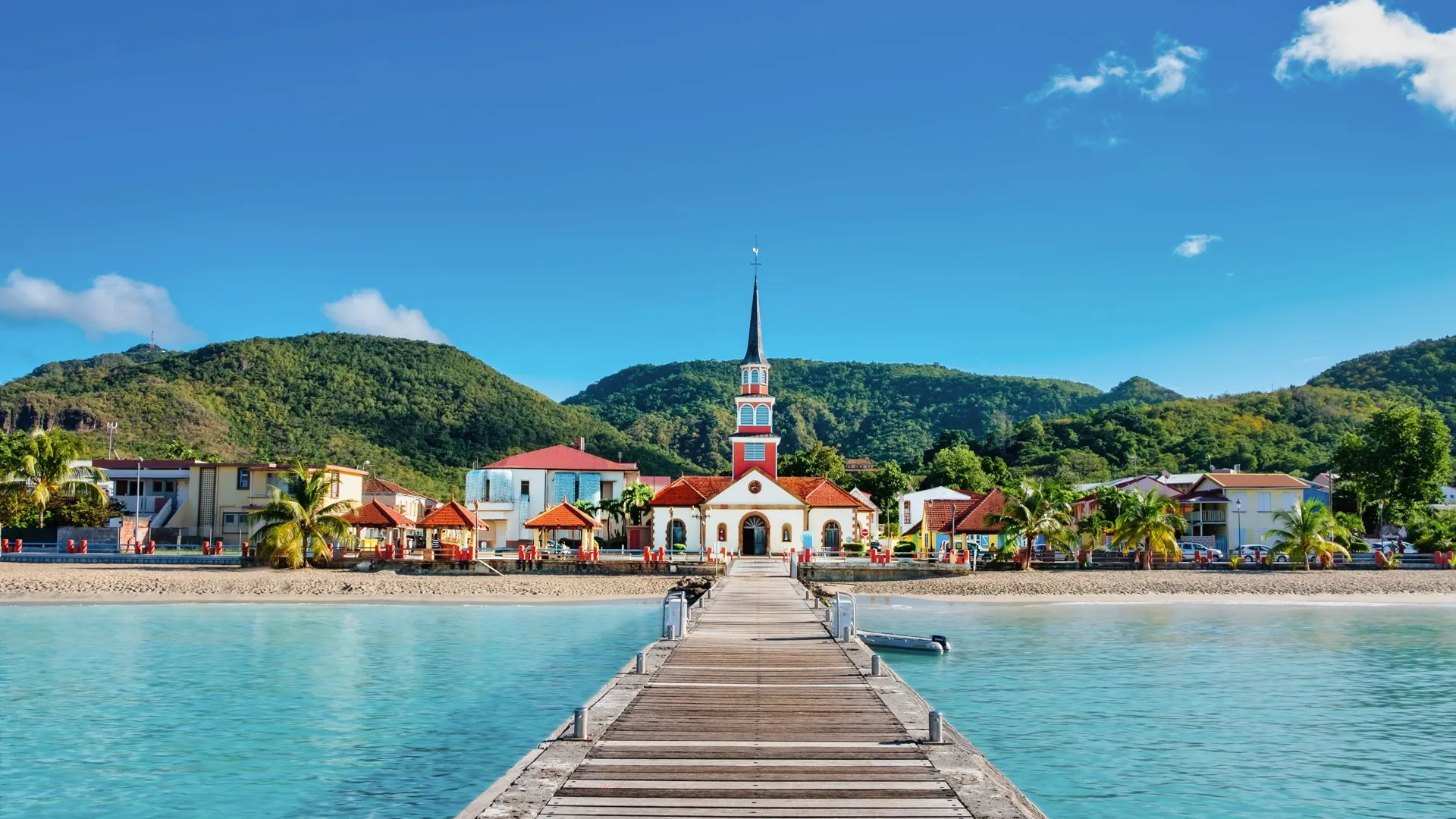
Seasickness is a real possibility on this route: the channel between the islands can get rough. If you’re prone to it, bring a remedy or opt for the plane. Since the crossings leave early from the Fort-de-France ferry terminal, many travellers prefer to spend the night before in town, in a cosy apartment in Fort-de-France within reach of the waterfront, rather than driving across the island at dawn.
Martinique or Guadeloupe: do you have to choose?
Before combining everything, ask yourself the real question: Martinique or Guadeloupe? Because these two islands, cousins though they are, don’t resemble each other as much as people imagine, and trying to see it all often means seeing both poorly.
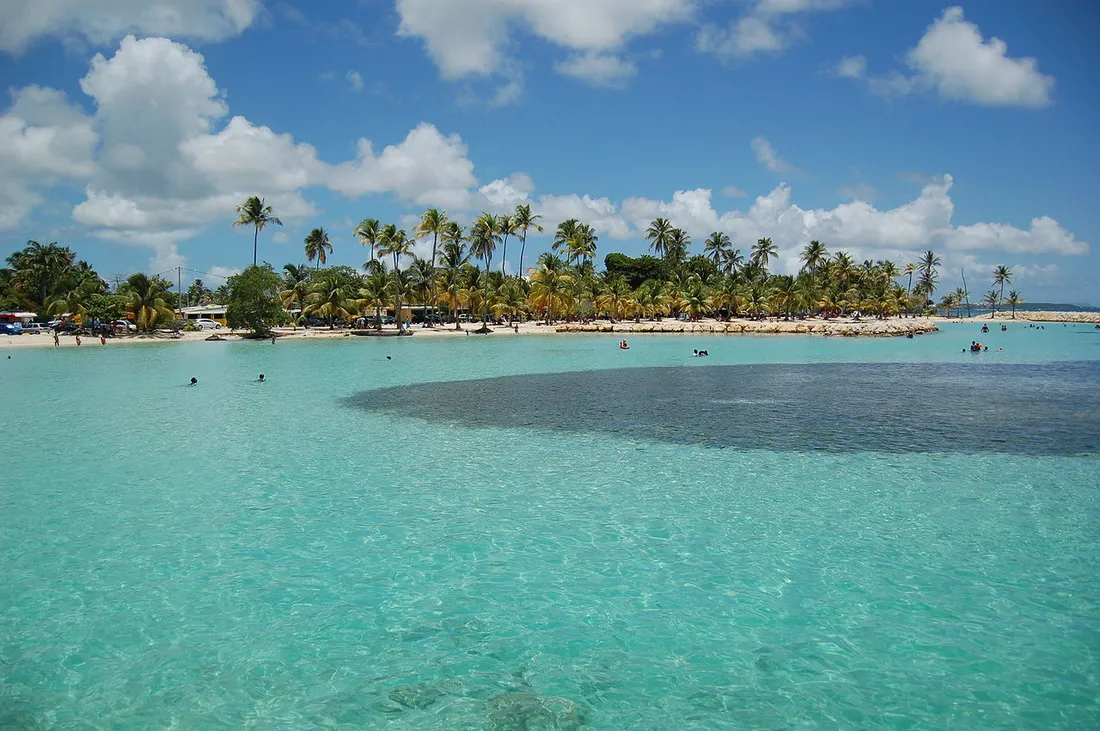
Martinique is more compact (80 km long), more “garden-like”, with an impressive density of must-sees: the southern beaches such as Les Salines in Sainte-Anne, Mount Pelée and the UNESCO-listed ruins of Saint-Pierre, the Rum Route with its AOC distilleries (Clément, Depaz, Saint-James, La Mauny), the Balata Garden, the Caravelle peninsula and the Diamond Rock. You get around quickly, and the car is king.
Guadeloupe, shaped like a butterfly, is larger and more contrasting: the wild, volcanic Basse-Terre (La Soufrière, the Carbet Falls, the rainforest of the National Park) facing the seaside Grande-Terre, not forgetting the satellite islands (Les Saintes, Marie-Galante, La Désirade). It demands a bit more effort, with longer drives.
My local advice: for a first trip to the Antilles, it’s often better to go deep on a single island than to skim both. You come home with memories, not a logbook of flights. To plan your Martinique side, keep our complete guide to Martinique within reach.
The minimum stay for a successful two-island Antilles trip
This is the heart of the matter. A two-island Antilles trip isn’t something to attempt over a single week. Here are my benchmarks, tested in the field.
- Under 10 days: forget the combo. Between the time difference (-5h in winter, -6h in summer vs Paris), the write-off arrival day, the inter-island transfer and the departure day, you’d be left with only scraps. You’d spend your holiday in transit.
- 10 to 12 days: the acceptable minimum, with roughly a week on one island and 3–4 days on the other. It’s tight but coherent if you accept you won’t see everything.
- 14 days and more: the comfortable duration. A full week per island, with real breathing room. This is where the combo truly makes sense.
Golden rule: allow half a day of transition on the departure side and half a day on the arrival side for each transfer. Switching islands is never “free” in terms of time. And align your crossing with the days L’Express des Îles actually operates, otherwise you’ll be forced to take a last-minute flight, which costs more.
An example of a balanced 14-day itinerary
- Days 1 to 7: base in Martinique, the southern Caribbean coast (Trois-Îlets, Sainte-Anne, Le Diamant). Beaches, distilleries, Mount Pelée, the Caravelle.
- Day 8: transfer to Guadeloupe (morning ferry, afternoon to relax).
- Days 8 to 14: base in Guadeloupe, exploring Basse-Terre then Grande-Terre.
- Day 14: departure, ideally a direct flight from Pointe-à-Pitre if you’ve chosen a “multi-destination” ticket.
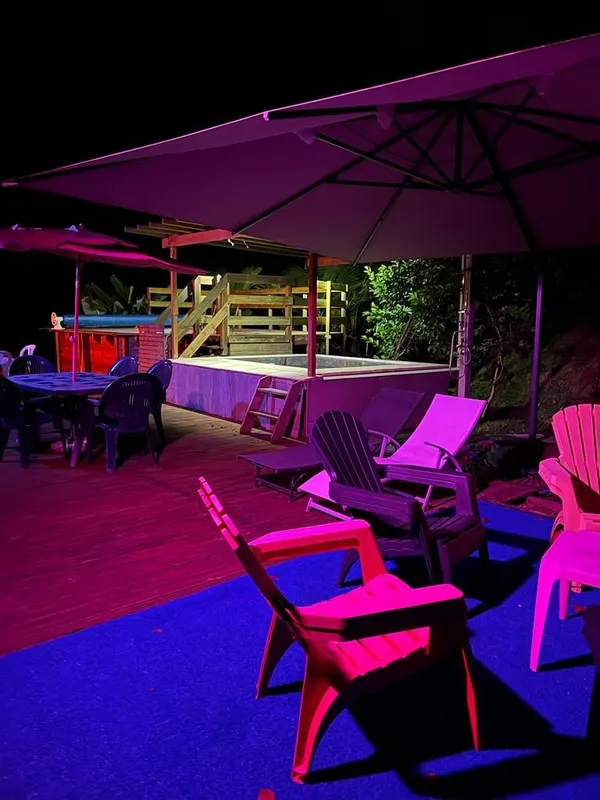
For the Martinique week, a base facing the sea sets the tone: Horizon Caraïbes, with its sea view and pool lets you alternate southern beaches and distilleries without ever repacking.
Ticketing tip: ask for an “open-jaw” plane ticket (arrive in Martinique, return from Guadeloupe or vice versa). You save a full inter-island leg and a good half-day.