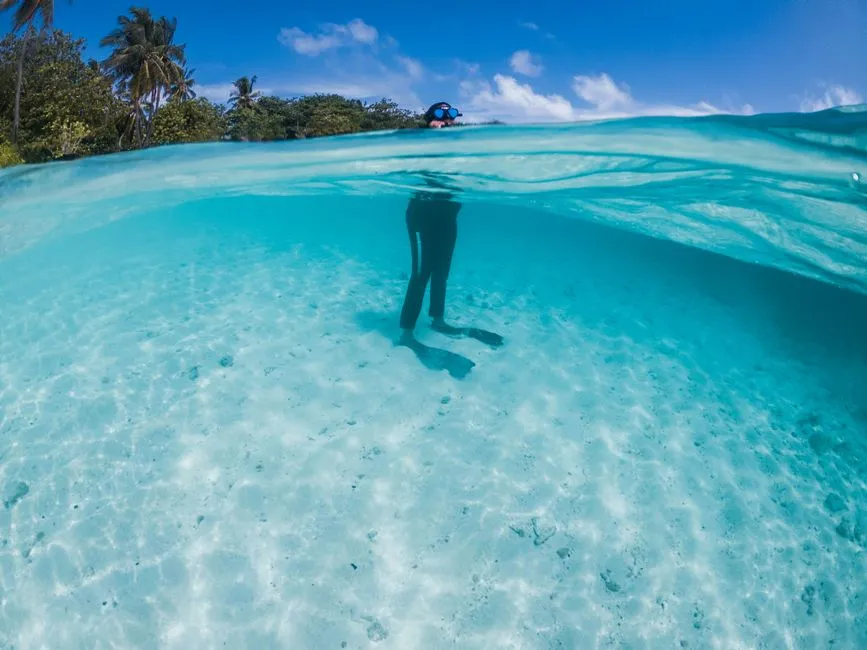
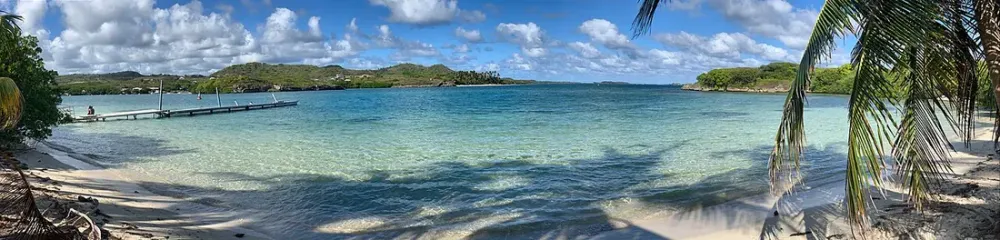
At the south-eastern tip of Martinique lies a place where you wade into the water, walk a few minutes with the water barely up to your waist, and reach a deserted islet across a crystal-clear lagoon. That place is Cap Chevalier, in Sainte-Anne: its snorkeling in a turquoise lagoon remains one of the best-kept secrets of the Grand Sud. No boat, no club, no ticket required: just a mask, a snorkel and a well-chosen tide. As a resident of the south, I bring my friends and family here the moment they arrive. Here is my guide to enjoying it without getting the timing or the footwear wrong.
Cap Chevalier: where this lagoon is and why it’s unique
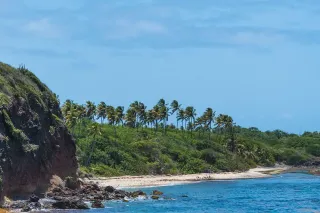
Cap Chevalier closes off the wild beach of Sainte-Anne on the Atlantic side, in the south-east of the island, about ten minutes from Le Marin and twenty from Sainte-Anne. It is sometimes called “les Coffres” (the chests): these tucked-away coves, little sheltered sea “chests,” dot this coast battered by the trade winds. The contrast is striking: a few kilometres away the Atlantic pounds the headlands, but here a reef barrier cuts the swell and leaves a stretch of water that is almost perfectly still.
What makes the Cap Chevalier lagoon so ideal for snorkeling comes down to three words: shallow, sheltered, alive.
- Shallow: between the beach and Îlet Chevalier, the water never rises above an adult’s waist, sometimes only knee-deep at low tide.
- Sheltered: the fringing reef breaks the waves, and the lagoon stays smooth even when the sea is rough elsewhere.
- Alive: seagrass beds, coral heads and small drop-offs concentrate a coral fauna visible right from the surface.
It is one of the island’s rare spots where inexperienced swimmers, and even accompanied children, can snorkel with confidence without ever being out of their depth.
Îlet Chevalier: the walk across the water that makes the place special
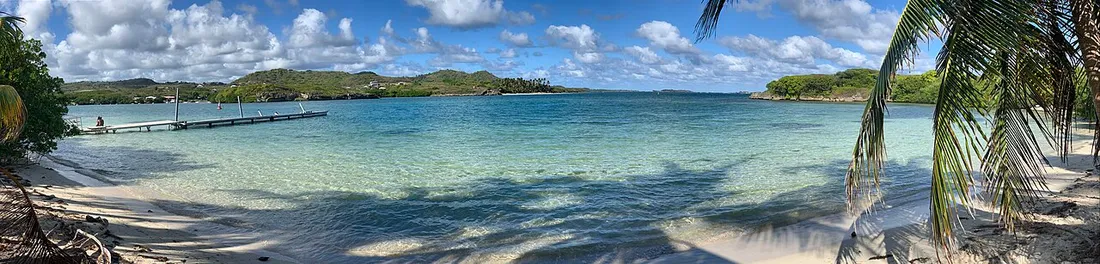
The star is Îlet Chevalier, the uninhabited islet that closes off the lagoon a few hundred metres from the shore. Its standout feature is dreamlike: with the right tide and a calm sea, you reach it on foot through the water, over sandy and seagrass bottoms where you rarely lose your footing. A few useful markers:
- Distance: 300 to 500 metres from the beach depending on your entry point.
- Duration: 15 to 25 minutes at an easy pace, mask on your forehead so you can observe along the way.
- Depth: an adult’s waist at most, often much less on a falling tide.
- Water shoes essential: the bottom alternates between sand, seagrass, coral and sea urchins. Never barefoot.
Be careful, though: this crossing depends on the tide and the wind. With a rough sea, strong trade winds or high tide, the passage becomes uncomfortable and a current can set in; in that case go for a kayak or paddleboard, both easy to rent in the area. On the islet you’ll find a bit of shade, patches of sand and the best snorkeling spots all around.
Snorkeling at Cap Chevalier: what will you see underwater?
Snorkeling at Cap Chevalier rewards a patient eye: life concentrates on the coral heads and seagrass beds, at shallow depth. You’ll easily spot:
- Parrotfish nibbling at the coral, striped sergeant-majors and electric-blue damselfish.
- Trumpetfish and more discreet triggerfish along the small drop-offs.
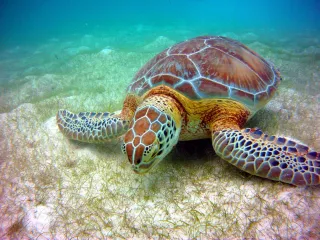
- Green turtles over the seagrass, less of a sure thing than at Anse Dufour but definitely present.
- Stingrays on the sand and long-spined sea urchins in the crevices.
The best areas are not in the middle of the lagoon but along the edges: the perimeter of Îlet Chevalier, isolated coral heads and the inner fringe of the reef. As for etiquette, stay at the surface, never set foot on the coral, favour a mineral sunscreen or a UV-protective rash guard, and keep 3 to 5 metres from any turtle. Bring your own gear: there isn’t always a rental on site (otherwise €8 to €15 a day).
When to go: tide, season and the ideal time
The right window makes all the difference between a postcard lagoon and churned-up water:
- The season: the Carême (December to April). Dry season, clearer water, rarer swell. During the wet season (June to November), rain and Atlantic swell cloud the bottom.
- The tide: low or falling for the walk across and for clear water. The tidal range, modest in Martinique, is still enough to change how comfortable the crossing is.
- The time: early morning, before 9–10 a.m. The water hasn’t been stirred up yet, the light illuminates the bottom well, and the cramped car park isn’t yet full. The trade winds often pick up in the afternoon.
- Sargassum: this Atlantic-facing coast sees seaweed strandings depending on the episodes; check the forecasts before you head out.
The winning combination: a February or March morning, on a falling tide, with light wind.