“My listing brought in €22,000 last year!” The owner who throws this figure at me thinks he’s talking about yield. He’s talking about gross revenue, which is something else entirely. As a holiday-rental manager based on the island, I see projects where the gap between gross income collected and net income kept tops 40%, simply because the costs specific to the French overseas departments (DROM) were never priced in. Calculating Airbnb yield in Martinique properly isn’t about dividing income by a purchase price: it means factoring in the sea tax (octroi de mer) on furniture, freight, hurricane insurance and property management. Here’s the method, line by line, with a worked example.
Why the classic calculation goes wrong in Martinique
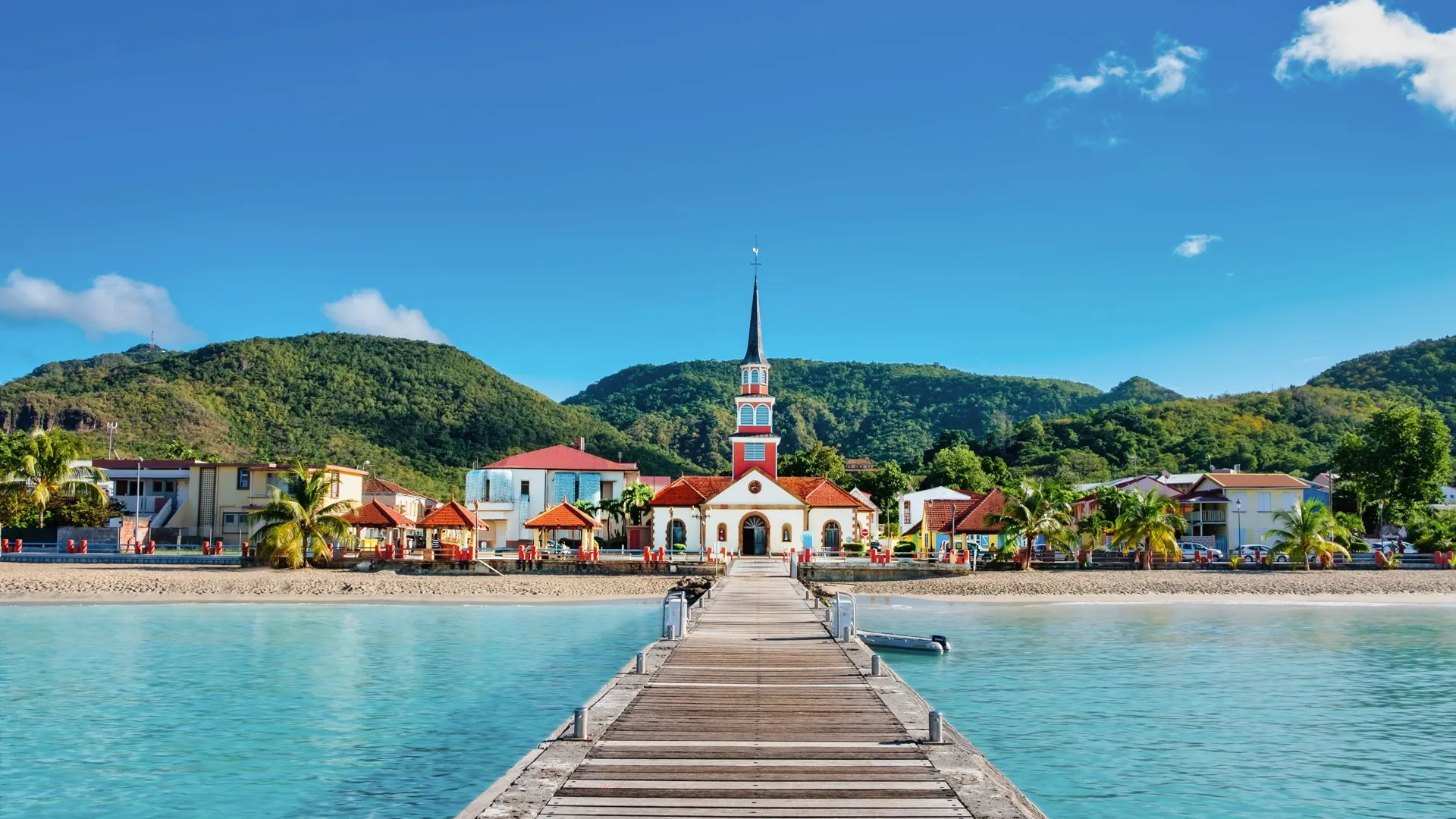
Martinique is a French overseas department (DROM) of roughly 360,000 inhabitants, using the euro and French tax rules. On paper, calculating the yield of a furnished rental looks just like mainland France. In practice, three differences throw off any calculation imported straight from the mainland:
- a higher fit-out cost, driven up by the sea tax (octroi de mer) and maritime shipping, which hit furniture that is almost entirely imported;
- heavier recurring expenses (hurricane insurance, air conditioning, accelerated wear from salt and humidity);
- strong seasonality: the dry season, known as the Carême, from December to April, fills well (with Carnival in February–March), while the summer hurricane season hollows out occupancy.
A sound overseas rental yield calculation therefore starts from the same skeleton as elsewhere, but with honest local coefficients.
The step-by-step method for calculating net yield
Forget gross yield (rents ÷ purchase price × 100): it only serves to reassure yourself. Pre-tax net yield is built in three steps.
Step 1: real income, not theoretical income
You never multiply a nightly rate by 365:
Annual income = average nightly rate × nights actually rented (occupancy rate).
A realistic occupancy rate for a Martinique holiday rental sits between 55 and 70% over the year for a well-located, well-managed property, with sharp month-to-month swings. Aiming for 85% “because it’s Martinique” is the first trap.
Step 2: total investment, furnishing included
The denominator isn’t the listed price, but the total acquisition cost: purchase price + notary fees (7 to 8% on existing property) + any renovation + full furnishing, the latter weighing heavier than on the mainland (more on that below).
Step 3: the final formula
The holiday-rental running costs in Martinique (detailed below, overseas extra costs included) then feed into the calculation:
Net yield (%) = (real income − annual costs) ÷ total acquisition cost × 100.
The next step is to go further with the “net-net” yield after tax, which depends on your tax regime (micro-BIC or the actual-expenses LMNP regime): more on that after the example.
The overseas extra costs you absolutely must include
This is the part mainland simulators ignore, and the one that makes the difference to your net.
The sea tax (octroi de mer) on furnishing
The sea tax (octroi de mer) is a levy specific to the overseas territories that hits imported goods. Sofa, bed, washing machine, air conditioning: everything arrives marked up by this tax, already passed on in the prices of local retailers. Furnishing a property therefore costs more than on the mainland for the same equipment. Rough orders of magnitude for a full, rental-grade fit-out:
- Studio / one-room flat: €6,000 to €9,000.
- Two-room flat: €9,000 to €14,000.
- Three-room flat / small villa: €14,000 to €22,000.
This extra cost inflates the denominator of the calculation and lowers the headline yield. Ignoring it means overestimating your yield by 0.3 to 0.6 points from the outset.
Freight and import logistics
If you order furniture unavailable on the island, add maritime freight (container or groupage) and its lead times: 4 to 8 weeks are not unusual. A property unrentable for two months because a piece of furniture is stuck at the port is lost yield. Same logic with maintenance: an imported spare part lengthens downtime in the event of a breakdown.
Hurricane and overseas multi-risk insurance
Martinique lies in the Atlantic hurricane zone. Non-occupant owner (PNO) policies there are 15 to 30% higher than on the mainland, due to the storm-hurricane guarantee. Budget a PNO of €200 to €350/year for a furnished holiday rental, ideally topped up with a loss-of-revenue guarantee should a weather event make the property uninhabitable in peak season. A non-negotiable cost line.
Property management fees
Managing an Airbnb remotely in an overseas department is rarely realistic, if only because of the time difference (−5h in winter, −6h in summer relative to Paris). A full-service property manager generally charges 18 to 25% of rents collected, with cleaning sometimes re-billed to the guest. It’s a cost, but also a revenue driver: better occupancy and better reviews often pay for this line. Our owners page sets out our approach.
Other recurring costs
- Property tax: €800 to €1,600/year depending on the municipality.
- Non-recoverable service charges: €60 to €150/month in a residence with a pool or on-site security.
- Electricity and internet (your responsibility in holiday rental): air conditioning weighs heavily, €90 to €140/month for a two-room flat.
- Air conditioning servicing: €120 to €200/year.
- Wear-and-tear provision: 1% of the property’s value per year; salt and humidity are unforgiving by the sea.
- Tourist tax: collected from the guest and paid over to the municipality; neutral for your net, but something to manage.