On the banks of the Maroni, the yam is no ordinary tuber: it is a living memory. Symbolically carried from West Africa by the Maroon ancestors who fled the Suriname plantations from the 17th century onward, this starchy root lies at the heart of the Bushinengue cultures that today populate western French Guiana. When people speak of the yam festival in French Guiana, they are really touching on a whole calendar of Bushinengue celebrations that pace life in Saint-Laurent-du-Maroni around the land, the river and a freedom reclaimed. Here is how to experience these moments like an insider, without slipping into postcard folklore.
Who are the Bushinengue of the Maroni?
The word “Bushinengue” (literally “men of the forest”) refers to the descendants of the Maroon slaves who broke free from the great plantations of Dutch Guiana. Several peoples are distinguished, each with its own language, songs and rituals:
- The Aluku (Boni), settled on the upper Maroni since the late 18th century;
- The Ndjuka (Aukan), historic dwellers along the border;
- The Saamaka (Saramaca) and the Paramaka, part of whom moved to the French bank after the Surinamese civil war of 1986.
These communities speak English-lexified creoles and keep alive an intangible heritage of rare richness: the tembe (geometric, interlaced woodcarving and painting, listed in the French inventory of intangible cultural heritage), the hand-carved dugout canoe, the bushikondesama dances and a cuisine in which the yam holds a central place.
To place this culture within the wider territory, our complete guide to French Guiana details the peoples, languages and regions of this overseas department.
The yam, the common thread of Bushinengue festivities
In the cosmogony of the Maroon peoples, as in many West African traditions, the yam harvest marks the passage from one farming cycle to the next. It is grown on plots cleared at the edge of the forest, and its first harvest is shared among family before any other consumption: a gesture of gratitude toward the ancestors and the land. It is enjoyed boiled, pounded or as a side to river fish and smoked meat, often with couac (toasted cassava meal) prepared before visitors’ eyes during the festivities.
In Saint-Laurent-du-Maroni, this tribute to the tuber is experienced less as an official, fixed “yam festival” than as one dimension of the great Bushinengue identity celebrations. Understanding this nuance avoids many disappointments and helps you arrive at the right time.
Indicative calendar of celebrations in Saint-Laurent
Exact dates change each year depending on the local associations (notably the Respeki association) and the municipality. Here is an indicative calendar to confirm before your visit:
The Doo Udu and the Day of the Maroon Peoples — 10 October
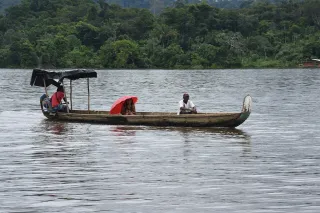
This is the major event. 10 October celebrates the freedom reclaimed through marronage. The Doo Udu ritual (“cutting the wood”) unfolds in dugout canoes on the Maroni, accompanied by songs, drums and craft demonstrations. On the banks of La Charbonnière, you can watch couac being made, take part in dance and cooking workshops, and enjoy tastings where the yam and starchy roots take pride of place.
The Bushinengue Culture Days — early October
Spread over several days around 10 October (often the 6th, 7th and 10th), these days offer workshops in music, tembe, traditional cooking and parades. It is the ideal opportunity to exchange directly with the keepers of tradition.
Bushinengue trimesters and gatherings — depending on the program
Throughout the year, cultural “trimesters” or cycles celebrate the canoe, the tembe or the songs. Inquire at the western French Guiana tourist office when you arrive.
Local tip: the dry season (July to late November) partly overlaps with these October festivities. Passable tracks, a calmer river and clear skies: it is the best time to combine culture and nature.
Experiencing Bushinengue culture responsibly
These celebrations are first and foremost community moments, not tourist shows. A few guidelines for approaching them with respect:
- Ask before photographing, especially during rituals and on the canoes;
- Buy crafts directly from the makers (tembe, engraved gourds, combs): it is the most direct support for this heritage;
- Favor a Bushinengue guide or boatman to travel up the river: their navigation knowledge is passed down from generation to generation;
- Taste without hesitation the couac, pounded yam and smoked fish offered at the stalls.