“When should I come to Martinique to see whales and turtles?” The question comes up with almost every booking, and I often have to disappoint a little: there’s no single right answer. The whale season in Martinique and the turtle season don’t fall at the same time. One unfolds during the dry Carême season, with glassy seas and blue skies; the other has to be earned in the heart of the wet season, at night, on a beach in the South. Here’s how to choose your window depending on what you dream of seeing, including the short period when you can try for both.
Two calendars that don’t overlap
Martinique is a French overseas department (DROM) bordered by the Caribbean Sea to the west and the Atlantic Ocean to the east, and this dual coastline explains everything: the great cetaceans frequent the Caribbean coast (calm waters, depths that drop away quickly) during the dry season (the Carême, from January to May), while turtles nest on the quiet beaches of the South during the hivernage (wet season, from March to October). The classic high tourist season (December–April, clear skies, high prices) therefore coincides with the whales, but not really with the turtles: one of those rare cases where brochures and nature diverge. For the full climate context, our guide to Martinique breaks down both seasons region by region.
Practical pointers: you pay in euros, people speak French and Creole, the dialing code is +596, the time difference is -5 h in winter / -6 h in summer compared with Paris, and you land at Aimé Césaire airport (Le Lamentin). A car is strongly recommended to reach marinas and beaches.
Whale season in Martinique: from January to May
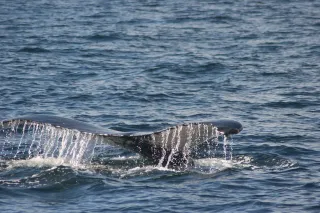
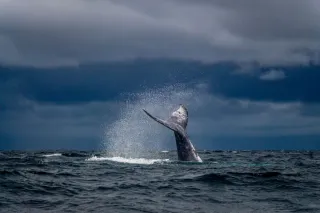
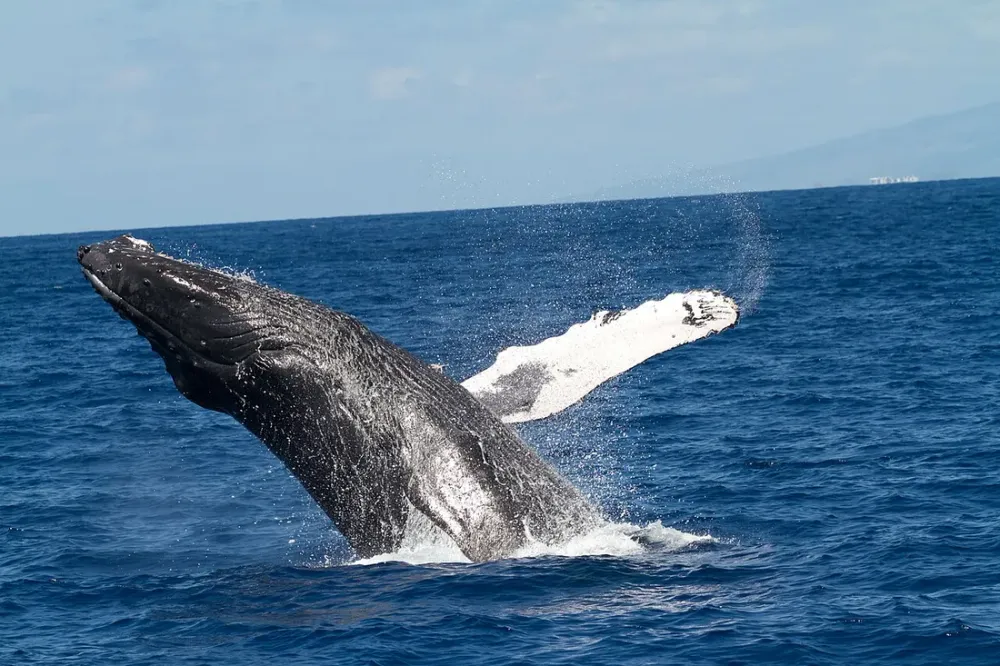
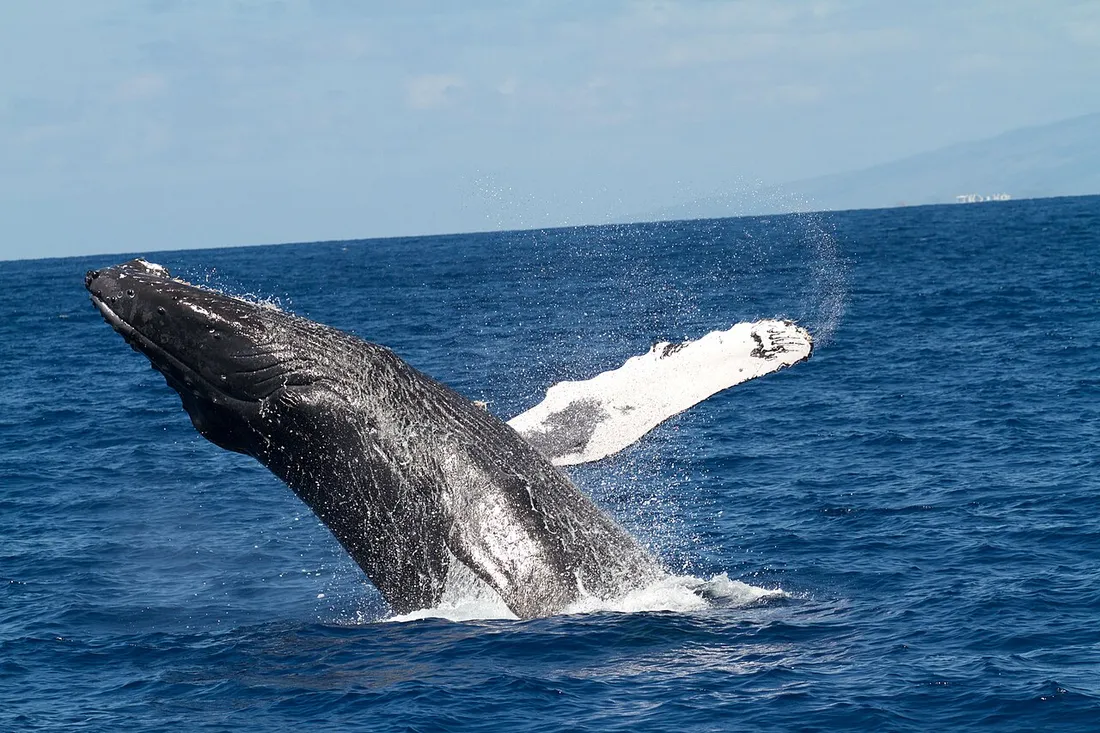
This is winter’s great show. Humpback whales travel up from the North Atlantic toward the warm waters of the Caribbean to breed and give birth, hugging the Caribbean coast.
The peak viewing window: February–March
The useful window runs from mid-January to late April, sometimes into early May, with a clear peak in February and March, the most stable weeks of the year: flat seas, excellent visibility. Good news for the undecided: along this same coast, dolphins and sperm whales can be seen year-round, so a trip outside whale season stands a good chance of being rewarded.
Where the trips depart
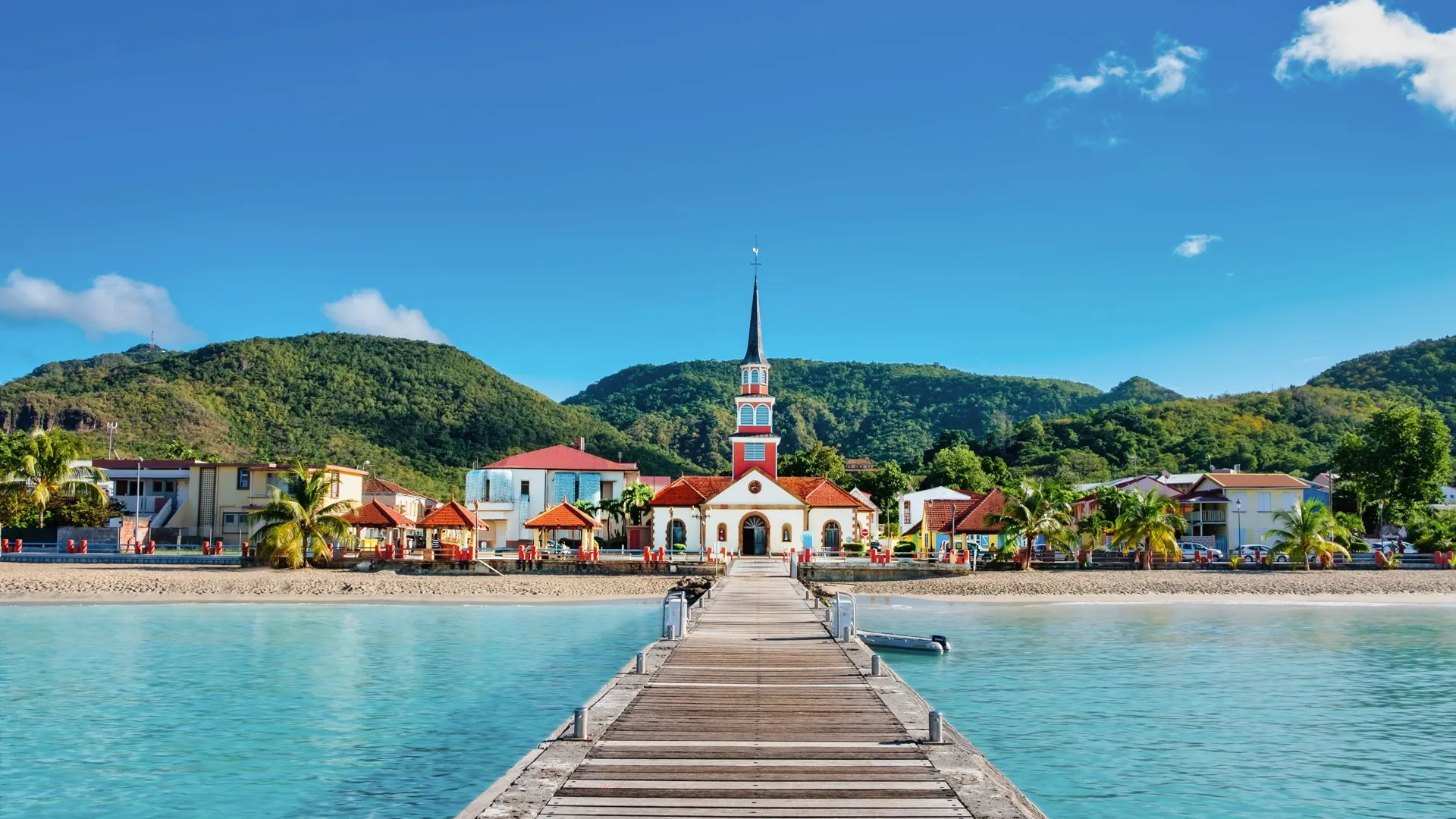
Cetacean watching in Martinique is concentrated on the western coast, where the small boats set out: Le Diamant facing the famous Rocher (about 35 km south of Fort-de-France), Les Trois-Îlets (Pointe du Bout), Les Anses-d’Arlet and Saint-Pierre to the north, known for sperm whales. Expect 60 to 80 € per adult for a half-day (3 to 4 h) in a small group, 90 to 150 € for a private trip. A serious operator never “guarantees” a whale sighting, and every outing respects the Agoa sanctuary charter (no swimming with whales, minimum distance of 100 m).
Turtle season in Martinique: from March to October
A change of mood, and of season. Turtle nesting is a nocturnal phenomenon, slow and fragile, in the middle of the wet season. Three species frequent the island, all fully protected: the leatherback turtle, the giant (up to 2 m, more than 500 kg), nests mainly from April to July (peak May–June); the hawksbill and green turtles rather from June to October. Incubation lasts about 60 days: hatchings spread from summer into autumn. Between May and September, you’re in the right window, both for a female coming ashore and for a hatching.
The nesting beaches of the South
Turtles choose beaches with loose sand, little light and calm at night. Out of respect for the guidelines, the precise location of an active nest is never shared:
- The areas of Sainte-Anne, Sainte-Luce and the coves of the far South mostly host hawksbill turtle nests.
- The Grande Anse du Diamant sees females come ashore regularly; discovering at dawn a fan-shaped track in the sand remains one of the thrills of a Martinican summer.
- The northern coves with black volcanic sand (Le Carbet, Le Prêcheur) are favorite sites for the leatherback turtle.
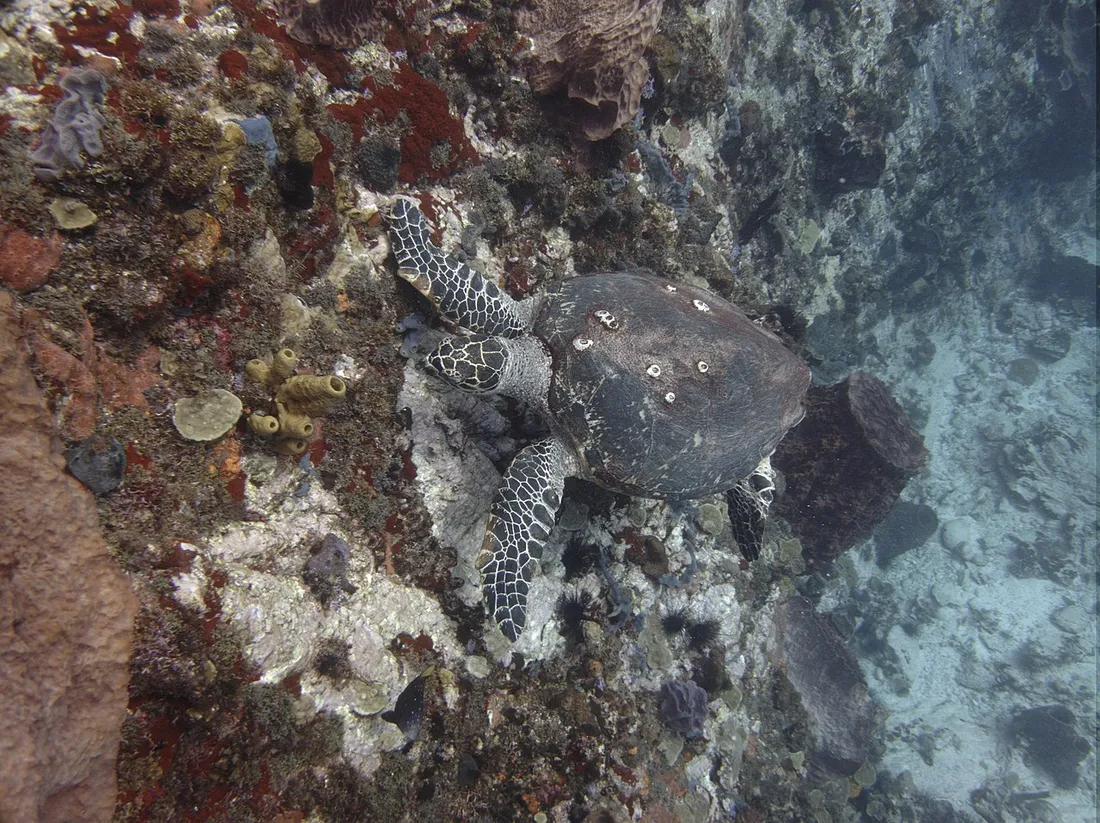
Not to be confused: the turtles you come across during the day, mask on, at Anse Dufour or Anse Noire are grazing the seagrass beds and do not nest.
The golden rule: go through the volunteer network
Never set off alone to look for a turtle at night: a disturbed female may turn back and release her eggs into the sea, and disturbing a protected animal is an offense. Martinique has a structured marine turtle network, backed by the French Office for Biodiversity, which organizes supervised monitoring. This is the right contact, and observation is generally free: ask your host for the contacts as soon as you arrive.