
Hostel Toucan — Apartments & Hotels
Menu

Settling in

Viewing a rental in French Guiana: the checklist to run before you sign

Published on July 30, 2026 · by Ismael Samuel

Viewing a rental in French Guiana: the checklist to run before you sign

Arriving from mainland France to settle in French Guiana is often a wonderful adventure, but finding the right home takes method. Between the equatorial climate, the quirks of local construction, the pressure on the market in Cayenne and its urban area, and the distances between towns, a rushed viewing can cost you dearly once the lease is signed. A place that looks charming in photos can hide mould caused by humidity, faulty air conditioning, noisy neighbours, or a neighbourhood prone to water and power cuts.

This article gives you a concrete checklist adapted to the realities of French Guiana, to work through during every viewing. The goal: to leave with the information that really matters, and to avoid nasty surprises. The figures quoted here are indicative only: they vary by town, neighbourhood, season and type of property. Treat them as orders of magnitude, not absolute truths.

Before you even set off: preparing the viewing

A good viewing starts beforehand. In French Guiana, rental demand is strong in the Cayenne urban area (Cayenne, Remire-Montjoly, Matoury) and in Kourou, around public-sector employers and the Guiana Space Centre. A decent property goes fast: better to arrive organised.

Before heading over, gather these details:

  • The rent including or excluding charges — the distinction makes a big difference to your real budget.
  • The type of lease on offer (furnished, unfurnished, short-term serviced letting).
  • The actual availability and the possible move-in date.
  • A sense of the exact location: ask for the precise neighbourhood, not just the town.
  • The list of documents required for your application (proof of income, guarantor, etc.).

Scoping out the neighbourhood in advance

A home is more than its walls. In Cayenne, neighbourhoods have very different atmospheres: the historic town centre, Montabo and its residential heights, Mont-Baduel, Cabassou, Zephir. Remire-Montjoly is more residential, quieter and close to the beaches; Matoury has suburban housing estates near Felix-Eboue airport. Scout out the shops, the nearest school, the bus stops and the real travel time to your workplace: traffic jams on the RN1 and RN2 at peak hours are a fact of life.
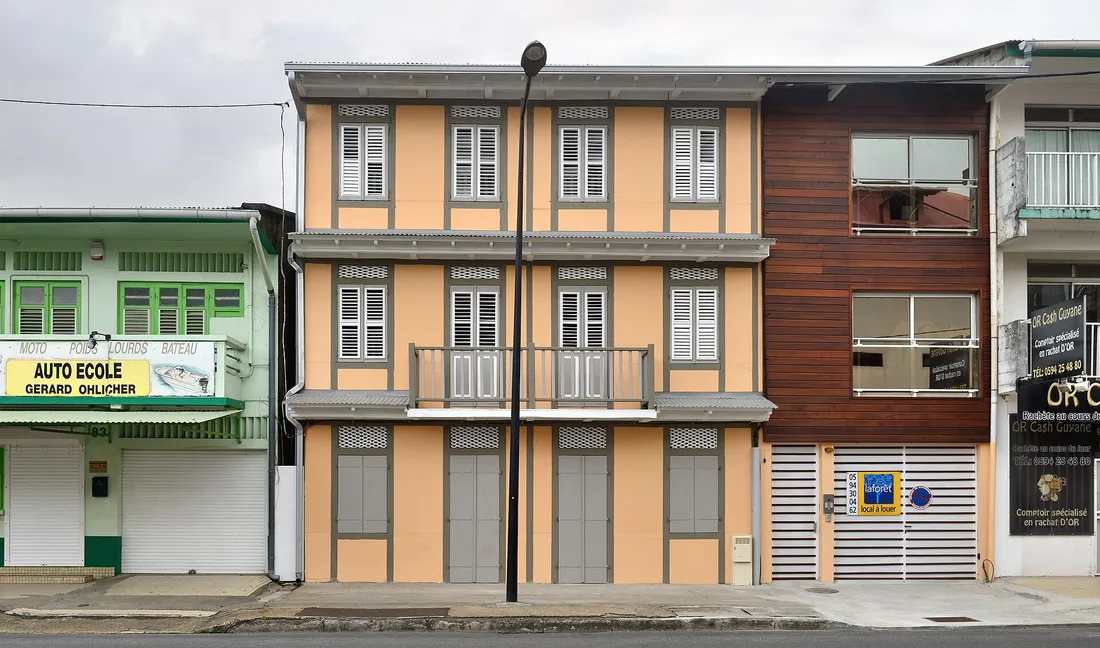
Maison créole rénovée à Cayenne avec panneau « local à louer », façade à volets sur rue en Guyane
Une maison créole à louer à Cayenne : avant de signer, on inspecte la façade, les volets et l'état général. — © Cayambe (Wikimedia Commons, CC BY-SA 3.0)

The general condition of the building and humidity

This is THE critical point in French Guiana. The equatorial climate, hot and very humid all year round, puts homes through the wringer. Humidity is enemy number one: it encourages mould, damages paintwork, swells woodwork and helps insects proliferate.

What to inspect closely

  • Look for traces of mould in wall corners, behind furniture, in cupboards, under windows and in the bathroom.
  • Spot water stains on the ceiling or high up on walls — signs of leaks or roofing problems.
  • Smell closed-up rooms: a musty or mouldy smell betrays poor ventilation.
  • Check the condition of the bathroom and kitchen seals (blackened = badly managed humidity).
  • Inspect the joinery: swollen wood, windows that don’t close properly, rusted metal.
  • Check for mosquito screens on the windows — essential against mosquitoes, which carry dengue and other arboviruses.
  • Look at the state of the roof and gutters if the property is a detached house.

A well-ventilated home, with cross-ventilation and ceiling fans, ages far better in this climate. Conversely, a poorly aired flat that depends solely on air conditioning can quickly become a humidity trap.

Air conditioning, electrics and ventilation

In French Guiana, thermal comfort depends directly on ventilation and air conditioning. These items weigh heavily on the electricity bill, which can account for a significant share of the monthly budget depending on how much you run the AC: as a rough guide, a home air-conditioned round the clock costs appreciably more than one that is naturally ventilated.

Testing the installations during the viewing

Don’t be afraid to switch everything on. A serious viewing is also a technical test:

  • Turn on every air conditioning unit and check that it genuinely cools without abnormal noise.
  • Look at the state of the filters and the age of the units (a clogged AC uses more power and cools poorly).
  • Run the ceiling fans and air circulators.
  • Test several power sockets and switches.
  • Check for a consumer unit that meets standards (circuit breakers, residual current device) and its condition.
  • Turn on the taps (kitchen, bathroom) to check water pressure and colour.
  • Test the toilet flush and the drainage of sinks and showers.

The question of outages

Depending on the neighbourhood and the town, occasional water or power cuts can occur. This is more frequent in some areas than others. Don’t hesitate to ask the landlord, and if possible a neighbour, whether the area is affected and how often. A hot water tank, a water reserve or a UPS for sensitive equipment can be welcome features.

Security, neighbours and the immediate surroundings

Security is a legitimate concern in the Cayenne urban area as elsewhere. It is judged as much on the property itself as on its surroundings.

What to look at

  • Quality of the locks, doors and windows; presence of grilles or shutters on the ground floor.
  • Outdoor lighting, the state of the street at night (come back for a second viewing at the end of the day if you can).
  • Parking: dedicated space, secured or not — this matters a lot if you have a vehicle (all but essential in French Guiana outside the very centre).
  • Noise levels: proximity to a busy road, a bar, a place of worship, a business zone.
  • Immediate neighbours and the general feel of the building or street.

Asking the neighbours

If the opportunity arises, have a quick word with a neighbour. It’s often the most honest source of information about outages, noise, recurring problems in the building, or how responsive the landlord is. Nobody knows a home better than the people who have lived next door for years.
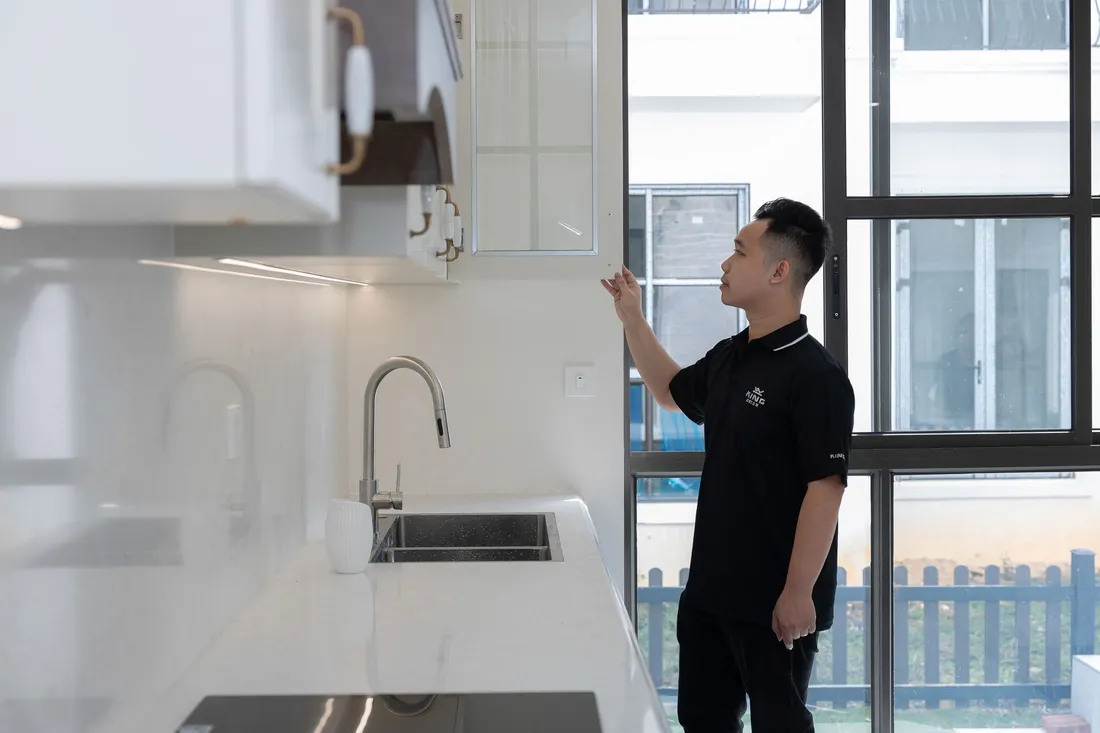
Visiteur inspectant un meuble de cuisine et l'évier dans un appartement lumineux avant la signature du bail
Ouvrir les placards, vérifier robinetterie et évier : les gestes clés d'une visite avant de signer. — © HONG SON (Pexels, Pexels License)

Documents, the lease and the surveys

You may love a property, but the paperwork side is just as decisive. In French Guiana, as everywhere in France, renting is governed by law, and certain documents are mandatory.

The administrative checklist

  • Ask to see the lease in full before signing, and read the clauses (term, notice period, allocation of charges, conditions for returning the deposit).
  • Check the amount of the security deposit (generally capped depending on the type of letting) and the conditions for its return.
  • Request the technical surveys (energy performance, electrics, risk statement depending on the area).
  • Clarify how charges are split: water, upkeep of communal areas, refuse collection.
  • Carry out a detailed inventory of condition on entry, backed up with photos, noting the smallest defect. It’s your best protection when you move out.
  • Confirm in writing the availability date and the arrangements for handing over the keys.

Never sign under pressure. A serious landlord or agency will understand that you want time to read. If you are denied time to think or access to the documents, that’s a warning sign.

Location and practical day-to-day life

A home is also a location that will shape your daily routine for months. In French Guiana, distances and the state of the roads make the question of location central.

Assessing journeys and services

  • Distance and real travel time (including rush hour) to work, school and the shops.
  • Proximity to a supermarket, a pharmacy, a health centre.
  • Access to public transport if you don’t have a vehicle: the offering remains limited away from the main routes.
  • Internet and mobile coverage: it varies by area, something to check if you work remotely.
  • Areas that may flood during the rainy season: ask whether the street or neighbourhood is affected.

Between Cayenne, Remire-Montjoly, Matoury, Macouria, Kourou or Saint-Laurent-du-Maroni, the realities are very different. Choose according to your workplace and your lifestyle, not just the advertised price.

Taking your time: the temporary accommodation solution

The most common trap, when arriving from mainland France, is signing in a hurry because you have nowhere to sleep. The result: you accept a home you haven’t properly assessed, in a neighbourhood you don’t know, with flaws you’ll discover too late.

The best strategy is to give yourself a buffer period: temporary accommodation, comfortable and well located, while you view several properties, compare neighbourhoods and sign with full knowledge of the facts. It lets you discover French Guiana at your own pace, identify the areas that suit you, and negotiate without being cornered by urgency.

That’s exactly what we offer at Hostel Toucan: furnished, fully equipped places to stay, designed for stays of a few days to a few weeks, ideal for setting down your bags while you search. And if you’re a property owner or would like to entrust the management of a property, take a look at our concierge service too.

Frequently asked questions

How long should I allow to find a home in French Guiana?

It depends heavily on the town, your budget and the type of property. As a rough guide, in the Cayenne urban area where demand is sustained, allow several weeks of active searching. Booking temporary accommodation avoids signing in haste.

Is there a best time of day to view?

Ideally, visit first during the day to inspect everything in good light, then, if possible, come back at the end of the day or in the evening to assess noise, the atmosphere of the neighbourhood and the outdoor lighting. Two viewings are better than one.

Is furnished accommodation a good option on arrival?

Yes, often. When arriving from mainland France, an already furnished and equipped home saves you from buying furniture straight away and from shipping costs, which are very high to French Guiana. It’s also more flexible if you’re not yet sure which neighbourhood you want to settle in.

What red flags should make you walk away?

A persistent mouldy smell, significant damp patches, dubious electrical wiring, a refusal to show you the lease or the surveys, or pressure to sign immediately. Faced with those signals, it’s better to move on.

Is a vehicle essential to live in French Guiana?

Outside the very centre of Cayenne, a vehicle is very strongly recommended. Public transport is limited and the distances between towns are considerable. Factor this into your choice of location and your overall budget.

Ready to settle in with peace of mind?

Viewing a home methodically saves you months of hassle. Keep this checklist to hand at every viewing, take the time to compare, and never sign under the pressure of urgency.

To give yourself that precious time, book comfortable, well-located temporary accommodation from our places to stay in French Guiana. A question about settling in or about your search? Feel free to contact us — we know the ground and can point you in the right direction. And to go further, find our other guides on the blog.

🧭 Which stay suits you?

3 questions, 20 seconds.

Also read