French Guiana is the only French territory that shares land borders with two South American countries: Brazil to the east and Suriname to the west. For anyone staying in the department, the idea of slipping across the river for a day or a weekend has something irresistible about it: changing language, currency and atmosphere simply by crossing a stretch of water. But these crossings cannot be improvised. Crossing points, opening hours, documents, fees, currency and safety rules all call for a minimum of preparation. Here is a complete guide to organising your cross-border getaway with peace of mind, setting out from your accommodation in French Guiana.
⚠️ Entry formalities evolve regularly and may change without notice. Always check the official information (Préfecture de French Guiana, France Diplomatie / Travel Advice, the Brazilian and Surinamese consulates) before any trip. The details below are given for guidance only and do not replace an up-to-date check.
Two borders, two rivers
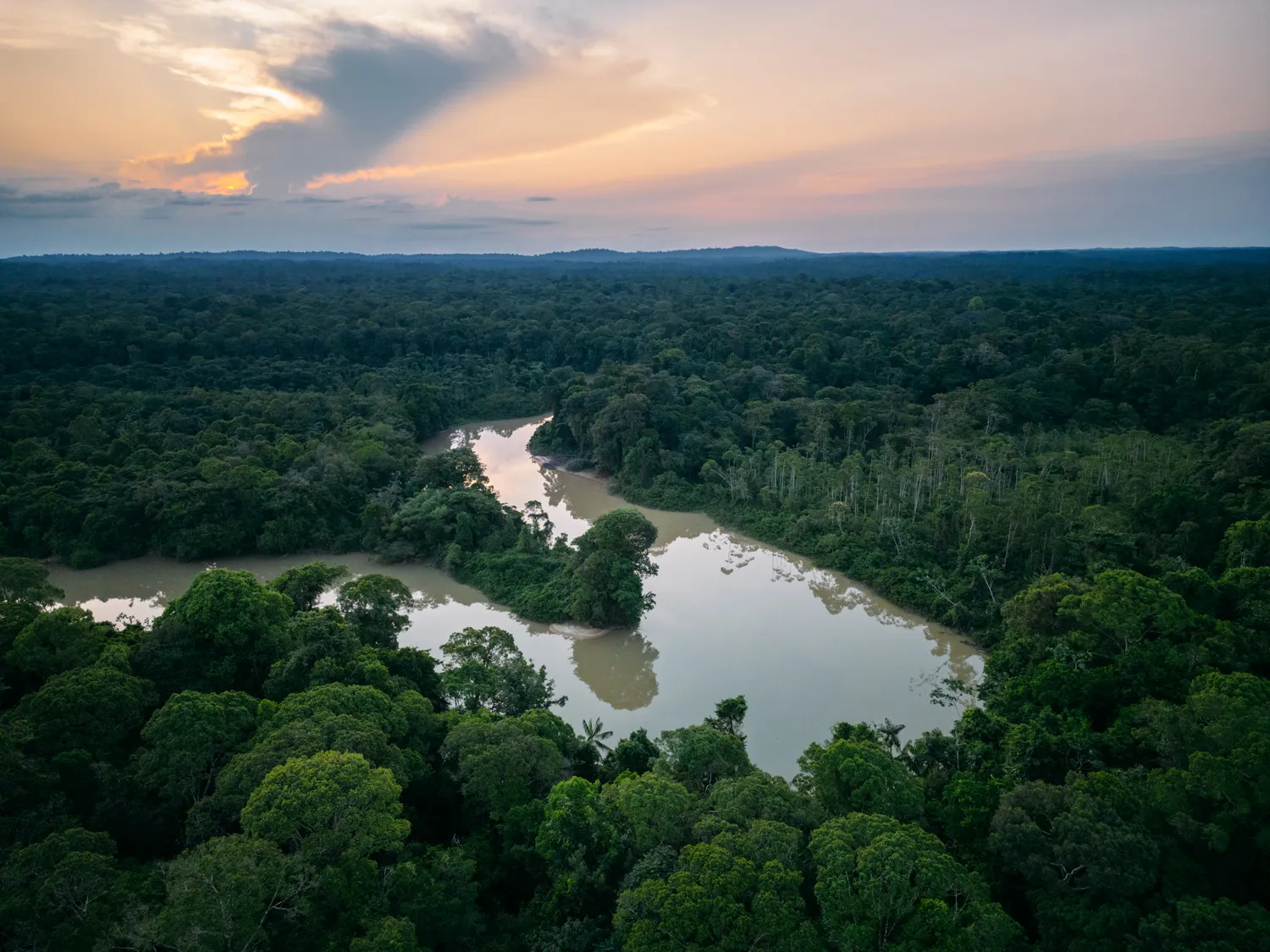
Understanding the geography helps you plan. Both of French Guiana’s borders are marked by rivers, and each crossing has its own logic:
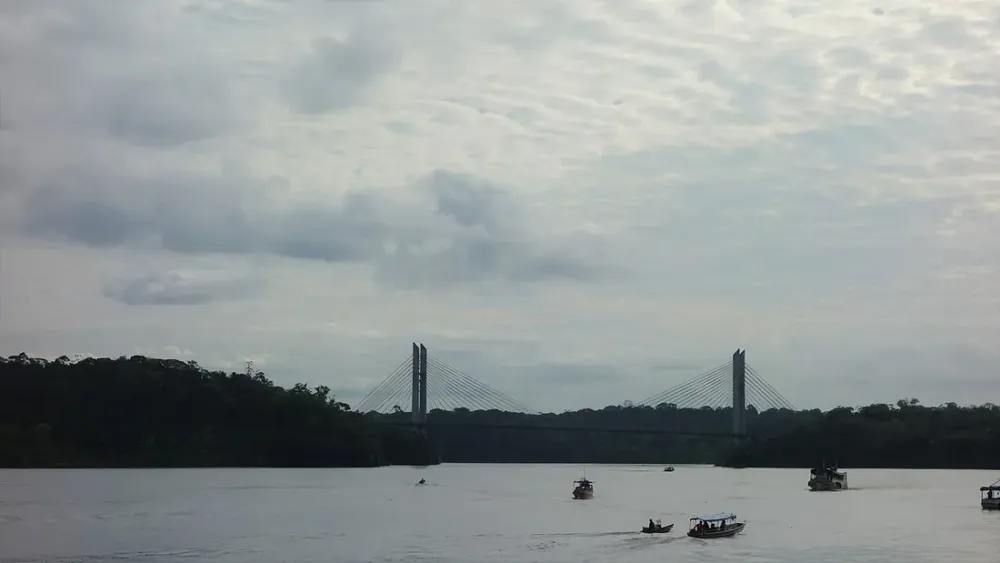
- To the east, towards Brazil: the Oyapock river separates Saint-Georges-de-l’Oyapock (French Guiana) from Oiapoque (State of Amapá, Brazil). It is the gateway to Macapá and the Brazilian Amazon.
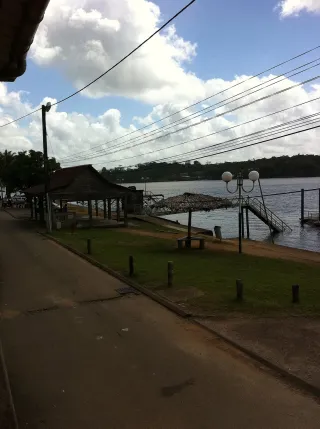
- To the west, towards Suriname: the Maroni river separates Saint-Laurent-du-Maroni (French Guiana) from Albina (Suriname). It is the route to Paramaribo, the Surinamese capital.
In both cases, the distances from central French Guiana are considerable. Allow roughly 3.5 to 4 hours’ drive from Cayenne to Saint-Georges, and a little over 3 hours from Cayenne to Saint-Laurent. It is therefore best to sleep nearby the night before and set off early, especially as the border posts close in the late afternoon. Many travellers spend that last night in Cayenne, in the tropical-wood apartments of the Cayenne Chic residence, in the Zac Hibiscus district, and hit the RN1 or the RN2 at first light.
Travelling to Suriname from French Guiana
Crossing the Maroni: Saint-Laurent → Albina
The crossing is made by river, between Saint-Laurent-du-Maroni on the French side and Albina on the Surinamese side. You have two options:
- The “La Gabrielle” ferry, if you are travelling with a vehicle. It runs on fixed-time rotations, generally during the week and with reduced slots at weekends. Check the exact times for the day, as they vary and spaces for cars are limited.
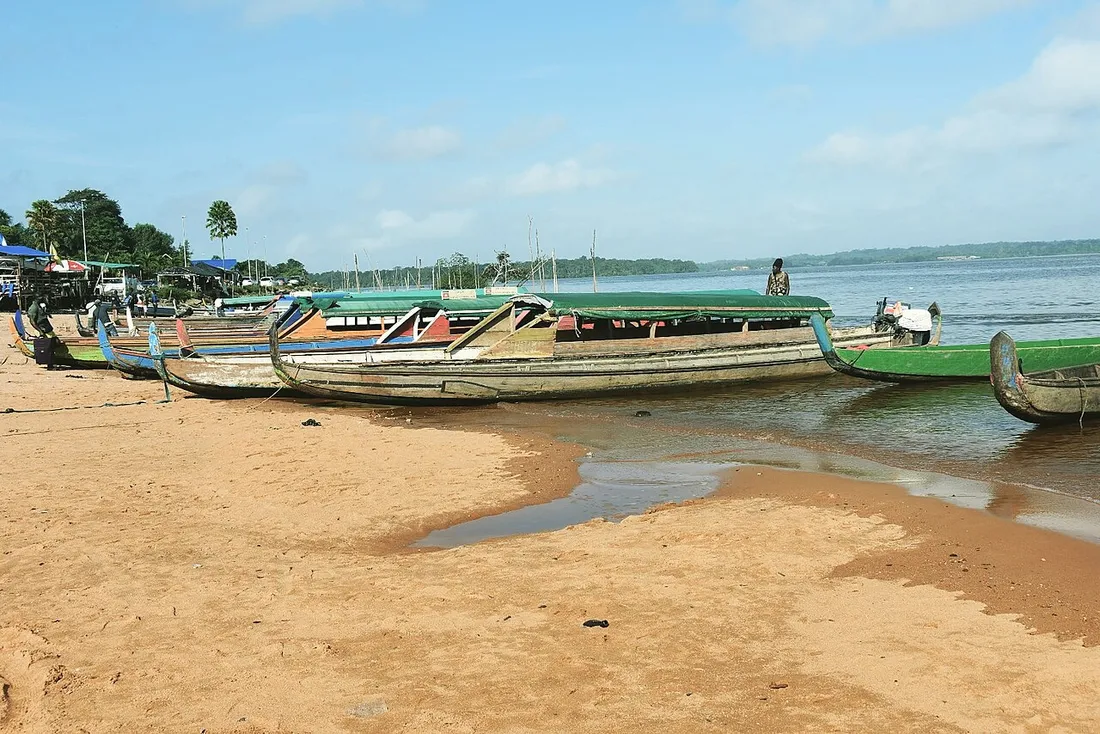
- The taxi-pirogue (motorised canoe), more flexible and faster, ideal for pedestrians. The crossing takes only a few minutes, but it is operated by local boatmen: agree on the price before you board.
On the Surinamese bank, shared taxis and buses link Albina to Paramaribo in about 2.5 to 3 hours. The capital, listed as a UNESCO World Heritage Site for its wooden historic centre, is well worth the detour.
Formalities on the Suriname side
Suriname has modernised its entry system. For many nationalities, the traditional paper visa has been replaced by a tourist entry fee (Tourist Card / Entry Fee) to be paid online before departure, on the dedicated official Surinamese website. A few key points to anticipate:
- A valid passport (beyond the length of your stay), even for French nationals.
- An international yellow fever vaccination certificate, required for entry from French Guiana.
- Proof of payment of the entry fee, printed or accessible on your phone.
Visa requirements and the amount of the fee vary depending on nationality and length of stay. Be sure to check the up-to-date conditions with the Surinamese consulate and on the official Surinamese portal before you leave: do not rely on outdated information, or you risk being turned away at the border.
Travelling to Brazil from French Guiana
Crossing the Oyapock: Saint-Georges → Oiapoque
On the eastern side, the crossing is made between Saint-Georges-de-l’Oyapock and Oiapoque. Two means exist side by side:
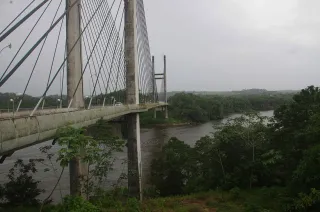
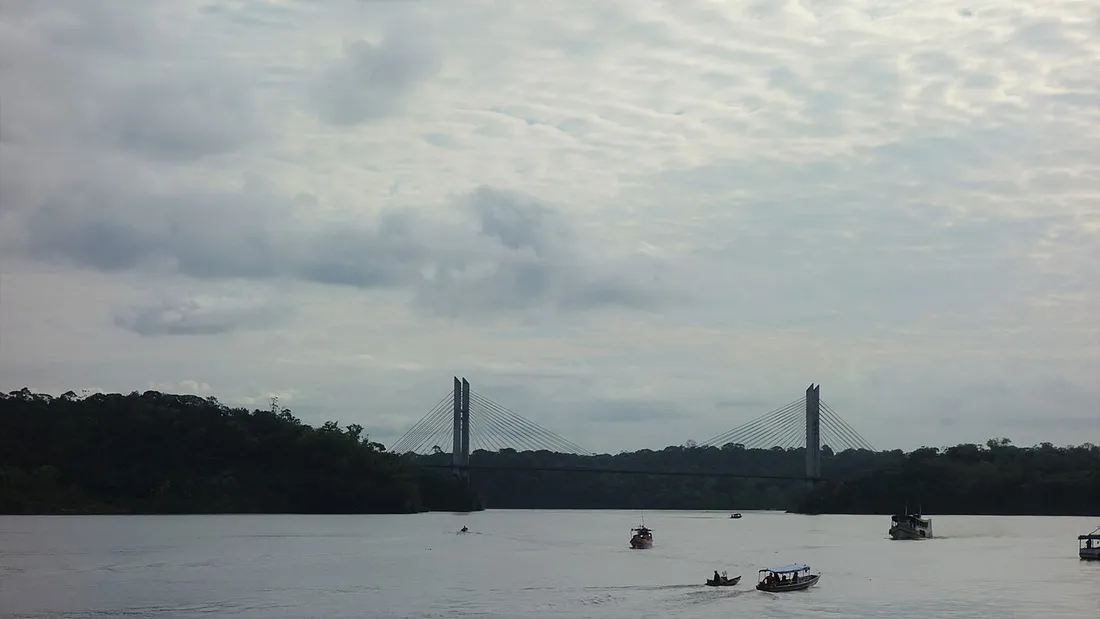
- The binational bridge over the Oyapock, opened in 2017. It connects the two banks directly by road and is open at specific hours (usually during the day, around 8 a.m. to 6 p.m., though the slots may change). The bridge is the only legal way to cross with a vehicle.
- The pirogue (canoe), which carries pedestrians across the river in a few minutes. It is the traditional option, handy when the bridge is closed or for a quick visit to Oiapoque.
From Oiapoque, the federal road BR-156 leads to Macapá, capital of Amapá, located on the mouth of the Amazon and crossed by the equator. The journey (several hours) is made by bus or shared taxi; part of the road has long been in poor condition, so check current conditions.
Formalities on the Brazil side
To enter Brazil from French Guiana:
- Carry a valid passport. Depending on your nationality and length of stay, a visa may be required: check with the Brazilian consulate (present in Cayenne and Saint-Georges).
- Have your entry stamped by the Polícia Federal in Oiapoque. This step is essential: without an entry stamp, you will be in an irregular situation and will have problems when leaving.
- If you are driving a rental vehicle in Brazil, the compulsory Brazilian insurance (Seguro DPVAT / local insurance) and the vehicle documents are essential. Many French Guiana rental contracts do not allow border crossings: confirm this point with your rental company.
- The yellow fever certificate is also recommended, and may even be required depending on checks.
Visa rules for Brazil have changed in recent years. Do not rely on outdated information: consult the official Brazilian consulate website and France Diplomatie before departure.
The other direction: Brazilians exempt from visas for French Guiana
The border has opened both ways. Since 31 July 2026, Brazilian nationals no longer need a short-stay visa to enter French Guiana. Useful to know if you are hosting family, friends or business contacts from Amapá:
- The exemption covers stays of up to 30 days within any 180-day period;
- It requires a passport valid for three months beyond the planned departure, medical insurance of €30,000, proof of accommodation and funds, and the yellow fever vaccination certificate;
- It excludes stays for commercial purposes and grants no right to work or settle: beyond 30 days, or to study or work, a long-stay visa remains mandatory;
- PAF and customs checks remain in place, as do the rules on goods, vehicles and cash carried across.
The measure is experimental, opened for a renewable six-month period, i.e. until 31 January 2027 initially. Check that it is still in force with the French Guiana state services or the French consulate in Brazil before arranging a visit.