It’s the question I get asked most often when friends from mainland France start planning their trip: what documents do you need to go to French Guiana? The short answer is reassuring: French Guiana is a French overseas department and region (DROM), so you stay in France. No visa, no customs, the euro in your wallet and French spoken everywhere. But after several years welcoming travelers here, I know the long answer is worth reading: one vaccine is genuinely mandatory, identity checks are more frequent than elsewhere in France, and the slightest side trip into Brazil or Suriname changes everything. Here’s the full rundown, from the ground in Cayenne.
ID Card or Passport: What Actually Suffices
The principle: a French domestic flight
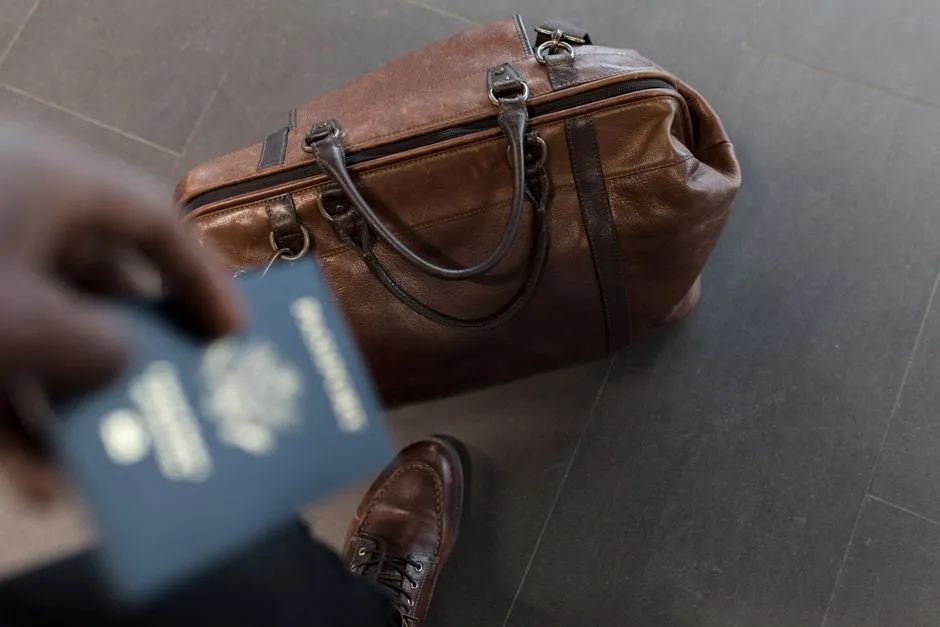
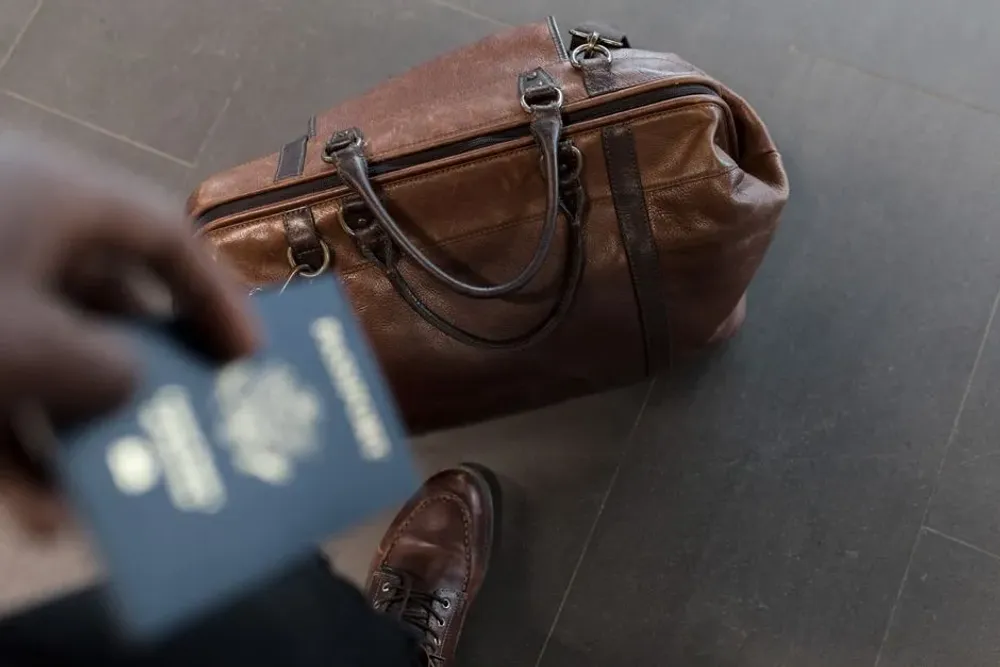
For a French national, the Paris–Cayenne flight (8.5 to 9 hours in the air, landing at Félix-Eboué airport in Matoury) is legally a domestic flight. A valid identity card is enough to board: the “French Guiana DROM, simplified formalities” formula holds true, with the same rules as a Paris–Nice flight or nearly so.
What’s accepted for a French traveler:
- Valid national identity card (5-year extended ID cards technically pass, but check your airline’s conditions);
- Valid passport;
- For minors: ID card or passport in their name.
Yes, traveling to French Guiana without a passport is therefore possible. But I advise against it for 90% of my travelers, and here’s why.
Why I still recommend the passport
Three very concrete reasons, observed in the field:
- Border excursions. Suriname (ferry to Albina from Saint-Laurent-du-Maroni, around 4 € per foot passenger) and Brazil (Oyapock bridge at Saint-Georges) are within weekend reach. Without a passport, you’ll stay on the French bank. Suriname also requires an electronic tourist card (around 35-55 €), and Brazil stamps your passport on the Oiapoque side.
- Regional stopovers. Some connections (Belém, Paramaribo) require an international travel document.
- A safety margin. Losing your ID card 7,000 km from home, with a -5h time difference in winter (-6h in summer), seriously complicates the return.
For European nationals, an ID card or passport also suffices. Other nationalities fall under the French visa regime, with one subtlety: a standard Schengen visa does not cover French Guiana, you need the French overseas territories endorsement.
The Yellow Fever Vaccine: The Only Real Health Requirement
This is THE point that travelers from mainland France often discover too late. Vaccination against yellow fever is mandatory to enter French Guiana, from the age of 1. The yellow card (international vaccination certificate) may be requested on arrival.
In practice:
- Where to get vaccinated? Only at an approved international vaccination center (there’s one in most university hospitals). Budget 40 to 75 € depending on the center, not reimbursed by the French health system in most cases.
- What lead time? The injection must be done at least 10 days before departure for the certificate to be valid. Don’t leave it to the last minute: some centers post 3 to 6 weeks of waiting in high season.
- How long is it valid? Since 2016, a single dose is valid for life for most adults.
- And other vaccines? Nothing else is mandatory; up-to-date DTP, hepatitis A and typhoid are advised, plus antimalarial treatment only for prolonged immersions along the rivers (Maroni, Oyapock) or in deep forest like the Nouragues reserve. For a coastal stay between Cayenne, Rémire-Montjoly and Kourou, a good repellent is enough.
Slip the yellow card next to your ID in your carry-on: it’s the winning duo for disembarking at Félix-Eboué. From the tarmac it’s about twenty minutes to Cayenne, where the air-conditioned apartments of Le Nid de Thalys, a charming residence in town take in many travellers for their first night.
Stepped-Up Checks: What to Expect on the Ground
The Guianese paradox no brochure tells you about: you’re in France, but you show your papers far more often than in mainland France, due to the fight against illegal gold mining and undocumented immigration.
The Iracoubo and Régina roadblocks
Two fixed gendarmerie checkpoints dot the territory:
- on the RN1 between Kourou and Saint-Laurent-du-Maroni, near Iracoubo;
- on the RN2 toward Saint-Georges-de-l’Oyapock, at Régina (the former Belizon tollgate).
Every vehicle stops, every occupant presents an ID. It’s quick (2 to 5 minutes with no queue), courteous, but non-negotiable. If you’re heading out to see the leatherback turtles at Awala-Yalimapo or the Camp de la Transportation in Saint-Laurent (250 km from Cayenne, about 3 hours of driving), every passenger must have their papers on them, children included. I’ve seen families turn back at Iracoubo over an ID card left at the rental.
At the airport, on departure as on arrival
The PAF (border police) systematically checks documents on departure from Cayenne, even bound for Paris or the West Indies, with frequent additional sniffer-dog checks. Nothing worrying for a traveler in order, but arrive 2.5 hours before takeoff.
The special case of the Guiana Space Center
Visiting the CSG in Kourou is free, but must be booked in advance and requires an original ID document (no phone photo) for every visitor aged 8 and up. Same logic for attending an Ariane 6 or Vega launch from the official sites: registration by name and check at the entrance.