
Planning a trip to French Guiana means juggling one detail that many travellers underestimate: the time difference with mainland France. Between summer time and winter time in France, the gap isn’t the same, and that changes everything when it comes to scheduling a work call, reaching family or organising a night-time arrival at Félix-Éboué airport. As a French Guiana resident and rental manager in and around Cayenne, I’m sharing here the concrete benchmarks I wish I’d had on my first trip.
What is the time difference in French Guiana?
French Guiana, a French overseas department and region (DROM) of nearly 294,000 inhabitants, lives on the UTC-3 time zone all year round. Unlike mainland France, it does not observe daylight saving time. That detail is exactly what explains why the gap with Paris varies depending on the period.
- During mainland winter (late October to late March): French Guiana is 4 hours behind Paris.
- During mainland summer (late March to late October): the gap widens to 5 hours.
For the traveller, remember this practical rule: when it’s noon in Cayenne, it’s 4 p.m. in Paris in winter, and 5 p.m. in summer. The sun sets early and consistently all year round, around 6–6:30 p.m., because we’re close to the equator.
Why this gap changes with the season
Mainland France moves its clocks forward an hour in late March and back an hour in late October. French Guiana, on the other hand, never changes. The result: the gap “widens” by an hour during the French summer. It’s exactly the same mechanism as with the French West Indies. If you travel in July or August, peak dry season and the best time to visit, you’ll therefore be on a 5-hour difference with your loved ones back in France.
Organising your calls with mainland France
The time difference works in your favour for staying reachable without breaking up your sightseeing days. The Guianese morning corresponds to midday or early afternoon in France.
The best windows to call France
- 8–10 a.m. in Cayenne = 1–3 p.m. (summer) or 12–2 p.m. (winter) in Paris: ideal for a work or administrative call before heading out to explore.
- Late Guianese afternoon (4–6 p.m.) = 9–11 p.m. in France in summer: still doable for family, but already late on the mainland side.
- To avoid: calling after 7 p.m. French Guiana time means waking up the people you’re reaching (past midnight in Paris).
Practical tips for remote workers
More and more travellers combine a stay with remote work. Here, the time difference is an asset: your early-afternoon French meetings fall in the Guianese morning, leaving you the afternoon free. A few benchmarks:
- French Guiana’s dialling code is +594.
- The mobile network is reliable along the coast (Cayenne, Rémire-Montjoly, Matoury, Kourou), more patchy inland, along the Maroni or towards the Nouragues.
- Plan for a good Wi-Fi connection for your video calls; our holiday rentals are fibre-equipped wherever the network allows.
- Set up a world clock app with “Cayenne” and “Paris” side by side: it prevents calculation mistakes, especially during the weeks when clocks change.
Managing a night-time arrival in Cayenne
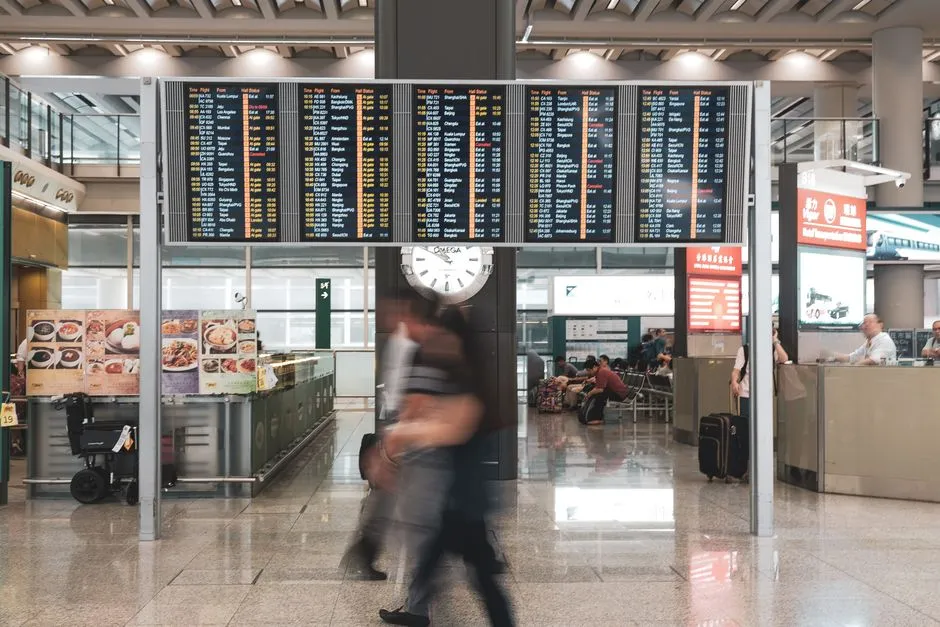
This is the trickiest point. Most direct flights from Paris-Orly land at Félix-Éboué airport in Matoury in the evening or in the middle of the night, local time. The flight lasts about 8.5 to 9 hours, and with the time difference, you take off in the late French morning to arrive that same evening in Cayenne, sometimes after 10 p.m.
Anticipating fatigue and jet lag
Good news: with “only” 4 to 5 hours of difference, jet lag stays moderate, comparable to a trip to Brazil. A few reflexes:
- On arrival, switch to local time immediately: sleep on Guianese time from the very first night.
- A night-time arrival encourages a quick bedtime; you’ll naturally wake up early the next day, which fits perfectly with a morning programme (visits like the Cayenne market or the Kaw marshes are best savoured at dawn).
- Stay hydrated: the equatorial climate is hot and humid all year round.
The transfer from the airport to your accommodation
Félix-Éboué airport is located in Matoury, about 15 km from the centre of Cayenne, a 20- to 25-minute drive. Things to know for a night-time arrival:
- A car is essential in French Guiana: public transport is almost non-existent for reaching the towns. Book your rental vehicle in advance, as availability is limited.
- A taxi ride from the airport to Cayenne generally costs between €35 and €50 at night (surcharge rate after 9 p.m.).
- If you pick up a rental vehicle at midnight, check the desk’s opening hours: not all are open for late flights.
- Let your host know your actual arrival time, in French Guiana time, to avoid any misunderstanding over check-in.
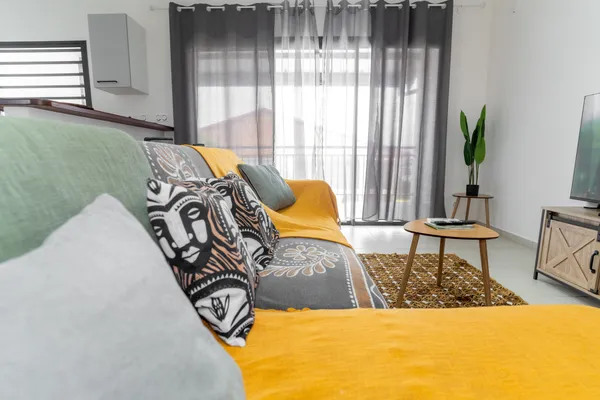
It’s precisely on this point that a night-time arrival can turn into a headache. At Hostel Toucan, we offer 7-day WhatsApp assistance: you message us on landing, and we guide you right to the door, access codes and parking included. No reception to find at midnight, no stress after 9 hours of flying. Discover our accommodation for rent in French Guiana, designed for late arrivals.