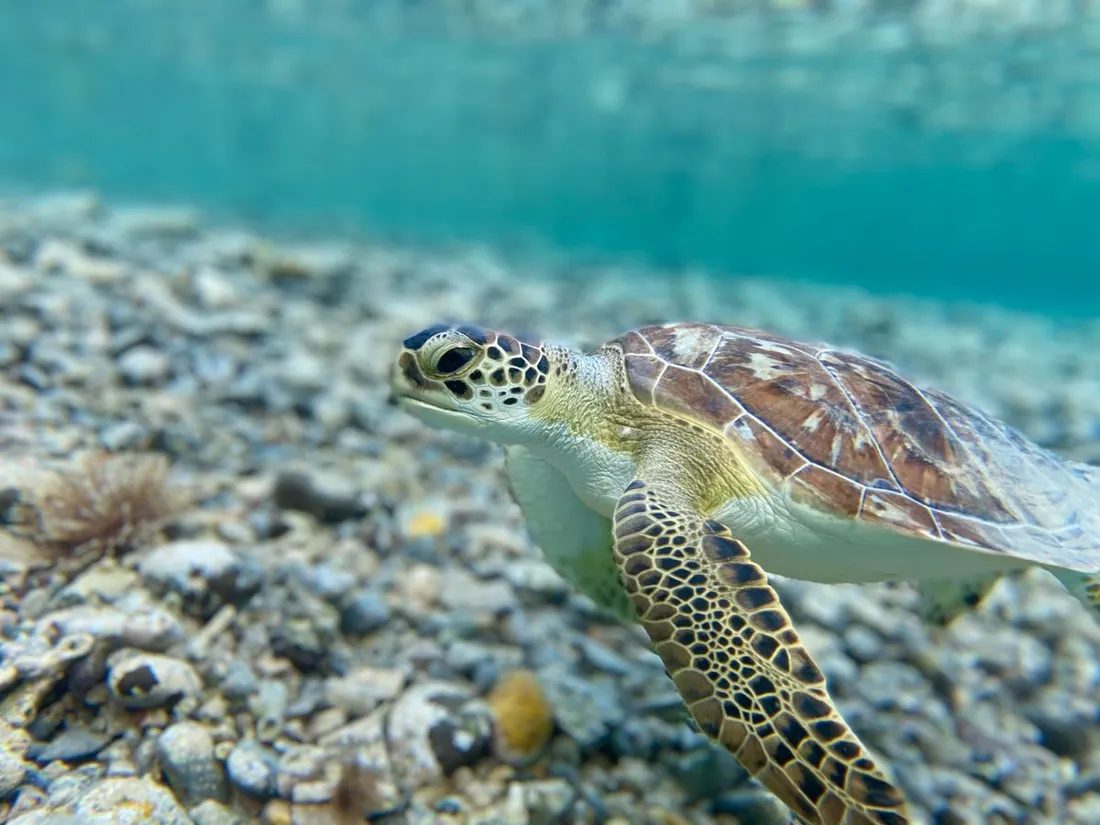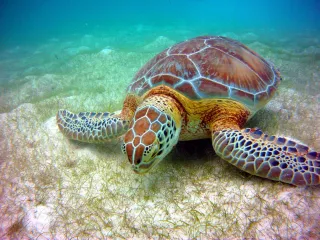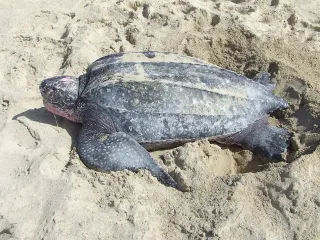
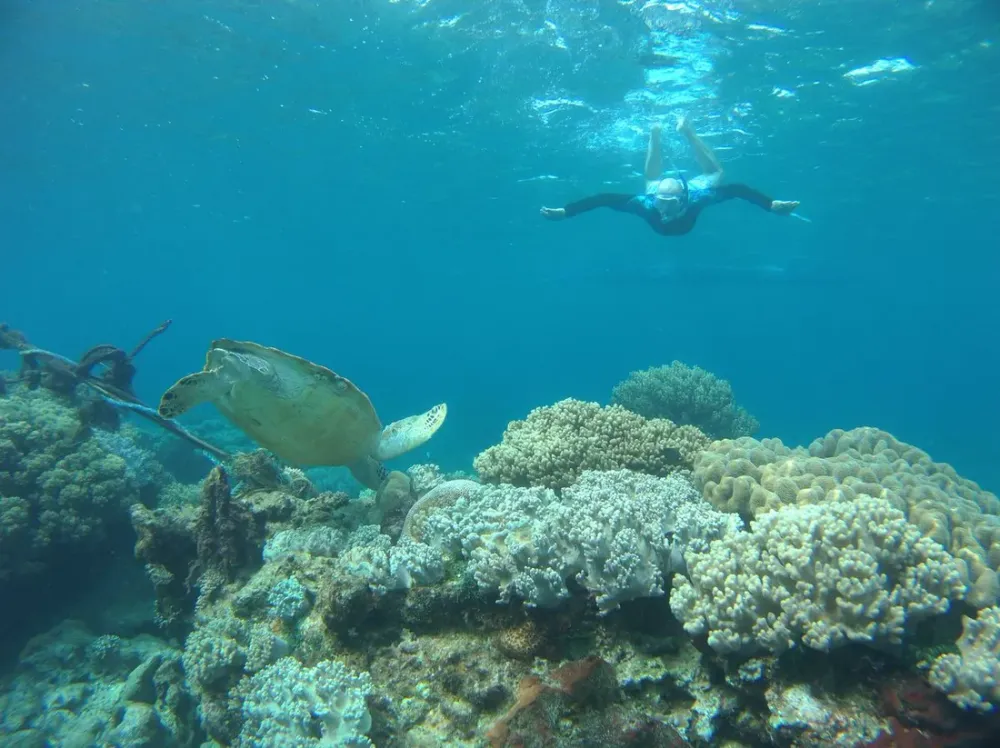
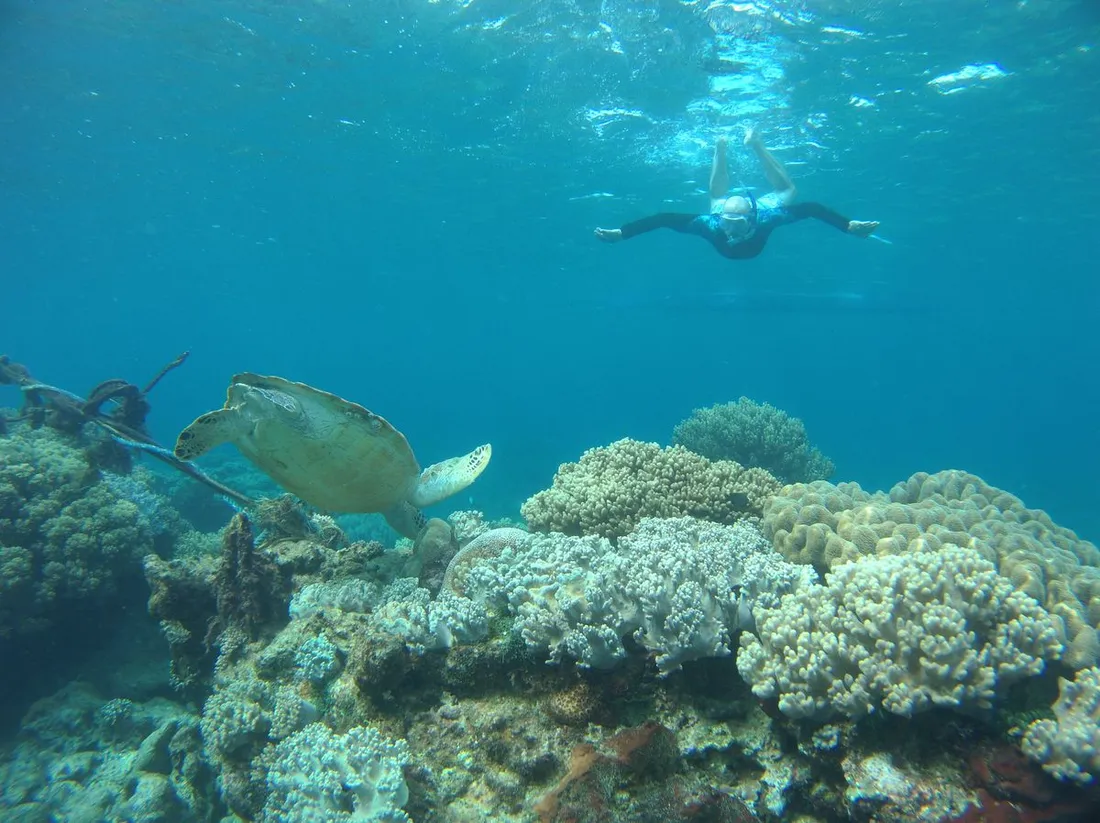
Gliding silently above a turquoise seagrass bed and watching a sea turtle graze peacefully just a few metres away from you: it is one of the most memorable experiences Martinique can offer. The good news is that you need neither a scuba tank nor a long boat trip to live this moment. In the town of Anses-d’Arlet, in the south-west of the island, several sheltered coves regularly welcome green turtles and hawksbill turtles, all within reach of a mask and snorkel. In this guide, you will find the best spots, the right time to watch them, the useful gear and, above all, the rules of respect that turn this encounter into a responsible ecotourism experience.
Why Martinique is a turtle hotspot
The Caribbean coast of Martinique, calmer than the Atlantic side, is home to bays sheltered from the wind where vast seagrass meadows grow. These underwater prairies are the pantry of the green turtles, which feed on them daily. Hawksbill turtles, on the other hand, are more likely to frequent the neighbouring coral areas in search of sponges. As a result, around Anses-d’Arlet you can come across both species in water that is often clear and shallow.
These turtles are wild and protected animals: they are neither fed nor trained. Spotting them therefore remains a matter of luck, never a guarantee. That is precisely what makes the encounter so precious — and what justifies approaching it with patience and discretion.
The best spots in Anses-d’Arlet
The town of Anses-d’Arlet brings together, within a few kilometres, the three most famous sites for snorkeling with turtles.
Anse Dufour
This is the most renowned spot on the island. This small cove of light-coloured sand, lined with a handful of fish restaurants, looks out over a seabed where turtles come to graze just a few metres from the shore. You can set off straight from the beach, fins on, and reach the seagrass bed in a few strokes. It is also the busiest spot: to enjoy the calm, it is best to get there early.
Anse Noire
The immediate neighbour of Anse Dufour, Anse Noire stands out for its dark volcanic sand and its more secluded atmosphere. You reach it via a staircase from the car park. The pontoon and the sheltered waters make it an excellent place to observe green turtles and shoals of fish. Pairing Anse Dufour and Anse Noire in the same morning is one of the great classics of the coast.
Grande Anse des Anses-d’Arlet
Wider and more open, Grande Anse boasts a seagrass bed close to the shore that regularly attracts turtles coming to graze. The beach, lined with colourful gommier boats, is ideal for alternating between swimming, snorkeling and lounging. From the pontoon or the rockier ends of the bay, you increase your chances of meeting the wildlife.
The village of Anses-d’Arlet
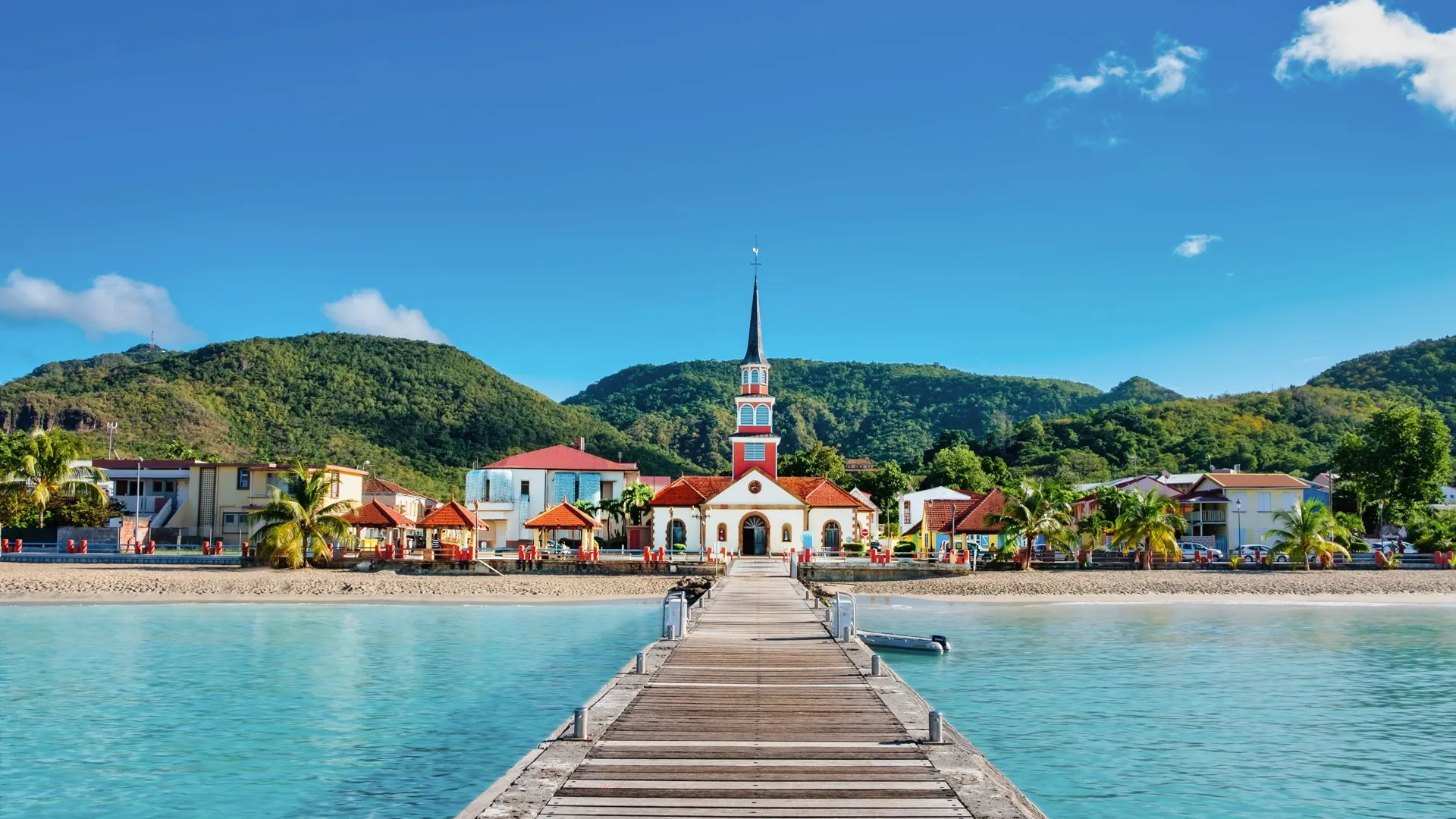
The village of Anses-d’Arlet, with its church facing the sea and its famous pontoon, is one of Martinique’s postcard scenes. Beyond the setting, its nearby waters shelter multicoloured fish and, sometimes, turtles. It is a convenient starting point for exploring the other coves and refuelling at a snack bar with your feet in the sand.
How to watch turtles while snorkeling
Snorkeling — fins, mask and snorkel — is the simplest and most respectful way to approach these animals. There is no need to know how to free-dive: turtles feed in shallow water, and most encounters happen at the surface.
A few principles to stack the odds in your favour:
- Spot the seagrass beds: these dark-green areas, more than bare sand, are the green turtles’ restaurants.
- Swim slowly and quietly, without big fin kicks that frighten the wildlife.
- Stay at the surface and let the turtle come to you: if it feels free to move, it will stay longer.
- Be patient: watch the areas where other swimmers are looking down at the seabed — it is often a sign of a presence.
- Breathe calmly through your snorkel to limit noise and energy expenditure.
The best time to see them
Early morning is by far the ideal window. The water is generally calmer, visibility better, the crowds thinner and the turtles more at ease. Arriving as soon as the car parks open also spares you the heat and the crowds of midday.
As for the season, turtles are present all year round at these sites. The most pleasant period often corresponds to the dry season (roughly from December to April), with its clear waters. During the wetter season, keep an eye on the weather and the swell, which can reduce visibility. Avoid getting into the water just after heavy rain and favour days without a strong wind.