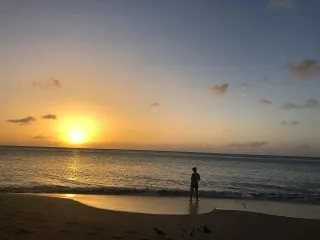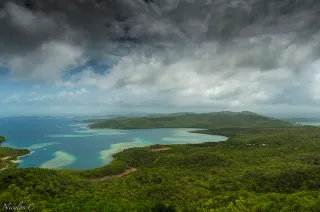
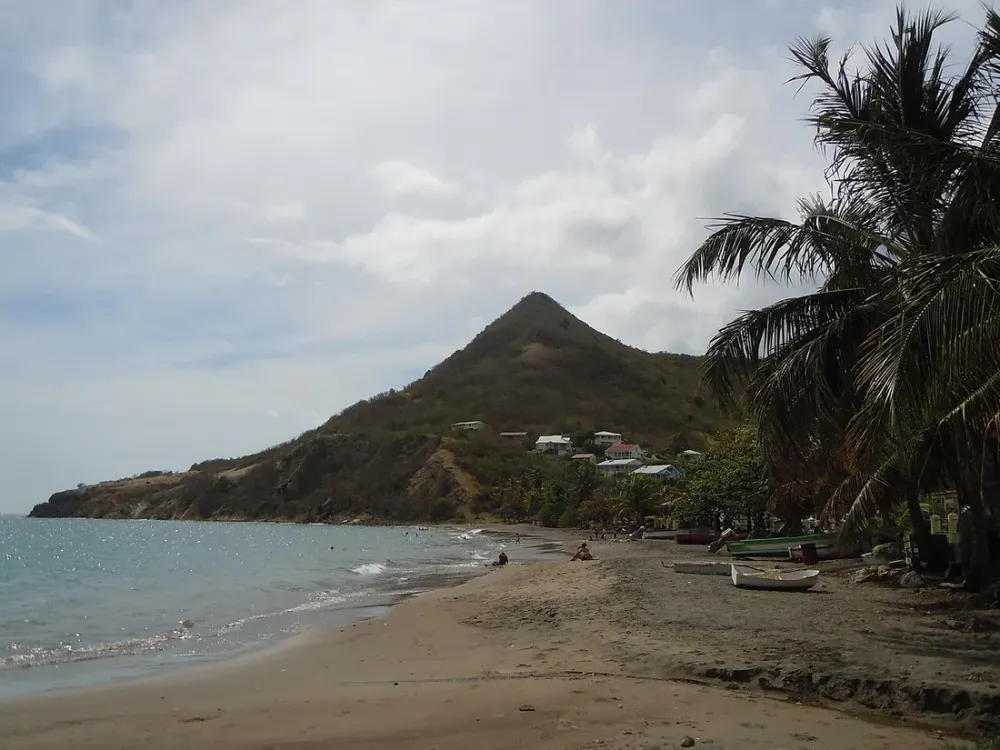
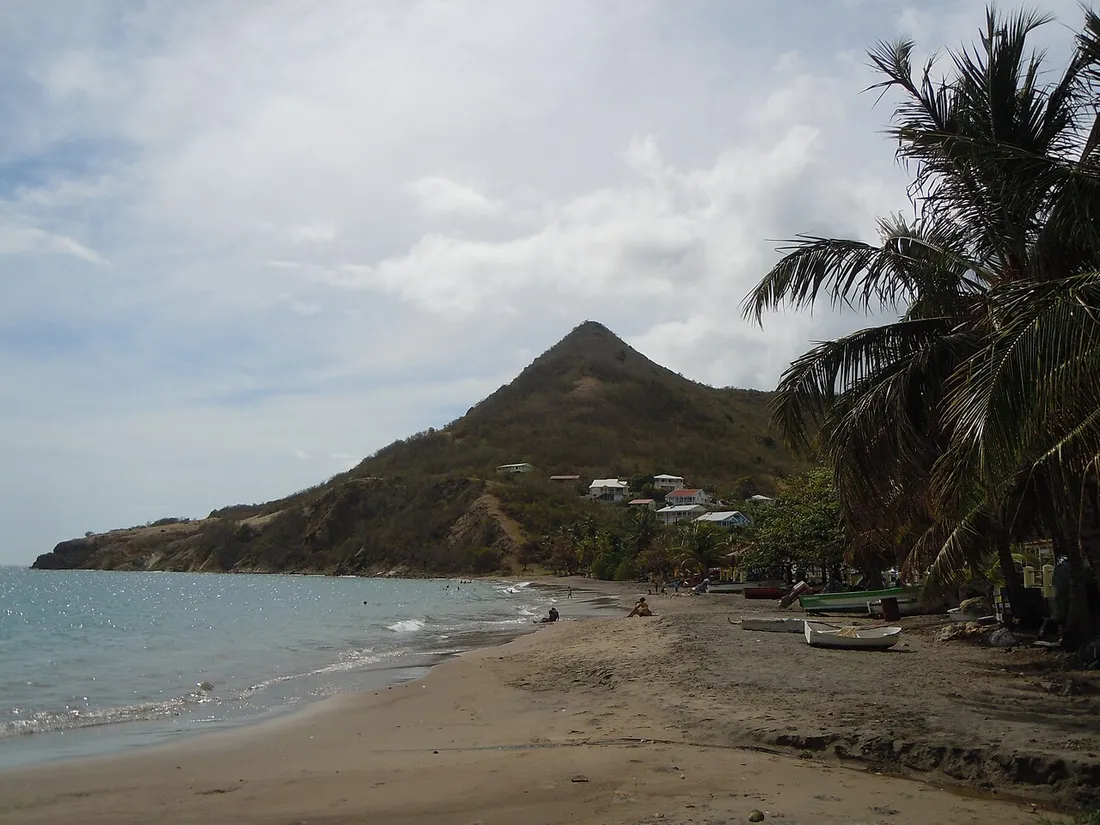
There’s a reflex every resident eventually picks up: around 5 p.m., you head west. In Martinique, the sunset is a daily appointment, and all its magic comes down to a quirk of geography. The island has only one side facing the setting sun: the Caribbean coast, to the west. That’s where the orange disc dives straight into the sea; on the Atlantic side, it sets behind the hills. After years of guiding our guests to these beaches, here is my guide to the best spots for a sunset on a Martinique beach: real times, water’s-edge bars and pitfalls to avoid.
Why the west coast for sunset
Martinique is barely thirty kilometres wide, yet its two coastlines are opposites. The Atlantic coast (Le François, Le Robert, Tartane) takes the trade winds, the swell and the sunrise. The Caribbean coast unrolls calm waters and faces west, towards the setting sun.
So you don’t get it wrong, keep these landmarks of Martinique’s west coast in mind, from south to north:
- Les Anses-d’Arlet (Grande Anse, Petite Anse, Anse Dufour) — postcard scenery distilled.
- Les Trois-Îlets (Anse Mitan, Anse à l’Âne, Pointe du Bout) — easy access and nightlife.
- Le Diamant — a large beach, with the sun setting behind its Rock.
- Le Carbet and Saint-Pierre — black sand, a wild atmosphere at the foot of Mount Pelée.
In the tropics, sunset time varies little over the year. In the dry season (the Carême, December to April), expect a sunset between 5:40 and 6:15 p.m.; in summer, up to 6:25-6:35 p.m. Twilight is brief: full darkness comes 20 to 25 minutes later. Settle in 45 minutes before the announced time, and bear in mind the time difference (-5h in winter, -6h in summer vs Paris).
Grande Anse d’Arlet: the most photogenic sunset
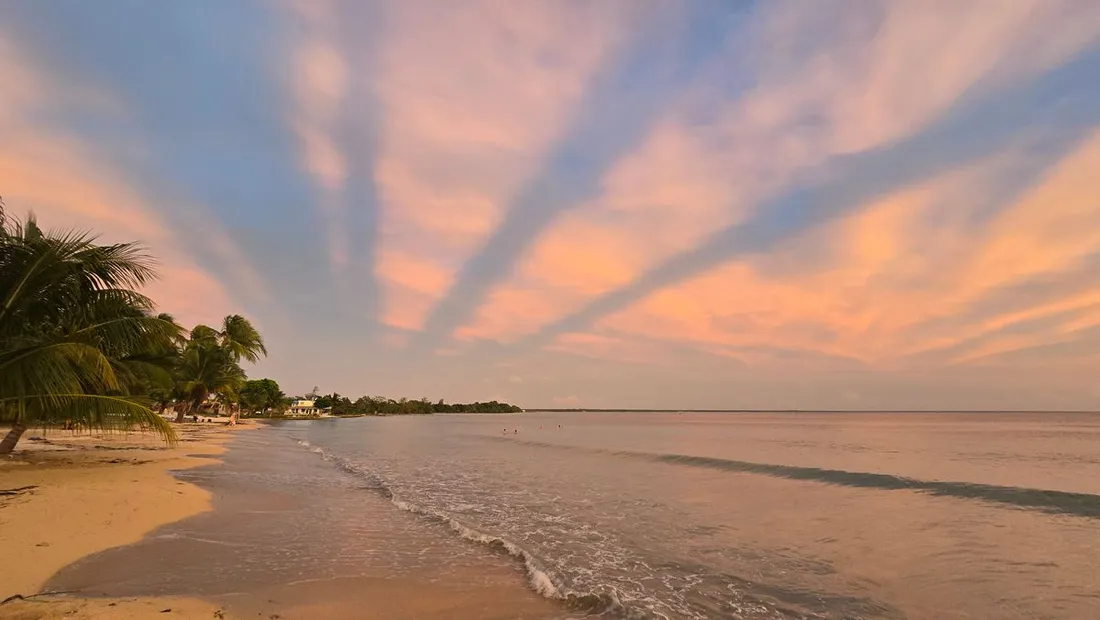
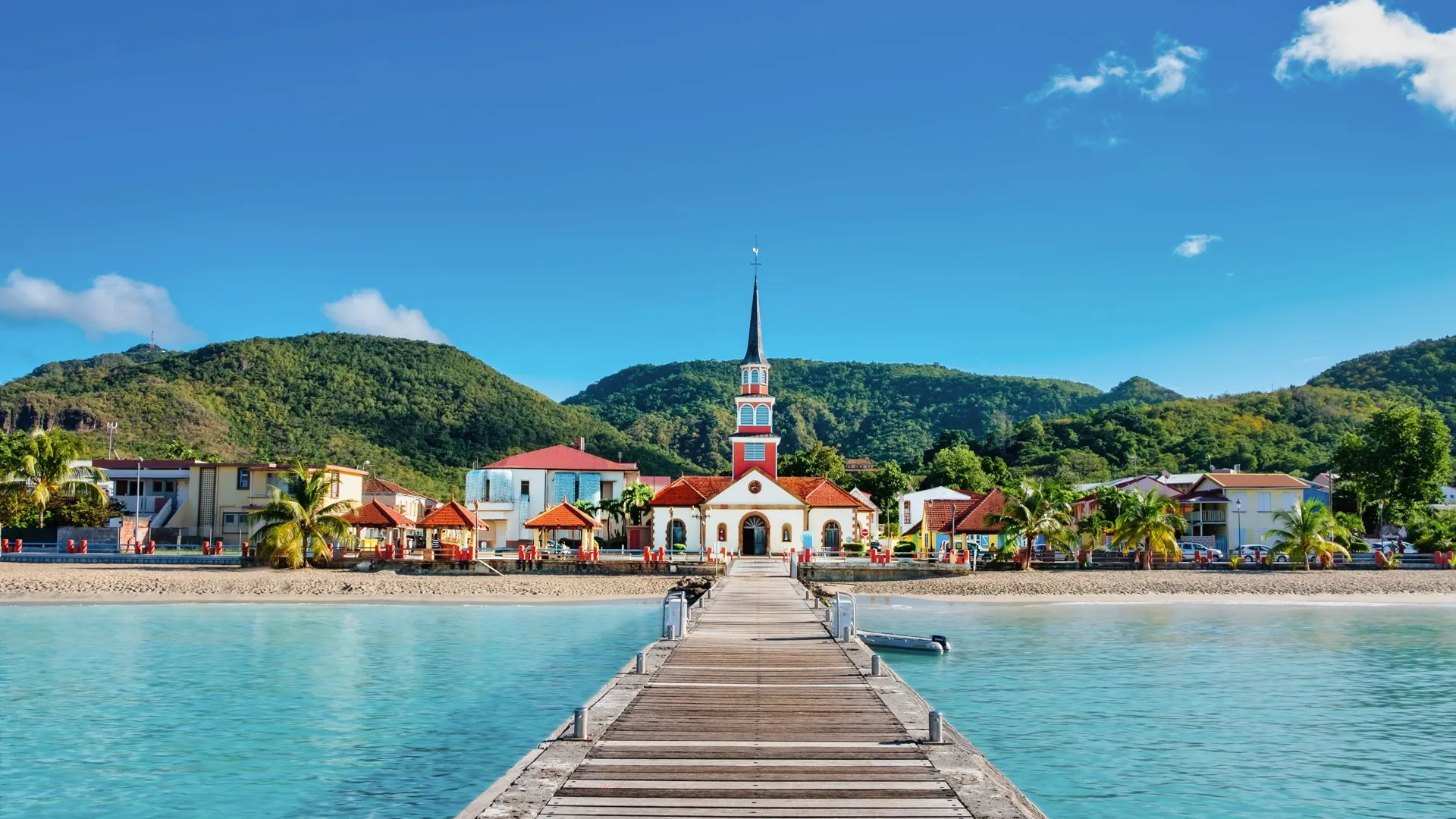
If I could name just one, it would be this. Grande Anse d’Arlet and its sunset bring so many couples back every evening. The bay, perfectly oriented due west, traces an arc of beige sand lined with coconut palms, with the wooden jetty and the fishermen’s yawls in silhouette as the sky catches fire.
What makes this sunset unique:
- The orientation: no mountain blocks the horizon, the sun dives cleanly into the sea.
- The jetty: this wooden walkway is THE photographers’ viewpoint — come early for a spot.
- The calm water: you can keep swimming right to the end, one of the great pleasures here.
- The seafront restaurants: half a dozen tables and lolos for the evening.
The village winds down gently in the evening. Expect €15 to €28 for a plate of grilled fish or a court-bouillon, €6 to €9 for a ti-punch. Parking is the only drawback: the central car park is small and access is narrow. Arrive before 5 p.m. in high season, or park further out and finish on foot. Note: the same bay is a well-known snorkelling spot by day (turtles are frequent).
Sunset at Anse Mitan and Pointe du Bout
On the Trois-Îlets side, the sunset at Anse Mitan plays a different tune: less wild, livelier. This is the island’s historic tourist area, facing the bay of Fort-de-France, and the sun sets over the water with the city skyline and the boats at anchor as a backdrop.
The decisive advantage of Anse Mitan and the neighbouring Pointe du Bout is the cluster of water’s-edge bars: you go straight from a sea swim to a drink facing the sunset. Expect €9 to €14 for a signature cocktail, €4 to €6 for a draught beer, €16 to €24 for a sharing board.
Another plus: you can come without a car. The ferry links Fort-de-France to Pointe du Bout and Anse Mitan in about twenty minutes, several crossings a day. Check the time of the last return departure (often early evening) if you’re staying on the other side of the bay. For anyone staying in Les Trois-Îlets, this is the easiest everyday sunset.
Le Carbet and Saint-Pierre: a wild sunset on black sand
Further north, the scenery shifts. At Le Carbet, the sand turns volcanic black, inherited from Mount Pelée, and the crowds thin out. The sunset here is rawer: a long dark beach, the Pitons du Carbet backlit, and often nobody around. It was on this coast that Gauguin settled in 1887. Just above, Saint-Pierre, the former capital destroyed by the 1902 eruption (a listed town, candidate for UNESCO heritage), offers a sunset steeped in history, above the harbour and the 1902 shipwrecks.
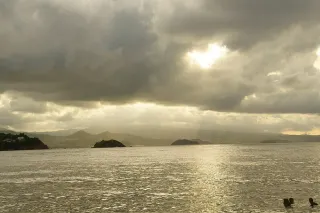
Two things to remember for the north: the sky here is more changeable (a squall can clear for a spectacular sunset — don’t give up too soon) and the drive counts (40-45 min from Fort-de-France to Le Carbet, about 1h to Saint-Pierre). To tie these sites into a wider itinerary (Pelée, the distilleries of the Route des Rhums, the Balata Garden), our complete guide to Martinique helps you plan the day.