

Housing your teams on assignment in Cayenne, Kourou or Saint-Laurent-du-Maroni quickly raises a very concrete question: how do you obtain a clean invoice, issued in the company’s name, payable by bank transfer, with VAT handled properly? On mainstream holiday rental platforms, the answer is often vague: a receipt in the employee’s name, no VAT number, a personal card payment to front, and supporting documents that accounting struggles to accept. Serviced accommodation (in French, para-hôtellerie) changes the picture entirely. By offering hotel-style services (reception, housekeeping, linen supply, a contactable front desk), an accommodation provider can invoice business to business, with the wording and tax treatment your accounting department expects.
This article gives a factual, up-to-date overview of invoicing and VAT for a professional stay in serviced accommodation in French Guiana: what a compliant invoice looks like, when VAT applies and can be recovered, how to build an expense claim that gets approved, why bank transfer payment matters, and how long-stay pricing works for construction projects, secondments and missions. The figures given are indicative: they vary with the season, the town and the length of stay. For an accurate quote, the best approach is to contact us.
Serviced accommodation: what exactly are we talking about?
“Serviced accommodation” refers to a furnished lodging activity that comes with services comparable to those of a hotel. It is not merely making a property available: it means offering a package of services around the stay.
In practice, the tax authorities have traditionally applied a “bundle of indicators” approach built around several hotel-style services:
- Breakfast or a light catering offer, where available.
- Regular cleaning of the premises (not just an end-of-stay clean).
- Linen supply (bed sheets, towels) and its renewal.
- Guest reception, even when not physical: a welcome, a reachable contact, assistance during the stay.
For a corporate stay, this framework has a direct and very practical consequence: the accommodation operates as a professional supplier. You are not a private individual subletting a room, you are a corporate client purchasing an accommodation service, with a properly issued invoice.
Why this matters for a business stay
An employee travelling in French Guiana needs supporting documentation that their employer’s accounting team can process without debate. A simple Airbnb receipt in the traveller’s name, with no company registration number or VAT, complicates the expense claim and may be rejected. Serviced accommodation, on the other hand, makes it possible to issue an invoice in the company’s name, with all the legally required details, which makes life easier for the employee and the finance department alike.
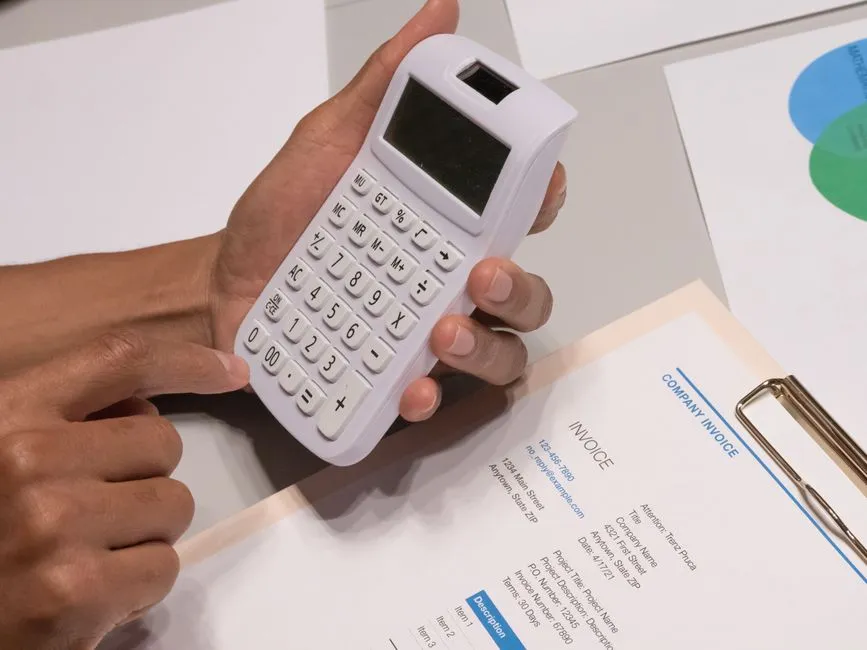
The invoice in the company’s name: the details that count
A professional invoice is not a receipt. To be usable in accounting and to stand up to an audit, it must include a core set of mandatory details. Here are the main ones to check on any business accommodation invoice.
- Supplier identity: business name, address, company registration number (SIREN/SIRET) and, where applicable, the intra-EU VAT number.
- Client identity: your company’s name and address, not the employee’s.
- A unique, sequential invoice number, and the issue date.
- Description of the service: serviced accommodation, with the dates of stay and, ideally, the occupant’s name and the purpose of the assignment.
- Breakdown of amounts: price excluding tax, VAT rate and amount applied, total including all taxes.
- Payment terms: due date, payment method, bank details for the transfer.
The practical difference with a platform receipt
On a consumer platform, the document you retrieve is often a booking summary rather than an invoice in the accounting sense. It frequently lacks the VAT number, the rate applied, or the company address. The result: the employee pays out of pocket on a personal card, then has to fight to be reimbursed. With serviced accommodation, the invoice is designed from the outset for the client company’s accounts.
VAT: when does it apply, and can it be recovered?
This is the point that draws the line between plain furnished rental and serviced accommodation. Renting out a furnished property as a private individual is in principle exempt from VAT. Conversely, serviced accommodation, because it comes with hotel-style services, falls within the scope of VAT.
The special case of French Guiana
French Guiana has a specific tax status. Unlike Guadeloupe and Martinique, VAT is currently not applicable in French Guiana: it is not levied there. This has an important practical consequence for a business stay on the ground. In most cases you will have no VAT line to recover on an accommodation invoice in French Guiana, quite simply because none is charged.
This particularity takes nothing away from the value of serviced accommodation: the invoice is still issued in the company’s name, with the full set of professional details, payment by bank transfer available and documentation that works perfectly for an expense claim. The “compliant business invoice” benefit remains intact, even without a VAT line to deduct.
What about the French West Indies or mainland France?
If your company also manages travel to Guadeloupe, Martinique or mainland France, the logic differs: VAT does apply there, with rates specific to each territory. On a serviced accommodation service subject to VAT, the VAT-registered client company may, subject to conditions, recover the VAT shown on the invoice, provided the expense is incurred for business purposes and properly documented.
As a guide, recovery rules depend on your company’s VAT regime and on the exact nature of the services. If in doubt, have the treatment validated by your accountant. For our part, we provide a detailed invoice that makes this check straightforward.
The expense claim that gets approved: the checklist
Expense claims are rejected mainly because of incomplete supporting documents. For a business stay in French Guiana, here is a checklist to tick off before sending the file to accounting.
- The invoice is issued in the company’s name (exact business name + address).
- The supplier’s company registration number (SIREN/SIRET) appears on the document.
- The dates of stay and the occupant’s name are stated.
- The service is clearly described (serviced accommodation).
- The amounts are broken down (excluding tax, VAT where applicable, including tax).
- The payment method is specified (bank transfer) along with the reference.
- The purpose of the assignment is mentioned or attached (assignment order).
- The document is legible and archived in the format the company requires.
Best practice on the employer’s side
Attach the invoice to the corresponding assignment order, keep proof of the transfer and retain a record of the actual length of stay. For long assignments, clear monthly invoicing, rather than a multitude of small bookings, makes accounting follow-up and bank reconciliation far easier.