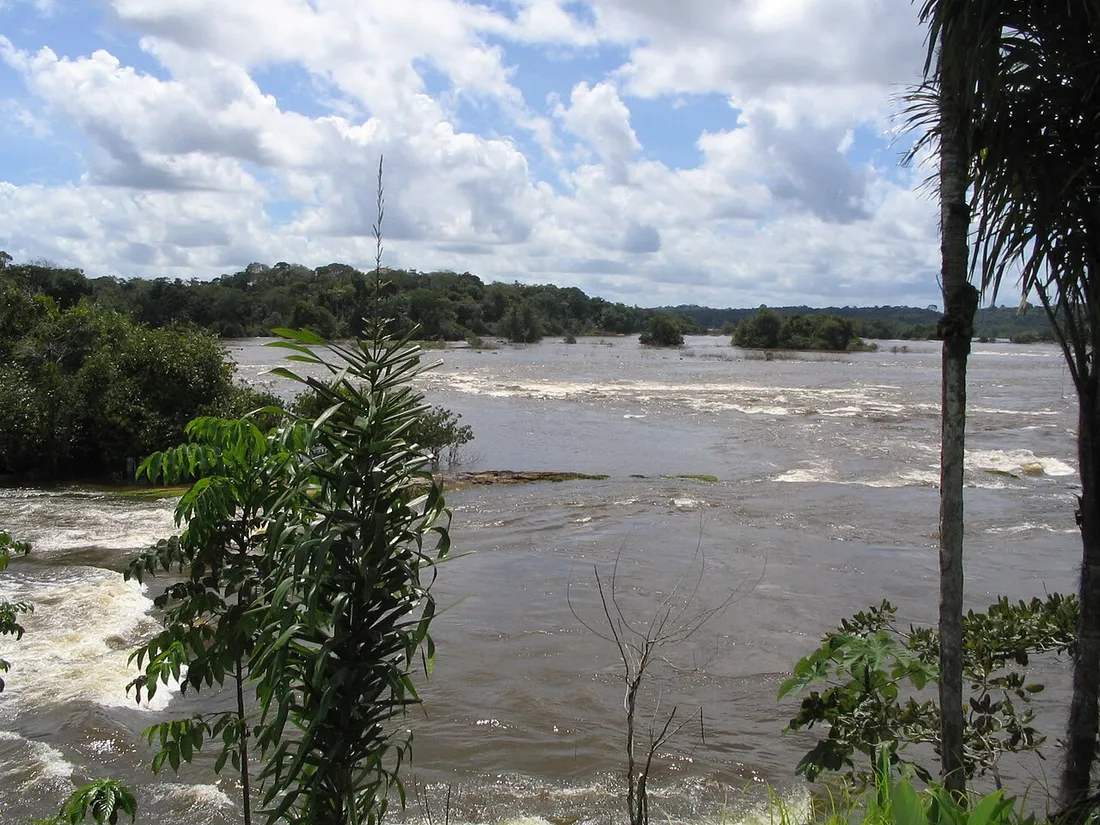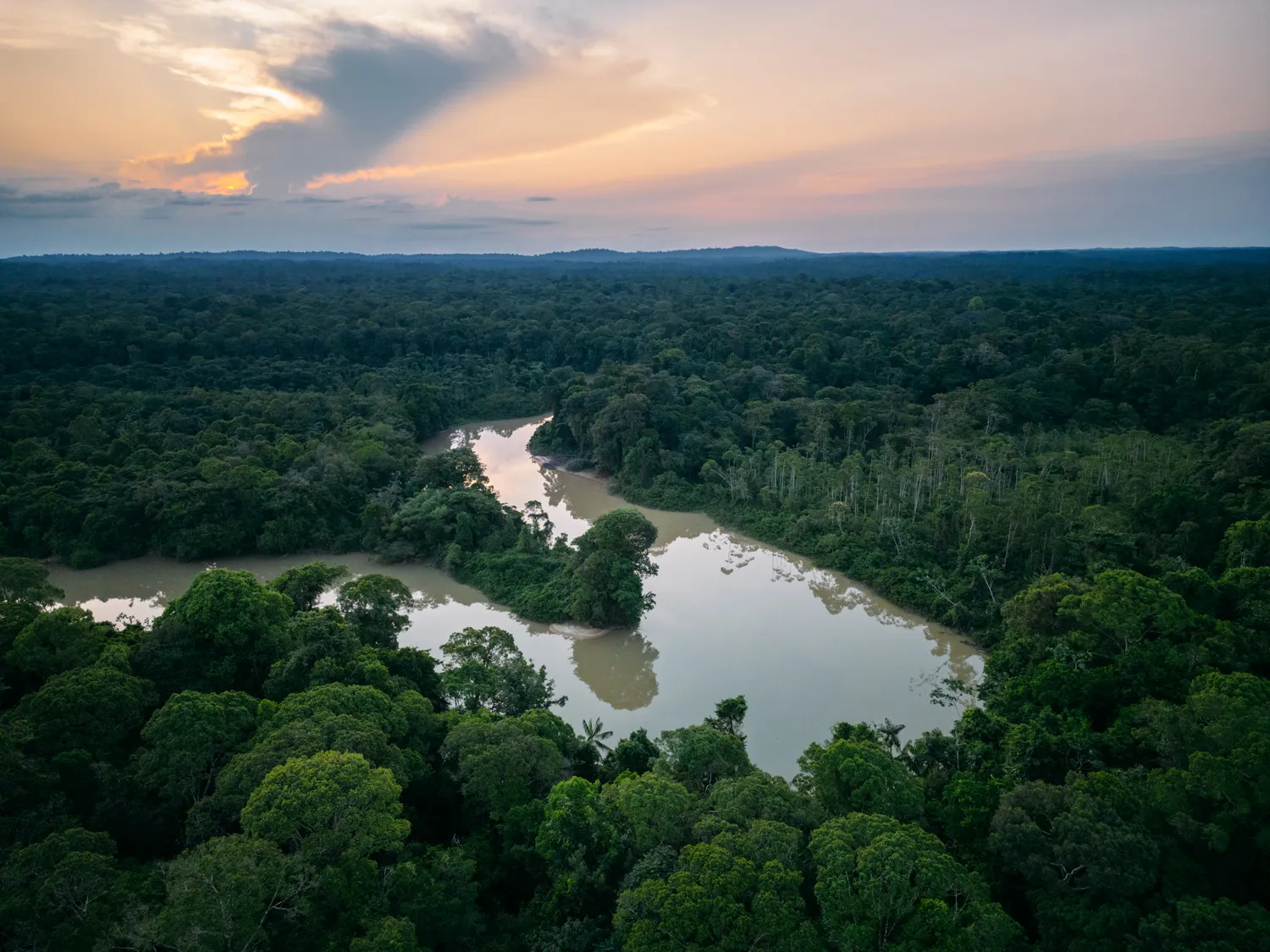
At the far eastern edge of French Guiana, where the Oyapock river traces the natural border with Brazil, hides one of the most spectacular aquatic sights of the French overseas territories: Saut Maripa. Far from the classic tourist trails of Cayenne or Kourou, this string of rapids offers a raw, authentic experience where the Amazon rainforest plunges into tea-coloured water. From Saint-Georges-de-l’Oyapock, a simple pirogue is all it takes to reach this site, which alone sums up the magic of eastern Guiana. Here is our guide to discovering it like a local.
What is a “saut” in French Guiana?
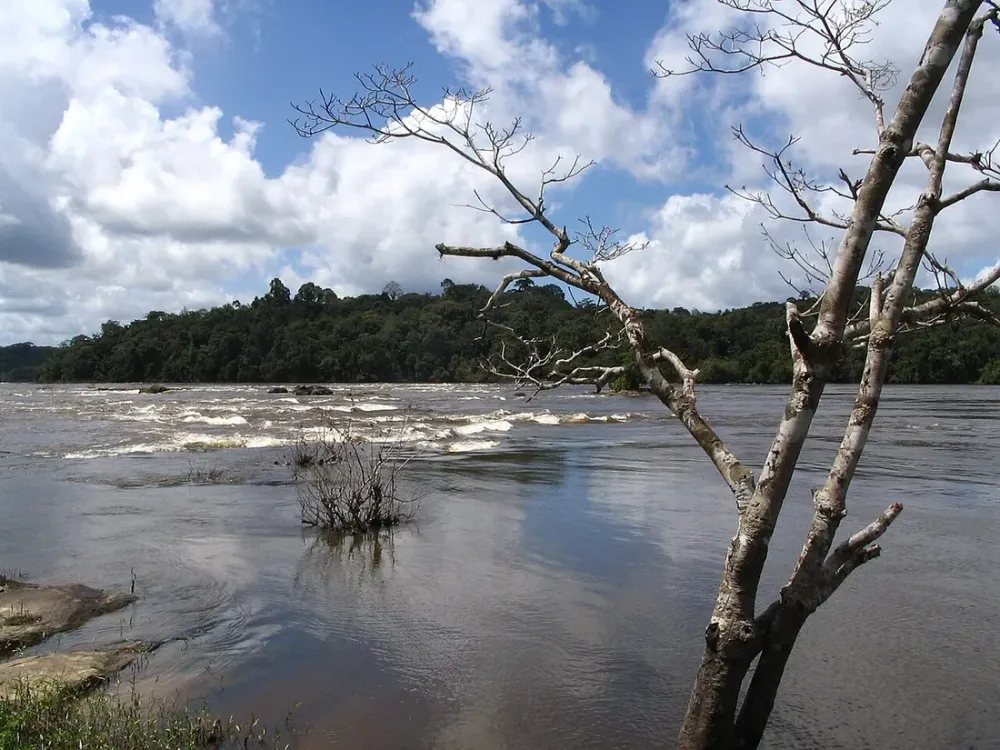
To fully understand the appeal of Saut Maripa, you first need to clear up a point of vocabulary. In French Guiana, a saut does not refer to a vertical waterfall, but to a succession of rapids: rocky thresholds where the river speeds up, churns and splits into turbulent channels. It is a legacy of the language of the pirogue pilots, for whom each saut represents an obstacle to clear or skirt around.
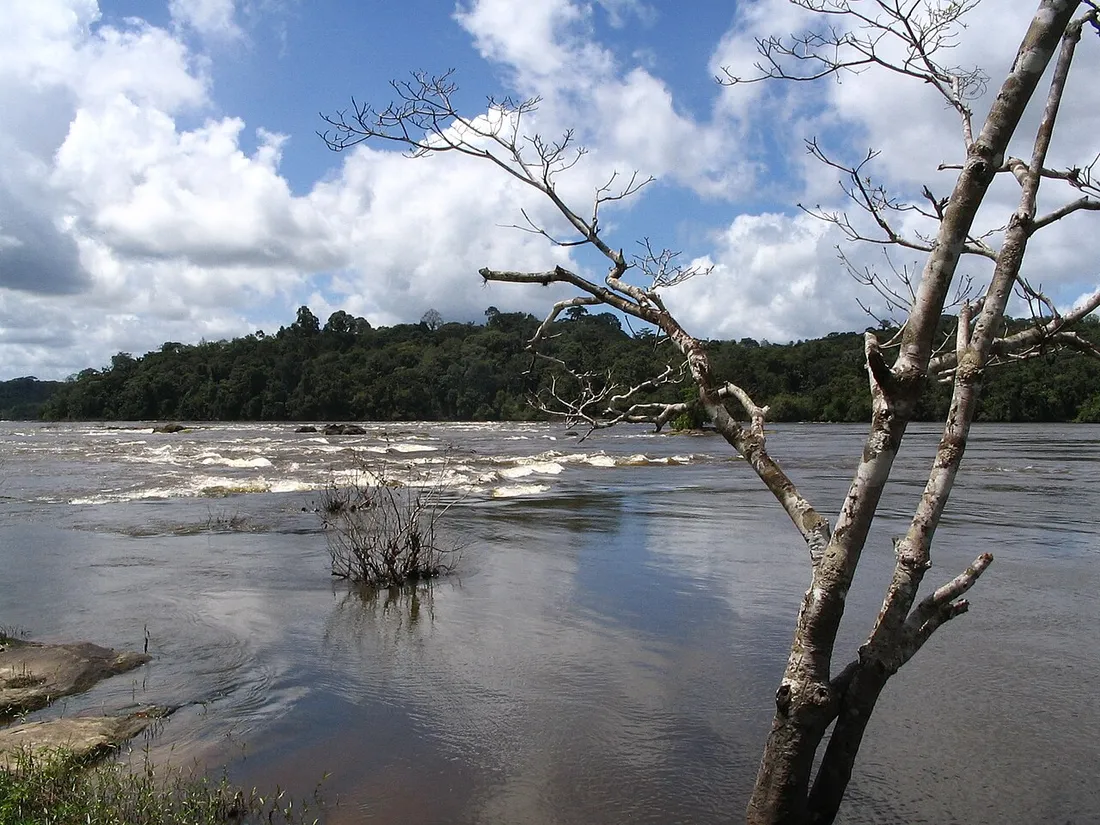
Saut Maripa is one of the most impressive on the Oyapock. Over several hundred metres, the water tumbles between slabs of granite polished by the centuries, forming channels, natural pools and rock beaches where you can settle. When the level is right, you can hear the roar well before you arrive.
Why Saut Maripa is worth the detour
- A backdrop of completely preserved primary forest, with no concrete development whatsoever.
- The rare feeling of being on the border between two countries: the opposite bank is the Brazilian state of Amapa.
- Water perfect for swimming in the calm pools, between two rapids.
- No crowds: here, you cross paths with more pirogue pilots than tourists.
Where is Saut Maripa located?
Saut Maripa lies on the Oyapock, upstream from Saint-Georges, the easternmost town in French Guiana. Saint-Georges is connected to Cayenne by the RN2, a fully paved road of about 190 km, meaning a 2.5 to 3-hour drive by car. It is the only road access, and it crosses spectacular forest landscapes, including the crossing of the commune of Regina. Many visitors take the RN2 out of Cayenne at first light — from the tropical-wood apartments of the Cayenne Chic residence, in Zac Hibiscus, for instance — to reach the dégrad before the heat sets in.
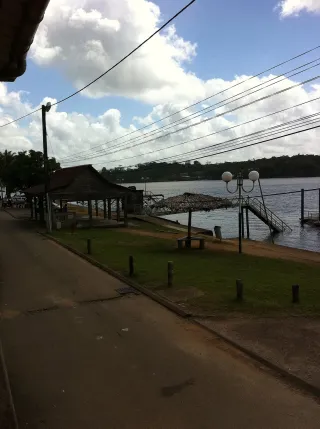
Once in Saint-Georges, the road ends: the relay is the pirogue. You reach the saut by going up the river from the dégrad (the landing) of the town.
Practical landmarks
- Cayenne -> Saint-Georges: ~190 km, 2.5-3 hours via the RN2.
- Saint-Georges -> Saut Maripa by pirogue: about 30 to 45 minutes of navigation depending on the river level.
- Car essential: no reliable public transport serves this corner of French Guiana on a daily basis.
- Remember to fill up on fuel at Regina or Saint-Georges, as stations are scarce along the RN2.
Reaching the saut by pirogue: the heart of the adventure
The pirogue is the quintessential Guianese experience, and it is what gives the trip all its flavour. On the Oyapock, the pilots are often of Amerindian (Palikur, Karipuna) or Brazilian origin, and their knowledge of the river is unrivalled.
How to organise the trip
There is no formal ticketing: you book a pirogue with a local pilot, directly at the dégrad of Saint-Georges or through a host. A few realistic price guidelines:
- Half-day trip to Saut Maripa: expect 40 to 70 € per person depending on the size of the group.
- Privatising a pirogue (up to 6-8 people): often 250 to 400 € for the day, transport and waiting time included.
- A small additional contribution may be requested for fuel if the river level forces long detours.
Always negotiate the price before setting off, and confirm the return time. In the dry season, the low level makes some passages technical: trust the pilot who knows every rock. If you drive back down to Cayenne the same day, the evening is far gentler with a pool waiting at the end of those three hours on the RN2, like the one at Sweet Dreams, a cosy air-conditioned apartment in Cayenne.
On site: what to do at Saut Maripa?
- Swim in the calm pools (never in the rapids themselves).
- Picnic on the granite slabs, in the shade of the canopy.
- Watch the wildlife: kingfishers, macaws in flight, sometimes giant otters upstream.
- Photograph the contrast between the dark water and the white foam of the rapids.
Saint-Georges-de-l’Oyapock: much more than a departure point
Don’t treat Saint-Georges as a mere stopover. This multicultural town, where Creoles, Amerindians, Bushinenge and Brazilians live side by side, has an atmosphere unique in French Guiana. From the central square, you can see Oiapoque, the Brazilian town across the water, linked by the binational bridge inaugurated about a decade ago.
To combine with your visit
- Stroll along the riverfront at sunset.
- Sample Brazilian cuisine in the town’s small restaurants (the real rubs shoulders with the euro).
- Push on to Trois-Paletuviers, an Amerindian village accessible by pirogue.
- For the more adventurous, cross over to the Brazilian side for a lunch — a passport is mandatory (an ID card is not enough), with PAF and then Polícia Federal stamps.
Be warned: the border zone is subject to gendarmerie checks. Keep your ID on you, and find out about the formalities if you plan to cross to the Brazilian side.