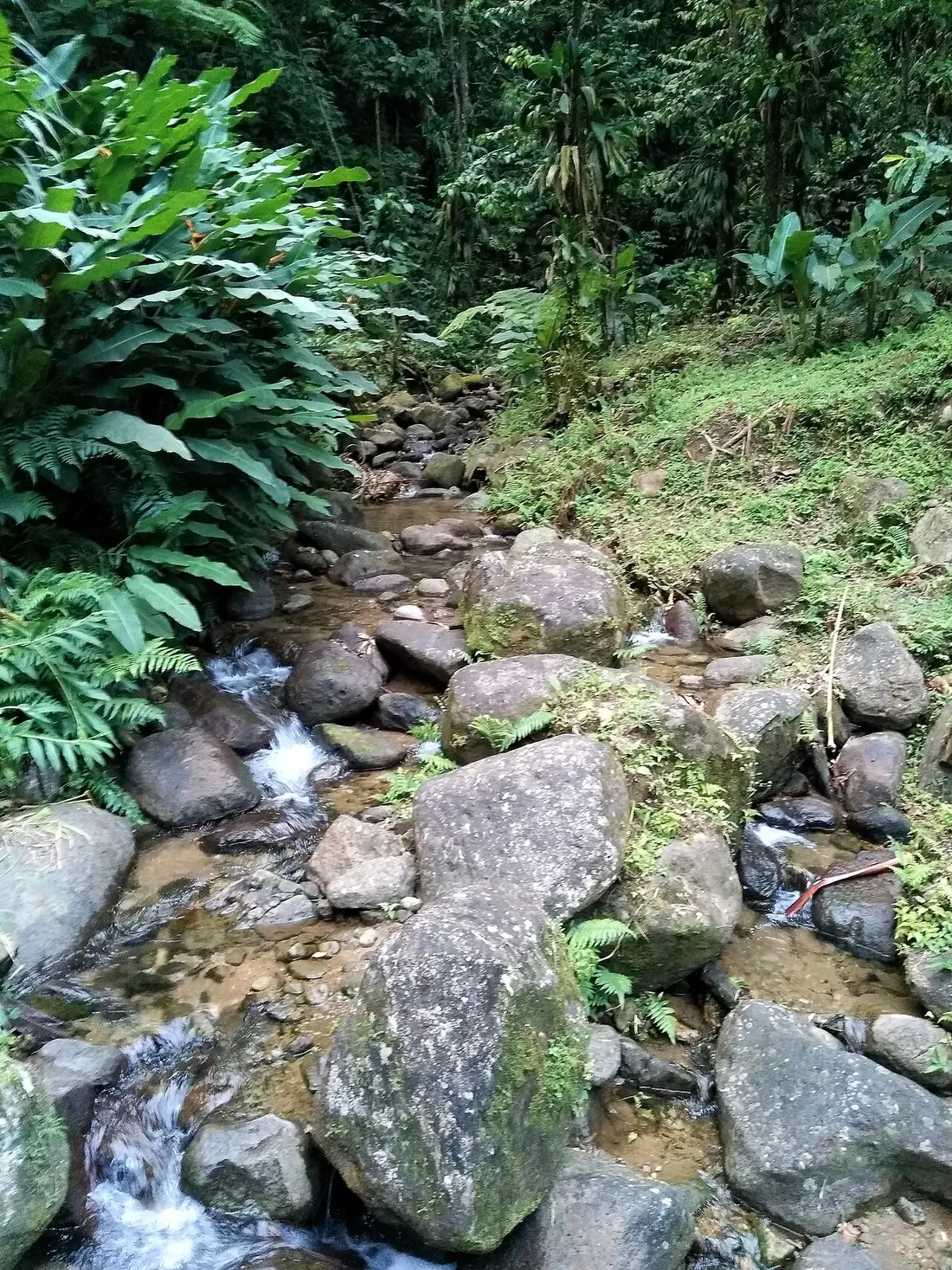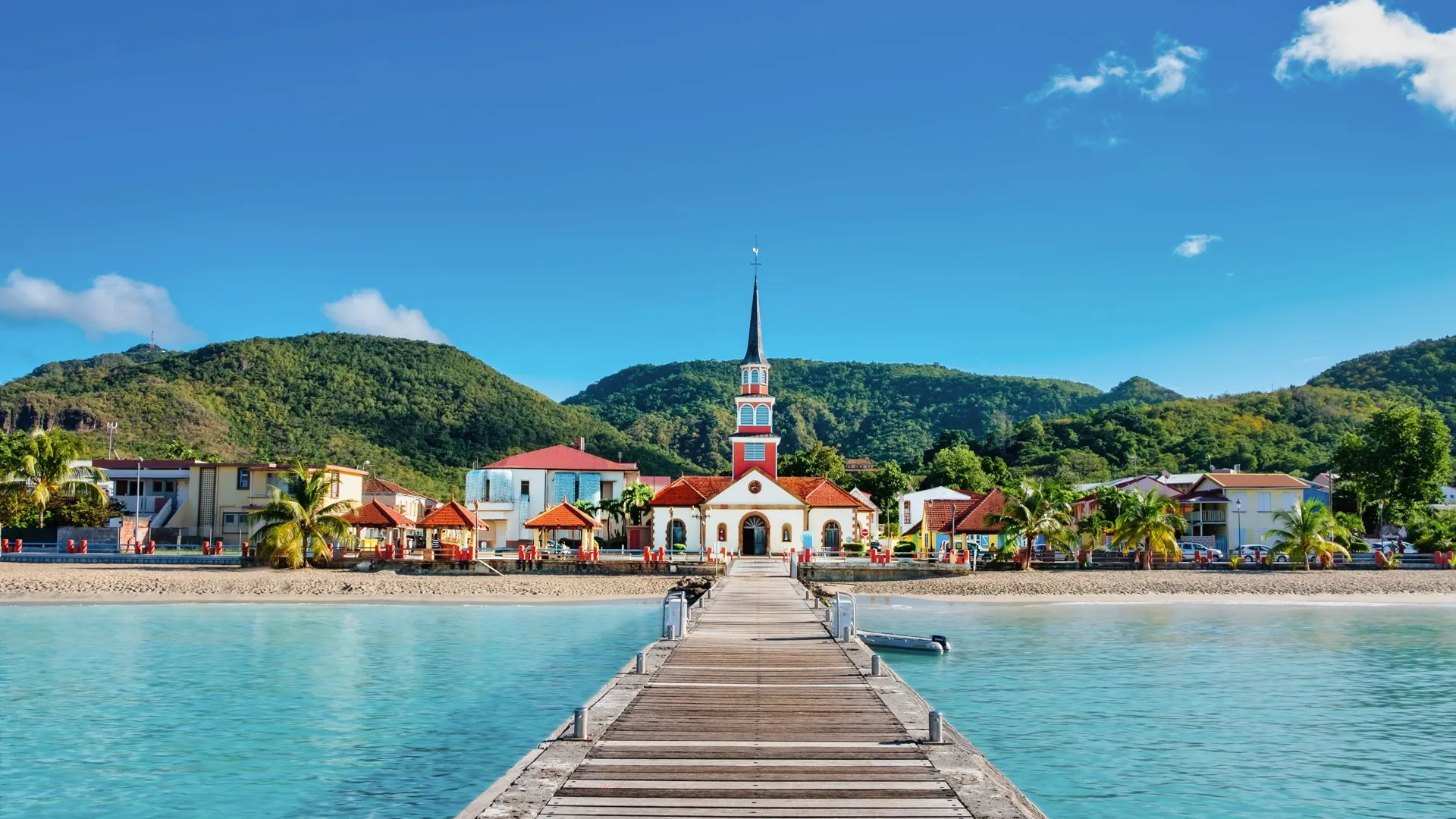
People come to Martinique for the southern beaches, and they often leave with a memory of fresh water instead. In the heart of the island, where the Route de la Trace plunges into the rainforest of the Pitons du Carbet, hides another face of Martinique: that of cool rivers and waterfalls. The most famous, the Saut Gendarme, runs alongside the road in Fonds-Saint-Denis, less than 30 minutes from Fort-de-France. After years scrambling through these hills, I’m taking you to this waterfall and then on to a handful of more discreet falls, perfect for a freshwater swim far from the crowds.
The Saut Gendarme in Fonds-Saint-Denis: the easiest waterfall on the island
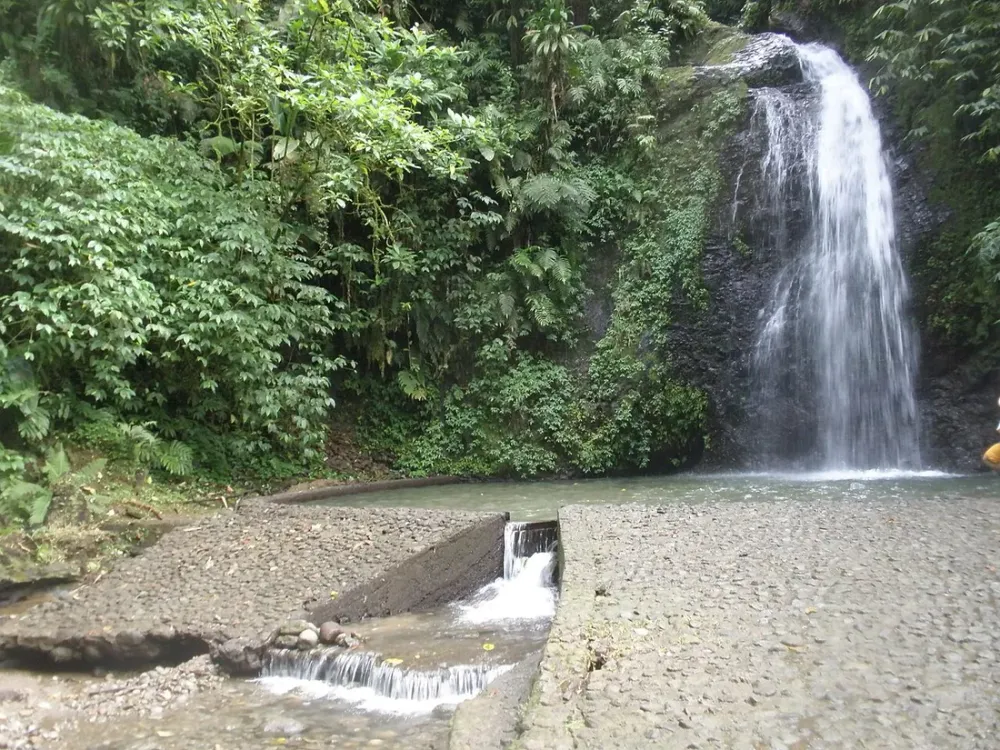
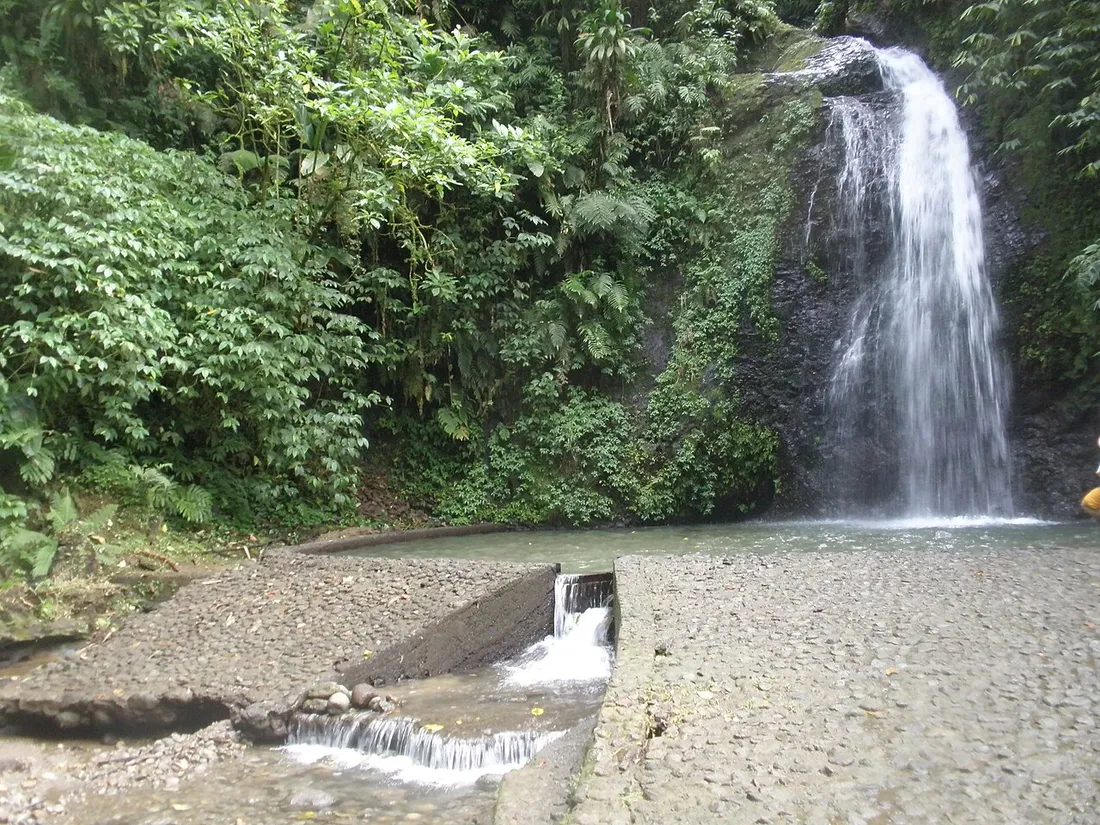
If you could see only one waterfall on a first visit, this would be the one. The Saut Gendarme (or Saut du Gendarme) is a fall of around ten metres nestled in a setting of tree ferns, in Fonds-Saint-Denis, in the heart of Martinique’s mountainous centre. Its great asset: total accessibility.
- Access: free, off the D1 (the famous Route de la Trace), between Fort-de-France and Morne-Rouge; a small car park right at the foot of the site.
- Walk: barely 5 minutes, via a built-up staircase and a footbridge. Doable in sandals, with an all-terrain pushchair or with grandparents.
- Swimming: a modest pool with shallow water, where you can cool your feet and legs; a site more contemplative than a great swimming spot.
- Time on site: 30 minutes for the photo and a break, 1 hour if you picnic.
The water in the central rivers hovers around 22 to 24°C, a delicious coolness under the tropics. The Saut Gendarme is the ideal stop on the way to the Jardin de Balata, the Pitons du Carbet or Montagne Pelée, and the best possible introduction to green Martinique.
How to get there from the main towns
A rental car remains strongly recommended: no convenient bus serves the site. Realistic travel times:
- From Fort-de-France: 25-30 minutes via the Route de la Trace.
- From Les Trois-Îlets: about 50 minutes.
- From Sainte-Anne or Le Diamant (South): 1h15 to 1h30, to combine with other visits to the centre or the North.
- From Saint-Pierre or Le Carbet (Caribbean North): 30-40 minutes via Morne-Rouge.
The Route de la Trace (D1), once cut by the Jesuits through the primary forest, is superb but winding: ease off the gas, watch out for mist at altitude and drive in daylight.
The hidden cascades of the Centre: 4 lesser-known alternatives
The Saut Gendarme is perfect to start with, but lovers of freshwater swimming will want to go further. Here are my confidential alternatives, all in the central massif, within reach of Fort-de-France.
1. The Absalon waterfall and pools (Fort-de-France)
In the heights of Fort-de-France, the Absalon site is a Foyalais secret: a disused former thermal spa opening onto the Case-Navire river and its small shaded pools.
- Access: from Balata, park at the end of the D45, then a few minutes’ walk.
- Atmosphere: dense forest, sulphurous waters in places, a very local crowd at weekends. It’s also a starting point for hikes towards the Pitons du Carbet, with more generous water levels early in the dry season.
2. The Canal de Beauregard / Canal des Esclaves (Le Morne-Vert)
More than a waterfall, this is one of the most memorable waterfall and river hikes in the centre-west: you walk along a narrow 18th-century irrigation channel, on the flank of a hill, with pools accessible at the end of the route.
- Level: easy on the flat but vertiginous, the low wall sometimes no more than 30 cm wide. Not advised if you suffer from vertigo or for young children.
- Duration: 1h30 to 2h round trip, an out-of-time atmosphere guaranteed.
3. Cœur Bouliki and the Rivière Blanche (Saint-Joseph)
Heading up the Saint-Joseph valley, in the heart of the state forest, the developed Cœur Bouliki site lines the Rivière Blanche with clear pools over pebble beds, perfect for family swimming.
- Access: park at the Maison de la forêt, then 15-20 minutes of easy walking.
- Advantage: picnic tables, shaded shelters (carbets) and shallow water. Very popular on Sundays; come on a weekday for the quiet.
4. The Didier waterfall (Fort-de-France)
Even closer to the main town, the Didier river, in the residential heights, hides small discreet pools. The flow varies with the season: this confidential, barely signposted spot, accessible without a 4x4, is at its prettiest right at the start of the dry season.
And the famous Chutes du Carbet? Beware the trap: the renowned Chutes du Carbet are in Guadeloupe, not Martinique. On the Martinique side, the “cascade du Carbet” refers to the Pitons du Carbet massif and its rivers (Case-Navire, Blanche), of which the most accessible are precisely the ones described here.
River safety: my golden rules against flash floods
A Martinique waterfall stays magnificent, but a tropical river can kill in minutes. The main danger is not ordinary drowning, it’s the flash flood: a downpour on the heights of the Pitons, invisible from the pool, can turn a trickle of water into a torrent in less than 10 minutes.
My rules, never negotiable:
- Check the weather before setting off, especially the “heavy rain/storms” alert from Météo-France Martinique.
- Watch the colour of the water: if it clouds over or turns brown, get out immediately, a sign of a rising flood.
- Spot a high exit as soon as you arrive and avoid jumping from the rocks (the depth changes after every flood).
- Never swim alone, keep children within arm’s reach and wear closed shoes: the volcanic pebbles are slippery.
The Saut Gendarme, exposed and bordered by the road, poses little risk; but enclosed sites like the Canal de Beauregard or the Absalon pools demand real vigilance.