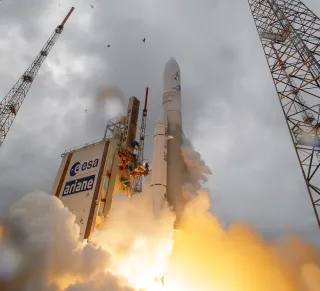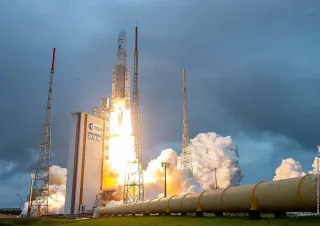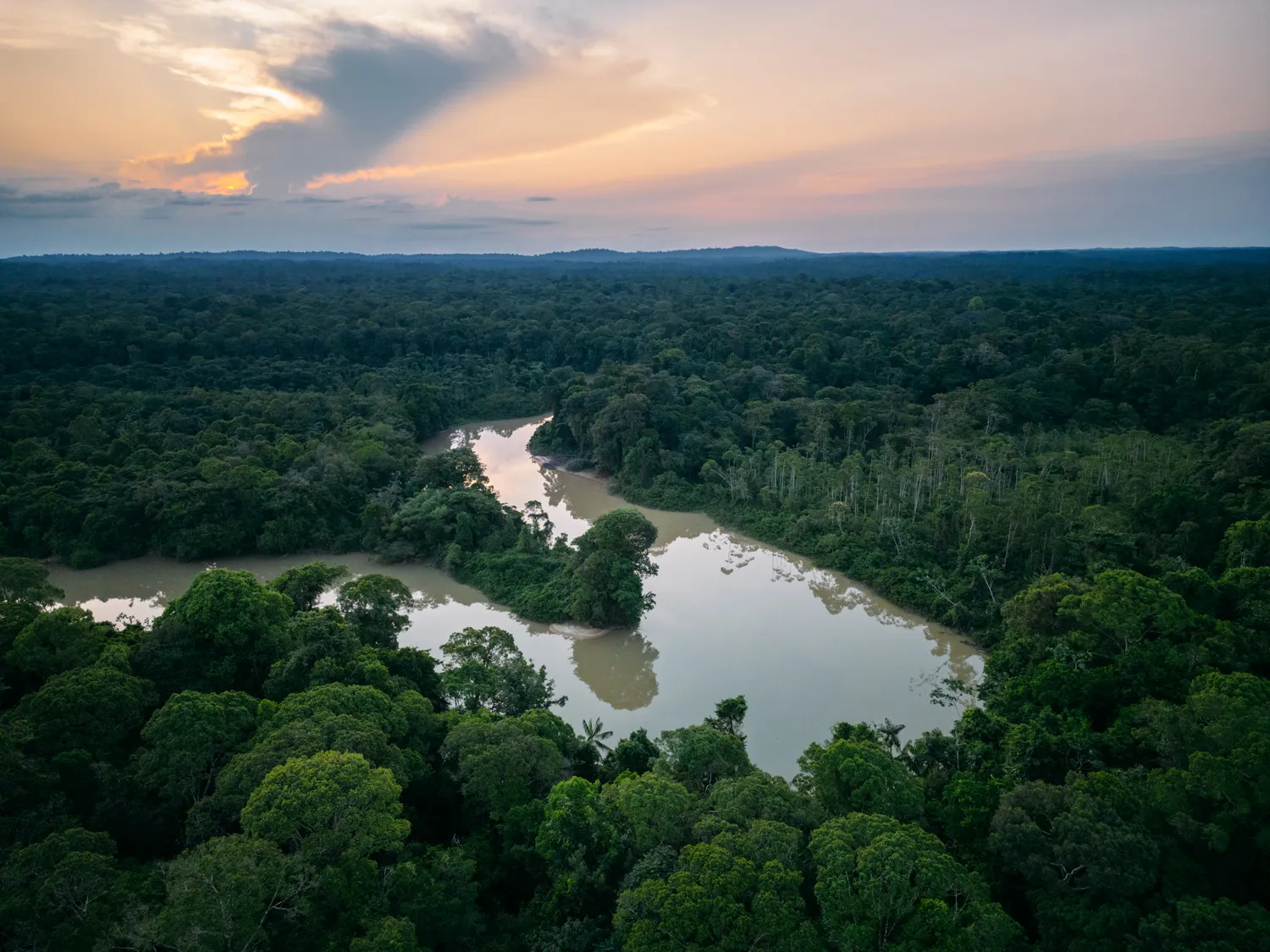
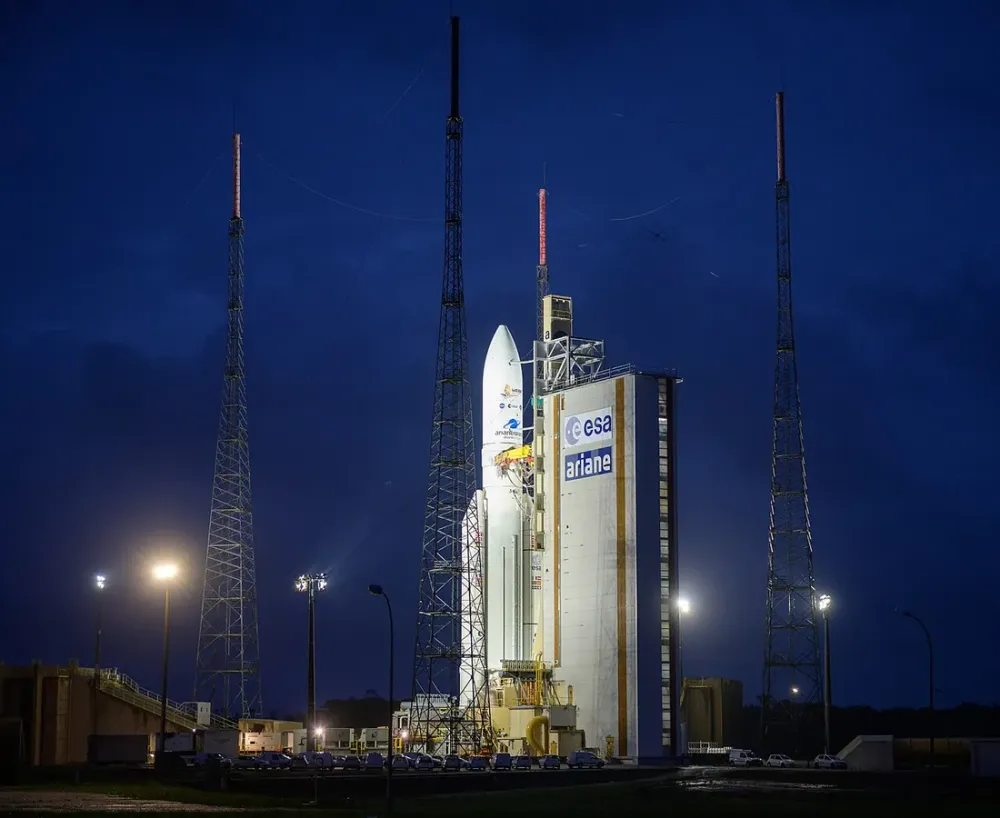
Watching a rocket lift off from French Guiana is one of the most unforgettable experiences South America has to offer. But seeing Ariane 6 or Vega tear away from the ground comes down first to logistics: where to drop your bags so you’re in the right place, at the right time, facing the right line. After following several launches from Kourou and its surroundings, here is our hands-on guide to choosing your accommodation based on the real visibility of the launch pad and access to the CNES sites.
Understanding the geography of the Space Centre before you book
The Guiana Space Centre (CSG) stretches over nearly 700 km² along the coast, between Kourou and Sinnamary. The launch pads are not in town: they lie to the west, 10-15 km from the centre of Kourou. That single detail changes everything when you book.
Two launch complexes matter today:
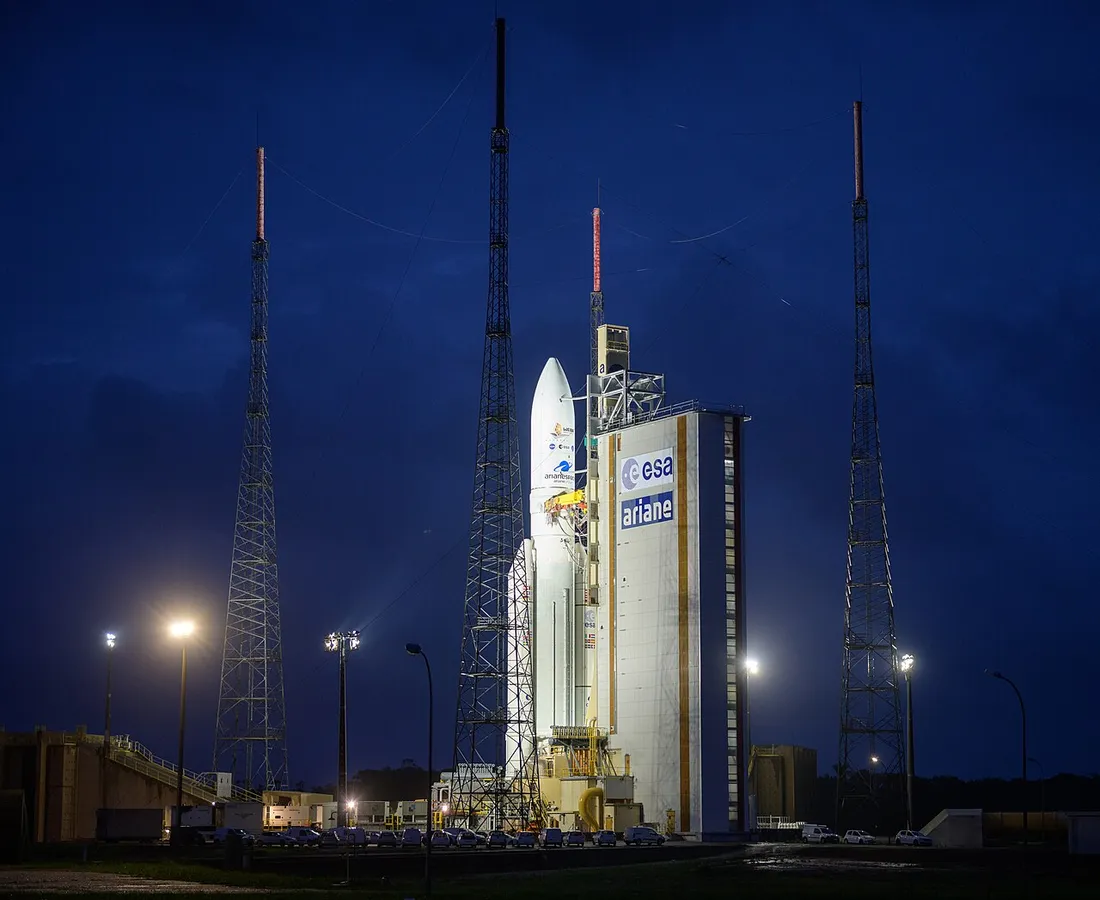
- ELA-4 (Ariane 6), the furthest west, toward Malmanoury.
- The Vega-C launch pad, a little closer to town.
The rocket climbs toward the north-east (out over the ocean), but the plume and column of fire stay visible high in the sky for several minutes. In practical terms, from Kourou you’ll see the launcher rise above the western/north-western horizon. Accommodation with a clear view in that direction, with no buildings or curtain of trees, makes all the difference.
Local tip: light matters as much as the angle. A night launch lights up the entire sky and can be seen from almost anywhere; a daytime launch calls for a cleaner opening toward the west.
One more thing no map shows you: on launch day, several roads around the base are closed for hours before liftoff. If you sleep far away and count on driving in that same evening, you risk being stuck behind a barrier or in the traffic that piles up behind it. That single constraint is what makes staying right in Kourou so valuable.
Where to stay near the Guiana Space Centre by visibility line
Central Kourou and the seafront: the ideal compromise
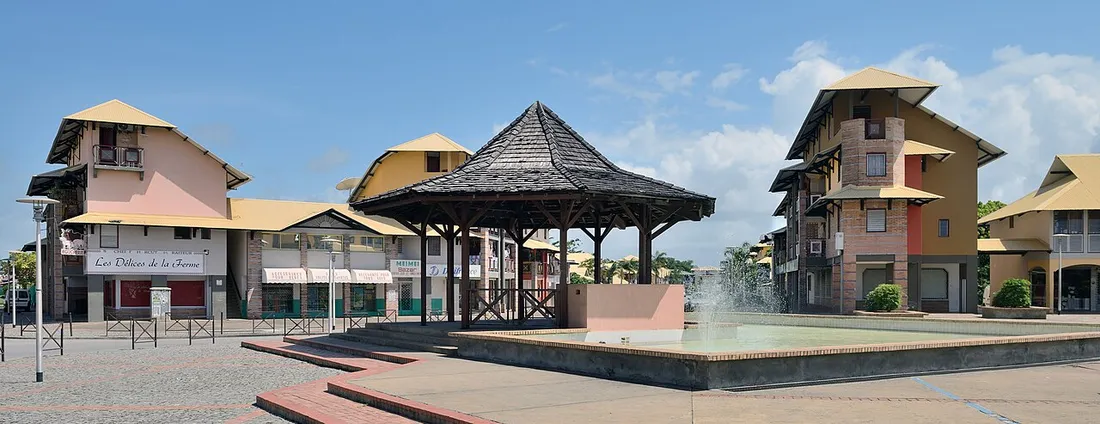
For a first launch, staying in Kourou remains the simplest choice. You’re 15-20 minutes by car from the official observation points and within reach of shops. The seafront area (avenue du Général de Gaulle, plage des Roches) offers wide-open views to the west: perfect for tracking the launcher’s ascent unobstructed.
Look for:
- A unit on an upper floor or with a rooftop terrace facing west/north-west.
- A reasonable walking distance to the seafront, where many spectators gather.
- Parking, since a car is essential in French Guiana.
Realistic budget in Kourou: expect €70 to €110/night for a comfortable studio or apartment, more during launch weeks when demand soars.
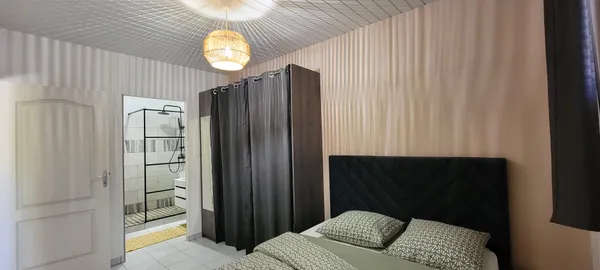
These town-centre studios and apartments suit couples and travelling pairs who come first and foremost for the launch: count 5 to 20 minutes on foot to the seafront depending on the property, and plan a 3 to 5 night stay if you want to pair the launch with the Salvation Islands and a little downtime.
Houses and family accommodation in Kourou and Macouria
For families or groups of friends coming to share the event, a house with several bedrooms and outdoor space beats a studio.
- Capacity: 4 to 6 people.
- Indicative budget: €130 to €200 per night.
- The real advantage: an equipped kitchen to put a picnic together before heading to the viewpoint, and private parking — invaluable on a busy evening.
The point and Les Roches area: an open ocean view
At pointe des Roches, a few minutes’ walk from the centre of Kourou, and along the beach, the horizon is completely open. This is where regulars set up their tripods. An apartment with a sea-facing balcony lets you live the countdown from home, drink in hand, without moving the car. For a night launch, it’s a vantage point that’s hard to beat.
Sinnamary and the west: as close as possible to the launch pad
If you want to get nearer to ELA-4 (Ariane 6), the town of Sinnamary, about thirty kilometres west of Kourou, puts you on the shortest line. Accommodation here is more rural and limited, but the atmosphere is authentic and the closeness of the plume striking. Book early: very few units are available. From here you also have the Sinnamary / Carapa road, which gives a different angle on the ascent for anyone who wants to get away from the crowd.
Macouria, Cayenne and Rémire-Montjoly: stay further out, see it anyway
Do you absolutely have to stay in Kourou? Not necessarily. For powerful night launches (Ariane 6), the glow is visible from Macouria, even Cayenne and Rémire-Montjoly, 50-60 km away. You won’t see the lift-off up close, but the blaze across the sky is still spectacular.
This option makes sense if:
- You combine the launch with exploring Cayenne (the market, place des Palmistes).
- You arrive from Félix-Éboué airport (Matoury) and want to limit travel.
- Kourou is fully booked, which happens fast during launch weeks.
Allow about 45 minutes to 1 hour of driving between Cayenne and Kourou via the RN1 — anticipate traffic jams on launch evenings. If you stay on that side, leave very early on the big day and factor in the road closures around the base.
Real distances from our accommodation
The rough figures we share with our travellers (driving times in normal conditions, outside the launch-evening closures):
- Kourou accommodation → CSG visitor entrance: 5-10 min by car.
- Kourou accommodation → Salvation Islands jetty (Kourou marina): 5-10 min by car.
- Félix-Éboué airport → Kourou: approx. 50-65 min by road.
Accessing the CNES observation sites
The CNES offers free spots to attend launches from official sites (Toucan, Agami, Colibri, Carapa depending on the launch), at varying distances from the pad. Registration is done online, in advance, and spots go extremely fast. A few pointers:
- Watch for registration to open about one to two weeks before the launch.
- Bring an ID document (mandatory check).
- The closest sites require a group departure by bus from Kourou; others are reachable by car.
If you don’t land an official spot, don’t worry: the Kourou seafront, the plage des Roches and several points along the RN1 offer a perfectly satisfying view, and that’s where the friendliest atmosphere takes shape.
How a launch evening unfolds
- Check the liftoff time on the official CSG / Arianespace channels the day before, then again on the day itself.
- Get settled early: 1 to 2 hours ahead for the beach on a busy evening.
- Bring water, insect repellent, a torch and a light layer — it stays hot and humid well after dark.
- After ignition, the sound takes several seconds to reach you: watch first, listen after.
Visiting the Space Centre during the day
Make the most of your stay with the free CSG tour (by reservation, ID required): it lasts about half a day and tells the story of Ariane, Vega and the Space Museum. An excellent complement before or after the launch. To plan your whole trip, check out our complete guide to French Guiana.
Beyond the launch: extend the adventure
Since you have travelled this far, don’t leave without seeing:
- The Salvation Islands (including Devil’s Island), 1 hour by boat from the Kourou marina: a former penal colony turned magnificent natural site.
- The Kaw marshes (Roura) for caimans and birds, or Cacao and its Hmong community.
- Further west, Saint-Laurent-du-Maroni and the Camp de la Transportation, plus the Maroni river by pirogue.
Two practical points before you fly: rent your vehicle right at the airport, since public transport is very limited here, and check your yellow fever vaccine, which is mandatory to enter the territory.