When we talk about safari, the imagination drifts toward the African savanna. Yet on the far side of the French map, the wildlife of French Guiana offers an adventure just as powerful, but of a radically different nature: here there are no open plains where you tick off species through binoculars. Here lies the most pristine Amazon rainforest of any French territory, and most of its largest inhabitants reveal themselves only after dark, or only to those who know how to look. As residents and travel hosts on this land for years, we share the real playbook: which mammals to hope for, where to look for them, and above all with what ethics.
Why French Guiana is a unique safari destination
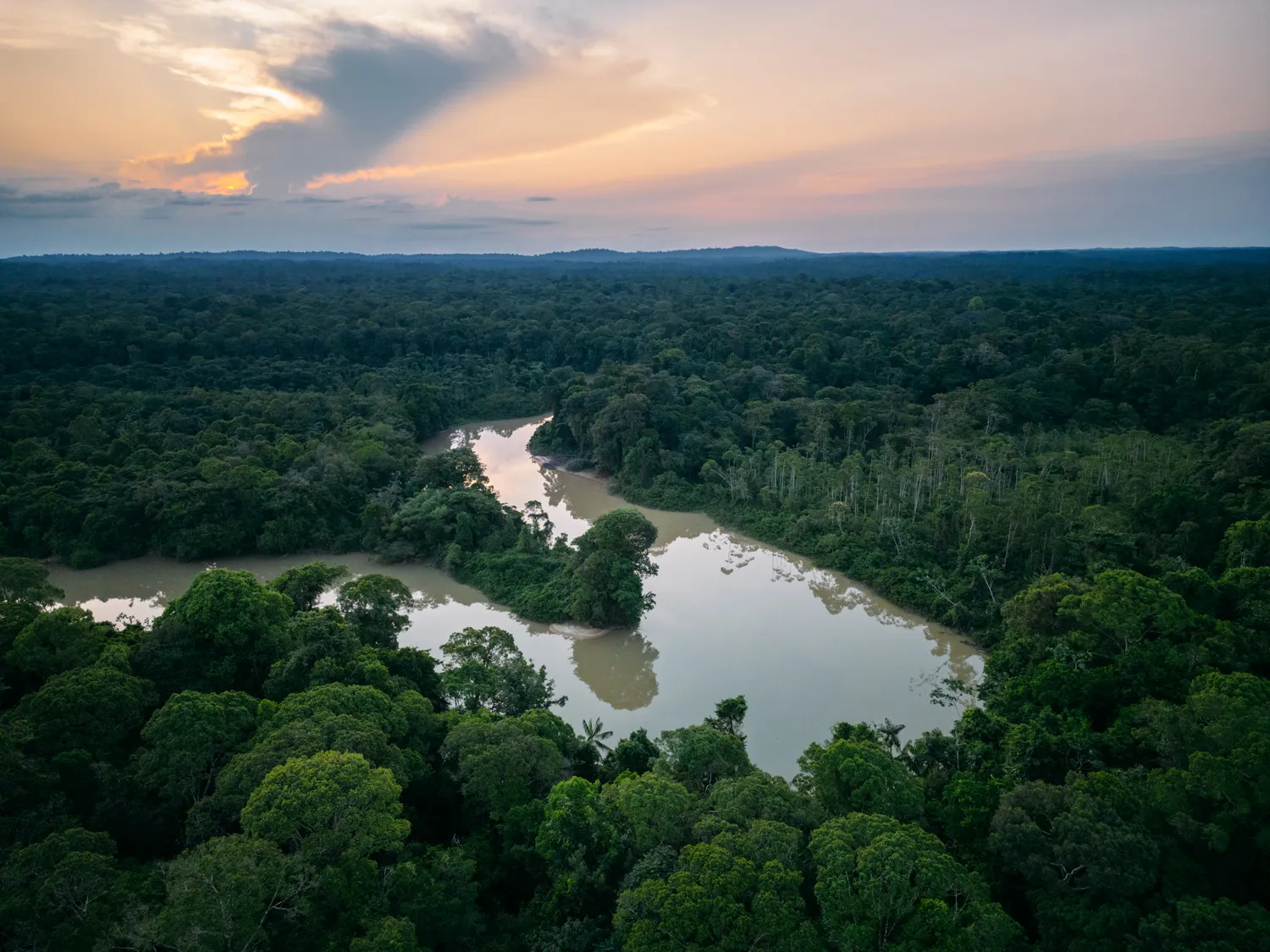
French Guiana is a French overseas region on the Guiana Shield, in South America, with Cayenne as its capital and nearly 294,000 inhabitants. People pay in euros and speak French alongside Creole, Bushinenge and Amerindian languages. More than 90% of the territory is covered by primary forest: it is this density that explains both the exceptional richness of the wildlife and the difficulty of observing it.
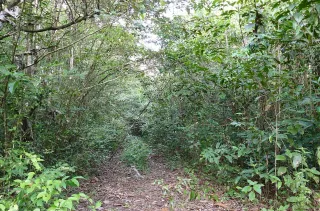
Unlike a savanna, the Amazon rainforest hides its animals. The canopy rises above 40 metres, the vegetation is dense, and most large mammals are shy, nocturnal or crepuscular. A Guianese safari is therefore not measured by the number of species seen in a day, but by the quality of the encounters: a sloth spotted high in a kapok tree, two eyes shining in the beam of a torch on the river, the fresh print of a jaguar in the mud of a forest trail.
Which large mammals to hope to see
Let’s be honest from the start: seeing a jaguar remains rare, and that is normal. Here is a realistic ranking of what you might come across, from the most accessible to the most legendary.
The sloth: the most accessible encounter
It’s the star animal, and the good news is that it can be observed without difficulty. The three-toed sloth (the aï) and the two-toed sloth (the unau) live right into the gardens of the coastal towns: Rémire-Montjoly, Matoury, Macouria. You most often spot them motionless, clinging to the fork of a tree.
- Where: the Rorota trail in Rémire-Montjoly, mangroves, urban parks, forest edges
- When: all year round, during the day, with binoculars
- Local tip: look for a “ball” of foliage that doesn’t move; ask the locals, they know “their” neighbourhood sloths
Anteaters: the giant anteater and the tamandua
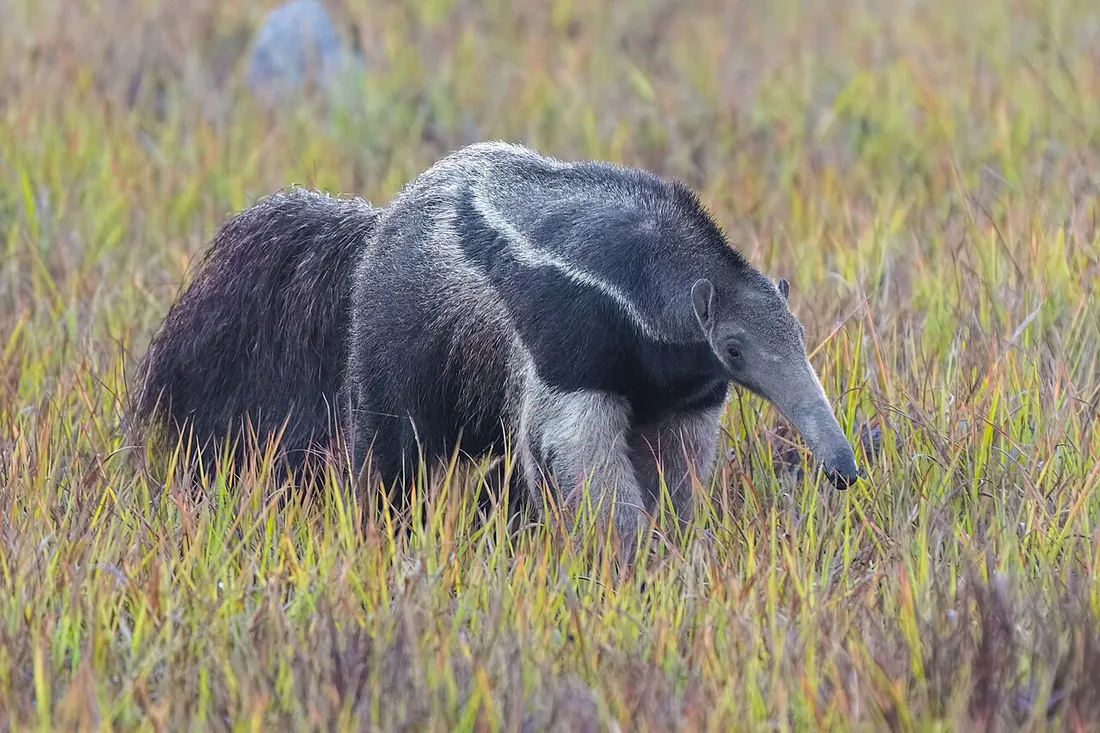
The giant anteater is probably the most spectacular land mammal in French Guiana, measuring two metres from snout to tail. More discreet, the tamandua (a tree-dwelling anteater) is sometimes seen at night. The savannas of Macouria and the edges of the Kaw reserve are among the best areas.
The mammals of the river and the night
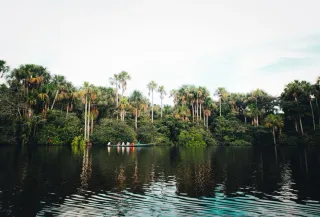
During a nighttime pirogue outing, several species become observable by torchlight:
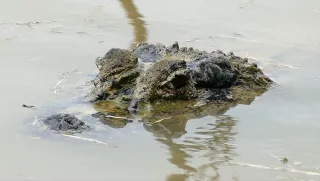
- Caimans (notably the black caiman of the Kaw marshes), spotted by their red eyes
- Giant otters, on certain pristine waterways
- Pacas and agoutis, forest rodents common at night
- Monkeys: capuchins, howler monkeys (heard far more than they are seen), tamarins
- Bats and opossums in the riverbank vegetation
The jaguar: the myth, in its rightful place
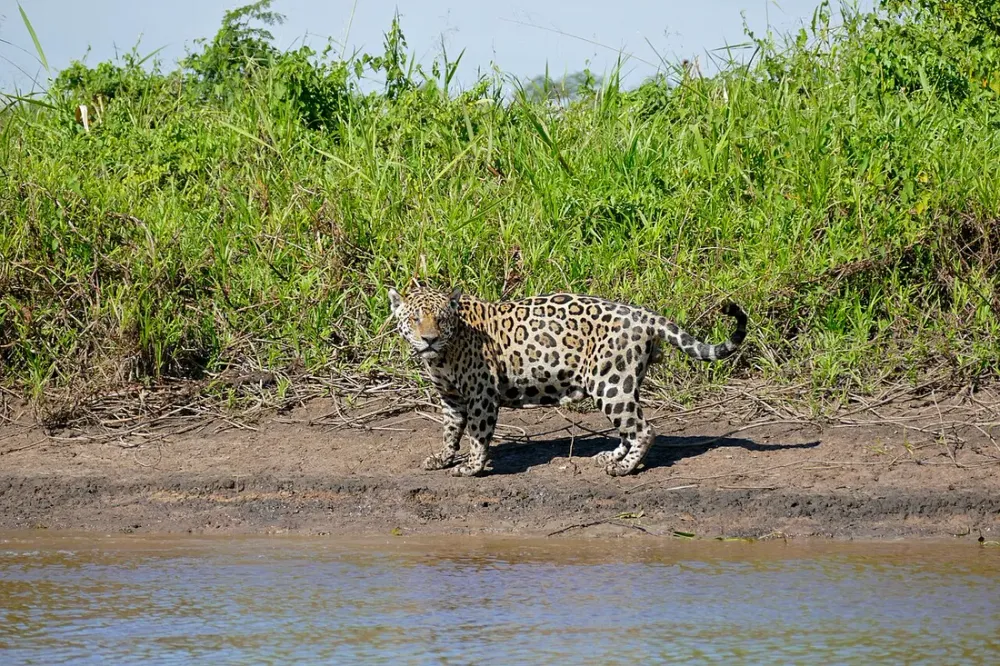
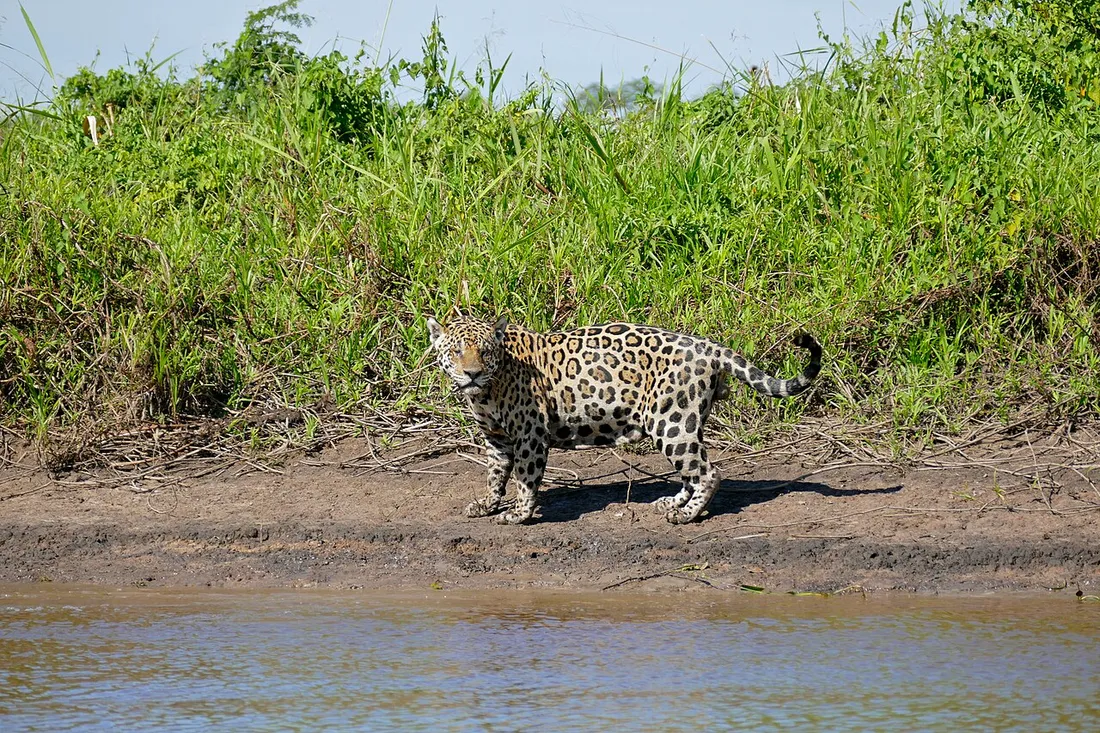
The jaguar is present and thriving in French Guiana, but it is a stealthy cat. Most sightings are indirect: tracks, claw marks on trunks, camera-trap captures. Seeing one with your own eyes is a matter of extreme luck, often deep within remote reserves like the Nouragues. Approach it as a bonus, never as a guaranteed goal, and be wary of operators who “promise” it to you.
Where to go: the best spots
| Place | Access | What to hope for |
|---|---|---|
| Kaw marshes (Roura) | Car + pirogue, ~1h30 from Cayenne | Black caimans, birds, riverbank mammals |
| Nouragues reserve | Supervised, limited access | Primary-forest wildlife, jaguar (extremely rare) |
| Rorota trail (Rémire-Montjoly) | Car, 20 min from Cayenne | Sloths, monkeys, birds |
| Maroni River (Saint-Laurent-du-Maroni) | Pirogue | Otters, monkeys, riverbank life |
| Macouria savannas | Car | Giant anteater, savanna birds |
The Kaw marshes, in the municipality of Roura, remain the most accessible experience for a first nocturnal safari. Expect around 80 to 120 euros per person for a guided pirogue outing with an overnight stay in a carbet, depending on the operator. A car is essential to reach most of these departure points.
When to come: the dry season makes the difference
The best time to observe wildlife runs from July to late November, the dry season. The tracks are passable, the pirogue outings more comfortable, and the animals gather around the dwindling watering holes. The rainy season is not ruled out, but access becomes muddy and outings more uncertain.
To plan your whole trip, our complete guide to French Guiana details climate, transport and must-sees beyond wildlife alone. Keep this in mind: French Guiana has to be earned logistically, and a little anticipation changes everything.