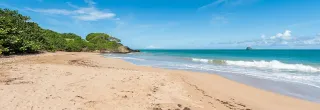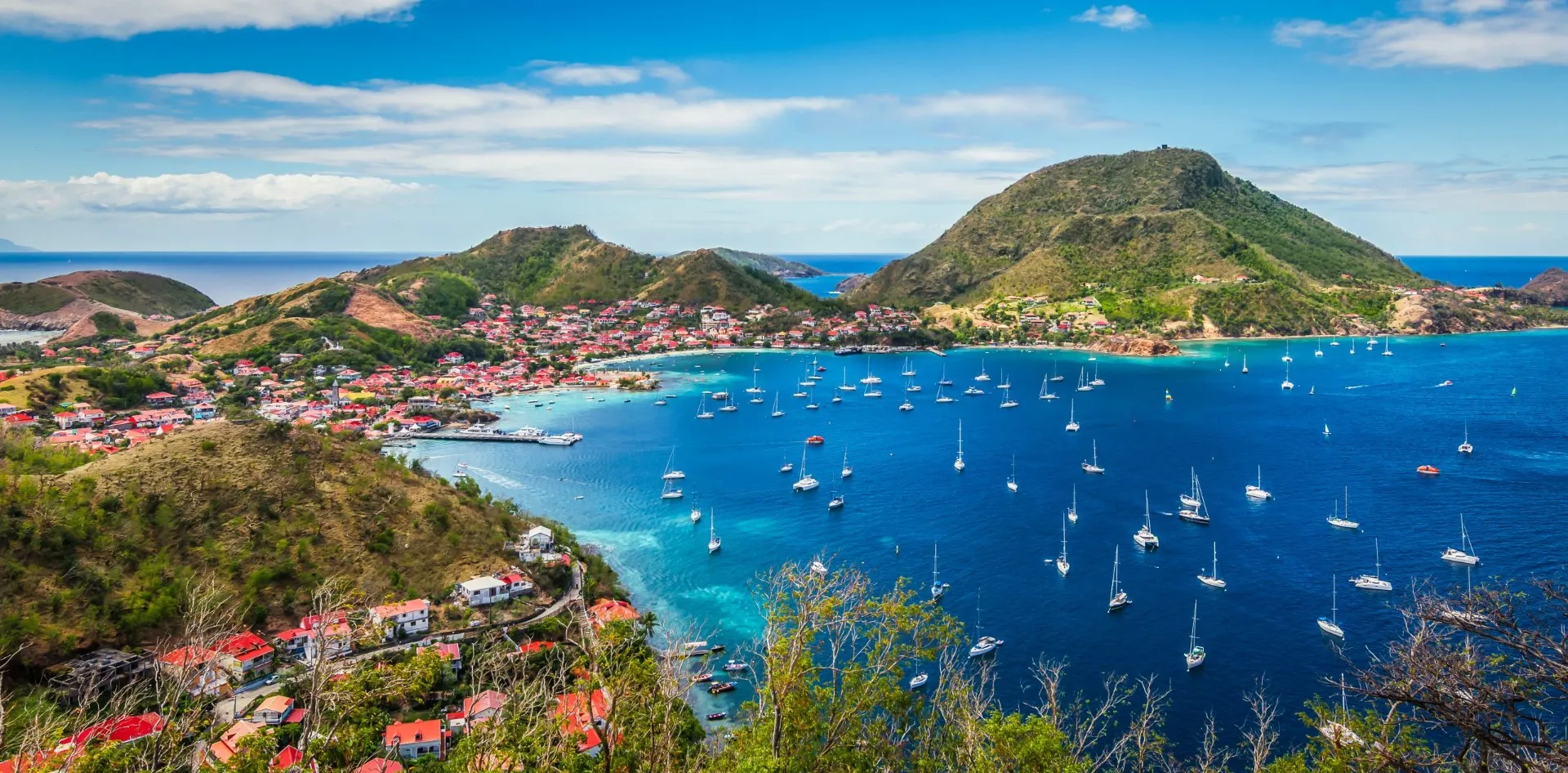
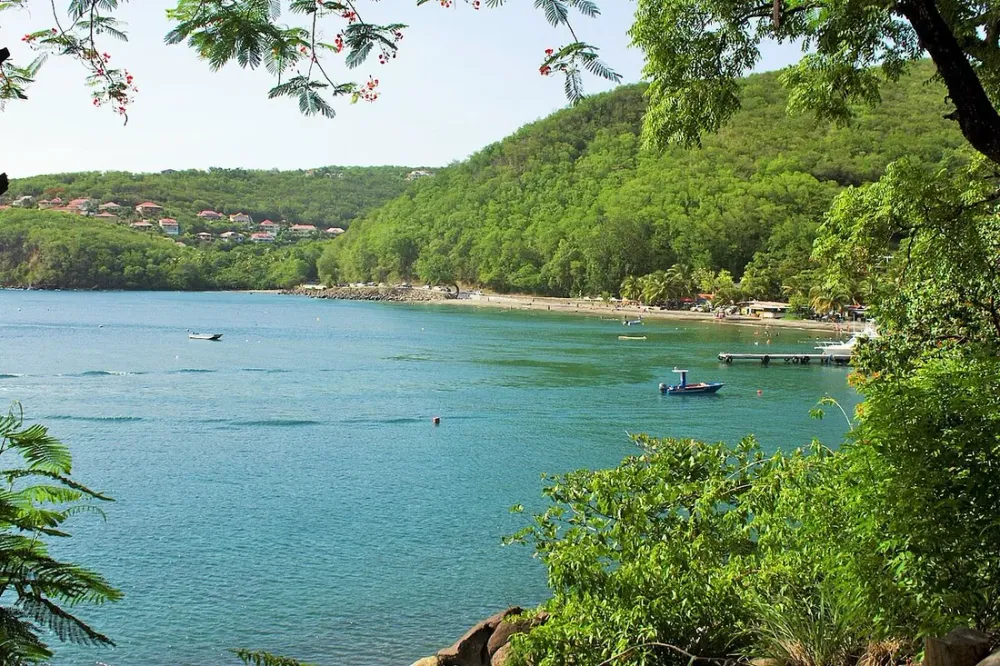
Malendure Beach is unlike any other in Guadeloupe. Forget the white-sand postcard of Sainte-Anne: here you lay your towel down on grey-black volcanic sand, facing the Pigeon Islets and the famous Cousteau Reserve. Set in Bouillante, on the leeward coast of Basse-Terre, it’s the liveliest beach on the entire Caribbean shoreline: dive boats leaving every hour, transparent kayaks lined up along the shore, fins and masks drying on the rocks. After dozens of snorkeling sessions here and just as many coffees enjoyed facing the islets, here’s our complete on-the-ground guide to making the most of Malendure without the high-season pitfalls.
Why Malendure’s black sand surprises (and wins you over)
The black sand of Malendure is the first visual shock when you arrive along the coast road. This colour has nothing to do with pollution: it comes straight from La Soufrière and the ancient volcanic flows of Basse-Terre, ground down by erosion and then carried by the rivers onto the shoreline.
In practical terms, for swimmers, this sand changes three things:
- It heats up fast. In the middle of the day, the dark sand becomes scorching: bring sandals to cross the beach between 11 a.m. and 3 p.m., especially with children.
- The water looks darker at the edge, even though it’s perfectly clear just two metres from shore: put on a mask and your opinion changes in thirty seconds.
- The leeward coast shelters the bay. Sheltered from the trade winds by the Basse-Terre massif, the sea here is calm almost year-round, with water between 27 and 29 °C. That’s what makes Malendure such a reliable watersports hub: boat trips are rarely cancelled, even when the Atlantic coast is choppy.
The beach stretches roughly 300 metres, split in two by a small rocky headland. The northern section concentrates the clubs and boat departures; the quieter southern section is better suited to family swimming.
Diving from Malendure: the gateway to the Cousteau Reserve
Malendure is quite simply the departure point for trips to the Cousteau Reserve, the protected marine area surrounding the Pigeon Islets, about one kilometre offshore. Allow 10 minutes of boat crossing, which makes it one of the most accessible dive spots in the Caribbean.
Scuba diving: from first dive to Level 1
Half a dozen clubs operate directly from the beach or the nearby harbour. Price benchmarks observed on site in 2026:
- Discovery dive: €60 to €75 (around 30 minutes underwater, from age 8 depending on the club);
- Exploration dive for certified divers: €45 to €55, equipment included;
- Level 1 / Open Water training: €350 to €420 over 3 to 4 days.
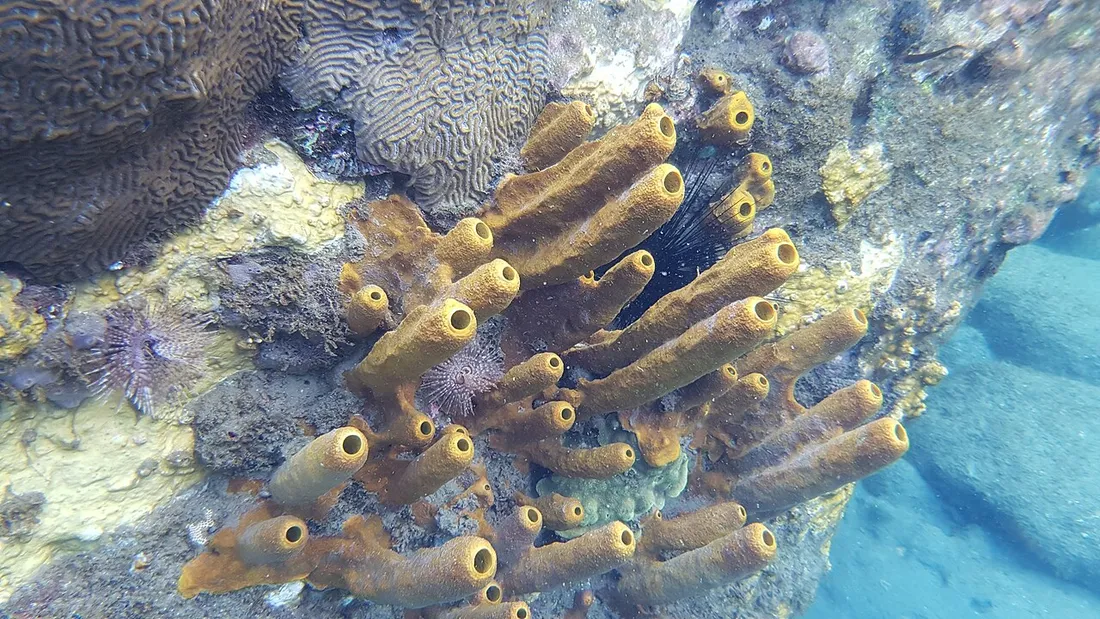
The Coral Garden, on the sheltered side of the islets, slopes gently down from 3 to 12 metres: ideal for a first encounter. Parrotfish, sergeant majors and sea fans are guaranteed there, and turtles are very common. Book the day before in the dry season (December to April): the morning departures fill up.
Trips without getting wet: glass-bottom boats and kayaks
Not a diver? Malendure’s watersports hub has it covered:
- Glass-bottom boat: around €25 per adult and €15 per child for 1.5 hours above the reefs, commentary included. Perfect with toddlers or grandparents.
- Transparent kayak or paddleboard: €20 to €30 for two hours, free rental or guided trip out to the islets. Set off before 9 a.m.: the water is a mirror and you’ll cross paths with turtles along the way.
- Guided snorkeling excursion to the islets: €25 to €35 with gear, the best option for getting your head underwater in the heart of the reserve without swimming 2 km.
An important reminder: the Cousteau Reserve is a regulated zone. Anchoring outside the buoys is prohibited, fishing is forbidden, and ordinary sunscreen should be avoided in favour of a “reef-safe” mineral protection — the corals of the Garden are already struggling to survive there.
Snorkeling from the beach: turtles without a boat
This is Malendure’s worst-kept secret: you can spot green turtles straight from the beach, without paying for a single excursion.
The seagrass bed carpeting the bay, 30 to 80 metres from shore, serves as a pantry for the turtles that come to graze in the late morning and mid-afternoon. Our protocol, tested dozens of times:
- Enter the water at the southern section of the beach and fin gently out to sea;
- Look for the dark grass zones between 2 and 5 metres deep;
- Stay at the surface, still: the turtle surfaces to breathe every few minutes.
Non-negotiable rules: 5 metres minimum distance, never any contact, never any chasing. Sea turtles are protected and the fines are real.
Skill required: a confident swimmer, as the bottom drops off fairly quickly. For children, stay within the first 20 metres, where trumpetfish and shoals of small jacks already swim.