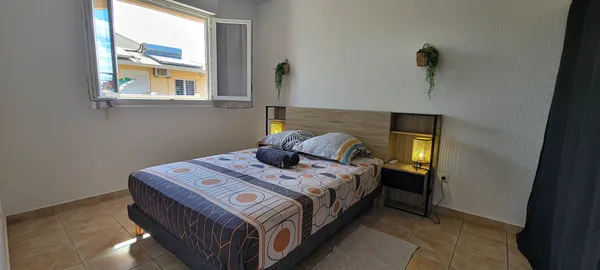

A several-week assignment in Cayenne, a project at the Guiana Space Centre in Kourou, a months-long audit in Saint-Laurent-du-Maroni: as soon as the duration stretches out, a conventional hotel becomes expensive, impractical and rarely suited to genuine business travel. In French Guiana, where the distances between the coast (Cayenne, Rémire-Montjoly, Matoury) and the interior are very real and where hotel capacity remains limited, serviced furnished accommodation is often the most rational solution for a long trip. Provided, of course, that the administrative side keeps up: an invoice in the company’s name, a compliant expense claim, payment by bank transfer, recoverable VAT where applicable, and above all a rate that drops as the stay gets longer. That is exactly what this article is about: understanding how sliding-scale pricing works for a long business stay in French Guiana, and what to check before you book.
Why long stays come with sliding-scale rates
The principle is simple: the longer the stay, the lower the cost per night. There is nothing arbitrary or purely commercial about this logic; it reflects a concrete economic reality for the host.
Short stays multiply fixed costs: a full clean between every guest, managing arrivals and departures, communication time, laundry, restoring the property. Over a long stay, those costs are spread across a large number of nights. Cleaning shifts from an “after every departure” rhythm to a weekly or fortnightly one, the client relationship stabilises, and occupancy becomes predictable for the host. That predictability has value: it makes it possible to offer a lower rate without compromising on quality.
In practical terms, a long business stay differs from a tourist stay on several counts:
- Duration: we are generally talking about several weeks to several months, not a few nights.
- Stability: a single occupant or a small team, across the whole period, with little turnover.
- Genuine work requirements: good internet connection, space to work, a fully equipped kitchen so you don’t depend on restaurants every evening.
- The administrative framework: corporate invoicing, compliant supporting documents, payment by bank transfer.
It is this combination that makes sliding-scale pricing both possible and relevant.
At what duration threshold does the rate change?
There is no universal scale, and everything depends on the property and the season. As an indication only, thresholds are frequently structured around the week, the month and the quarter: the longer the commitment, the more significant the discount compared with the nightly rate. Ranges vary according to the time of year (French Guiana’s high tourist season, particularly around carnival, tightens demand) and according to location. For accurate pricing tailored to your assignment, a personalised quote remains the most reliable route.
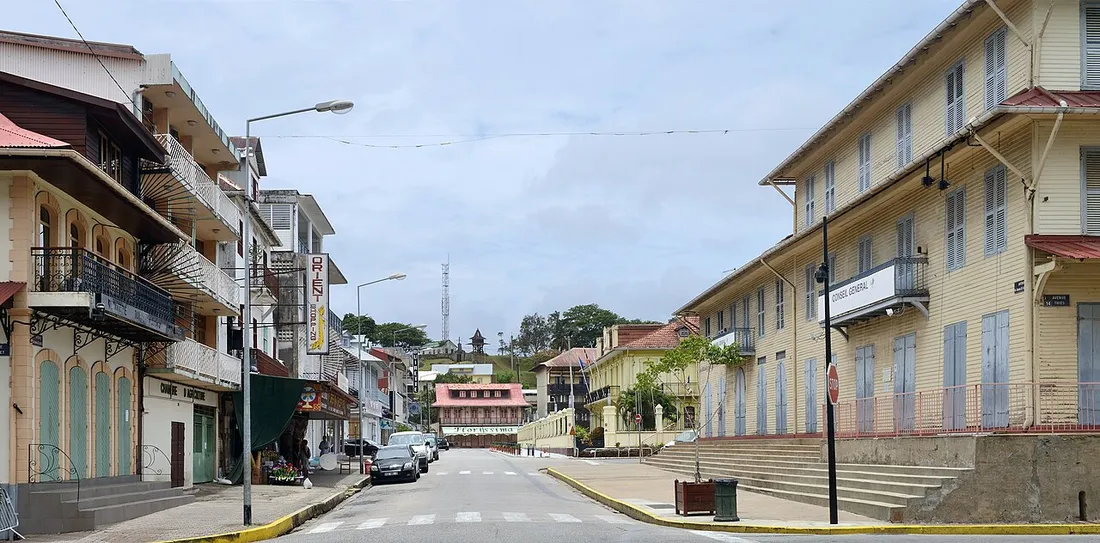
Business stays in French Guiana: the local realities to know
Booking a long stay in French Guiana means knowing the ground. The département is vast, and needs differ considerably depending on the municipality where the assignment takes place.
Cayenne, Rémire-Montjoly and Matoury: the economic heart
The Cayenne conurbation concentrates the bulk of administrative and economic activity. The residential districts of Rémire-Montjoly (close to the Montjoly and Rorota beaches) and Matoury (near Félix Éboué airport) are sought after for business stays: quieter than the town centre, better served by transport links, and close to business zones. Central Cayenne, around the Place des Palmistes and the Montabo district, suits those who need to be as close as possible to the institutions.
Kourou: the space hub
Kourou lives to the rhythm of the Guiana Space Centre. Assignments linked to aerospace, industrial subcontracting or launch campaigns generate specific long-stay accommodation demand, often tied to schedules spanning several weeks. Proximity to the site and the availability of stable accommodation are decisive criteria there.
Saint-Laurent-du-Maroni and the west
To the west, Saint-Laurent-du-Maroni is a growing hub, driven by demographics and public-sector projects. Assignments there are frequent in healthcare, education, public administration and construction. Quality accommodation is scarcer than in Cayenne, which makes a reliable, invoiceable furnished solution all the more valuable.
Practical constraints on the ground
A few realities to factor into planning a long stay:
- Distances: roughly 60 km between Cayenne and Kourou, more than 250 km between Cayenne and Saint-Laurent. A vehicle is all but essential.
- The climate: hot and humid all year round, with a pronounced rainy season. Air conditioning and a well-maintained property make a real difference over a long stay.
- Day-to-day logistics: having a fully equipped kitchen and a washing machine radically changes the comfort of a multi-week assignment.
Invoicing in the company’s name: what serviced accommodation allows
This is where the major difference lies between a conventional holiday rental and structured serviced accommodation. A serviced-accommodation operator can issue an invoice in your company’s name, with all the details your accounts department expects.
What a compliant invoice must include
An acceptable business invoice notably includes:
- Your company’s registered name and address (the client being invoiced).
- The host’s contact details and identification number (SIRET).
- The issue date and a unique invoice number.
- A precise description of the service (furnished accommodation, period covered, number of nights).
- A breakdown of the amount excluding tax, the VAT rate and amount where applicable, and the total including tax.
- The terms and method of payment.
A clear, detailed invoice is what separates a justified expense from a questionable one during an internal or tax audit. That is not a point to compromise on.
The expense claim that goes through without friction
For an employee on assignment, the expense claim is often the crux. An invoice issued in the company’s name, settled by transfer from the company account, with an explicit description, slots into a reimbursement or direct-accounting process without difficulty. No more scattered hotel receipts and incomplete supporting documents: a single clean document covers the entire stay, or regular monthly invoicing on longer assignments.
Bank transfer payment and VAT: the financial side
Settlement by bank transfer is the norm for business travel. It offers several concrete advantages:
- Accounting traceability is complete: the movement appears clearly on the company statement.
- It avoids tying up an employee’s personal cash flow, unlike card payment followed by reimbursement.
- It fits corporate expense approval workflows (purchase order, management sign-off, payment schedule).
A word on VAT
The VAT question is worth raising upfront. Accommodation falling under the serviced-accommodation regime may, where it provides a hotel-type bundle of services, be subject to VAT — in which case VAT appears on the invoice. Whether your company can recover that VAT depends on your tax position, the nature of the expense and the applicable rules. This falls to your accountant or tax department: we provide a compliant, detailed invoice, but we do not stand in for your tax adviser. It is best to confirm this parameter before booking to avoid any surprises on the accounting side.
Indicative note: VAT rates, regimes and recovery conditions change and depend on each situation. Nothing above constitutes tax advice; always check with your accountant.