Leaving mainland France for Guadeloupe, with southern Grande-Terre in your sights? Le Gosier and Sainte-Anne take in a large share of newcomers: beaches, easy access to the Pointe-à-Pitre urban area, services, schools and a seaside lifestyle that many people are looking for. Whether your move comes from a job transfer, a family reunion or a life project, these two neighbouring towns have quite different profiles — worth understanding before you sign a lease. This article covers the neighbourhoods, rent benchmarks (given for guidance only), arrival formalities and daily life, so you can settle in with peace of mind.
Le Gosier and Sainte-Anne: two neighbouring towns, two atmospheres
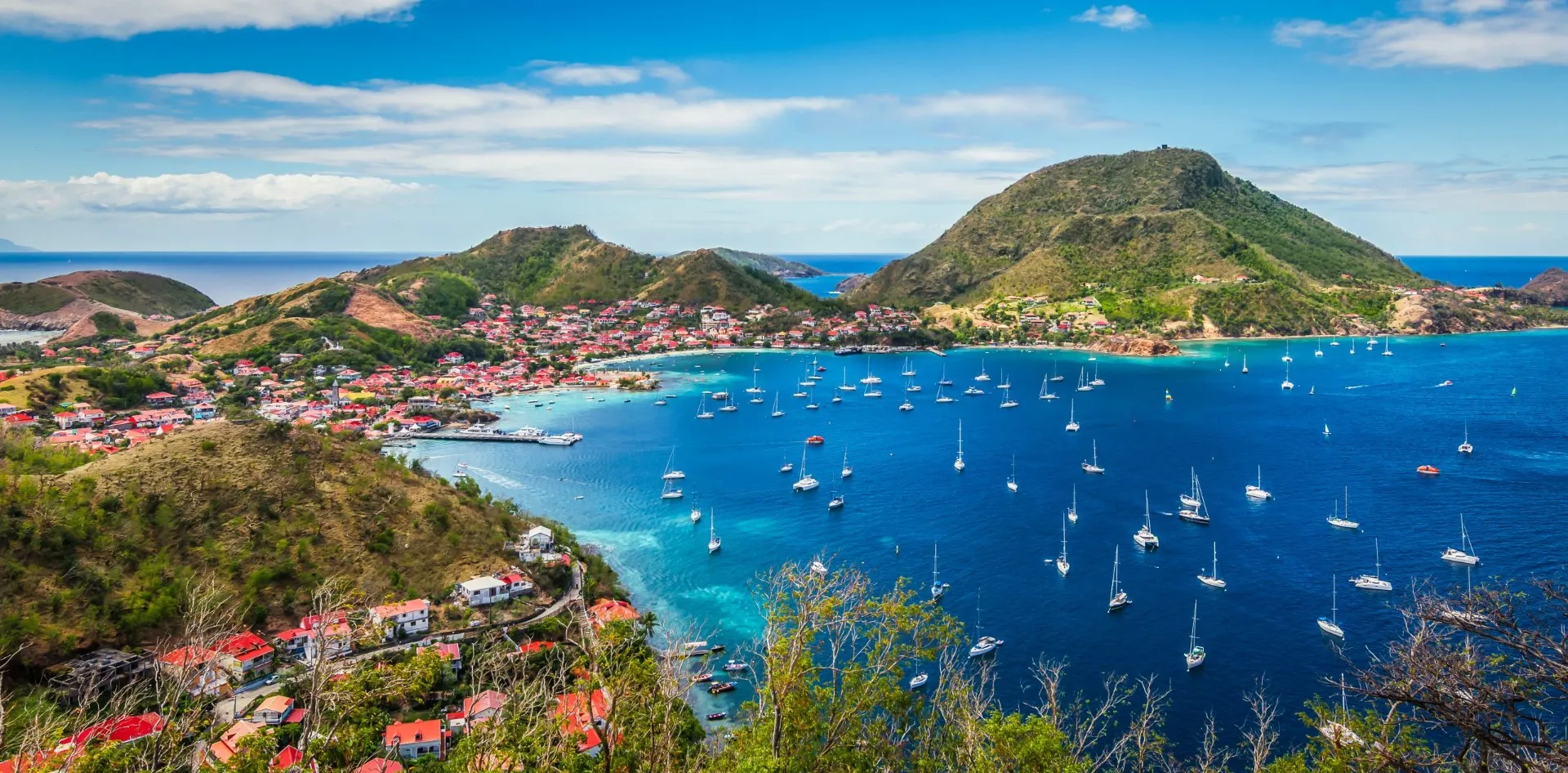
Le Gosier and Sainte-Anne both sit on the southern coast of Grande-Terre, in Guadeloupe, along what is often called the Guadeloupean “Riviera”. They border each other, yet their character is clearly different.
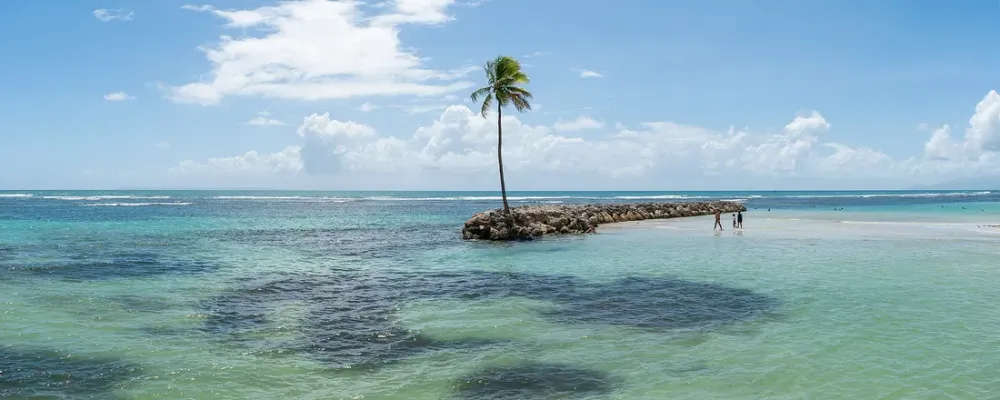
Le Gosier is the town closest to Pointe-à-Pitre and Les Abymes, the economic heart of the archipelago. It is a residential and tourist town, heavily built up in places, with plenty of hotels, apartment complexes, shops, restaurants and a lively nightlife. The town centre looks out onto the Îlet du Gosier, a small islet with an emblematic lighthouse reachable by shuttle boat. The population mixes long-established families, transferred civil servants, retirees and working people commuting into the urban area.
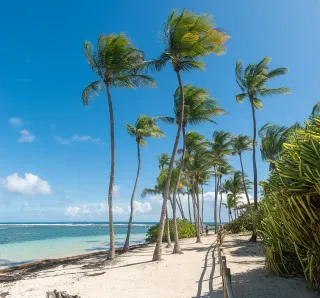
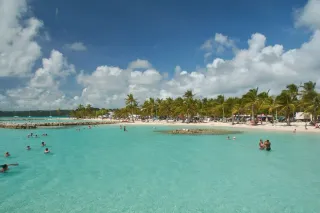
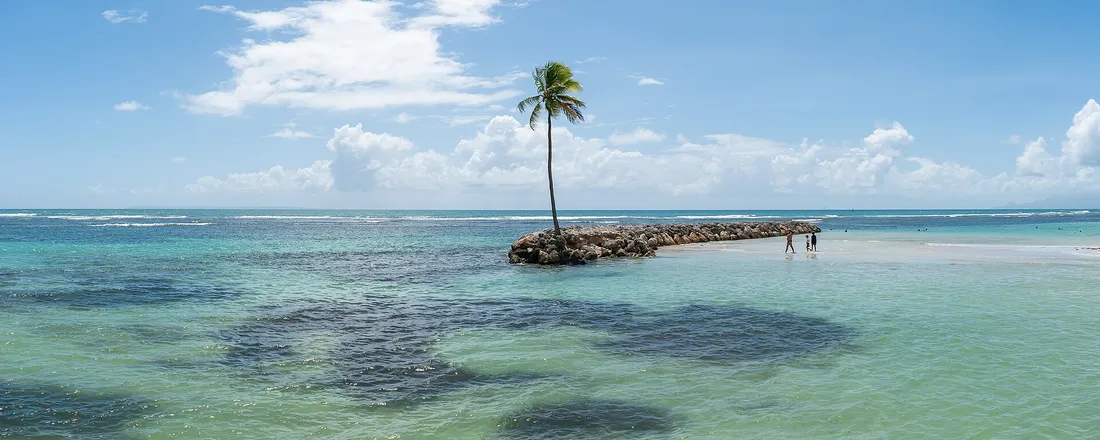
Sainte-Anne, further east, is famous for some of the finest beaches on the island (the town beach, La Caravelle, Bois-Jolan). The commune is larger and turns rural as soon as you move away from the centre, with a patchwork of districts and residential neighbourhoods. The feel is more “seaside village” than “town”, even though the centre stays very busy, especially at weekends and during the tourist season.
Which town suits which profile?
- You work in Pointe-à-Pitre, Les Abymes or at the CHU teaching hospital: Le Gosier keeps your commute short.
- You want a quieter setting, close to the beach and nature: Sainte-Anne or the outlying districts of Le Gosier.
- You want shops and services right on your doorstep: the centre of Le Gosier or the centre of Sainte-Anne.
- You are working to a tight budget: neighbourhoods set back from the coast, in both towns, are generally more affordable than the seafront.
The neighbourhoods to know
Choosing the right neighbourhood matters as much as choosing the town. Here are some concrete pointers.
In Le Gosier
- The town centre: central, lively, close to the shops and to the Bas-du-Fort marina (shared with Pointe-à-Pitre). Practical, but sometimes noisy and pricier.
- Bas-du-Fort: a district of apartment complexes and the large marina, sought after and well placed for reaching the urban area.
- Montauban, Pliane, Périnette, Dampierre: residential areas mixing detached houses and apartment complexes, often popular with families.
- Grand-Baie, Petit-Havre: closer to the coast and the beaches, with a residential feel.
In Sainte-Anne
- The town centre: shops, market, central beach. Lively but very busy in high season.
- La Caravelle: a well-known seaside area (hotels, beach), more tourist-oriented.
- Bois-Jolan, Belle-Plaine, Douville, Le Helleux: residential or more rural neighbourhoods, often chosen for their peace and quiet.
- The inland districts, more agricultural, generally offer softer rents but require a car.
Finding a home: rent before you buy
The golden rule for a successful move overseas: rent first, take the time to get to know the ground, and only then consider buying. Micro-climates, exposure to wind and swell, the neighbourhood, the real distance to schools and shops — all of that only becomes clear once you are living there.
Rent benchmarks (indicative)
The amounts below are purely indicative and vary widely depending on location (seafront or not), the condition of the property, the season and whether it is furnished. They are in no way a guarantee of price.
- Studio or one-room flat: often in an indicative range of around €500 to €750 per month.
- One-bedroom flat: generally around €650 to €950 per month, depending on location.
- Two-bedroom flat / small house: frequently between €850 and €1,300 per month, more on the coast.
- Villa with outdoor space: above that, and highly variable depending on the view, the pool and the neighbourhood.
On top of these amounts come service charges, water (its cost and, at times, supply cuts are a local reality to plan for), electricity and, where applicable, the waste collection tax.
Things to check before signing
- Water: water cuts can occur in Guadeloupe; ask about the neighbourhood and consider keeping a reserve.
- Exposure: wind, swell, sunshine and humidity vary from one area to another.
- Furnished properties: many homes aimed at newcomers are offered furnished, which makes arriving without a shipping container much simpler.
- Actual condition: damp, mosquitoes, air-conditioning servicing and upkeep of outdoor areas are all worth checking.
While you look for the ideal home, temporary furnished accommodation saves you from rushing. Discover our accommodation for a first stay on the island, with no long-term lease commitment.
Arriving from mainland France: the formalities
Moving overseas involves a few formalities that are best anticipated before you even leave.
Before departure
- Book temporary accommodation for the first few weeks
- Organise the transport of your belongings (luggage, possible shipping container, allow for sea freight times)
- Notify your bank and check that your payment methods work overseas
- Plan ahead for your children’s schooling (contact the schools and the town hall)
- Gather your documents (ID, proof of income, possible guarantor for the rental)
After arriving
- Open electricity and water contracts in the household’s name
- Sign up for an internet / phone connection
- Update your address (tax office, social security, employer, insurers)
- Get in touch with the town hall (Le Gosier or Sainte-Anne) for local formalities
- Find a family doctor and locate nearby health facilities
- Transfer the vehicle registration document if you keep or buy a car locally
A car: all but essential
Outside the town centres, a car is very often necessary for work, school and shopping. Public transport exists but remains limited depending on the area. Many newcomers rent a vehicle for the first few weeks, until they can buy locally or have their own car shipped over.