Deploying two teams at the same time on two different projects in French Guiana is a common situation: a design office preparing a worksite in Kourou while a construction crew starts up in Cayenne, or a space-sector contractor mobilising technicians at the Guiana Space Centre while another team works on a site in Saint-Laurent-du-Maroni. The challenge is not just finding beds: it is housing staff properly, over variable durations, while keeping the paperwork clean (invoice in the company’s name, VAT, bank transfer, compliant expense claims).
Conventional hotels quickly show their limits: tight availability around launch periods, rates that climb, little flexibility on length of stay, and teams living in cramped conditions for weeks on end. Para-hotel accommodation (independent furnished properties managed with hotel-like services) is a better fit for these long-stay and corporate-invoicing needs. This article explains how to organise that dual housing setup without losing time or receipts.
Understanding the need: two teams, two projects, two logics
Before booking anything, set the framework. Two teams on two parallel projects almost never means “twice the same thing”.
Different constraints for each team
- Location: one team may need to be as close as possible to the Guiana Space Centre in Kourou, the other near a worksite or offices in Cayenne, Rémire-Montjoly or Matoury.
- Duration: one project may last three weeks (short assignment), the other several months (long worksite). That changes everything in pricing and tax terms.
- Headcount: a team of two engineers does not have the same needs as a construction crew of six to eight people.
- Rhythm: staggered hours, on-call duty and night work on certain technical operations sometimes call for accommodation where people can sleep quietly during the day.
Why a single type of accommodation is rarely enough
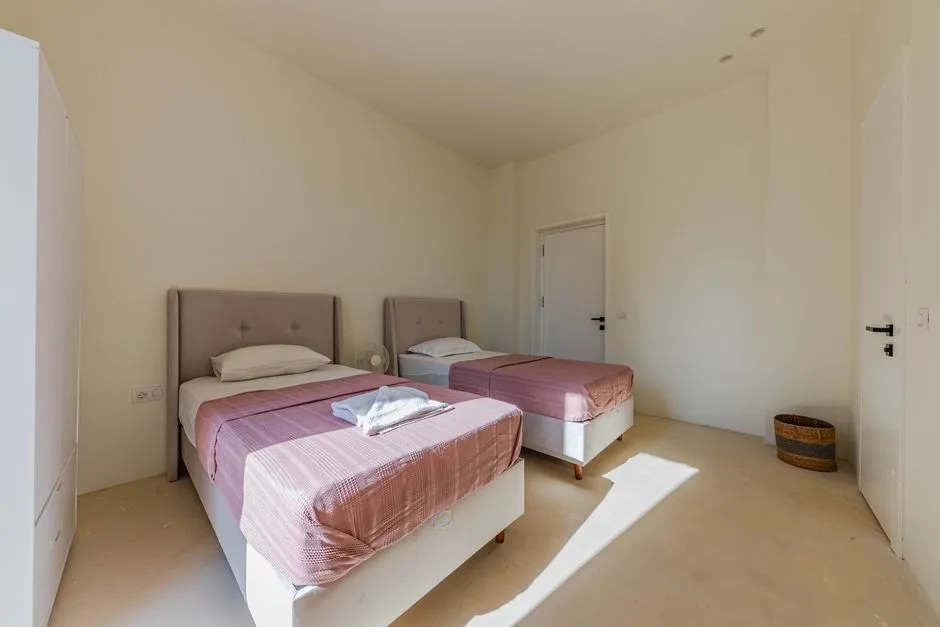
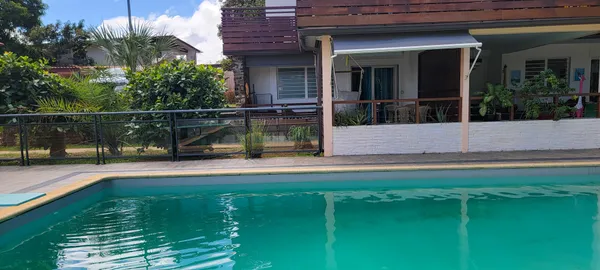
Housing two teams often means combining several properties: for example a three-room apartment or a villa for a team staying long-term and happy to cook on site, plus separate studios or one-bedroom units for more independent staff. The whole point of the para-hotel approach is to centralise that combination under a single accommodation provider, a single point of contact, a single invoicing logic.
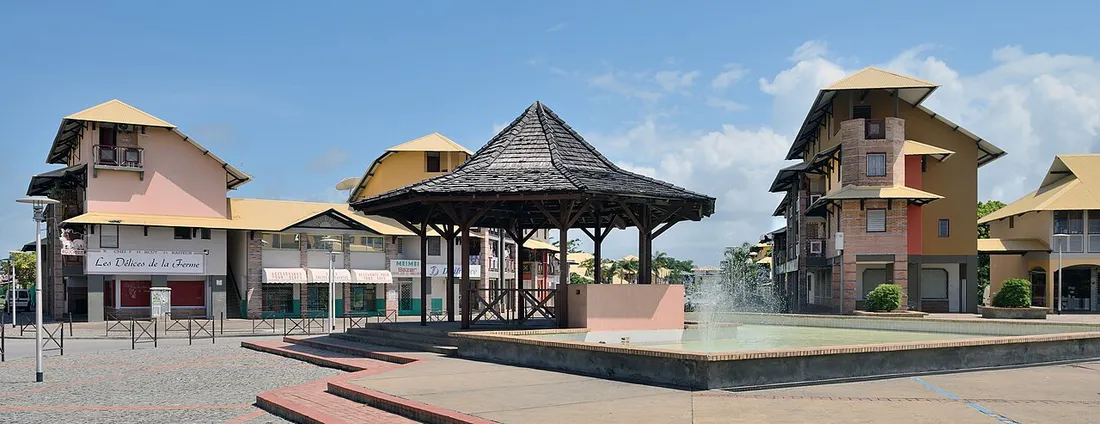
Mapping French Guiana: where to stay depending on the project
French Guiana concentrates most of its economic activity along the coastal strip, between Cayenne and Kourou, with a secondary hub in Saint-Laurent-du-Maroni. Choosing the right municipality avoids hours of pointless driving.
The Cayenne conurbation
Cayenne and its outskirts (Rémire-Montjoly, Matoury) bring together a large share of company head offices, government bodies, design offices and suppliers. It is also home to Félix Éboué airport, in Matoury, the arrival point for most teams. The residential districts of Rémire-Montjoly (Montabo, Bourda) offer quiet, well-located accommodation for business stays.
Kourou and the space hub
Kourou is essential for anything connected to the Guiana Space Centre and its subcontractors. Launch campaign periods put strong pressure on accommodation demand: book early. Housing a team in Kourou rather than Cayenne saves close to an hour of driving each way on the RN1.
Saint-Laurent-du-Maroni and the west
For a project in western French Guiana (development, utility networks, healthcare, construction), Saint-Laurent-du-Maroni is the logical base. The distance from Cayenne (more than two hours by road) makes local accommodation indispensable rather than a daily round trip.
Splitting your two teams intelligently
- If both projects sit on the same Cayenne–Kourou axis, you can sometimes centralise halfway, but you lose time on both sides.
- As a rule, it is better to house each team as close as possible to its site and hand coordination to a single para-hotel manager able to operate across several municipalities.
The para-hotel advantage: company invoicing and compliance
This is the heart of the matter for a manager who has to account for spending. Well-run para-hotel accommodation differs from peer-to-peer rental through its administrative rigour.
Invoice in the company’s name
Every stay produces an invoice issued in the company’s name, with the SIREN/SIRET number, the registered office address and a breakdown of services and nights. That document is what lets you book the expense and justify the expense claim. A booking made in an employee’s name on a consumer platform often complicates this point.
VAT on accommodation
Para-hotel accommodation with services (reception, cleaning, linen supply, etc.) falls under a regime where VAT applies and appears on the invoice. Depending on the company’s situation, this VAT may be recoverable. The exact rule depends on the nature of the services and the provider’s status: check with your accountant. What matters on the para-hotel side is supplying an invoice that clearly states the VAT, which an unfurnished peer-to-peer rental does not provide.
Payment by bank transfer
Settlement by bank transfer is the expected B2B standard: it leaves a clean accounting trail, fits internal approval workflows (purchase order, procurement department) and avoids employees fronting costs. A good provider supplies a quote, an invoice and bank details (RIB/IBAN) from the outset.
Compliant expense claims
An expense claim is compliant when it rests on clear supporting documents: an invoice made out to the company, stay dates, amount, VAT. By centralising accommodation with a para-hotel provider, the company reduces the number of scattered receipts and makes both internal review and any tax audit easier.
Organising the double booking step by step
Here is a realistic framework for setting up both stays without nasty surprises.
1. Identify the real requirements
List, project by project: number of people, arrival and departure dates (even approximate), target municipality, indicative budget per night, specific constraints (parking for site vehicles, space for equipment, solid wifi for technical remote work).
2. Choose the right combination of properties
A para-hotel manager can propose a split: for example a villa with several bedrooms for the larger team, and studios or one-bedroom units for the other. The aim is to optimise cost per person while preserving the comfort long stays require.
3. Frame the contractual side
Ask for a written quote covering both projects, with a breakdown per property, duration, included services and cancellation or extension terms. This is the moment to specify that invoicing will be in the company’s name, paid by bank transfer.
4. Anticipate extensions and schedule shifts
On worksites, dates move. Plan from the start how to handle an extension (possible sliding rate for long stays, indicative only) and a potential delayed start. A responsive provider is worth its weight in gold here.
5. Centralise the follow-up
A single point of contact for both teams simplifies everything: an issue (air conditioning, wifi, cleaning) is settled through one channel, and invoicing stays consistent.