Le Lamentin concentrates a large share of Martinique’s economic activity: this is where you’ll find Martinique Aimé Césaire International Airport, the Jambette industrial and commercial zone, along with the business parks of Californie, Manhity, Place-d’Armes and the Espace Aéroportuaire. When a company needs to bring in staff — technicians on assignment, executives travelling, project teams, contractors on site or seasonal construction workers — accommodation quickly becomes a headache. Hotels too expensive over time, mainstream holiday rentals impossible to put through an expense claim, no proper invoice in the company’s name: administrative friction that weighs on HR and accounting teams alike.
This article takes a factual look at the options for housing staff in Le Lamentin and the surrounding area. Above all, it sets out what distinguishes serviced business accommodation (the para-hôtelier model we operate) from an ordinary holiday rental: invoicing in your company’s name, expense-claim compliance, payment by bank transfer, VAT handling and tapered rates for long stays. Price benchmarks are given as a guide only: they vary with the season, the length of stay and the standard of the property.
Understanding Le Lamentin’s economic geography
Le Lamentin is the largest commune in Martinique’s central plain and the island’s true economic engine. Choosing the right location for accommodation means, first and foremost, cutting your team’s daily commute — a source of fatigue and cost (fuel, car hire) that is often underestimated.
The main hubs to know:
- Martinique Aimé Césaire Airport and the Espace Aéroportuaire: essential for short assignments with frequent return trips, rotating teams, or late arrivals after a long-haul flight from mainland France.
- The Jambette industrial zone: logistics, warehousing, distribution, technical companies. One of the commune’s principal business sites.
- The Californie and Place-d’Armes zones: retail parks, shops, car dealerships, business services. Very busy, they also account for a share of daily traffic.
- The Manhity zone and the administrative sector: offices, company headquarters, services.
- Fort-de-France: a few kilometres away, the administrative capital (prefecture, courts, banks, public bodies’ head offices) remains the destination for institutional and legal assignments.
- Ducos, Le Robert and Saint-Joseph: neighbouring communes within the employment area, often involved in construction projects and technical work.
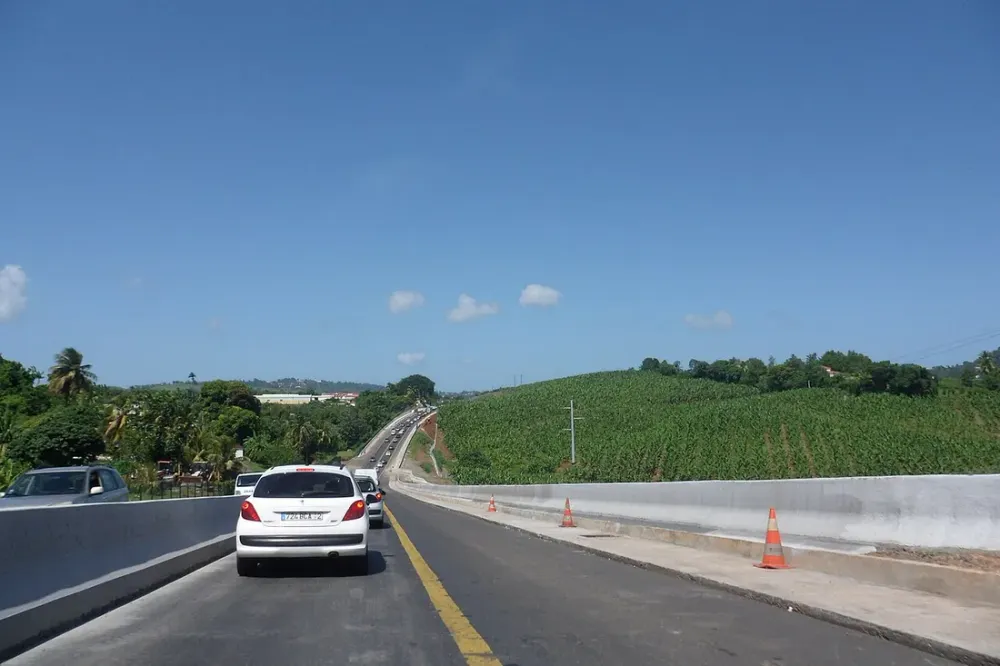
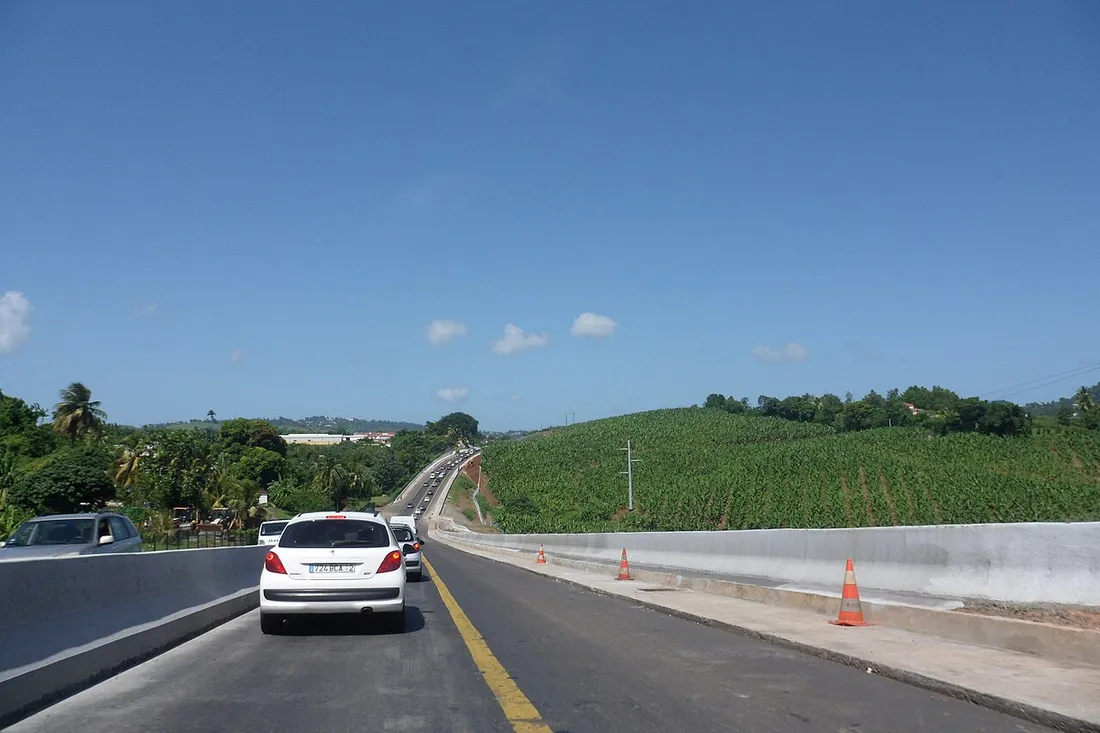
As a guide, Le Lamentin lies around ten kilometres from central Fort-de-France, but the routes linking the plain to the capital (notably the A1 motorway and the RN1) are regularly congested at peak times, in the morning towards Fort-de-France and in the late afternoon in the other direction. A smooth fifteen- to twenty-minute journey can easily double, or worse, at busy hours. Housing your staff close to where they will actually be working, rather than in the “centre” out of habit, is often the better call.
Hotel, holiday rental or serviced accommodation: which format for a team?
Each format answers a different need. The choice depends above all on the length of stay and on accounting constraints.
The hotel
Suited to very short stays (one to three nights) and one-off trips. Advantages: daily services, standard business invoice with VAT, simple booking. Limitations in Martinique: supply near Le Lamentin’s business zones is limited and often stretched during the week by corporate guests; the nightly rate climbs fast on a long stay, with no kitchen or living space for a team.
The mainstream holiday rental
Attractive for space and price over a few days, but poorly equipped for business use: a private landlord will generally not issue an invoice in the company’s name, does not apply VAT, often requires payment by personal card, and offers neither a framework agreement nor a dedicated contact. The employee fronts the cost and has to sort out the paperwork alone.
Serviced business accommodation
This is the format designed for medium and long-term business stays. In practice, it means a furnished and fully equipped property (villa, apartment, house) let with hotel-style services and, crucially, managed by a professional who invoices your company directly. You combine the independence of a home (kitchen, washing machine, several bedrooms, workspace) with the administrative compliance of a business service. That is precisely what our property management service offers across the properties it manages.
The serviced-accommodation difference: invoicing, VAT and expense claims
This is the heart of the matter for an administrative manager or a company director. A poorly documented stay means wasted time in accounting and exposure in the event of an audit. Here is what changes with professionally managed serviced accommodation.
An invoice in the company’s name
The invoice is issued directly in the company’s name and at its address (with the SIREN/SIRET number), not in the employee’s name. It becomes a company expense, booked as such, without going through a personal cash advance. For a team of several people over several weeks, that simplification is far from trivial.
The VAT question
Serviced accommodation, when it comes with a minimum of hotel-type services (linen provision, cleaning, reception, or other services), falls under a different VAT regime from the simple letting of an unfurnished property. Martinique also applies VAT rates specific to the French overseas departments, distinct from those in mainland France. Depending on the provider’s situation and the exact nature of the services, the invoice may therefore show VAT, potentially recoverable by a VAT-registered business, subject to conditions. Since tax rules are precise and subject to change, always have the treatment validated by your accountant; as a guide, this is a genuine potential advantage that a private rental does not offer.
A compliant, friction-free expense claim
With a proper business invoice, the employee has nothing to advance and the accounts department has clean supporting evidence: description of the service, dates, amount, VAT where applicable, provider’s details. No more screenshots from a rental platform or receipts that are hard to match up.
Payment by bank transfer
Rather than requiring a personal or corporate card, a serviced accommodation provider accepts bank transfers, the natural payment method for companies. This makes cash-flow management, internal approval timelines and account reconciliation easier.
Items to gather for a clean file:
- Quotation issued in the company’s name before the stay
- Final invoice showing the company’s SIREN/SIRET
- VAT stated and broken down (to be validated by your accountant)
- Payment by bank transfer with the invoice reference
- Contract or purchase order signed for long stays
- Evidence of the business purpose of the trip kept on file internally
Long stays: housing a team for weeks or months
Assignments in Martinique often run over several weeks: construction sites, technical rollouts, industrial maintenance, consulting engagements, medical locum work, field campaigns. Over those durations, the logic changes completely compared with a tourist stay.
Why a furnished long stay works out cheaper
Over a long stay, a hotel’s nightly rate quickly becomes disproportionate. A furnished property lets you pool resources: several staff in the same villa, a single invoice, shared living areas, a kitchen that sharply reduces the catering budget. As a guide, the longer the stay, the lower the cost per person per night tends to fall, notably thanks to tapered rates negotiated for monthly stays. Ranges vary by commune, by season — the peak tourist season known as the carême, running roughly from December to April, pushes prices up — and by the standard of the property.
What really matters on a long stay
- The number of bedrooms and privacy: one bedroom per person avoids tensions over several weeks of living together.
- A genuine workspace: a table, reliable internet, a quiet corner for video calls with mainland France, allowing for the time difference.
- Full equipment: washing machine, fitted kitchen, air conditioning or good ventilation, mosquito nets or suitable protection.
- Parking: a car is all but essential in Martinique; a property with private parking makes life easier for the team, especially as parking is tight in the business zones during working hours.
- Contractual flexibility: the ability to adjust dates, add a person, or extend an assignment that overruns.
Comfort and safety for your staff
Well-housed staff are effective staff. The Martinican climate (heat, humidity, and the hivernage rainy season from roughly June to November, which also corresponds to the hurricane season) makes thermal comfort and a well-maintained property particularly important. Nearby shops, secure parking and a quiet neighbourhood all contribute to the quality of the stay and, indirectly, to the success of the assignment.