
Are you arriving from mainland France for a job, an internship, a civil-service transfer, or starting your studies at the Université de Guyane? House sharing is often the simplest, most affordable and most reassuring way to find housing in French Guiana, especially during the first few weeks. The rental market is tight, the rent on a studio of your own can weigh heavily on a young professional’s or student’s budget, and sharing a home lets you split the costs while avoiding isolation when you don’t yet know anyone locally. This article gives you concrete benchmarks — neighbourhoods, indicative budgets, paperwork, pitfalls to avoid — to organise your house share between Cayenne, Rémire-Montjoly, Matoury and Kourou, and to handle the gap between your arrival and your permanent move calmly.
Why house sharing appeals when you arrive in French Guiana
Renting on your own in French Guiana means having a solid application file, a guarantor, a security deposit and often several months’ rent in advance, right away. For someone who has just landed and doesn’t yet have local payslips or a working bank account, that’s a real obstacle. House sharing gets around part of these difficulties.
- Shared budget: rent, electricity, water, internet and sometimes groceries are split between housemates.
- Faster move-in: an already furnished and equipped home means you don’t have to buy appliances and furniture on day one.
- Instant network: your housemates usually know the good tips (mechanics, markets, government offices, beaches).
- Flexibility: some house shares accept shorter leases or staggered arrivals, useful when your dates aren’t set in stone yet.
- Peace of mind: not living alone is reassuring, especially during the first weeks of discovering the territory.
One word of caution though: house sharing means communal living, a minimum of organisation and clear ground rules. It isn’t only a money-saving choice, it’s a lifestyle.

Where to look for a house share: the areas to know
French Guiana is not a uniform territory. The right area depends on where you work or study, how much you need a car and what your budget is. Here are the main areas where young professionals and students live.
Cayenne and its centre
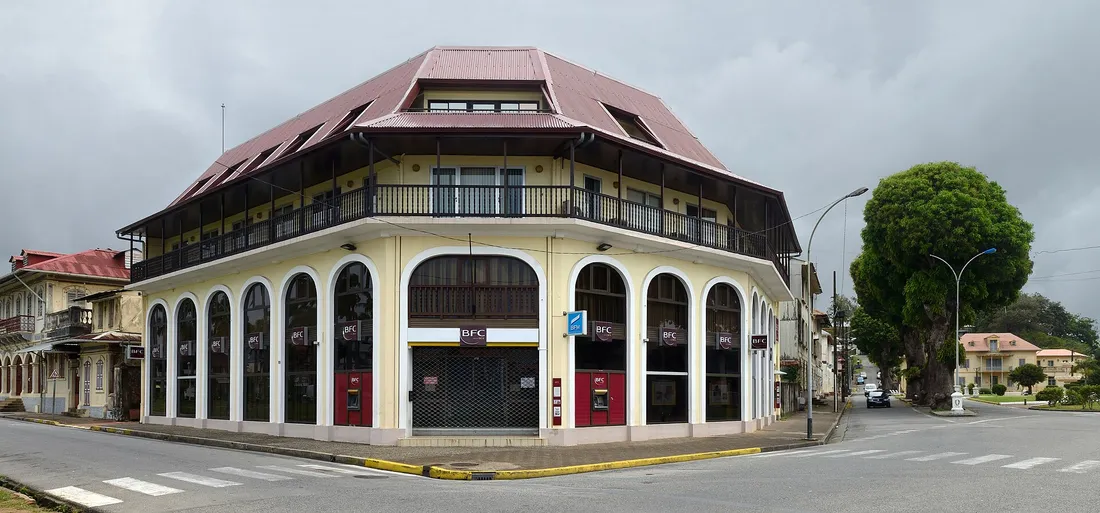
Cayenne concentrates government offices, shops, community life and part of the campuses. Neighbourhoods such as the city centre, Montabo, Cabassou or Baduel are sought after for their proximity to the university, the hospital and services. The historic centre offers plenty of buzz but sometimes older housing; Montabo, more residential and close to the coast, appeals to those who want a quieter setting. As a rough guide, a room in a house share in Cayenne usually falls within a broad range depending on the standard, the floor area and whether utilities are included.
Rémire-Montjoly
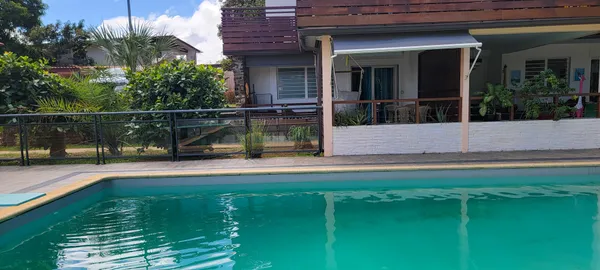
A popular residential town, Rémire-Montjoly attracts people with its beaches (Montjoly, Gosselin), its greener living environment and its detached-house neighbourhoods. It’s an area favoured by young professionals who work in Cayenne but want more peaceful surroundings. House shares there are often houses with a garden, sometimes a pool. Plan on having a vehicle as a rule, since public transport remains limited.
Matoury and the airport corridor
Matoury is a fast-growing town, close to Félix-Éboué airport and well connected to Cayenne by road. Rents there are sometimes more affordable than in the heart of Cayenne, and there is a genuine supply of shareable houses. It’s a good compromise if you work along the Cayenne-airport corridor or in the business zones.
Kourou
If your job depends on the Guiana Space Centre or space-related activities, Kourou is your anchor point. The town has a young, mobile population, with many people on assignment or fixed-term contracts — a context that favours house sharing and frequent arrivals and departures. Look towards the neighbourhoods near the centre and the residential areas.
Saint-Laurent-du-Maroni and the West
For a job in western French Guiana (healthcare, education, social work, administration), Saint-Laurent-du-Maroni is the reference town. The market there is narrower, and house shares are often found by word of mouth and through local professional networks. Plan further ahead, as supply is scarcer.
What it costs: indicative budget benchmarks
The amounts below are given purely as a guide and vary a great deal depending on the town, the floor area, the condition of the home, the utilities included and the season. Don’t take them as guaranteed prices: always check case by case.
- Room in a house share: a broad range depending on comfort and location; the price may or may not include utilities.
- Utilities (water, electricity, internet): to be split between housemates; electricity can climb with air-conditioning use, which is heavy in this equatorial climate.
- Security deposit: generally the equivalent of one or two months depending on the type of lease.
- Agency fees: possible if you go through a professional.
Bear in mind the cost of living, which is generally higher than in mainland France on many imported products. House sharing is precisely what helps absorb this reality by pooling certain expenses (subscriptions, large appliances, sometimes basic groceries).
Support schemes worth exploring
Depending on your situation, several schemes can lighten the bill. Look into them in advance:
- Housing benefits from the CAF, subject to income conditions.
- Employer schemes (mobility assistance, civil-service relocation bonus, allowances linked to an overseas transfer).
- For students, grants and support from the CROUS, as well as university housing when places are available.
- Mobility assistance for arriving from mainland France, to be checked according to your status.
Finding the right house share: method and vigilance
Where to look in practice
- Local Facebook groups dedicated to housing in French Guiana, Cayenne or Kourou: very active, but stay careful with listings that look too good to be true.
- Professional word of mouth: colleagues, HR department, other people who have been transferred; this is often the most reliable channel.
- Local estate agencies and classic classified ads.
- Student networks and associations on the Université de Guyane campus in Cayenne.
Avoiding scams
A tight market unfortunately attracts fraudulent listings, especially targeting people still in mainland France. A few simple rules:
- Never pay any money (booking fee, deposit) before you have viewed the property, in person or through a trusted third party on site.
- Be wary of an abnormally low rent for an ideally located home.
- Insist on a written lease and a condition report.
- Verify the identity of the landlord or the main tenant.
- Refuse payments made only by cash transfer or to a foreign account.